News
20 Feb 2026
Meyer Sound Aligns With Industry Advances in Hearing Health
Subscribe to CX E-News
Education and Standards Shape Future Practices
Hearing health has long been a recognized challenge in live sound across engineers, performers, venue staff, and audiences. While efforts once centered on individual responsibility, the conversation is shifting toward shared standards, education, and industry-wide accountability.
In recognition of World Hearing Day on March 3, Meyer Sound is highlighting its engagement in this shift through participation in global standards initiatives, education efforts, and partnerships focused on safer listening practices in live sound environments.
A key driver of this evolution is the World Health Organization’s Make Listening Safe initiative, which addresses venues and live events. The standard reframes hearing health as a systems-level issue—one shaped by sound system design, venue acoustics, monitoring practices, and education.
For Meyer Sound President & CEO John Meyer, hearing health is inseparable from sound quality and listener perception. “Sound is only successful if people can listen to it comfortably and clearly over time,” he says. “Hearing health is a responsibility that should be built into how sound is designed and experienced.”
Meyer Sound senior acoustic engineer Jessica Borowski is involved in the WHO Make Listening Safe initiative, contributing practitioner insight as framework for live venues and events is refined. For Borowski, the standard marks a shift from isolated personal choices to shared responsibility. “For many years, hearing health in live sound relied almost entirely on individual behavior, while the WHO framework acknowledges that safe listening is influenced by the entire environment—how systems are designed, how sound is distributed in a space, and how informed the people working in those environments are,” she explains.
As the WHO framework evolves, education has become the bridge between standards and practice. One response is HELA (Healthy Ears, Limited Annoyance), a certification and training program developed by an international group of audio professionals, researchers, and educators and hosted by the University of Derby in the UK. HELA translates WHO-informed research into practical guidance for engineers, venue operators, and event staff, addressing both hearing health and community noise impact.
Meyer Sound is a founding member of the HELA initiative and has HELA-certified staff in both the United States and Europe. HELA’s emphasis on education and best practices aligns closely with Meyer Sound’s long-standing focus on system design, coverage consistency, and acoustic optimization—factors that support both sound quality and safer listening environments.
Meyer Sound has also been a long-time supporter of CEID (Center for Early Intervention on Deafness) in Berkeley, California, a specialized center providing early education, audiology, and therapy for children who are deaf or hard of hearing. The partnership reflects shared goals around prevention, early intervention, and long-term hearing health.
As awareness grows and standards gain traction, Meyer Sound has engaged early, supporting education, participating in research-informed initiatives, and contributing technical expertise that helps translate hearing health principles into real-world practice.
“Once these conversations start happening across different forums—standards bodies, training programs, industry events—hearing health stops feeling like an exception,” Borowski says. “That normalization is what makes real change possible.”
—
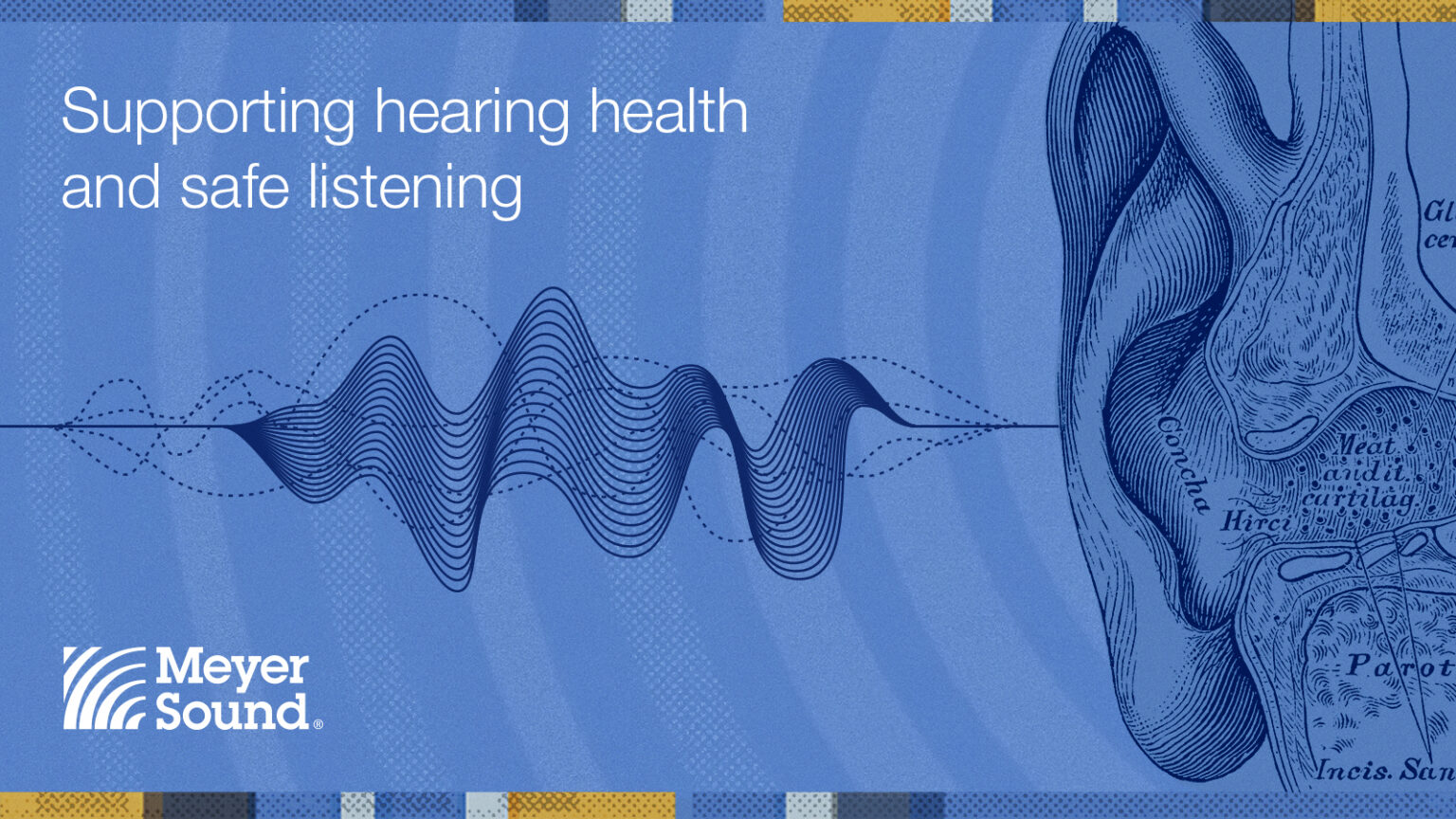
Main image © Meyer Sound Laboratories, Inc. All rights reserved.
Subscribe
Published monthly since 1991, our famous AV industry magazine is free for download or pay for print. Subscribers also receive CX News, our free weekly email with the latest industry news and jobs.
Recent posts


Latest jobs