TECH TALK
27 Apr 2026
When Musicians Become Lighting Designers
Subscribe to CX E-News
How Pixel Mapping is Bringing Stage Visuals into the Hands of Artists
For decades, lighting design has been a specialised craft sitting just outside the musician’s world. Artists wrote the music. Lighting designers interpreted it. But something interesting has been happening over the last few years: the line between those two roles is beginning to blur.
Affordable LED technology, powerful laptops, and increasingly intuitive software have made it possible for musicians to take control of their own visual shows. The same way artists now produce their own recordings in home studios, many are beginning to design the lighting that accompanies their music. And for performers who thrive on creative control, that shift opens up an entirely new instrument.
Turning sound into light
One of the tools driving this change is ENTTEC’s EMU, a sound‑to‑light control platform designed specifically for musicians, DJs and live performers.
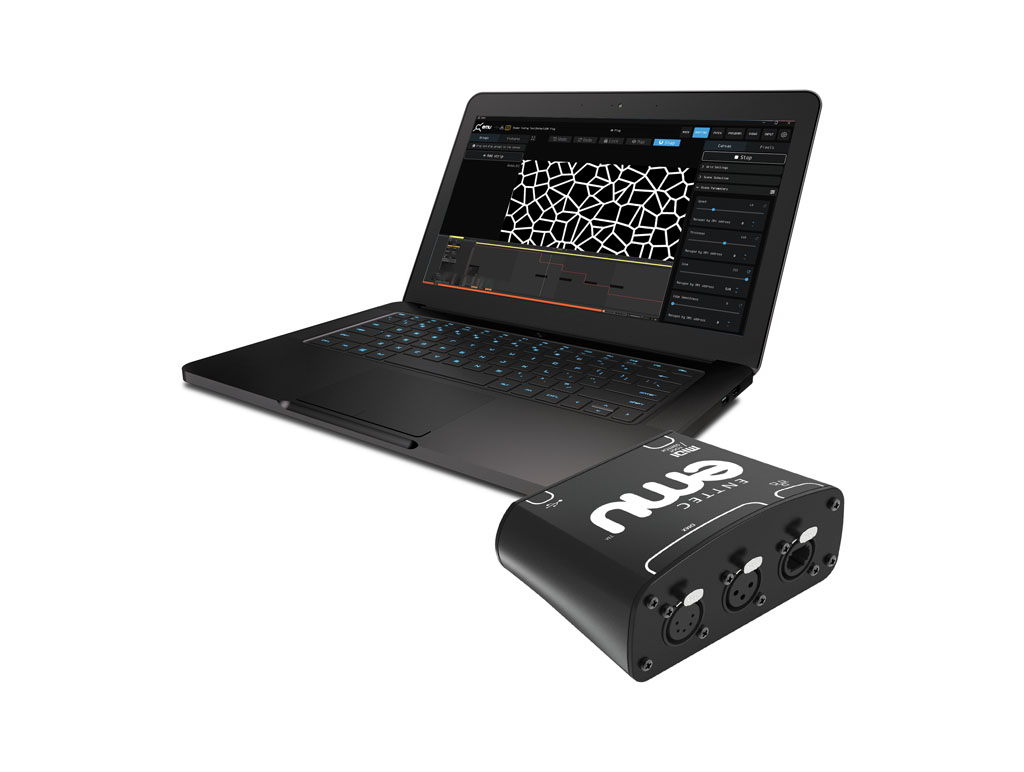
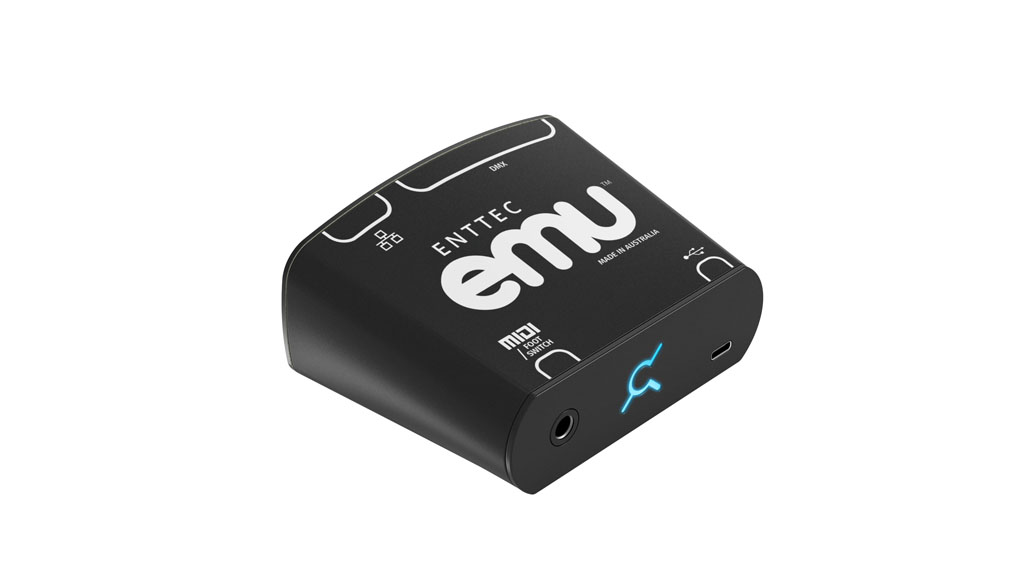
Unlike traditional lighting consoles which often require deep knowledge of DMX addressing, fixture profiles and programming logic, EMU was built around a familiar workflow for audio creators.
If you can automate a parameter in your DAW, trigger a MIDI controller, or adjust EQ on a mixer, then you can also control lighting.
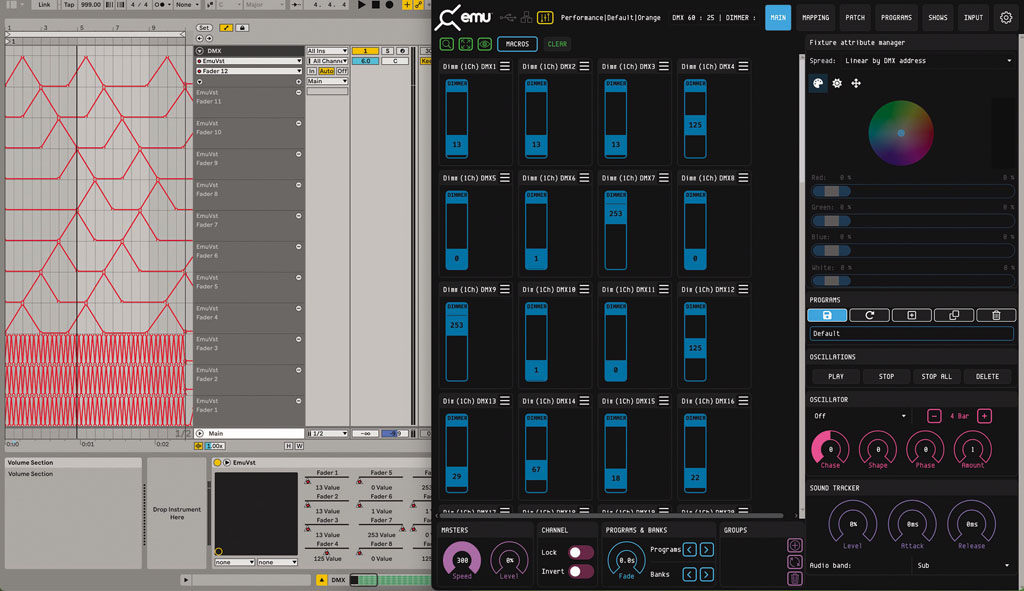
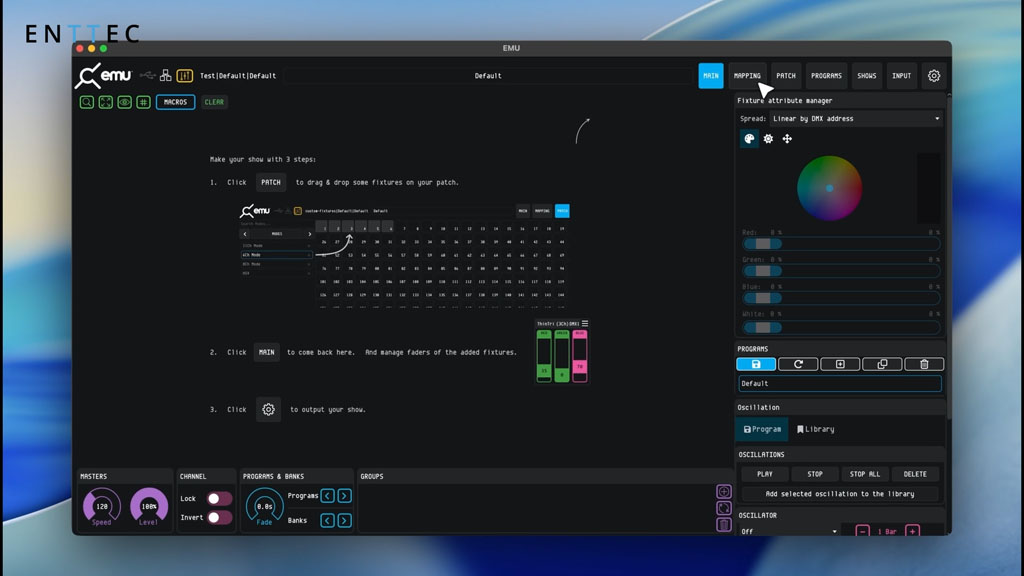
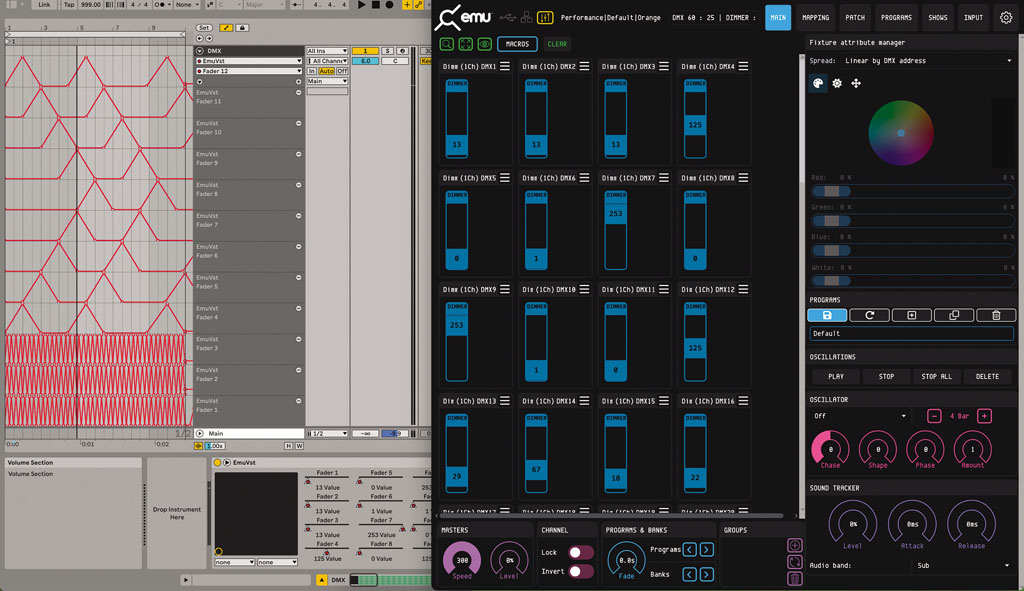
The software allows performers to pre‑program lighting cues, trigger them live via MIDI or footswitch, or synchronise lighting directly with their DAW through a VST plugin. That means lighting can evolve alongside a performance rather than running as a separate, fixed system.
For artists who perform solo or in smaller touring setups, that level of integration can be transformative. Instead of relying on a dedicated lighting operator, the performer becomes the visual director of their own show.
The rise of pixel‑based stages
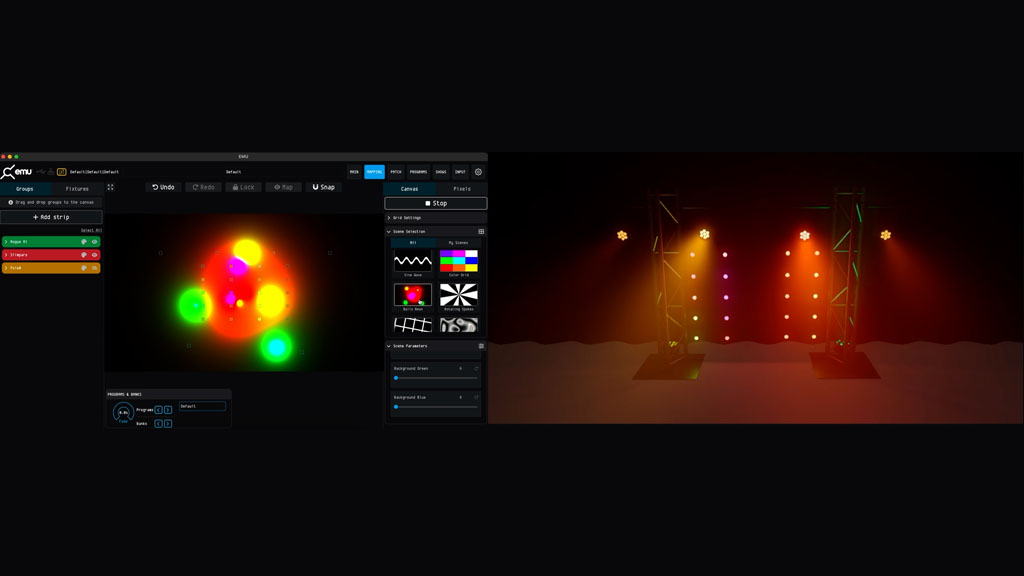
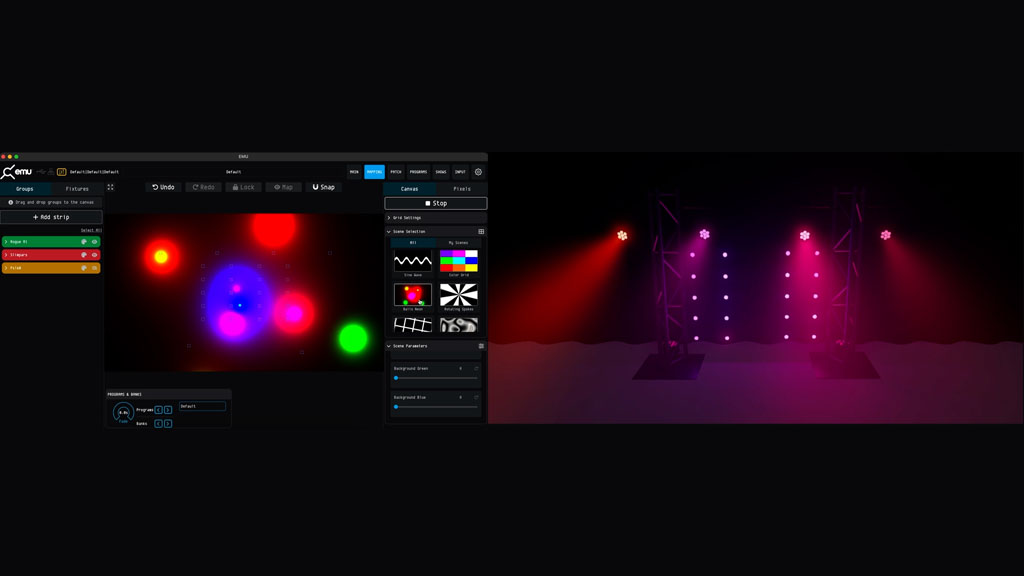
While traditional stage lighting often focused on fixtures such as PAR cans, strobes and moving heads, modern performances are increasingly built around LED pixels.
LED strips, panels and custom fixtures now appear everywhere: behind DJ booths, wrapped around instruments, embedded in stage sets, or even worn by performers themselves. These installations can contain hundreds, or even thousands of individual LEDs.
The concept of LED pixel mapping will be familiar to many lighting designers and programmers. For years, it has been used in large‑scale stage productions, architectural media façades and touring shows to create video‑style effects across arrays of LEDs.
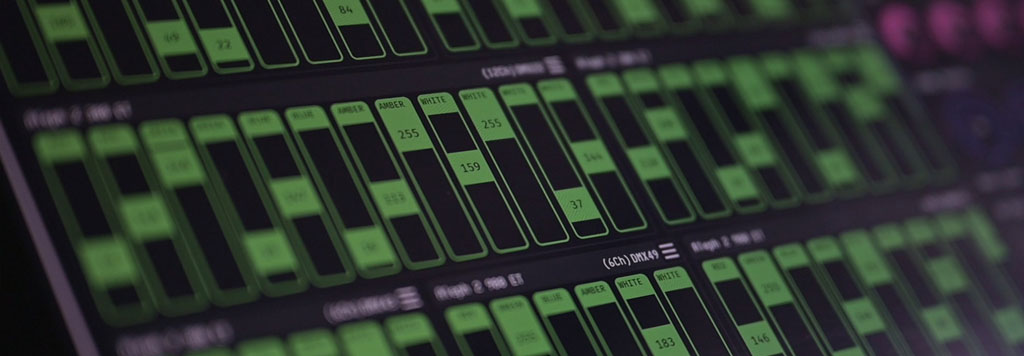
But for many musicians stepping into lighting control for the first time, pixel mapping can feel like an entirely new world. Programming individual pixels through conventional DMX workflows can be incredibly time‑consuming. Designing a two‑minute lighting sequence might require hours of detailed programming and a solid understanding of addressing, universes and fixture profiles.
That’s where newer tools are lowering the barrier to entry.
Painting light instead of programming it
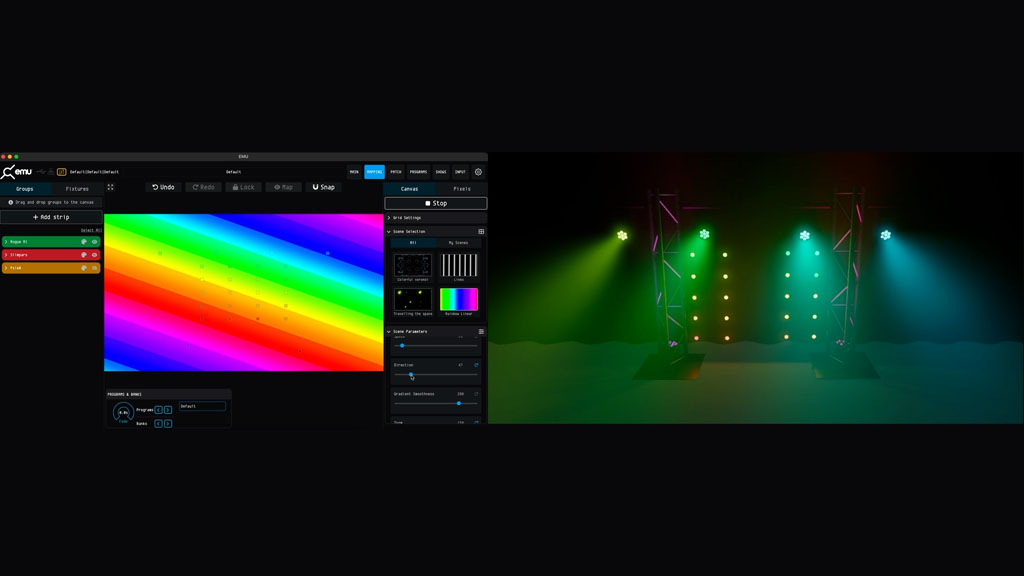
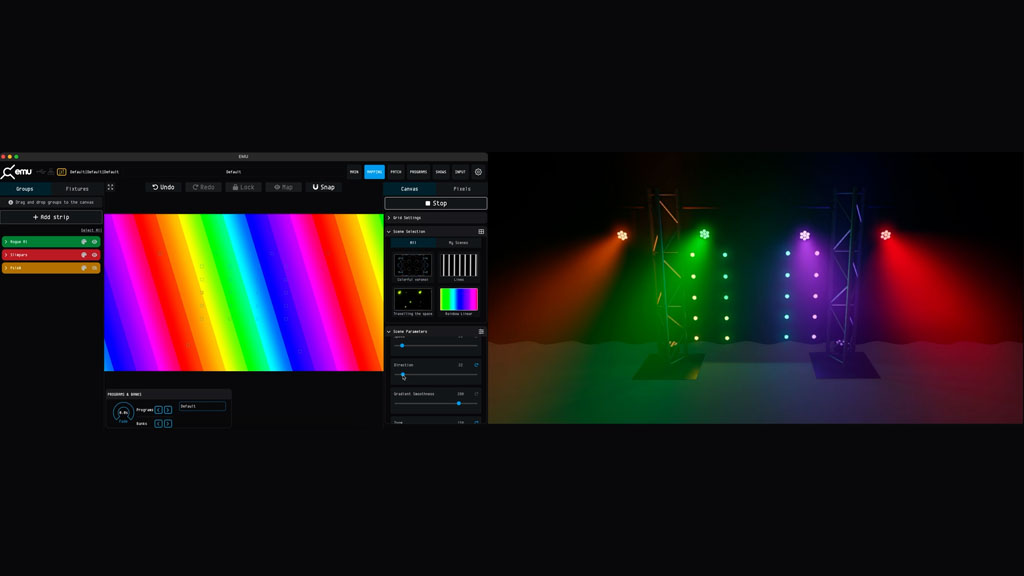
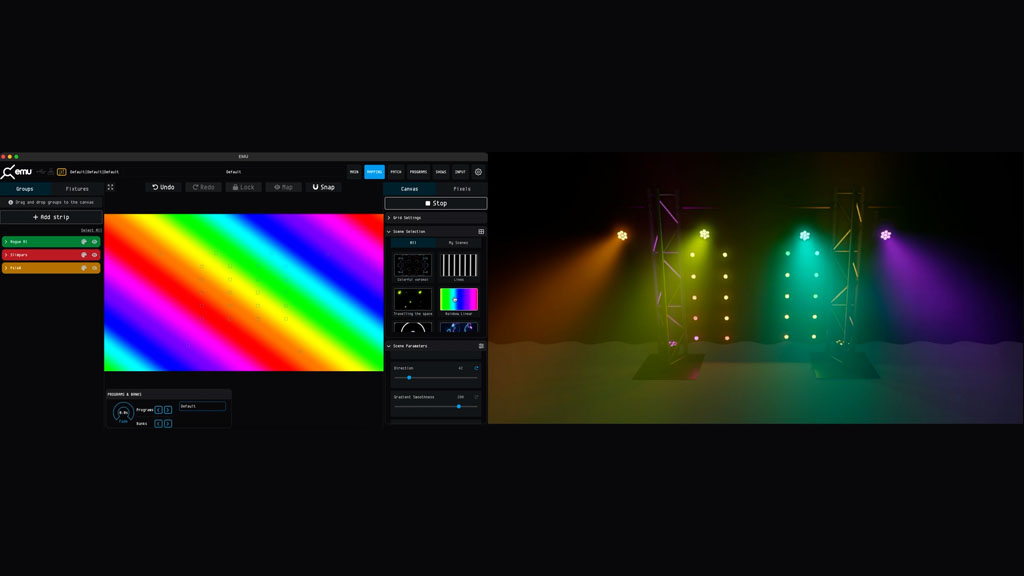
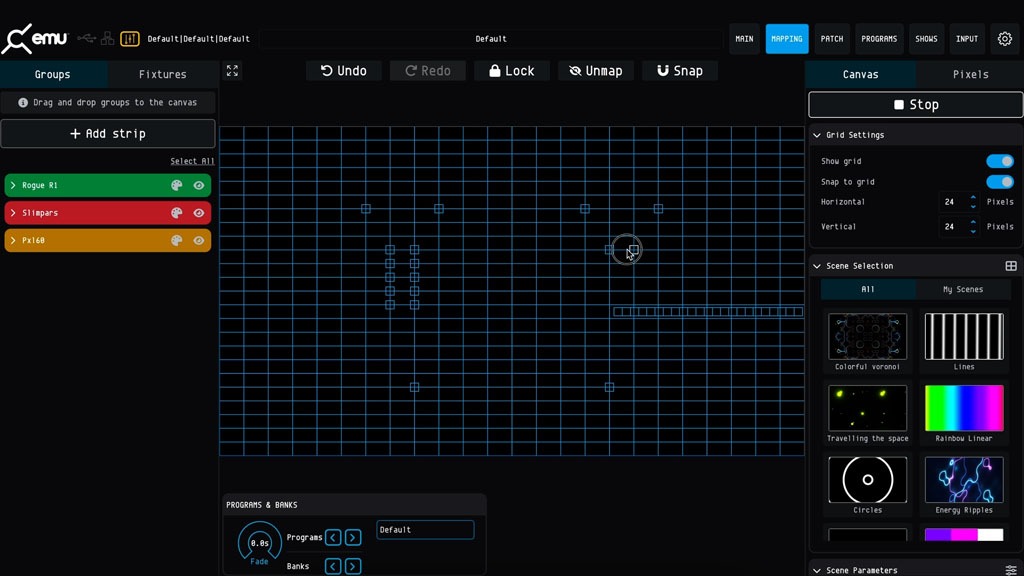
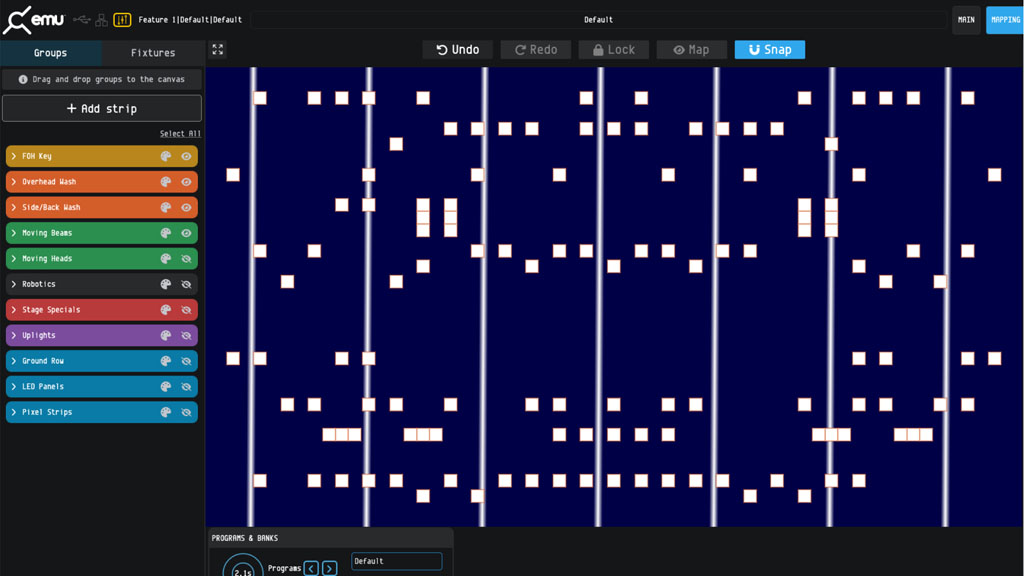
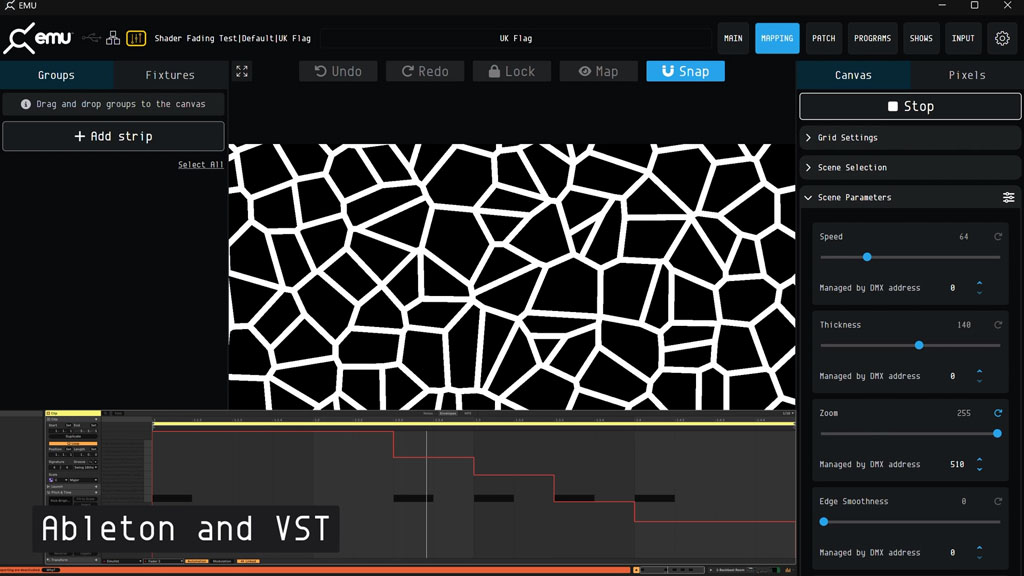
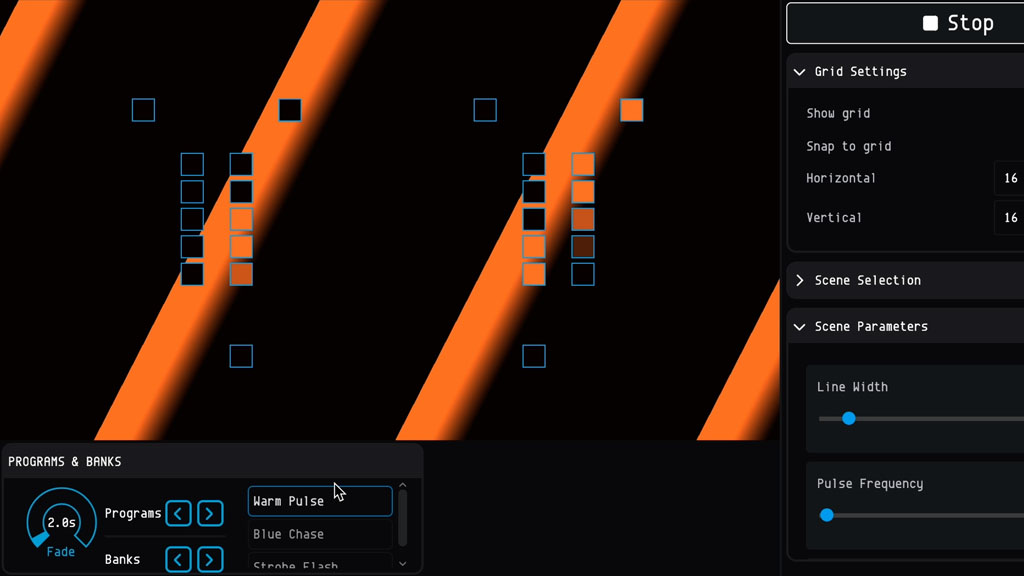
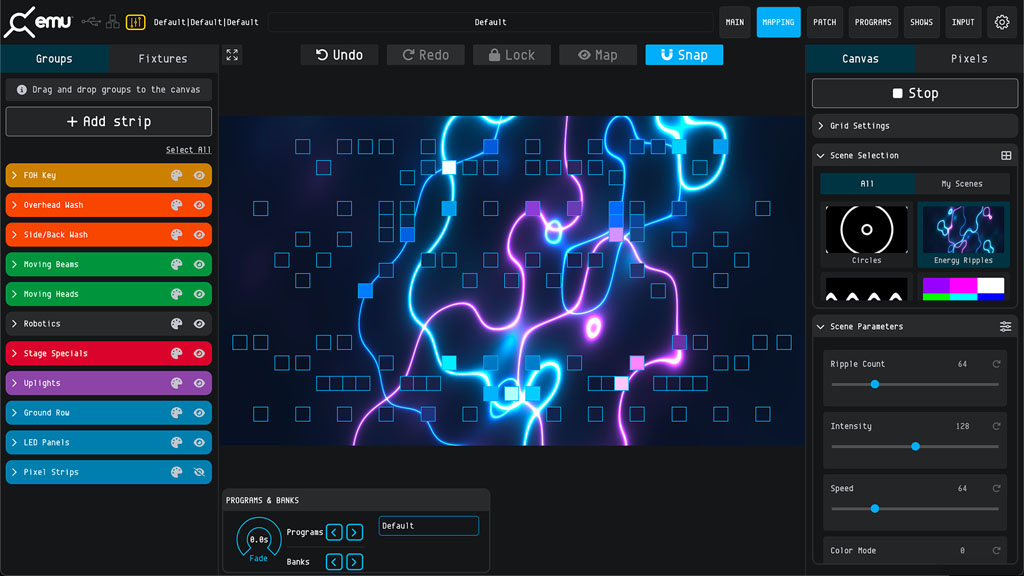
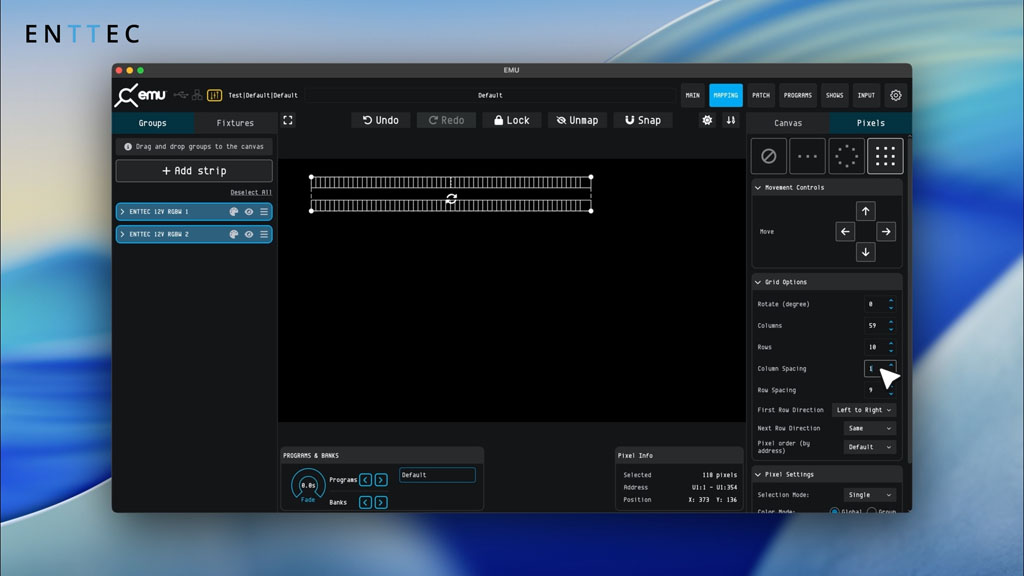
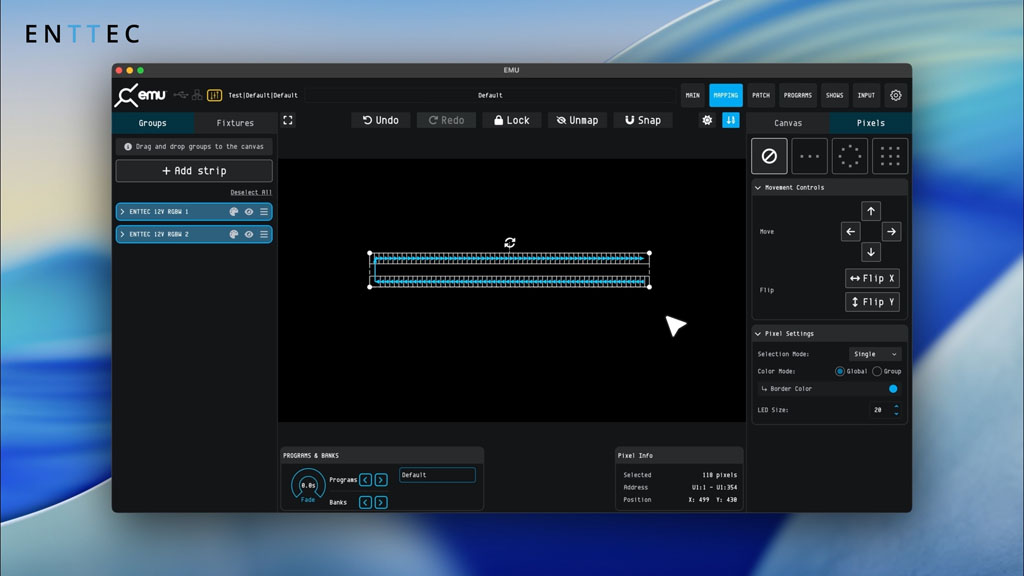
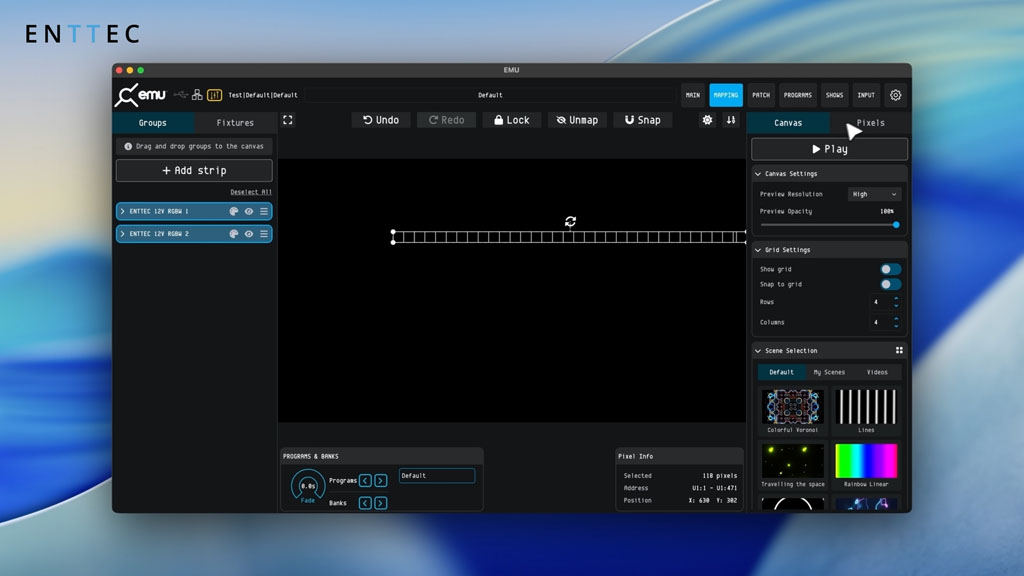
The latest update to EMU introduces a feature that many musicians have been asking for: visual LED mapping. Instead of thinking about DMX channels or fixture addresses, users simply drag their lights onto a virtual canvas that mirrors their real‑world stage setup. Once mapped, the lights behave like pixels on a screen. Effects can be drawn across the canvas, animated, and synced to the music in real time.
A ripple effect might sweep across LED strips behind the drummer. A wave of colour could travel across a wall of pixels as a bass drop hits. Video‑style shaders can generate complex motion patterns that react to tempo, MIDI signals or live audio. In other words, the lighting becomes another layer of the performance.
From programming to creativity
This shift from technical programming to visual design is arguably the biggest breakthrough. Musicians don’t want to spend weeks learning lighting protocols. They want to experiment creatively, and the LED mapping workflow reflects that mindset. Set up your fixtures, drag them into position, choose a scene or effect, and hit play.
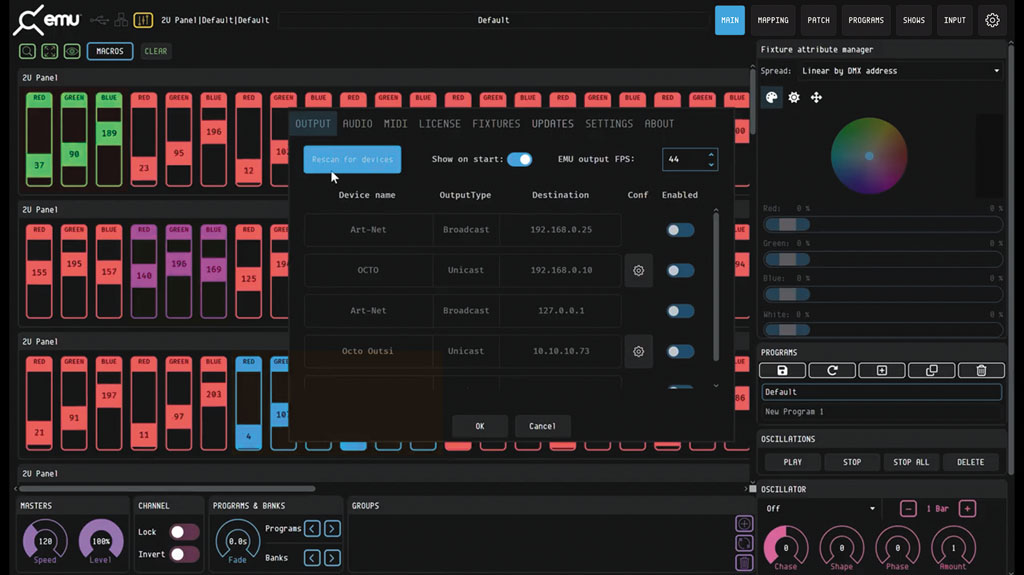
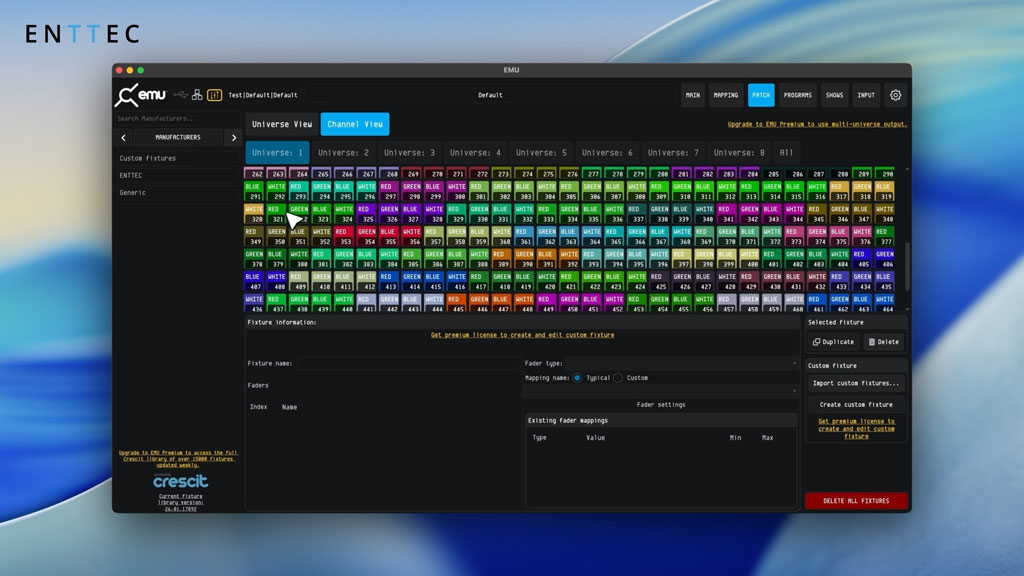
Under the hood, EMU handles the DMX translation, addressing, and output across multiple universes of control data. But to the user, the process feels more like working in graphic design or video software. In fact, many musicians describe it as “painting with light”.
Designed for the modern performance workflow
The software also integrates seamlessly with the tools musicians already use. Lighting parameters can be automated directly from a DAW timeline, meaning lighting cues can evolve alongside the arrangement of a track. MIDI controllers can manipulate colours, movement or scene parameters live on stage.
For performers who prefer audio‑reactive visuals, EMU’s sound‑tracking engine can analyse incoming audio and drive lighting effects based on frequency bands, intensity or rhythm. The result is a system where lighting behaves like part of the music rather than a separate technical layer.
Scaling from club stages to festivals
Despite its musician‑friendly interface, EMU still offers serious power under the hood.
The platform supports multiple universes of DMX output, allowing artists to control thousands of channels of lighting data when needed. That means a system originally built for club performers or touring bands can also scale to larger installations or festival stages.
And because the lighting show travels with the artist, simply stored inside the project file, the same visual identity can be recreated anywhere, from rehearsal studio to arena stage.
The future: visuals as part of the music
The most interesting aspect of this technology isn’t the software itself; it’s the cultural shift happening around it.
For a new generation of performers, lighting is no longer something added after the music is written. It’s becoming a part of the creative process. Artists now design visuals while composing tracks. Producers build lighting cues alongside arrangements. DJs integrate lighting control into their MIDI setups. In other words, the stage show is becoming another instrument.
With tools like LED mapping making complex lighting systems accessible to non‑specialists, this trend is only going to accelerate.
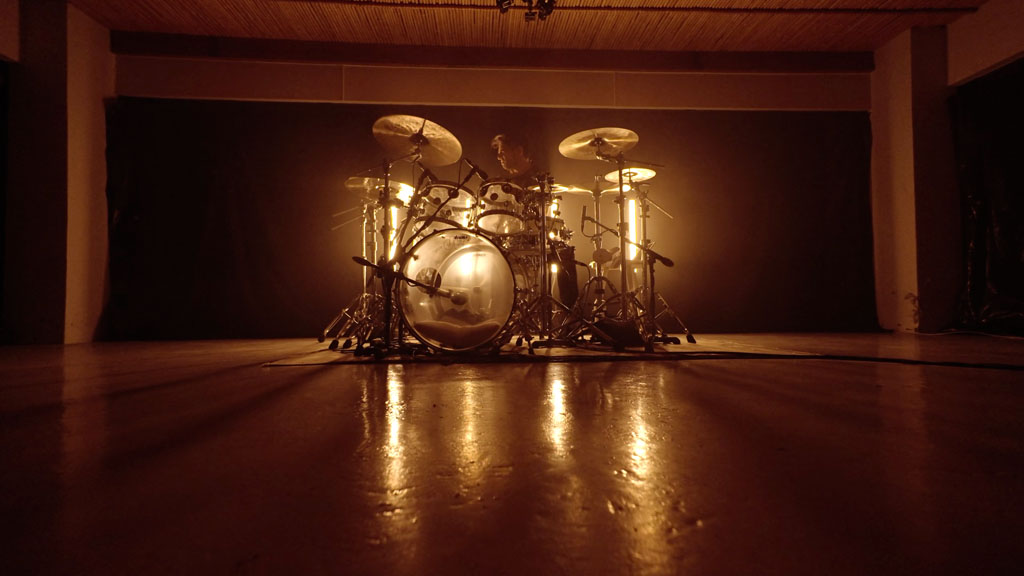
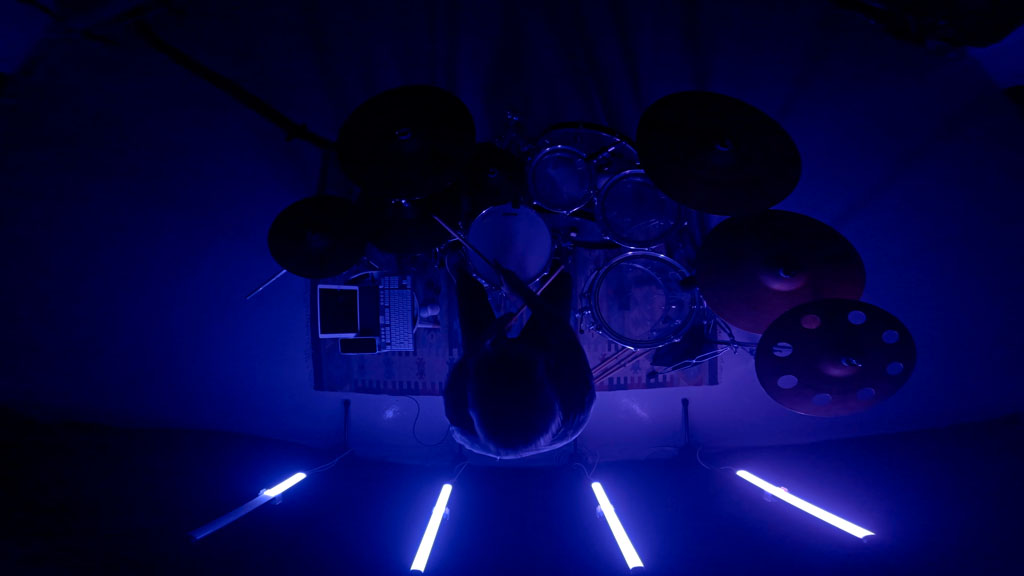
One musician currently exploring that territory is YouTube drummer Cobus Potgieter, whose high‑energy drum cover videos have amassed more than 300 million views online. Potgieter has recently begun experimenting with synchronising lighting directly with his performances using EMU, triggering lighting effects live from his drum playing via MIDI and DAW automation.
Demonstrations of these experiments are expected to begin appearing on Cobus’s social channels over the coming months, offering a glimpse of how musicians themselves might increasingly become the lighting programmers behind their own shows – so keep your eyes and ears peeled!
For musicians who want their performances to be heard and seen, the possibilities have never been brighter.
Subscribe
Published monthly since 1991, our famous AV industry magazine is free for download or pay for print. Subscribers also receive CX News, our free weekly email with the latest industry news and jobs.
Recent posts