LISTEN HERE
10 Nov 2026
Listen Here: When Passion Isn’t Enough

Subscribe to CX E-News
On loving your work, the value of experience, and the uncomfortable economics of a career in audio.
Every now and then, one of the younger crew who works here at The Mill will say something to me along the lines of, “Jeez, I wish I had your life… look at this place!”
On some level I understand why they say it, and what they mean by it – they’ve spent their entire lives looking at plug-in versions of half of this stuff, and when they see things ‘in the metal’ for the first time they’re naturally fascinated and excited. But while it’s all very flattering, the words ring quite hollow in my ears these days, and my response tends to confuse and disappoint them:
“Don’t follow in my footsteps, though, whatever you do!”
I say this half-jokingly, of course, mainly to deflect the flattery. But there’s a serious point behind it, too. I’m not sure I could recommend what I do – or what I’ve done – as a career path to anyone. After a lifetime in audio, with all the opportunities and success I’ve enjoyed, to find myself warning people away from the very career that’s given me so much feels almost tragic.
And it’s not because I don’t love what I do. Of course I do (in most respects, at least). That’s precisely what makes this conversation so difficult. I’m not warning people away from a profession I’ve come to despise, but one I love, because I’m no longer convinced that loving it is reason enough to pursue it. When people who’ve spent decades in an industry start discouraging others from following in their footsteps because they fear they’ll face the same poor pay and conditions – or worse – something has gone seriously wrong. What’s more troubling is that the wider audio industry seems oblivious to the problem, which is why it does nothing to address it.
Audio attracts people who are passionate about sound and music. Most of us didn’t enter this industry because we’d carefully researched its long-term earning potential, compared remuneration packages or calculated the return on our educational investment. We got into it because we loved music, were fascinated by the technology, or discovered that we had an aptitude for making things sound good. The prospect of spending our working lives around music was indeed fascinating enough that the practicalities could wait.
But that passion comes at a price.
We work late, sacrifice weekends, invest in equipment, spend years honing our skills and accept poorly paid work that people in other professions might refuse.
And because we care so much about the outcome, we’re often willing to give more than we’re paid for, and that commitment gradually becomes an expectation. Our passion, which should be one of our greatest professional assets, has too often become a means of extracting more from us for less. The industry has been benefiting from that arrangement for decades.
The price of doing what you love
One of the more frustrating aspects of working in audio for a long time is discovering that experience doesn’t necessarily translate into financial security. You might become better at your job every year, develop an extraordinary depth of knowledge, learn how to solve problems that would leave others scratching their heads, and still find yourself negotiating fees that barely reflect what you bring to the table.
The problem is that the value of an experienced operator can be difficult to recognise, largely because the importance of the role often becomes apparent only when something goes wrong.
Ironically, an experienced engineer may prevent many of these problems from occurring in the first place, leaving little visible evidence of their contribution. When everything works as it should, expertise can be almost invisible.

Audio equipment, on the other hand, is easier to value. We can point to a microphone, a console, a loudspeaker system or a particular piece of software and attach a price to it. Experience is harder to quantify (especially when it’s invisible). You can’t put it on a purchase order, and you can’t easily demonstrate its value to someone who doesn’t know what they’re listening for.
But if we can’t make a living from the knowledge we’ve spent decades acquiring, what incentive is there for the next generation to acquire it?
An industry built on goodwill
There’s another aspect of this that has always bothered me: the way audio professionals are sometimes regarded by the very people whose businesses depend on their expertise.
Venue owners and promoters have been crying poor for as long as I can remember. There’s always a reason why the budget won’t stretch to a decent fee, why the sound engineer should be prepared to do a little more for a little less, or why the person responsible for making an entire show sound good should be grateful simply to be involved. The negotiation often seems to begin with an assumption that the technical end of the business is somewhere costs can be cut.
Of course, venues and promoters operate under genuine financial pressures of their own. Running a venue or putting on a show isn’t necessarily a licence to print money, and budgets really can be tight. But it’s worth asking why the technical end of the business so often becomes the flexible part of the equation, and why the people responsible for delivering the sound are expected to absorb that pressure.
Then there’s the language. How often have you heard an audio professional casually referred to as a ‘soundie’? There’s nothing inherently wrong with the word, and plenty of people in the industry use it themselves. But context matters. Too often, it’s part of an attitude that diminishes the role, reducing a skilled professional to a vaguely defined technical function rather than recognising the experience, knowledge and responsibility the job entails.
But the point isn’t that we need grander titles. It’s that we seem remarkably comfortable with language that diminishes the people doing the work, while reserving the more respectable terminology for those who manage the budgets and own the businesses.
And language has consequences. When someone is repeatedly treated as an expendable service provider, rather than a skilled professional whose contribution is central to the success of an event, it becomes easier to justify paying them less. The low fee reinforces the perception that the work isn’t particularly valuable, and that perception in turn becomes the justification for the next low fee.
Eventually, the treatment and the remuneration start to validate one another. The person isn’t paid well because their contribution isn’t considered valuable; their contribution isn’t considered valuable because they’re not paid well, and so on.
But you can’t pay a mortgage with job satisfaction, and you can’t fund your retirement with the memory of a brilliant session.
Freelancers also have overheads that are easy to overlook. Equipment has to be bought and maintained, insurance paid, transport arranged, software licences renewed and time spent on the administration that surrounds the actual work. The hourly or daily rate a client sees is not the same as the money that ends up in someone’s pocket. Nor does a full working week necessarily translate into a full working week of paid work.
Even established professionals can find themselves caught in this cycle. They may have decades of experience and a reputation for delivering excellent results, but they still need to find the next job, negotiate the next fee and cover the next bill. Meanwhile, newcomers are often encouraged to accept low rates to gain experience, build a portfolio or get a ‘foot in the door’.
It’s a vicious cycle, one that’s difficult to break.
What are we asking the next generation to do?
When younger people work here at The Mill, I see the same fascination with sound and music that drew me into the industry. They’re curious, enthusiastic and eager to learn. They want to understand how things work, why one mix sounds better than another, and how to develop the skills that make an experienced engineer valuable.
But that enthusiasm shouldn’t be taken advantage of or used once again to prop up an industry that struggles to remunerate those skills properly. In short, the senior managers of our industry need to start addressing the financial shortfalls, because new apprentices can’t force a cultural shift on their own – they don’t wield that sort of power. And yet without new generations of audio engineers coming through the ranks, and without change, the industry is only going to degrade further: becoming more fragmented, less skilled, less professional and more poorly remunerated.
The economic circumstances facing young people today make this particularly difficult to ignore. A career that might once have offered a modest but workable living is a much harder proposition today when the cost of establishing a home, raising a family and putting something aside for the future continues to climb at a rate disproportionate to income growth.
It’s one thing to make sacrifices when you’re young and starting out. But there’s a difference between making a temporary sacrifice to build a career and being expected to make permanent financial compromises simply because you love your job.
There’s also a longer-term cost to getting this wrong. Experienced professionals carry an enormous amount of knowledge that isn’t necessarily written down or easily transferred through a manual or tutorial. Much of it comes from having encountered difficult situations and developed the judgement to recognise problems before they occur.
If the next generation can’t see a viable future in audio, some of that knowledge will disappear with the people who hold it. And once that knowledge is gone, it isn’t necessarily easy to get back.
Loving the work isn’t enough
I realise this might sound like a rather gloomy assessment of an industry that has given me plenty. That’s not my intention. I remain fascinated by sound and music, by solving problems, working with talented people and hearing the result when everything comes together. There are few things more satisfying than being part of a great recording or a live performance that connects with an audience.
I also recognise that no industry can guarantee financial security, and that any creative career involves risks. Nor should financial success be the only measure of a worthwhile working life. There’s enormous value in developing a craft and spending your time doing something that matters to you.
But there’s a difference between accepting the uncertainties of a creative career and accepting that the people who sustain it should routinely be underpaid. There’s a difference between loving your work and being expected to subsidise it with your time, expertise and financial future.
I don’t want to discourage young people from working in audio. I want them to have the opportunity to develop their skills, be recognised for what they contribute and earn enough to build a decent life around their work. I want experience to count for something, and those who benefit from it to understand its value.
That means challenging the assumption that low fees are simply part of the deal, being honest with apprentices about the realities of the business, and questioning the idea that long hours and personal sacrifice are badges of honour. It also means that those who own, run and profit from audio businesses should take greater responsibility for the future of the profession.
I know how fortunate I’ve been. I’ve had opportunities I could scarcely have imagined when I started out, and I’ve spent much of my life doing something I genuinely love. I wouldn’t exchange those experiences for a different career. But that doesn’t mean I can look at the industry’s economics and tell a young person that following the same path is necessarily a good idea.
When someone at The Mill tells me they wish they had my life, I understand why. I know how appealing it must look from the outside. But I also know what’s behind it: the years of work, the compromises, the uncertainty, and the uncomfortable realisation that loving something doesn’t automatically make it a sustainable way to earn a living.
I’d like the next generation to be able to love what they do without having to wonder whether that love is being used against them. I want them to inherit an industry that values experience, respects expertise and understands that passion is something to nurture, not exploit.
Surely, after all these years, that isn’t too much to ask.
—
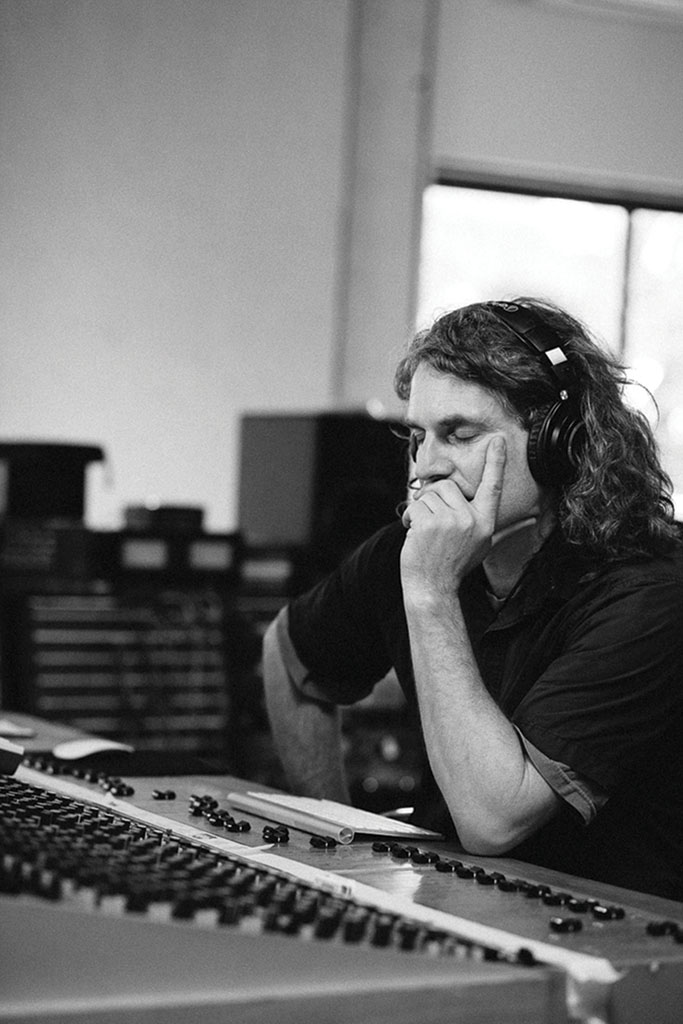
Andy Stewart owns and operates The Mill in Victoria, a world-class production, mixing and mastering facility. He’s happy to respond to any pleas for pro audio help … contact him at: andy@themill.net.au
—
Main Pic: PHOTO BY ADI GOLDSTEIN ON UNSPLASH
Subscribe
Published monthly since 1991, our famous AV industry magazine is free for download or pay for print. Subscribers also receive CX News, our free weekly email with the latest industry news and jobs.
Recent posts



Latest jobs