News
9 Nov 2026
d&b audiotechnik’s Planetshaking Soundscape
Subscribe to CX E-News
In early October, leading German PA manufacturer d&b audiotechnik ran a serious international operation in Melbourne through its APAC office. Concentrating mainly on the house of worship sector, d&b flew in representatives from 17 substantial churches across South-East Asia, plus d&b partners including Innosys, Illuminate and Sound Solution (South Korea), Louder Technologies (Indonesia), 808 International (Philippines), Soundsmith (Singapore) and Stage Audio Works (South Africa).
Joined by local guests from across the production, installation, venue, consultancy and worship sectors, and hosted by local distributor NAS, the delegates visited multiple local d&b installations in both sacred and secular spaces over a period of three days, culminating in a major event at Planetshakers Church in South Melbourne on Monday 5 October, showcasing its impressive d&b PA with immersive d&b Soundscape processing.
The event at Planetshakers was no mere meet-and-greet with a few tracks playing. This was a substantial deep dive into d&b’s philosophy and technology, with an in-depth session on the installed system, listening exercises and a Soundscape mixing workshop with Planetshakers’ Production Manager Terence Ong and NAS’s Dave Jacques, an expert worship audio mixer with a Grammy to his name for that very thing (which he really doesn’t enjoy us reminding people about).
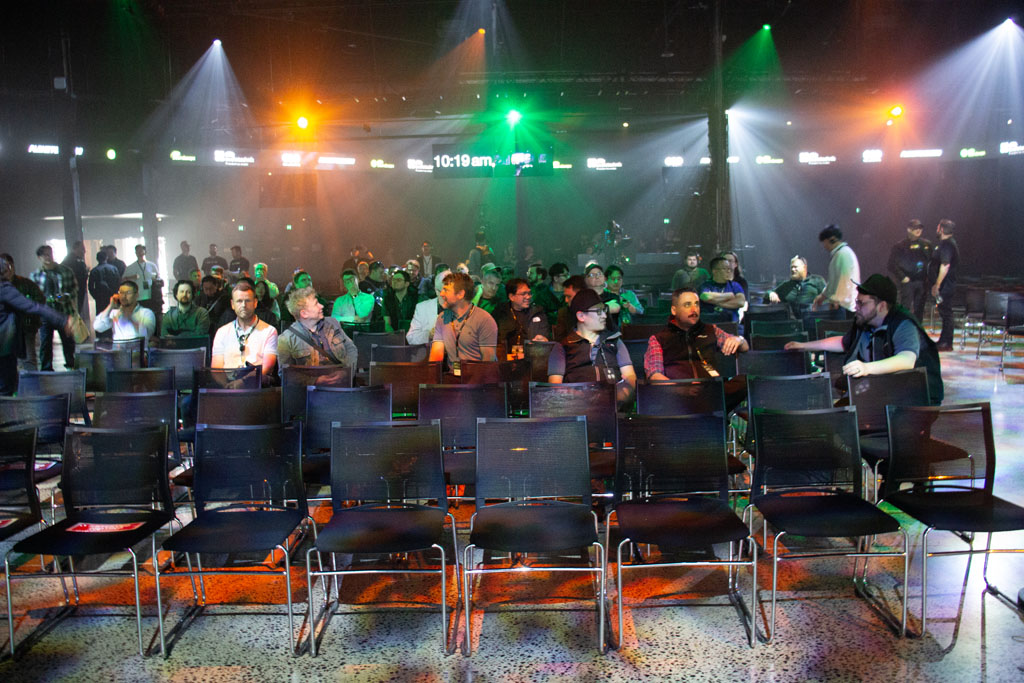
As we entered the auditorium, a gentle soundscape of a forest environment played. We were welcomed by NAS’s Director Shane Bailey, heard from d&b’s APAC Territory Manager and President Marco Baumgärtner, and got deep into the detail with Dave Jacques.
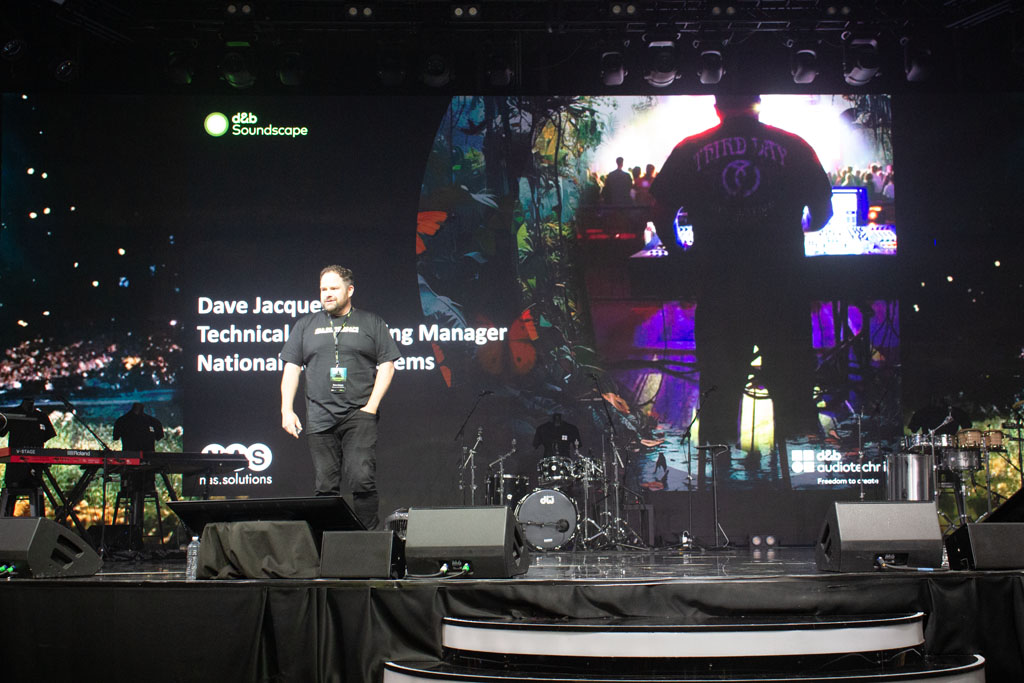
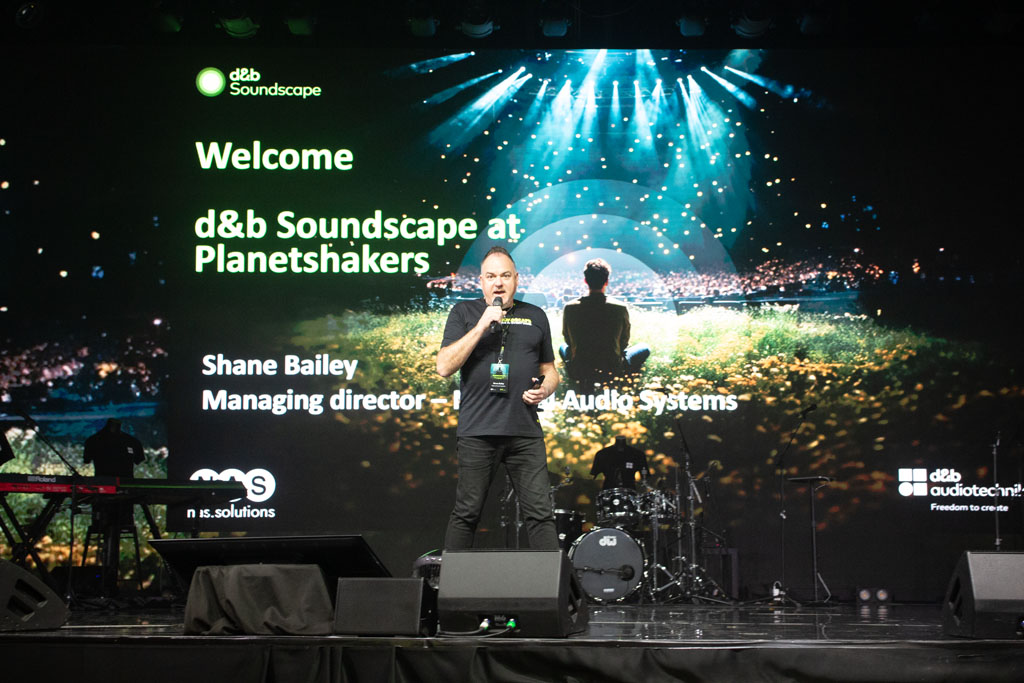
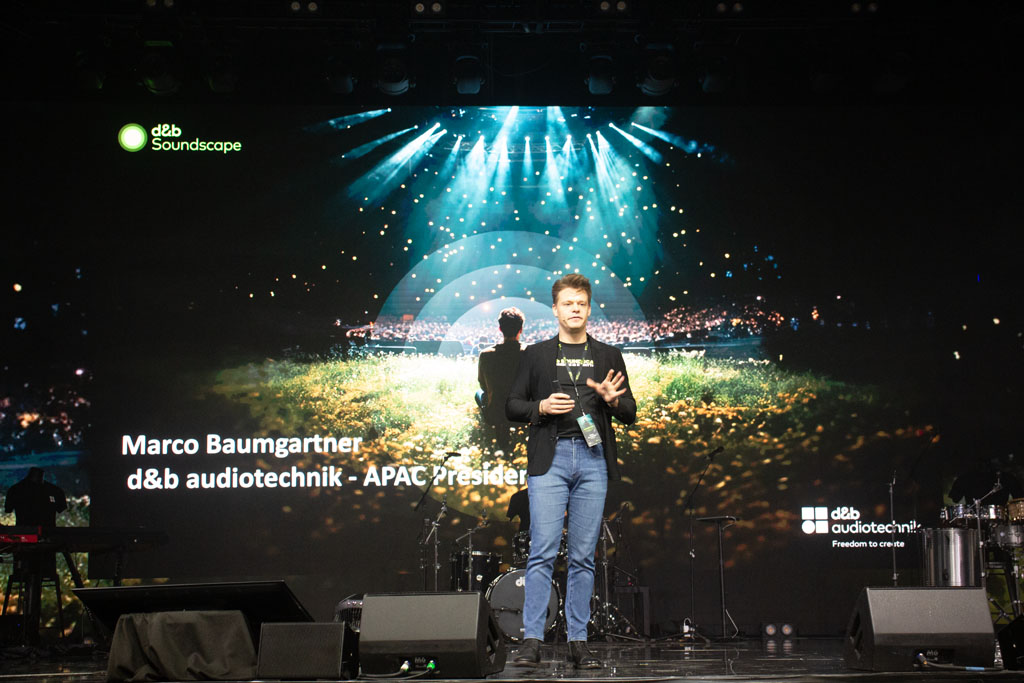
Dave demonstrated both the En-Scene (object-oriented mixing) and En-Space (acoustic enhancement) capabilities of Soundscape. I’ve said it before and I’ll say it again: object-oriented mixing makes me never want to hear stereo again. Even if you’re not using it to make objects fly around the room, its simple advantage of increasing the imaging sweet spot in the room from about 5% in the middle to up to about 90% of the auditorium is worth it. Then there’s the fact that it makes your brain identify the sound source as coming from the source, not just the loudspeaker nearest to your head. It is a better way to amplify both speech and music, and a vastly better way to hear it.
Dave used several real-world examples from his own live work and let us prowl the room doing A/B comparisons. It was a generous and open way to share technical information, especially about material and techniques that are so obviously close to Dave’s heart.
Then Dave let Terence Ong do what he does best in his own venue, mixing a huge worship band to incredible effect. Well, it was a multitrack, but between Terence’s skill and the Soundscape system, it was indistinguishable from the real, and very loud, thing.
I have to give it up to the NAS team that designed and installed the system at Planetshakers South Melbourne, with input from Planetshakers staff. In particular, the subwoofer deployment is the most musical I have ever heard. The subs, and indeed the whole system, have a more-than-generous amount of headroom. There are 10 flown subs and 10 built under the stage, and the result is stunning.
While it’s easy to get caught up in the purist audio position that Soundscape provides superior results, there are also hard-headed practical and economic reasons for venues to consider the technology.
The shorter PA hangs, due to the system’s distributed nature, mean better sightlines. The distribution of the loudspeakers also means you can use more lower-powered boxes instead of more expensive higher-powered boxes and their attendant amplification. You also increase the number of seats that get coverage. A beautiful Soundscape system is usually cost-neutral compared to a powerful left-right system and can often be cheaper. Hallelujah!
—
Planetshakers Melbourne – The System
FOH
- Five hangs of 6-box XSL arrays (20 × XSL8, 10 × XSL12)
- 10 flown KSL subs 10 floor SL subs Fills
- Four V7P outfills and an outfill delay
- 12 8S front fills Four Y10P delays
Surrounds
- 28 10S loudspeakers
Monitors
- Four M6 monitors
Electronics
- Two D25 amplifiers (delays/monitors) 21 D40 amplifiers (flown system)
- Five D90 amplifiers (floor subs)
- 10 5D amplifiers (front fills and surrounds)
- One DS100M processor, 128 in × 64 out, with En-Space
- Two RME M32DA units performing Milan-to-analogue conversion for the 5D amplifiers
- Klark Teknik DN9650s converting the AES50 signal from the Midas digital mixer to MADI inputs for the DS100M
Subscribe
Published monthly since 1991, our famous AV industry magazine is free for download or pay for print. Subscribers also receive CX News, our free weekly email with the latest industry news and jobs.
Recent posts

Latest jobs