PEOPLE
5 Oct 2026
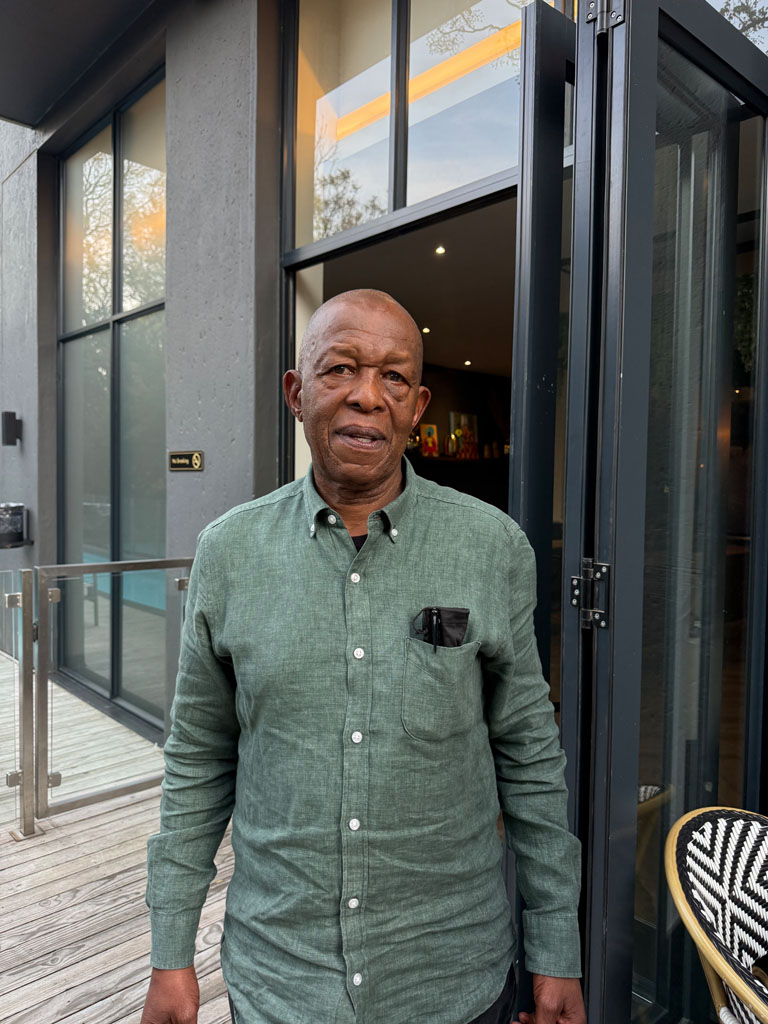
Freddie Nyathela fights on
Subscribe to CX E-News
Black crew in South Africa STILL face discrimination
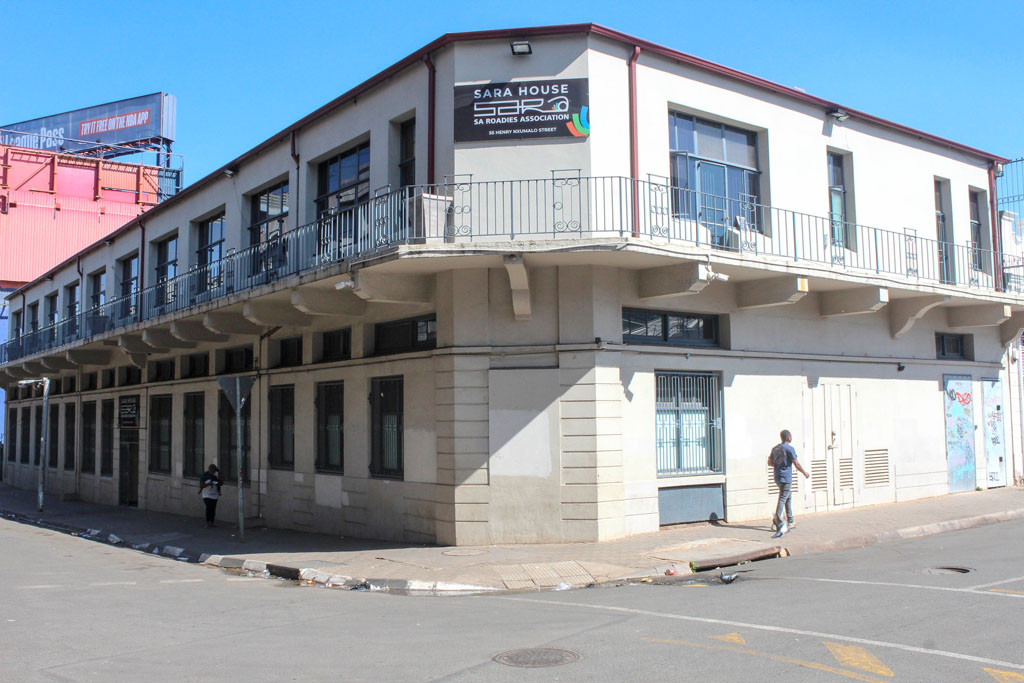
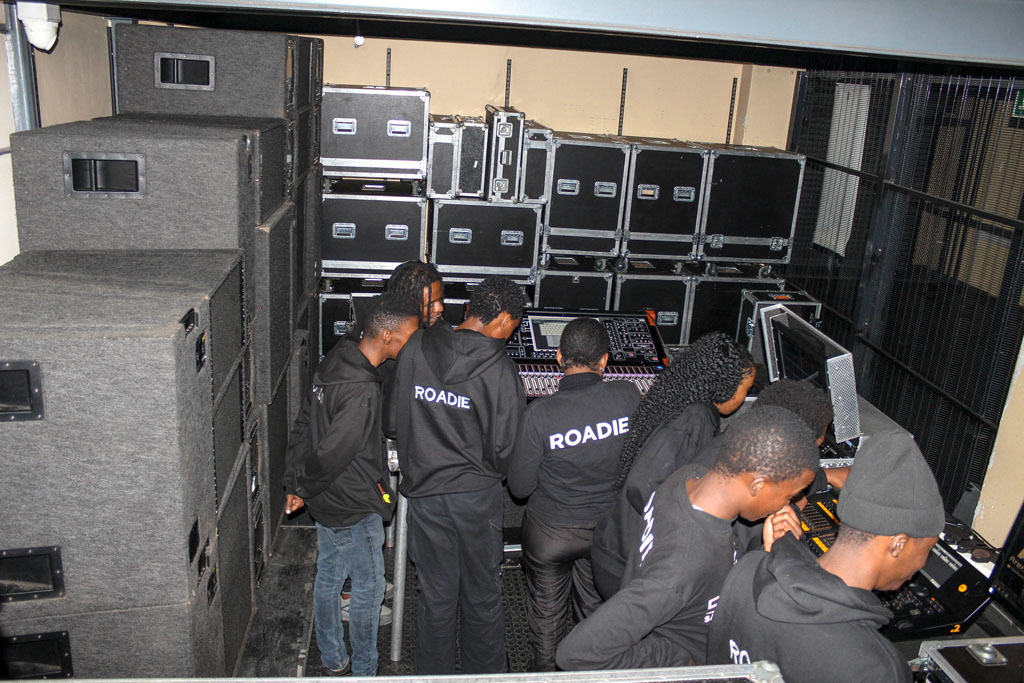
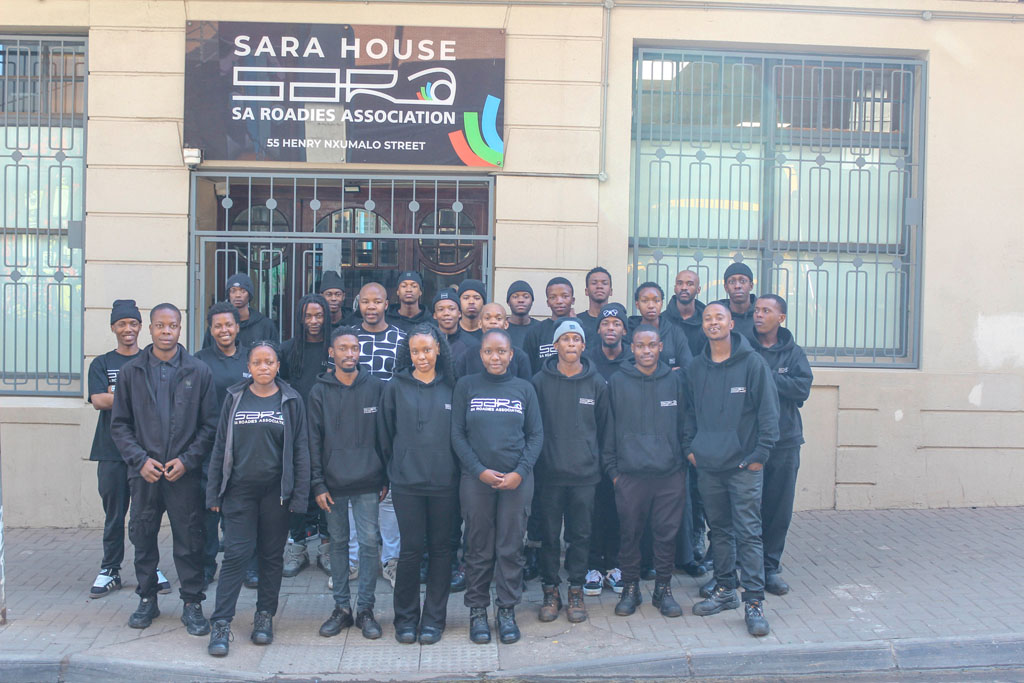
In Johannesburg’s Newtown Cultural Precinct, the South African Roadies Association (SARA) occupies a two-storey building dedicated to something that should no longer be remarkable: training young black South Africans to work as skilled technicians in their country’s live production industry.
Yet more than three decades after the end of apartheid, SARA says black technical crew still face barriers to training and employment that should have disappeared with the old regime.
The history matters. The white minority government of F. W. de Klerk began dismantling apartheid from 1990, and Nelson Mandela won the 1994 election to form South Africa’s first democratic government amid international celebration.
Apartheid had been insidiously disastrous for the majority black and coloured population. People were legally prevented from ‘mixed’ marriages, whole communities were forcibly removed under the Group Areas Act, segregation was brutally enforced and protesters were shot – often as they ran from police. International sanctions created economic pressure while internal revolts, protests and strikes increasingly disrupted the apartheid state.
Since 1994, South Africa’s political landscape has moved from overwhelming ANC dominance to a fractured, competitive multi-party democracy marked by factionalism, public disillusionment and shifting coalitions.
This is the world in which Freddie Nyathela came into the music business.
In the early 1980s he was doing sound for Harari, the pioneering Soweto funk/rock band and one of the first major black South African acts to own its own equipment. Freddie worked as their backline and sound guy on a 16-channel Soundcraft.
Harari drummer Sipho “Hotstix” Mabuse eventually went solo – he remains one of South Africa’s biggest names – and Freddie followed as his tour manager and front-of-house technician.
By then Freddie knew his craft. He had also seen the racial imbalance on the technical side up close: black workers relegated to hauling equipment as porters, not permitted to connect or operate it, and denied the opportunity to learn on the job.
Freddie decided to fight back.
He was born and bred in Soweto, the enormous township within Johannesburg, home to people from virtually all of South Africa’s indigenous ethnic groups, with Zulu, Xhosa and Sotho among its major languages.
Nelson Mandela and Desmond Tutu both lived there, famously on the same street.
Soweto is synonymous with black resistance. Its history of protest and struggle runs through modern South Africa.
Working with Harari and Mabuse gave Freddie a view almost no other black South African had: the performers on stage were black, but the crews, the consoles, the rental houses – almost the entire technical infrastructure behind them – were white.
Apartheid had effectively locked black people out of the trade. There was little exposure, no meaningful training pathway and almost nowhere to learn.
FIGHT TO EXIST
In 1992, as South Africa’s political transition was underway, Freddie and a handful of fellow roadies formed the South African Roadies Association.
Initially it was exactly what the name suggests: an association of working crew, built around the idea that live production was a real industry capable of giving unemployed township youth skills and careers. SARA formally registered in 1995.
The early going was rough. By Freddie’s account there was “serious resistance” locally, so SARA looked overseas.
The Irish government’s overseas service agency helped first, funding an Irish trainer to deliver SARA’s first intensive live sound course in 1997. The Dutch education ministry followed, with trainers drawn from Mojo Concerts, the promoter behind North Sea Jazz and Lowlands. The French Institute backed an annual lighting course, the British Council supported backline training, and the Norwegians funded stage management.
SARA students were placed on crews at Roskilde, North Sea Jazz and Norwegian festivals, and, from 2002, with the Atlanta-based Universoul Circus.
Freddie puts 80% of the support that built SARA at the feet of the international community rather than the South African government.
Through the 1990s and 2000s it evolved from a crew association into a training organisation that has now put more than 2,000 graduates through its doors.
Then came the Lottery-funded purchase of SARA House in 2003, an accredited one-year certificate and a claim Freddie makes with some justice: that SARA pioneered South Africa’s first national certificate in live event technical production, at NQF Level 4.
In 2010 he visited Julius Events College in Sydney, sponsored by Quest, after visiting WAAPA in Perth, attempting to arrange an exchange programme for SARA students. His visit was written up in CX Magazine – an article he credits with helping bring some of the limited government support SARA subsequently received. More on that later.
Like almost everything else, SARA’s progress has been uphill. Quest donated loudspeakers, while manufacturers including Yamaha and Nexo contributed equipment. SARA now owns a useful inventory of PA, backline and other production equipment which it rents commercially to help fund its operation.
Yet Freddie says the old racial problems continue to hold things back. But why? We went to Johannesburg to ask him.
“What is unfortunate is that even our senior government public servants from the relevant department, who should be supporting what SARA is doing in empowering youth with these critical technical and production skills, are making it difficult.
“They are blocking the redress of past injustices in education, training and employment opportunities. That block is still there,” he said.
“The only reason I can give is that it perpetuates the pre-1994 agenda. That’s why we now have to deal with these issues through the courts.
“Our constitutional rights have been trampled on, especially the youth’s rights of access to employment and training. We see the suppression of Section 10 of the Bill of Rights, which says everyone has inherent dignity; Section 16, freedom of expression; Section 29, education; Section 22, freedom of trade, occupation and profession; and Section 33, just administrative action.
“There has been a lot of abuse of public power by our own senior black public servants.”
DARK FORCES
In 2017 this masthead attended a conference hosted by SARA in Johannesburg where many of these issues were ventilated. We were also backgrounded against SARA, which happens in media. There were accusations and stories, and they came from white people within the industry. We chased leads, spoke to people and filtered the noise. Nothing stuck.
There were no documents, no witnesses prepared to be named and nothing that survived scrutiny – just an industry talking to itself. Nearly a decade later, not much has changed. Is SARA itself part of the problem? We put that directly to Freddie.
“The problem is wider, but it is also about SARA, because SARA is a unique, black training organisation, and some people cannot accept that black people can deliver technical skills training.
“That comes from our history. The majority of black people were never exposed to this industry.”
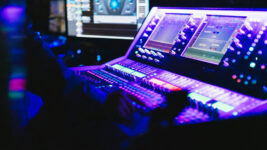
On the sidelines of that 2017 conference, white production managers described to us the resistance they said SARA faced. For the opening and closing ceremonies of the 2009 FIFA Confederations Cup and the 2010 FIFA World Cup, event organisers were contractually required to hire black crew. Freddie put 140 crew to work – and later pulled them when a deal involving two donated DiGiCo consoles for SARA was reneged upon.
The $80,000 consoles were promptly delivered, and the show went on. Conference participants also alleged that when major international acts toured South Africa, some local promoters and suppliers resisted engaging SARA crew and agreements were dishonoured. Accounts were given naming major South African companies, with allegations of outright bias and discrimination.
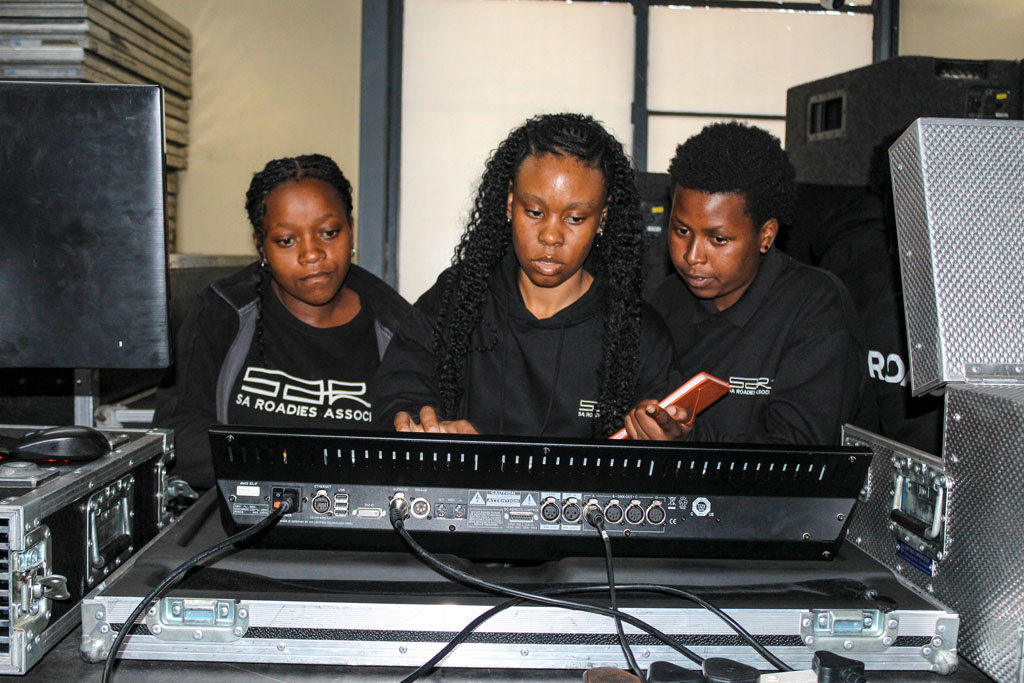
Progress, Freddie argues, remains glacial. Recently things have become worse amid government infighting. Yet SARA pushes on, enrolling 35 students this year in its one-year certificate course. Ten are women, and the completion rate is a healthy 80%.
So who pays for their training?
Freddie pauses, looking into the distance. “That’s been the problem. Even though SARA is an accredited not-for-profit training organisation, for more than six years the government has not provided the relevant education and training support.
“For the past six years we have provided this training free of charge to our young people, because we have no choice. For the past three years we have received no funding at all. There has been a mission to stifle and squeeze this organisation!”
Something changed three years ago. Why?
“They just blocked it. All of them. It’s abuse of power, driven by jealousy and animosity. And because we don’t play the corrupt game where they come and say, ‘we’ll give you one million, and you give us three hundred on the side’. That kind of corruption has become rife in South Africa.”
The building, at least, is renovated. Which led to the next fight.
“We applied to the National Lotteries Commission for furniture, computers and technical equipment for the lecture rooms and offices – fifteen million rand. There were delays, and then suddenly they want to give us nine million, with no reasons. We know it’s deliberate; they don’t want the programme to succeed.
“We are working on it and we will overcome it. But blocking this support means youth from disadvantaged communities don’t get access to the tools of learning and trade, while there are funds dedicated exactly for that.”
OBFUSCATION
“The act of making something unclear, confusing, or hard to understand on purpose.”
The National Lotteries Commission (NLC) told this masthead a different story – and told it at length. In a detailed written response, the Commission says SARA applied in March 2025 and that, after assessment, a site visit and repeated requests for information, a grant of R9,784,536 was approved.
A grant agreement was sent to SARA on 7 May 2026. SARA, the Commission says, did not accept the offer within the 30 days allowed by the regulations. It also says only two of SARA’s five directors completed the required electronic declarations, so the agreement never became operational.
“The remaining impediment to payment was not any further delay by the NLC,” the Commission states, “but SARA’s refusal or failure to accept the approved allocation.”
It “rejects, unequivocally and in the strongest possible terms” any suggestion that it corrupted due process or acted unlawfully, and notes that an approved allocation does not automatically result in payment.
But there is an awkward detail in the Commission’s own chronology.
Its timeline records an application lodged in March 2025 which was not allocated to a grant officer until November 2025 – some eight months later. The NLC attributes that delay to the first implementation cycle of a new electronic grants system.
Nyathela is unmoved. SARA declined the R9.78 million, he says, because the Commission gave no reasons for cutting the R15.7 million request and never responded to SARA’s mitigation letter.
On the directors’ declarations, he alleges the Commission’s system was “abused to sabotage SARA’s compliant application.”
SARA has now taken the matter to Parliament’s Portfolio Committee on Trade, Industry and Competition and awaits its guidance. The wider funding bodies see things differently too.
SARA’s claims have been disputed in Parliament and by the departments of Sport, Arts and Culture and Higher Education, and several matters remain before the courts. Both departments were approached for comment, as was the President of South Africa. No response was received.
NO MONEY: FREE COURSES
With no funding for three years, how does SARA actually run its courses? “We managed to raise funds over the years and purchase some equipment like backline, LED screens and so on, and former graduates who run their own companies come and hire it from us. And we had the big Nexo donation, about a million rand of amplifiers, made possible by Nexo in France after their people visited SARA House two years back.”
So where do SARA graduates go for work? “They find freelance and permanent work with equipment hire companies; some in broadcasting, filming and conference venues; some in churches – today’s churches have installed audio and LED screens. Some SARA graduates now own small production companies of their own and create jobs for others. And a lot are overseas – the USA, Europe, the Middle East, and on cruise ships. The Middle East is a melting pot: it doesn’t matter where you come from, only whether your skills are good.”
For Freddie, the battle has moved from the loading dock and the training room to the courtroom. “Through our struggles we have come to accept that the only way to bring change, break these barriers and stop this abuse of public power against SARA is through the law, especially because the matters that affect us speak to the Bill of Rights. We currently have matters already in court. The challenge is paying the legal fees. But the law, the Constitution and the truth are on our side. Sometimes I cry inside.”
The fight has now come full circle. The Office of the Public Protector, whose intervention under Busisiwe Mkhwebane finally forced the renovation of SARA House, closed SARA’s complaint against the department in July. Nyathela’s response was startling.
In August he walked into Johannesburg Central police station and laid a criminal complaint against the current Public Protector, Advocate Kholeka Gcaleka, alleging her report misrepresented the Auditor-General’s findings.
In a sworn affidavit, he puts SARA’s blocked funding at just over R16 million – around A$1.4 million – across the Backstage Academy South Africa project, SARA’s international programme, operations and its conference.
The complaint sits with the police Serious Commercial Crime Unit. There is documentary ballast to his grievance. The Auditor-General’s own draft finding, disclosed to SARA, recorded that the department had accepted SARA’s accounting for the first tranche of Academy funding and described the department’s move to claw back unspent funds as inappropriate while the project was still in its initial phase.
That does not resolve the wider dispute. But whatever comes of the criminal complaint, the symbolism is stark: the man once saved by the Public Protector is now at war with the office itself.
DREAMING OF THE FUTURE
Freddie sought out CX for this story.
“An article – because it’s people from outside who are concerned – this gets media attention.
Australia talking about the cause in South Africa; they don’t want bad publicity here. There’s a lot of power in that.”
From SARA’s experience, Freddie believes that under a democratic, black-led government some things are sliding backwards in South Africa.
We put that proposition to him. “Absolutely, and it’s not only me saying it. Civil society is standing up, community organisations, senior intellectuals forming movements to challenge what is going on. When you even hear some black people saying ‘it was better under apartheid’ – these are disturbing words and you must know things are not moving in the right direction.”
Freddie’s vision of what SARA could become is considerably larger than the organisation occupying this Johannesburg building today. “If the relevant departments were supportive, SARA would have satellites in all nine provinces by now. We would have a people’s Backstage Academy of South Africa, hosting students from Ghana, Nigeria, Botswana, the SADC region, because there is none of this training for live events technical production elsewhere.
“SARA is regarded as the leader in Africa in this field. So you ask yourself: why would you not support a programme that empowers youth with the very skills black people were deprived of under apartheid? That is what drove me to form SARA. And it was SARA that initiated the currently existing qualification for live events technical production in South Africa. Eighty per cent of the support that got SARA here came from the international community.”
The Backstage Academy ambition is no throwaway line. SARA has been working with the UK’s Academy of Live Technology – the training arm of the Production Park campus in Yorkshire that crews some of the world’s biggest tours – towards a purpose-built pan-African training centre.
In September 2023 it convened the first Live Tech Edu Summit in Johannesburg to begin registering South African live events qualifications from Level 4 to Level 8 – certificate through to degree.
Notably, the summit’s own publicity credited the strategic and financial support of the national arts department for getting the Academy off the ground.
That was before the money stopped, and before the department moved to claw back what it had committed – the dispute now at the heart of SARA’s court battles.
SARA House itself tells the story in miniature. It was once a medical arts centre owned by the late Dr Howitz and was on the market for four million rand. “When he heard what we were doing, he said: for you, one million, because of the youth empowerment work.”
A National Lottery grant bought it in late 2003. In 2006 the national department committed in writing to renovate it. It took eleven years, intervention by the Public Protector and a change of minister before that commitment was delivered. The building still lacks furniture and fit-out. That is what the contested Lottery application was intended to provide.
“This is where young people are empowered to acquire technical and production skills. Where the African child can learn these skills in a safe and secure environment.”
Thirty-four years since a Harari sound guy decided to fight back, the fight is nearly all that’s left to fund.
The class of 2026 – thirty-five of them, ten women – study on regardless, free of charge, in the house that Freddie built.
Subscribe
Published monthly since 1991, our famous AV industry magazine is free for download or pay for print. Subscribers also receive CX News, our free weekly email with the latest industry news and jobs.
Recent posts
Latest jobs