SAFETY
23 Nov 2026
It Doesn’t Take a Terrorist to Make a Vehicle Dangerous

Subscribe to CX E-News
In late October, a Toyota HiLux was allegedly driven deliberately into a security barrier at the Staghorn Avenue entrance to the Gold Coast 500 precinct in Surfers Paradise. The barrier stopped the ute from entering the protected area, but, unfortunately, two people were injured during the incident, including a security guard, according to media reports.
A 31-year-old Surfers Paradise man has since been charged with dangerous operation of a motor vehicle, failing to provide a blood specimen and failing to fulfil duties after a traffic crash. He is due to appear at Southport Magistrates Court on 13 November.
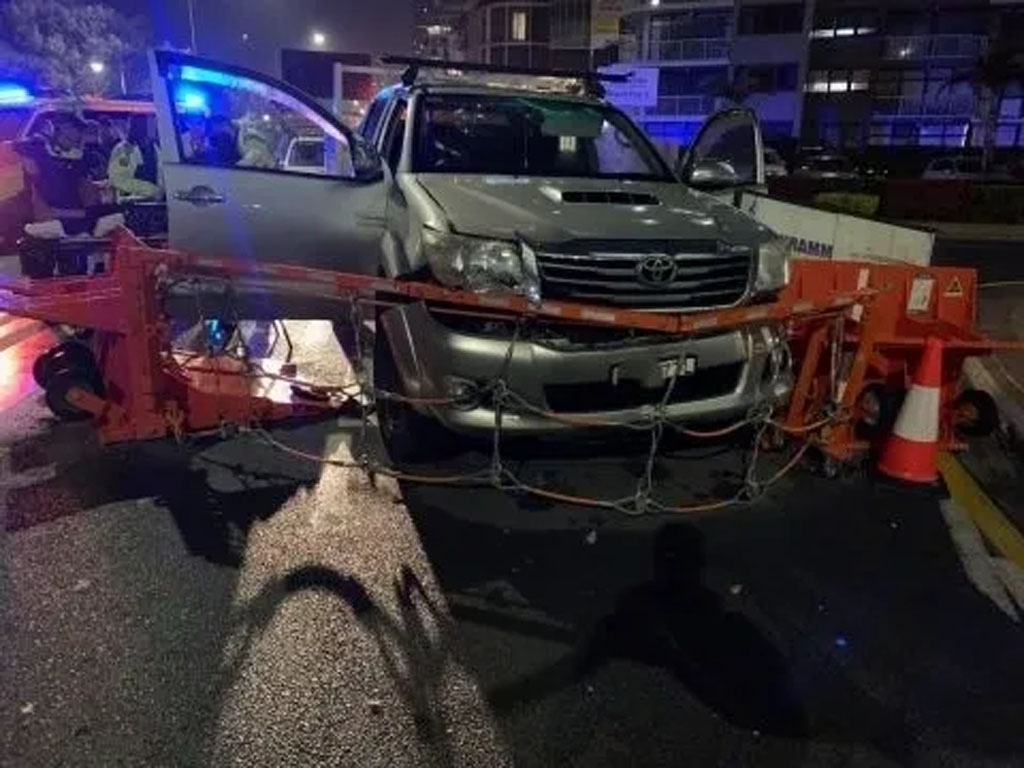
Following the incident, Meridian Rapid Defense Group, the Australian company that supplied the barrier, released a statement on LinkedIn explaining what had happened to its equipment. According to Meridian, the driver continued pushing against the Meridian Rapid Gate, but, despite this, the barrier moved less than a metre and prevented the vehicle from getting through. The driver subsequently abandoned the ute and was arrested by Queensland Police.
Meridian also confirmed that its crew had a replacement gate installed by 12.30 am, meaning the precinct remained protected overnight.
We regularly hear about the importance of hostile vehicle mitigation (HVM), and here we have an actual incident where a certified, crash-tested barrier reportedly did exactly what it was designed to do. However, despite the vehicle being stopped, two people were still injured, which raises another question about how we manage vehicle access points and, in particular, the safety of the people working around them.
We don’t yet know exactly how those injuries occurred, so I am certainly not suggesting there was anything wrong with the arrangements at the Gold Coast 500. But it does give us an opportunity to look at how we manage similar risks at our own events.
I have said this many times before, and I will probably keep saying it:
Terrorism is not the only vehicle threat we need to be concerned about at events, and I would argue that it is not the most likely one we will encounter.
Understandably, when people hear the words hostile vehicle mitigation, their minds often turn to terrorist attacks and some of the horrific incidents we have witnessed around the world. But, in my experience, we are far more likely to encounter a driver who is intoxicated, distracted, aggressive or simply determined to get through a road closure than someone attempting an act of terrorism. That doesn’t mean we should dismiss the terrorist threat, but our risk assessments need to reflect the much wider range of circumstances in which a vehicle could seriously injure someone.
We also need to consider the possibility of vehicles being stolen from within event sites. I have lost count of the number of times I have taken keys out of unattended vehicles while working on site, and I still find it extraordinary how often people leave them in the ignition on site, as per my previous article: https://beaspoke.com.au/safety-news/f/who-has-the-keys-the-risk-of-stolen-vehicles-on-event-sites
Anyone who has worked at an event with vehicle access points will know how challenging they can be. Contractors turn up without the correct accreditation, delivery drivers insist they have been told they can come through, residents want to get to their properties and members of the public become frustrated because a road they normally use is closed.
Most people are perfectly reasonable once you explain the situation, but occasionally you come across someone who isn’t prepared to take no for an answer. And, unfortunately, the person dealing with that situation is often a security guard, traffic controller or volunteer standing next to a temporary barrier.
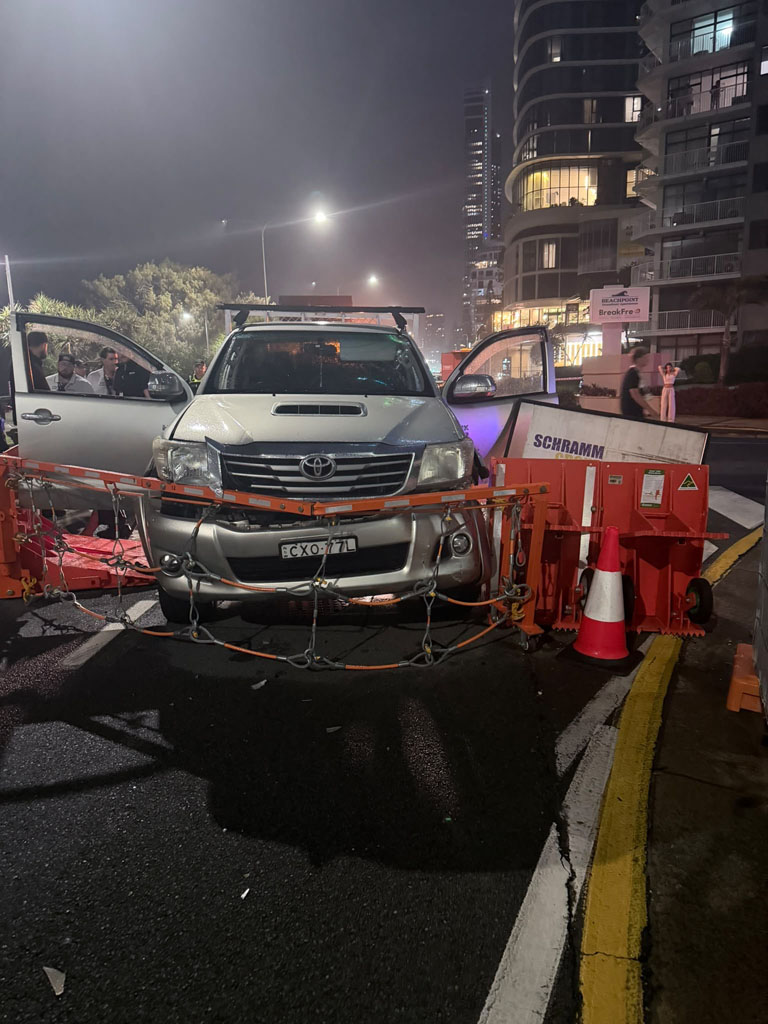
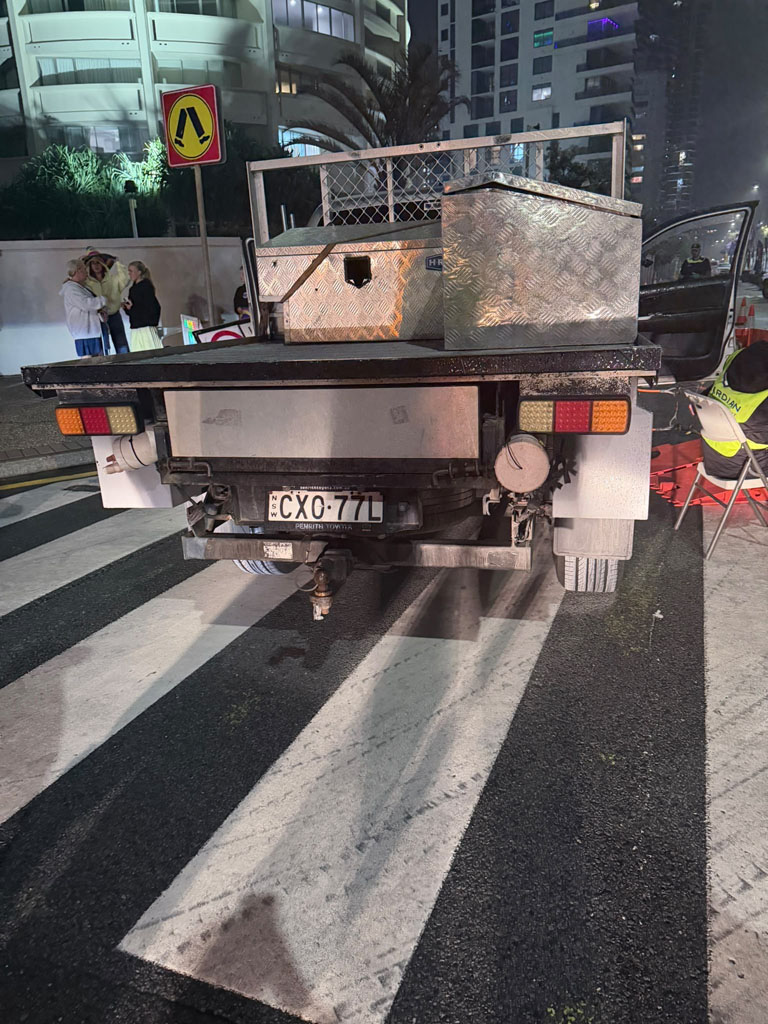
This brings me back to the Gold Coast incident and something I think we should be considering more carefully when planning these access points. We spend time looking at the type of barrier being installed, whether it is appropriately rated and where it needs to be positioned, but are we giving the same consideration to where the people operating that access point will be standing?
If a driver suddenly accelerates towards a barrier, where does the person checking accreditation go? Is there somewhere they can safely move to, or are they effectively standing between the vehicle and the equipment intended to stop it? We also need to consider what happens if a barrier moves when struck, even if it successfully prevents the vehicle from entering.
There is also a tendency to think that placing a few concrete blocks or water-filled barriers across a road means we have dealt with the vehicle risk.
Unfortunately, it isn’t quite that straightforward. Traffic management equipment and crash-tested hostile vehicle mitigation barriers serve different purposes, and we need to understand what protection the equipment we are using actually provides.
The type of vehicle, potential approach speed, available space, installation requirements and location of pedestrians all need to be considered. We also have to think about how emergency vehicles will gain access and whether the barriers themselves could create problems with pedestrian movement or emergency evacuation.
And while major events generally have the resources to engage specialist contractors and install certified equipment, what happens at smaller community events?
Think about a local Christmas market, street festival or community celebration where a couple of volunteers are managing a road closure using temporary fencing and traffic cones. They may have been given a high-vis vest, a radio and instructions about who is allowed through, but have they been told what to do if someone decides to drive past them?
More importantly, do they understand that they should never attempt to physically stop a vehicle?
I think we sometimes underestimate what we are asking people to deal with at these access points.
A volunteer might be perfectly capable of checking vehicle permits and directing deliveries, but that doesn’t mean they have the training or experience to manage an aggressive driver.
Even experienced security personnel need clear procedures, appropriate positioning and a means of withdrawing safely if a situation escalates.
We should also remember that vehicle risks aren’t limited to the public roads surrounding an event. Once vehicles are inside a site, we have forklifts, delivery trucks, buggies, contractor vehicles and sometimes members of the public sharing the same spaces. We spend considerable time managing pedestrian and vehicle separation during bump-in and bump-out, but the same principles need to apply whenever vehicles are moving around an event.
The Australian Government’s Hostile Vehicle Guidelines for Crowded Places provide useful guidance on assessing these risks, including the importance of considering how a vehicle could approach a site and what measures might be appropriate. Not every event will need the same level of protection, but every event should at least consider whether vehicles could present a risk and what reasonably practicable controls are required.
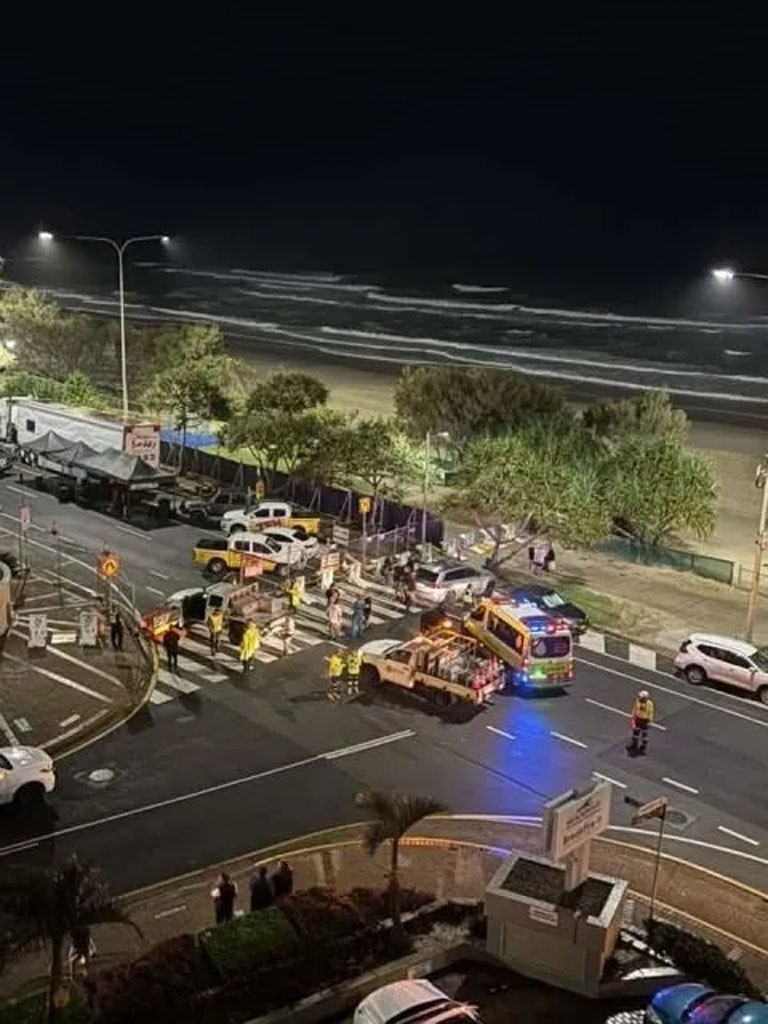
Coming back to the Gold Coast 500, the information released by Meridian suggests its barrier performed as intended and prevented the ute from entering the protected precinct. That is a positive outcome, and one that demonstrates why appropriately selected and installed vehicle mitigation equipment can be so valuable.
However, the fact that two people were injured also reminds us that stopping a vehicle is only part of the overall risk management process. We need to consider the people working at these access points, the pedestrians nearby and what could happen when a driver behaves in a way that nobody was expecting.
I would encourage anyone involved in planning an event, regardless of its size, to have another look at their vehicle access arrangements: not just whether the road is closed or what barriers have been installed, but who is managing those access points, where they are positioned and what they have been instructed to do if a driver refuses to cooperate.
While we are relying on those people to prevent unauthorised vehicles from entering our events, we also have a responsibility to make sure we are not unnecessarily putting them in harm’s way.
—
Photographs courtesy of Meridian Rapid Defense Group Australia. Reproduced with permission.
—
This article is based on publicly available information and statements issued as at 29 October 2026. The Gold Coast 500 incident remains subject to legal proceedings, and the allegations against the driver have not been determined by a court. The circumstances surrounding the injuries and the positioning of personnel have not been fully established. The discussion of vehicle risks and mitigation measures is intended as general event safety commentary and does not suggest any failure or wrongdoing by the event organisers, security providers or barrier suppliers. Event organisers should seek appropriately qualified advice when assessing and implementing vehicle mitigation measures.
Subscribe
Published monthly since 1991, our famous AV industry magazine is free for download or pay for print. Subscribers also receive CX News, our free weekly email with the latest industry news and jobs.
Recent posts



Latest jobs