The Gaffa Tapes
23 Feb 2026
Journey of a Fledgling Talent Scout
Subscribe to CX E-News
SNIPPETS FROM THE ARCHIVES OF A BYGONE ERA
In the mid-1980s, my inflated ego as a sound engineer and a sound and lighting installer was due to the fact that after working the Australian circuit for years, I was now outfitting American nightclubs in the Philippines, a country teeming with enormous musical talent but trailing in sound and lighting technology. It was an arena where I was virtually unchallenged, but when Lin Gomez, the Filipino JBL dealer and sound reinforcement installer, approached me after a couple of years and said, “I’ll tell you what your real talent is, Brian,” I couldn’t wait to hear the reply. “You know how to pick the best bands,” he said, crushing my self-image as a technical whiz.
I did pour an enormous effort into the search for talent, partly because I suffered from the apprehension that my first sound and lighting installation in the country at Rosie O’ Grady’s, Angeles City, in 1983, although very effective, was something that I thought could easily be copied. And with our competitors vying for the lucrative US military patronage at Clark Air Force Base, I needed a bit more of an edge. Strangely, our competitors chose their own way to go about things with disco-style lighting, poor sound reinforcement, and undisciplined metal bands.
Over the four-year period that followed, I travelled the country seeking out talent to sign to the three leading American off-base nightclubs and to fill USO (United Service Organisations) contracts with bands that played on base at the Officers’ Club, The Airmen’s Club and the NCO Club. Although the Philippines is classified as one of the largest English-speaking nations in the world, it is a second language, and in some of the remote places I travelled, it wasn’t widely spoken. I had to get up to speed on the native Filipino language (Tagalog), and fortunately, some phrases could be as simple as asking the armed security guard on the door of a nightclub, “May combo dito?” Do you have a band here?
I generally steered clear of the massive rock ‘n’ roll scene in Olongapo City that catered to the military personnel from the US Naval Base in Subic Bay, which was home to the US Seventh Fleet. I found the bands there to be loud and undisciplined, with on-stage volumes overpowering the jerry-built sound reinforcement systems. The audio mixing was atrocious, with screeching high-mids and massive reverberation, and the lighting guys flashing the front lights on and off made me nauseous. There was just too much to fix.
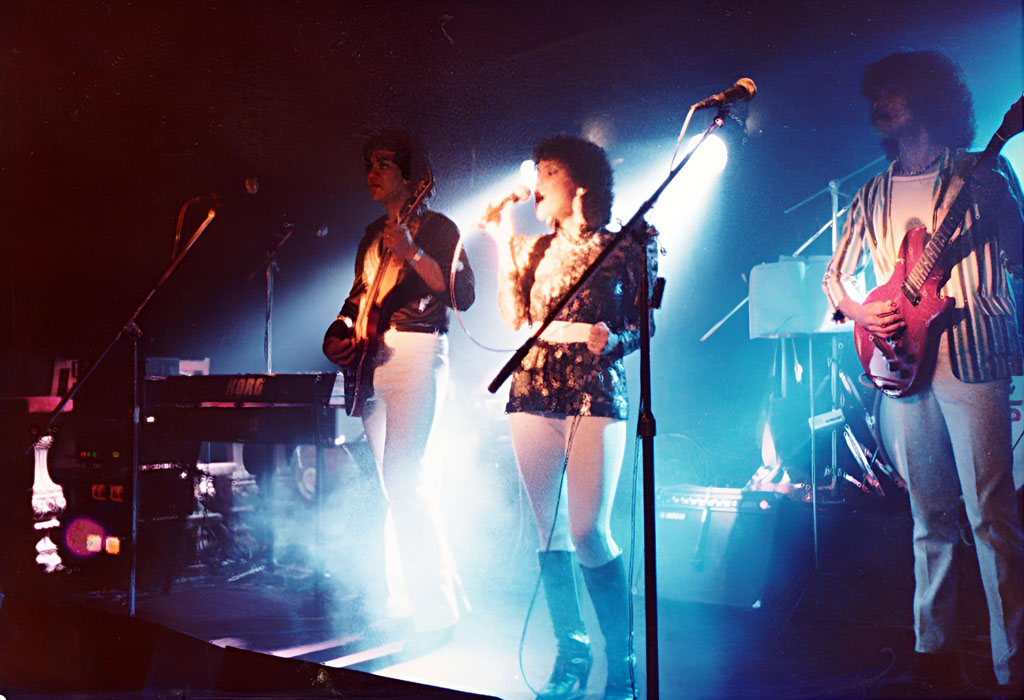
My first assignment in 1983 was outfitting Rosie O’Grady’s nightclub, Angeles City, with sound and lighting, and after being appointed entertainment manager, I terminated the unkempt and unruly metal band that the owner had in rehearsals; this was before they made it to their first performance. I replaced the metal band with Carol and the Lips, ironically, a band I found playing in an empty nightclub in Olongapo City. Although supported by the owner and his partners, I was ridiculed by others for replacing a metal band with what the locals considered a ‘variety’ band. However, in 1983, MTV was paving the way for an image-essential, commercial type of rock music. I initially introduced Carol and the Lips to the style and music of The Motels with Martha Davis, along with other bands that focused on the new-look visual style and contemporary music sound that went on to dominate the 1980s, which was a monumental period for bands with female vocalists such as The Pretenders, Madonna, Cyndi Lauper, Heart, Pat Benatar, and many others. Carol and the Lips were a massive success; they filled Rosie O’ Grady’s every night, and they are cited as the band that changed rock music in the clubs that catered to the US military personnel.
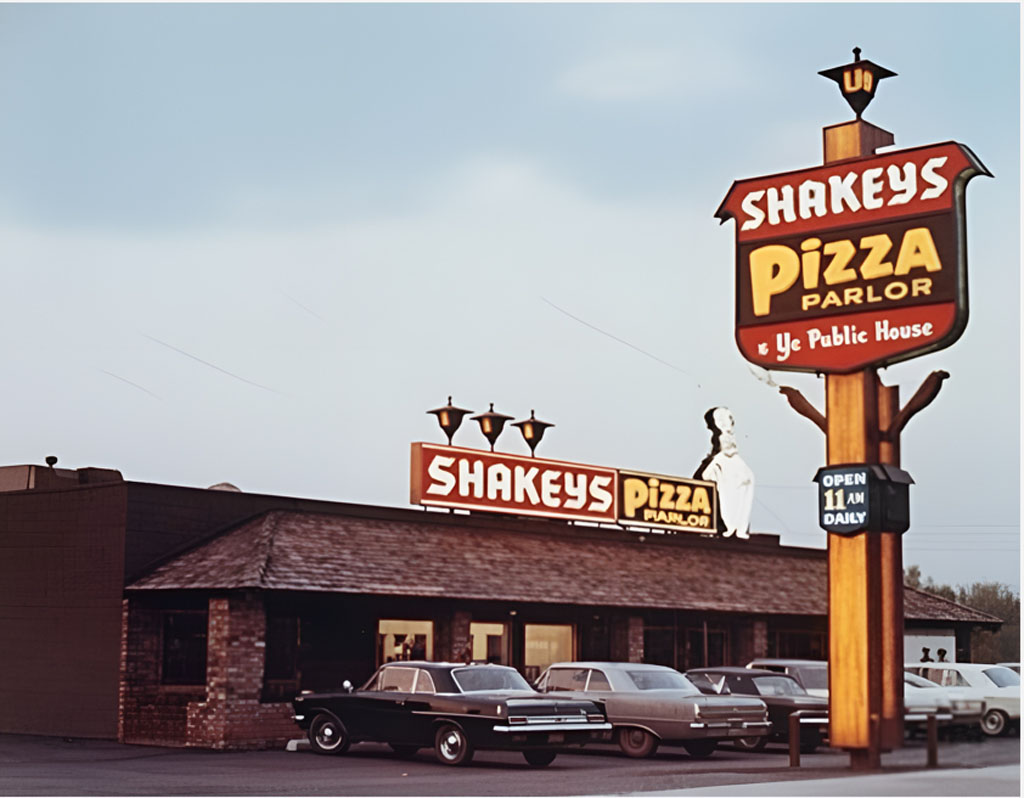
One of my go-to places to search for other talent was Shakey’s Pizza Parlor. The venues were owned by the San Miguel Corporation, who already had 90% of the bottled beer market, and Shakey’s was created to promote their San Miguel draught beer and to dominate the live music scene. Shakey’s wasn’t really a family venue, more a rock ‘n’ roll hangout featuring live bands. There were about 15 Shakey’s venues scattered over the greater Manila area, and I visited most of them. The bands were easy to approach, and nobody suspected a foreigner of being a talent scout on a poaching mission. My standard offer was to double the band’s wages and give them free accommodation off-base in Angeles City. Another incentive for the bands was to be accepted by American audiences, which were made up mostly of GIs, their wives and girlfriends, and the teenage ‘base brats’ of the US military community.
I only booked bands featuring accomplished and disciplined musicians with excellent vocalists, and especially female vocalists who made the acts more visual and kept the music contemporary.
I did change a number of the Filipino bands’ names to make them sound more appealing to their American audiences. The first name change was for a band I found at Shakey’s (Ermita), called Dimples, featuring a singer named Malou (Maria-Louise), who absolutely stunned me with her rendition of ‘Love On A Two-Way Street’. I immediately approached the band to sign them.
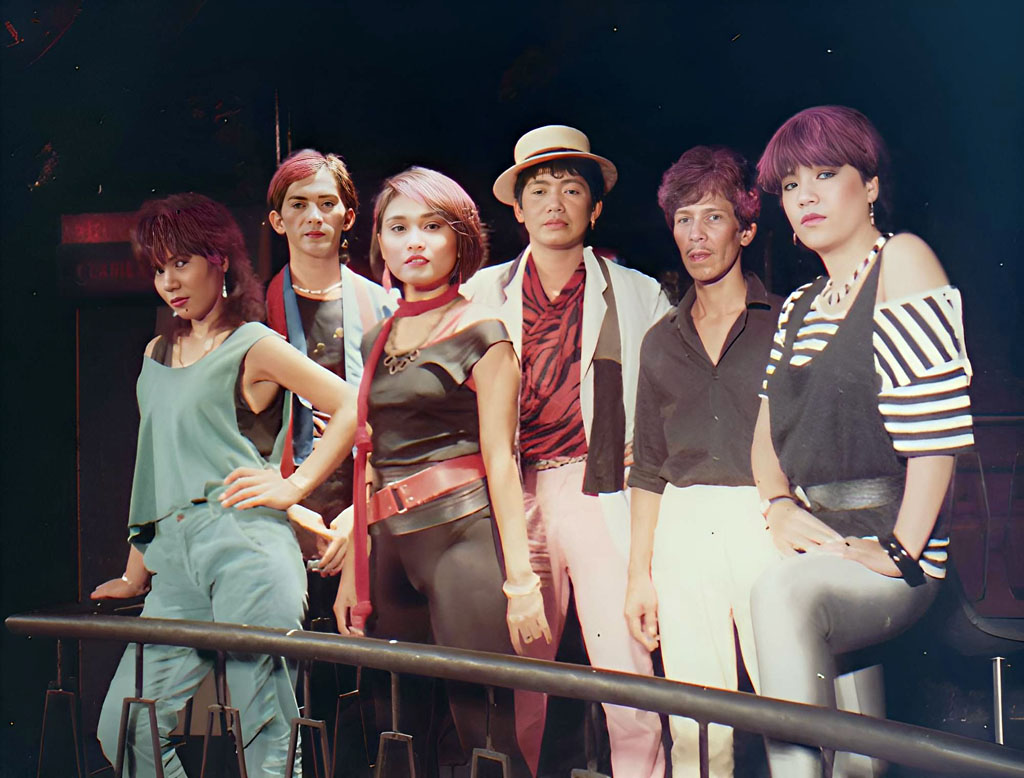
In those days, bands were paid as employees with individual salaries, and it was a ploy for them to try to include an extra member. They informed me, “Oh, one of our members is away today.” So, thinking it was a tambourine player or someone who played the bongo drums, I sarcastically asked who it was. “It’s our lead singer.” I was ultimately introduced to Ching, a powerful vocalist who added an extra dimension to the band and sang in perfect harmony with Malou’s velvety vocals. There were a couple of name changes before we settled on Magenta (named after my favourite colour gel, Lee 113). I signed Magenta to a management contract and booked them in three different clubs off-base and for a number of USO shows on the US Air Force base. Magenta became the most sought-after band in the country.
Another name change was for a band called Yjoz that I found playing at Shakey’s Pizza Parlor on Taft Avenue, Manila. I politely informed the band that Americans wouldn’t understand the name Yjoz. I was a big movie buff at the time, and flicking through my movie directory, I stumbled upon Crooked Hearts (a 1972 movie), which became the band’s new name at the Third Eye nightclub, my third venue engagement as entertainment manager.
During the same period, my employer at the Third Eye nightclub, a Canadian named Brian, invited me to accompany him to a function in the ballroom of a five-star Manila hotel. Brian was a personal friend of one of the performers, Sampaguita, the renowned ‘Queen of Filipino Rock Music’, who had invited him to attend. The event was some sort of expatriate businessmen’s gathering that turned out to be the most bizarre event that I have ever attended.
Brian had been urging me to book Sampaguita at the Third Eye for some time, and I had been resisting. I had seen Sampaguita some years earlier at a nightclub in Olongapo City. She had a style that identified as ‘Pinoy Rock’, which was a genre of rock music primarily sung in the Filipino language that just wouldn’t have twigged with our US military patrons. There was, of course, my other aversion, that she was often backed by heavy rock bands that I usually avoided. I sensed at the time that my invitation was an enticement for me to see Sampaguita in a live performance and change my mind.
I don’t remember Sampaguita’s afternoon performance at the Manila event being all that different from what I had witnessed years before in Olongapo City; however, she was only one of several acts, including a promotion that was somewhat unsavoury. Of course all the drinks were free, as was the food, and the overindulgence did somewhat blur the experience, which evolved into the surreal. One of the acts featured a remarkable Tina Turner lookalike, who danced and mimed to the superstar’s songs. This was a female impersonator, a ‘billy boy’, which is a respectful term Filipinos use to describe a gay guy, and these guys enjoy almost celebrity status in the country.
The steady stream of alcohol and entertainment continued into the evening, and after a brief hiatus, a huge wooden packing crate equipped with four long wooden handles was carried onto the stage by four Filipinos. I don’t remember the actual announcement by the auctioneer, but a torrid bidding session began for the contents of the crate. The bidding was extraordinarily high for the unknown contents of the crate, but there were no prizes for guessing what the contents were. Right on the money, at the conclusion of bidding, the crate was pried open to reveal a girl in a bikini who was to be the overnight companion of the winning bidder. At the time, any repercussions from this kind of sex trafficking didn’t seem to be an issue with the organisers. A second crate was then carried onto the stage, and the debacle repeated. The third crate attracted the highest bidding; however, it turned out to be the ‘billy boy’ Tina Turner impersonator who sprang from the crate.
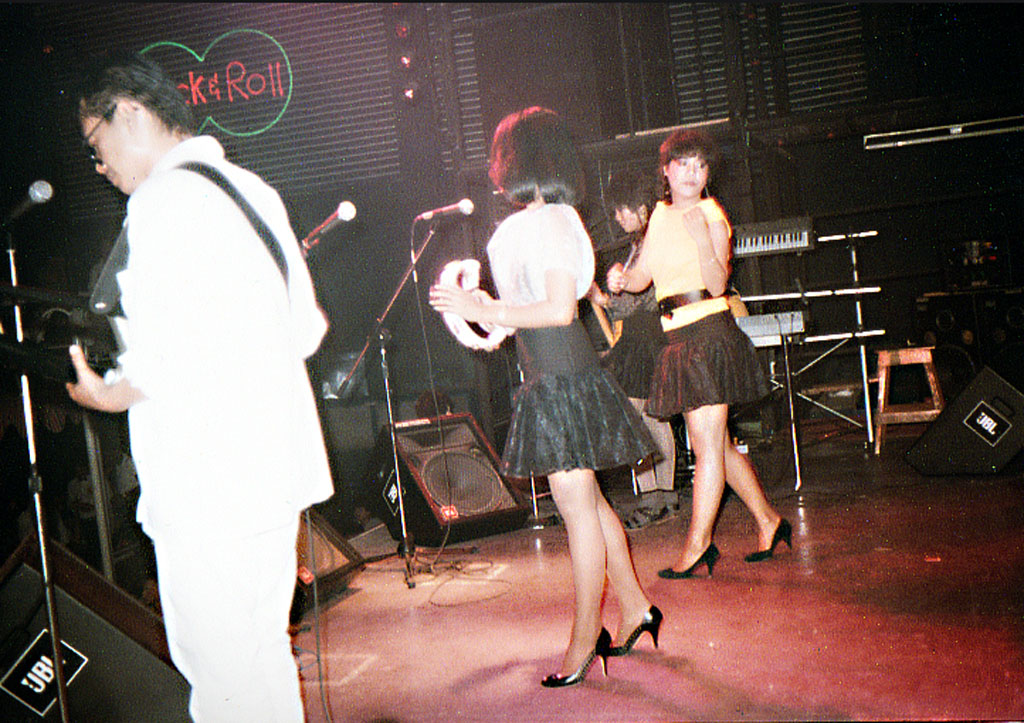
My dislike for the style of rock ‘n’ roll that was ubiquitous in Olongapo City was vindicated in 1985 when the owners of the biggest nightclub ever to open in that city, Cal Jam (California Jam), ignored the local talent and visited me to book my band Magenta for the grand opening. History doesn’t record this, but I have photos of Magenta’s opening performance. Some sources state that Arnel Pineda, with his band Amo, opened Cal Jam, but this occurred sometime later. Pineda has stated in his bio that he began his career at Shakey’s Taft Ave, Manila, in the mid-80s with the band Yjoz.
Until recently, I didn’t know that in 2007 Arnel Pineda became the fifth lead singer of the mega US band Journey (Steve Perry left in 1998). Pineda was only 18 years old in 1985 when I found his band Yjoz playing at Shakey’s Pizza, Manila, and billed them at the Third Eye as Crooked Hearts.

Had I known about Pineda’s 2007 rise to stardom, I could have dined out on this for the past 18 years and bored the tits off anyone unfortunate enough to sit at my table.
—
Main Pic: MAGENTA (L-R) HELEN, MANNY, MALOU, BOY, EFREN, CHING. PHOTO CREDIT: BRIAN COLEMAN
Subscribe
Published monthly since 1991, our famous AV industry magazine is free for download or pay for print. Subscribers also receive CX News, our free weekly email with the latest industry news and jobs.
Recent posts



Latest jobs