The Gaffa Tapes
30 Oct 2026
Spotlight on One of the Heavy Lifting People
Subscribe to CX E-News
Snippets from the archives of a bygone era.
“We need someone to come down and load for us,” was an early calling for music industry lynchpin Peter Ross…
…who transitioned from bank employee to a career spanning four decades in the music industry. It was a career that would encompass touring crew, front-of-house mixing, monitor mixing, backline expertise, and two decades with MEAA (Media, Entertainment & Arts Alliance) as Director of Technology.
The man widely known throughout the industry as ‘Rossy’, and also ‘The Celebrity Roadie’, talks to CX about that first gig, circa 1982, when a bank workmate asked him to help with his band’s load-in at the University of Technology, Sydney. The band, Second Language, was the supporting act for recording artists Do-Ré-Mi. Despite playing in bands when he was younger, Peter admitted he had no idea what a multicore was when someone asked him to run it, and then he was berated by the road crew for failing to gaff it down. He was then given brief and basic instructions on the operation of the monitor console.
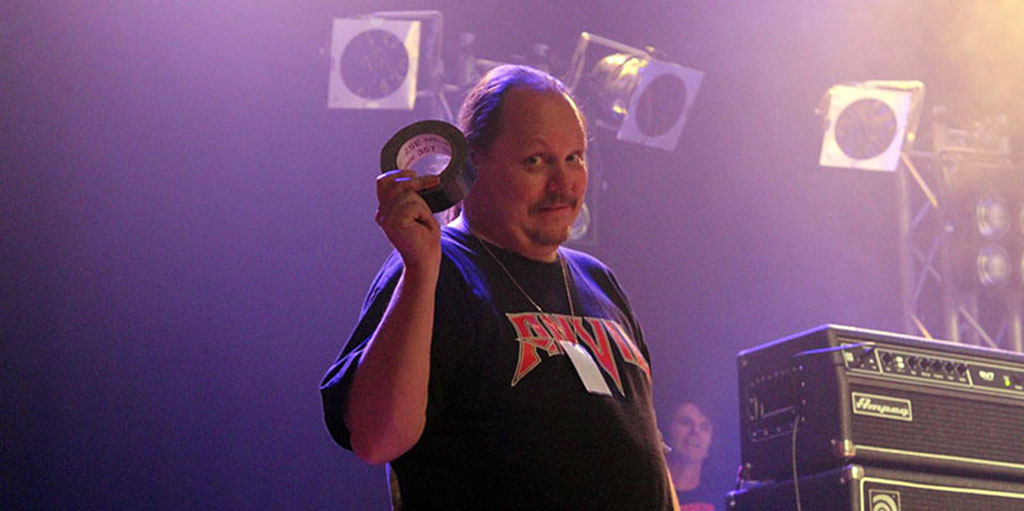
“I was out of my depth but willing to do anything as directed. About 15 minutes before showtime, the monitor technician for the headliner band said, ‘We’re off for dinner; here’s the monitor desk.’ I was then left to operate monitors for the first show I had ever worked on. The band came off and said it was fantastic,” says Rossy, who was then invited to join the band’s crew.
As Peter’s career progressed, he operated both front-of-house and monitors for several touring bands, as well as undertaking extensive road-crew work. “I was really a ‘stage guy’ because I could play instruments. So I ended up being a backline guy looking after the stage gear. I was also learning to mix, and I mixed for various bands,” says Rossy, who describes having a professional and personalised relationship with the bands as a key issue in getting the job done. “Sometimes I feel like I’m a butler, but once they trust you, you become invisible.”
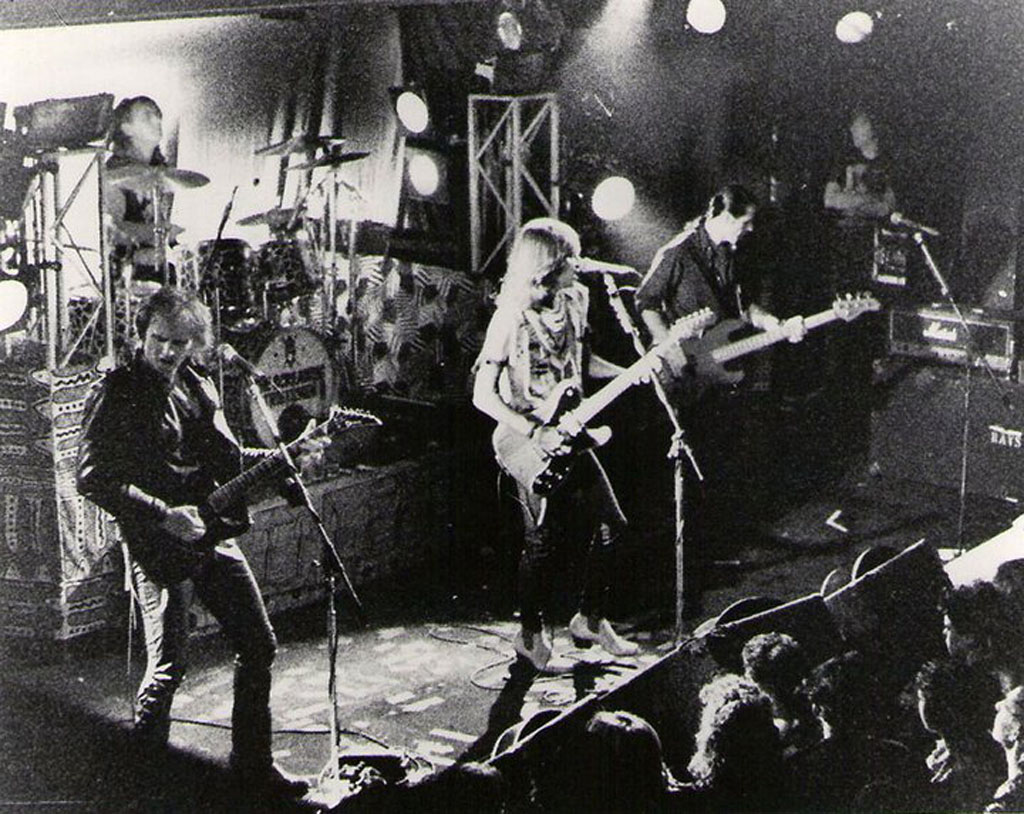
Circa 1985, Peter began mixing for The Psychotic Turnbuckles. “They were managed by the same guy who managed The Screaming Tribesmen. I was then asked to do ‘stage’ for the Tribesmen; they had Chris Masuak from Radio Birdman and Warwick Fraser, who was in Feather.” Peter explains that he was originally picked up in a hire car for his debut gig with the Tribesmen, and he ultimately stayed with the band for ten years. “In the ten years I was with that band, I did not miss a show. I was doing backline, like stage and guitars, unloading, and then I started doing foldback. I went on to production managing, and then I ended up doing tour managing as well as stage and monitors.”
As part of the road crew of the Tribesmen, Peter says he did a lot of loading. “We loaded every day; we had a 6-tonne truck and a double 4-way (PA) and 40 lamps, and we’d do four or five shows a week. We’d drive to Brisbane and do four or five shows, then drive back to Sydney and do four or five shows there. Then we’d drive to Melbourne and do four or five shows there, then drive back to Sydney and start again. I remember touring in the ’80s; you’d drive up the highway, and there’d be three or four other trucks heading up to Queensland, and you’d know the other guys when you got there. You’d see another truck heading down the road, and you’d know they were going to the Mansfield Tavern when you were going to the Playroom. We’d be pulling a thousand people a night, and it was insane.
I’d be in the truck with the truck drivers, half the time slapping them to keep them awake. I’d have to pick up the cash, and I’d get back to Sydney with $20,000 in a briefcase and hand it over to management.
I’d take a float of a couple of hundred dollars for petrol and gaff tape, and off we’d go again,” says Rossy.
Peter talks about working with veteran PA hirer Geoff Stewart, whose heavy-duty sound systems consisting of concert-grade gear were highly sought after by heavy rock and punk bands. “Geoff Stewart had a double 4-way and a truck. We’d do the Tribesmen and we’d do Swanee, and then we’d do, like, a Hitmen tour. The phone would ring and you’d just go and do the gig. We’d do a punk band, then a metal band, then anything needed to make a living the next week.
A lot of those guys I toured with ended up being almost disenfranchised; the crew guys lived hand-to-mouth and mostly lived in rental accommodation and had insecure relationships. A lot of those guys lived on the fringes,” he says.
Peter eventually took a break from the relentless grind of touring. “I was having a look at the guys who were about ten years older than me, and I wondered if that was where I wanted to end up.” During this hiatus he attained a degree in journalism and political theory from UTS (University of Technology, Sydney); coincidentally, the same institution where he did his first gig as a roadie and monitor mixer. He spent 22 years working for MEAA, where he was able to use his vast road experience to support entertainment workers. “The thing that I’ve learned in my years of advocacy is that musicians and crew are not rich men; they are economically disenfranchised,” says Rossy.
After Peter’s employment at MEAA, he worked in the quality control team at Fender, and those years at Fender honed his skill as a guitar technician. A touring act’s guitar tech has a huge responsibility; the role involves not only bringing various guitars on stage when required, but also ensuring they are perfectly in tune, which includes alternative tunings. Broken strings have to be replaced, along with other guitar maintenance.
The guitar tech can also be responsible for the entire guitar signal chain, including wireless systems, pedal boards, amplifiers and even the guitar player’s IEMs (in-ear monitors). “We did a lot of supports for international acts, like The Damned and The Cult and Cheap Trick. When you got to a venue like Selina’s, you knew you were supporting a serious band. I remember at one stage I was doing guitars for Joe Walsh. I did a lot of tech for guitar guys,” says Rossy, who also does guitars and IEMs for his 22-year-old son, Angus, who plays in a band called Pocketwatch. “I spend a lot of time with my son’s band at the moment.”
Peter Ross is currently employed by the Georges River Council, Hurstville, in a professional role involving live music, production and venue operations for the Marana Auditorium, which underwent a major refurbishment starting on 1 January 2026, and officially reopened to the public on 1 April 2026. “When I was a kid, before I started playing in bands, every Saturday night, they had an ‘all ages’ show at the Marana Auditorium, and I’d go and see all the bands playing there. I would see Rose Tattoo, The Angels, Split Enz, Air Supply, and The Radiators; all those bands played at the ‘all ages’ shows in the ’70s.” In another coincidence, Peter explains that he now works for around 30% of those bands he saw in the ’70s at the same venue. “Now it’s gone full circle,” he says.
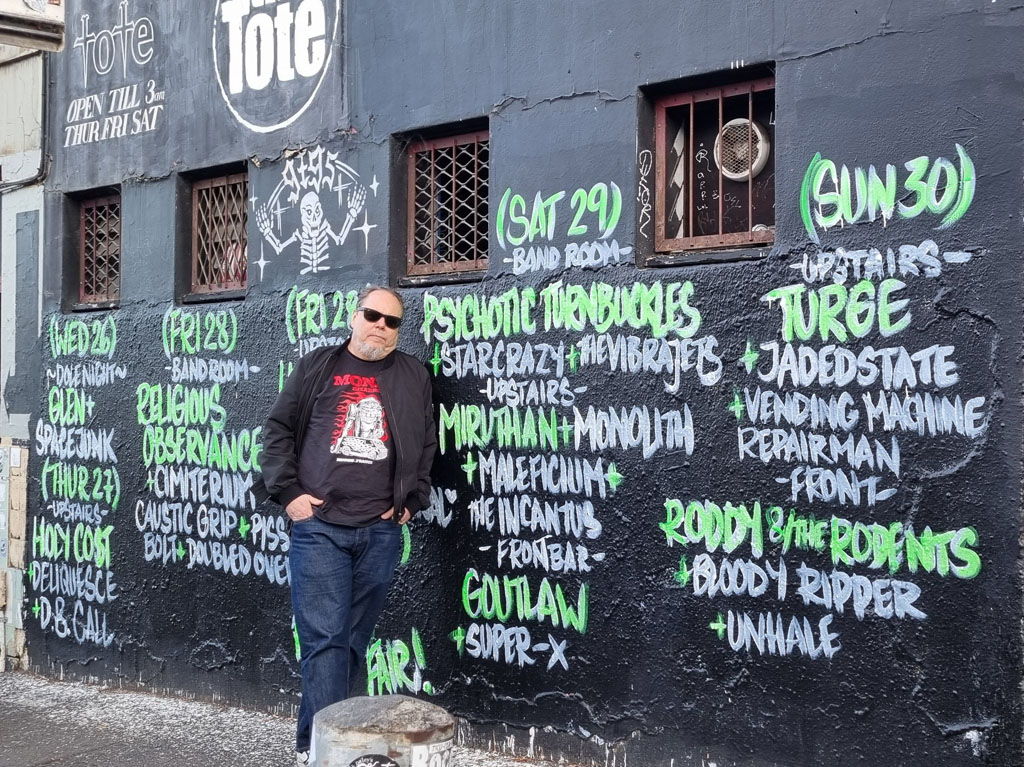
Peter still crews for various touring acts. “I’ve just done a run of shows on the East Coast with a band from Melbourne called The Huxton Creepers and another band called The Johnnys, where I was loading and running the backline and doing the guitars.” Along with crewing for other bands, he is the bass player in Jupiter 5, which he describes as a ’60s- and ’70s-based garage band. He is also a contributor to the I-94 Bar, an Australian webzine and virtual bar (not a physical venue), which he says is the brainchild of Craig Regan, who is also a record producer. Rossy, the Celebrity Roadie, co-presented the Drunk and Disorderly podcasts with Craig the Barman. “Craig runs a small label, and he manages Chris Masuak from Radio Birdman and Mick Medew from the Screaming Tribesmen, and he also manages the Psychotic Turnbuckles,” says Rossy.
Closer to home, Rossy used to tread the boards in the same era as former CX Magazine publisher and current contributor Julius Grafton, and he also worked for a time as his hire manager at Grafton’s Sound and Lighting back in the 1980s.
“As a kid, I loved rock’n’roll, and I just wanted to be part of it. That ten-minute period before a band comes onto the stage is the most exciting part of my life. It’s great when you’ve got a ‘happening’ band, but I also love seeing bands that I feel are about to take off; I love being around when that journey is happening,” says Rossy.
“Mental health among touring crew is a bad thing; there’s all that stress. I think the smartest thing I did was about 31 years ago when I got sober: no alcohol, no drugs, and no tobacco.
When you’re touring with people for a long period of time, you can see when they’re deteriorating, and it’s terrifying to see the results of the choices you make,” says Rossy.
Subscribe
Published monthly since 1991, our famous AV industry magazine is free for download or pay for print. Subscribers also receive CX News, our free weekly email with the latest industry news and jobs.
Recent posts

Latest jobs