NEW ZEALAND
3 Nov 2026
Western Springs Bowl: Building a Music-First Venue
Subscribe to CX E-News
A permanent stage deck, seasonal concert infrastructure and an unusual promoter partnership reshape one of Auckland’s best-loved outdoor venues.
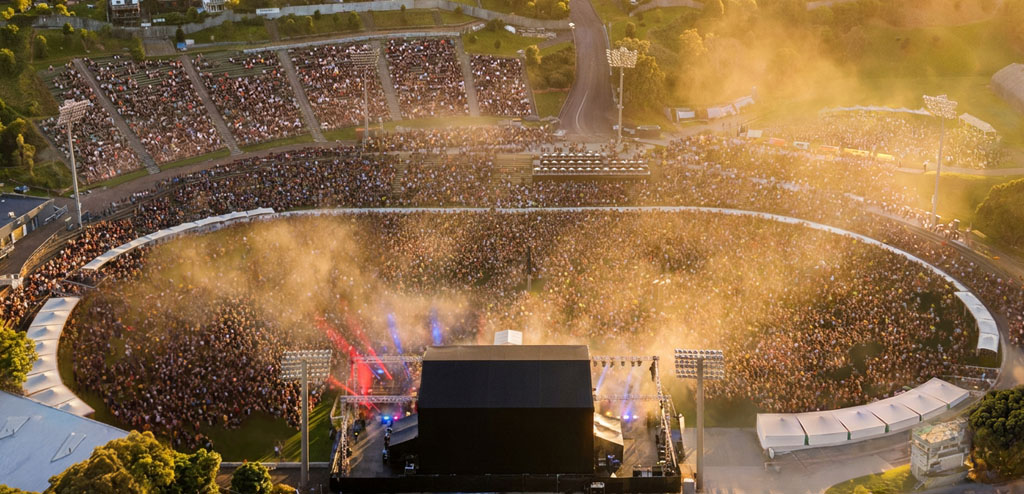
For fifty years, Western Springs has been where Auckland goes to hear its biggest shows. Elton John played five times. Other acts have included Bowie, Led Zeppelin, Bob Marley, the Rolling Stones, U2, AC/DC and Eminem. The venue has hosted crowds of up to 80,000. Every one of those shows was built from scratch. From this October, that changes. Western Springs Bowl opens as a purpose-built, semi-permanent concert venue.
From stadium to shared venue
Western Springs’ sporting history runs alongside its musical one. Ponsonby Rugby Club has called the site home since 1997, and speedway ran there for decades. But despite hosting some of the biggest touring acts in the world since the 1970s, for most of the year the site was doing comparatively little, pushing Tātaki Auckland Unlimited (TAU), the council-controlled organisation that owns and operates the venue as part of Auckland Stadiums, to test the market in 2024.
Auckland Stadiums Director James Parkinson explains, “We felt that there was an opportunity to unlock more value through the venue’s ability to attract acts that otherwise wouldn’t tour New Zealand at all. We also have a broader social and economic mandate on the part of the city and two concerts in the last summer season alone generated an estimated $10 million in net regional benefit. So, we went out to the market basically inviting the private sector to bring their ideas forward to us.”
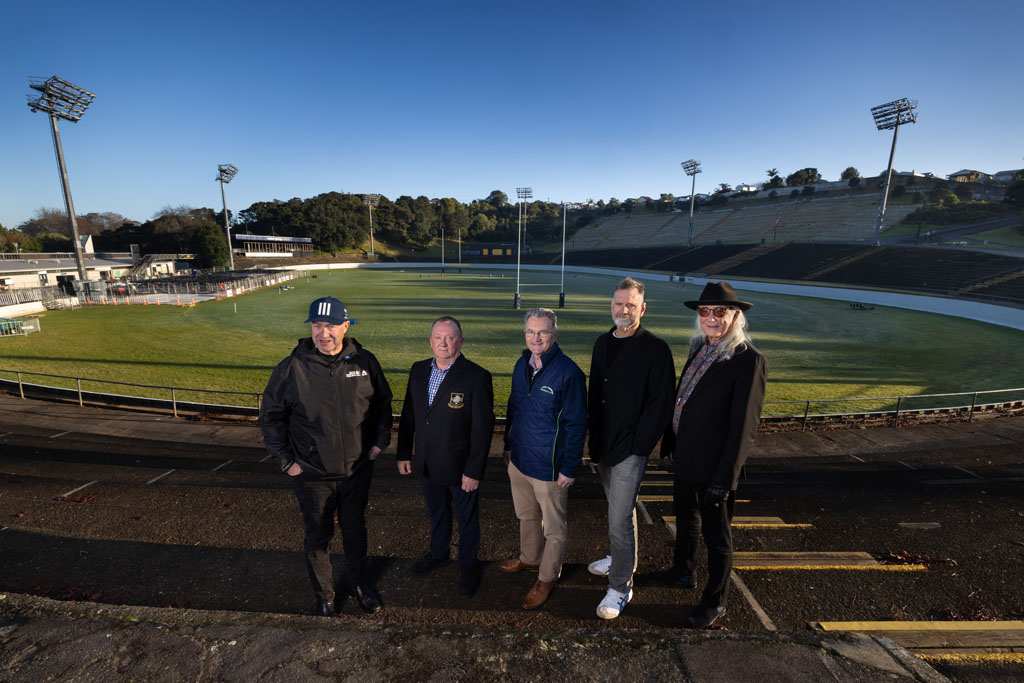
L-R: NICK HILL, CHIEF EXECUTIVE, TĀTAKI AUCKLAND UNLIMITED, GREG EDMONDS, CHAIR, PONSONBY RUGBY CLUB, JAMES PARKINSON, DIRECTOR AUCKLAND STADIUMS, TĀTAKI AUCKLAND UNLIMITED, CAMPBELL SMITH, VENUE PARTNER, SMITH & ECCLES, BRENT ECCLES, VENUE PARTNER, SMITH & ECCLES
Proposals emerged, including one from Ponsonby Rugby Club that was built around combining community sport with a boutique stadium, and one from concert producer Campbell Smith and promoter Brent Eccles, focused on enhancing Western Springs’ concert capability. A proposal led by Auckland FC’s ownership group was later withdrawn. Rather than compete, Ponsonby Rugby and Campbell and Brent combined into a single pitch: summer for concerts, winter for sport. Public feedback was sought by TAU before the concept went to Auckland’s councillors, who signed off on the proposal in March 2026.
James says the offering’s split personality was central to what TAU wanted: “We were attracted to the ethos that Western Springs Bowl is through summer a music-first venue, a deliberate contrast to traditional stadiums built around protecting turf and shifting infrastructure in and out for every show, providing us a unique proposition, offering reduced costs to an embattled industry.”
What the promoters saw
For Campbell, the appeal of Western Springs was never purely commercial. He talks about the Bowl as an “underappreciated jewel in the crown” of Auckland: a natural amphitheatre unlike anything else in New Zealand, with the potential to become part of the city’s identity rather than simply another place where concerts happen: “I’d like an iconic Auckland city T-shirt to be Western Springs Bowl, not just, you know, yachts on the harbour or the harbour bridge.”
That affection also came with a promoter’s eye for what the venue could solve. Campbell and Brent saw a stubborn gap in Auckland’s live music market: shows too large for Spark Arena, but not large enough to make the cost of building a one-off stadium show stack up: “To build a one-off show in a sports stadium, including the stage, you need a thirty-thousand-plus audience to be cost-effective. With a permanent stage in Western Springs, we felt we could meet demand between Spark and Eden Park and Go Media Stadium.”
The proposal
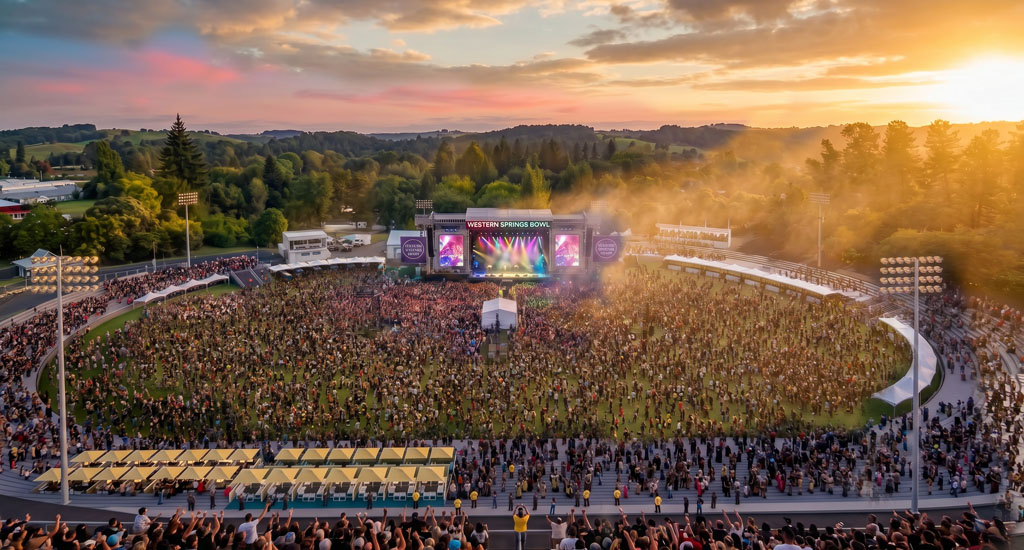
Campbell had already tested the market’s appetite at Western Springs’ Outer Fields, where Rüfüs Du Sol (25,000), My Chemical Romance (20,000) and Post Malone (18,000) had all played. That experience shaped the pitch to TAU: rather than asking the city to fund a fully permanent structure, Campbell and Brent proposed a “temporary permanent” stage, the same type of temporary staging used for one-off stadium shows but installed in situ for a fixed multi-year term to prove the concept without major capital risk on either side. The initial commitment is three years with stage supplier Acrow, and Campbell and Brent are committing to the same term as venue partners with Auckland Stadiums, tasked with helping to attract music content.
That structure turns Western Springs Bowl into what Campbell calls a turnkey venue: “Now as a promoter, you aren’t doing a venue hire agreement for an empty stadium. You’re getting a built stadium. Bars, food, waste management, traffic management, community engagement, crowd care, toilets, ushering, security and medical are all provided with the hire. The promoter just brings the production team and production overlay.”
For Campbell, as for James, that reduced build is particularly relevant in the current touring climate: “We’ve got an exchange rate that’s not particularly helpful right at the moment and continued elevated freight costs for bringing content to our shores. We believe that we’ve got the ability to at least offset some of those cost pressures.”
Building the Bowl
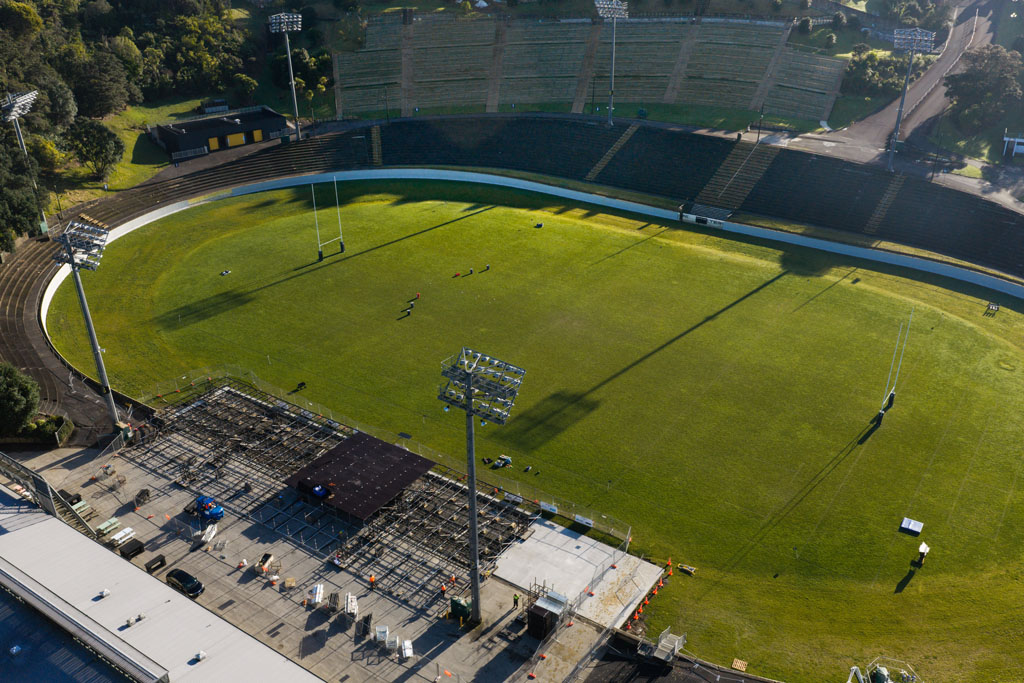
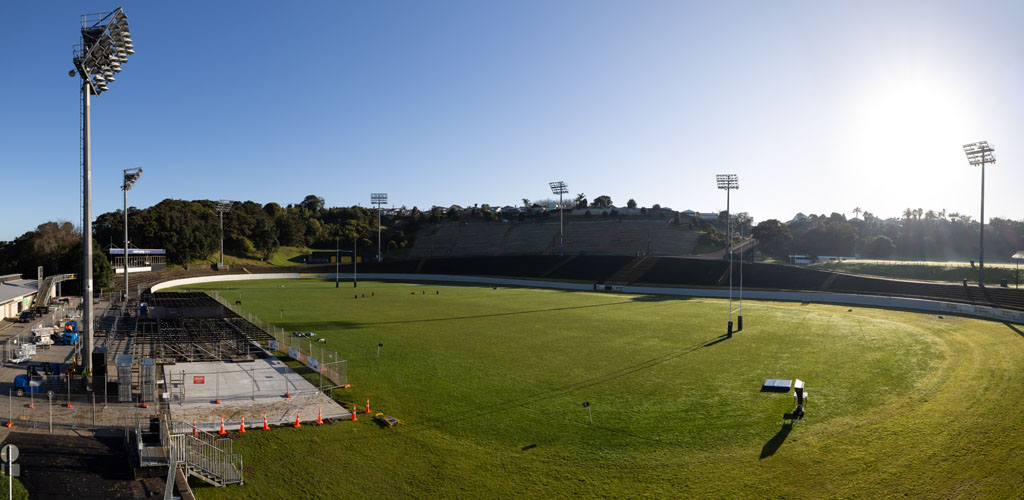
The upgrade, costing up to $2.5 million and delivered from July to October 2026 using TAU’s existing capital budget, centres on a permanent stage deck with a semi-permanent superstructure. Acrow’s 24-metre-wide Viking stage sits on a ten-leg configuration on a concrete pad, with the deck remaining in place year-round.
The specification was informed by the scale of touring productions Campbell had already brought through the Outer Fields: “We wanted a stage that was big enough to deal with most touring production specs but is still permanent. If an act comes and goes, ‘we need to hang this much weight’ and we can’t, then we’re not going to get the show, or they’re going to have to adjust the rigging plot. Acrow’s structure provides substantial capacity for touring production.”
The clever part is what happens between seasons. Through winter the walls and roof are removed and the stage deck becomes part of the sports configuration, able to carry marquees and corporate hosting. For the October-to-March music season, the roof and walls return and remain in place.
The first test
Western Springs Bowl has been designed around a 15,000–30,000 sweet spot but not limited to it. Its first music event will prove its flexibility, with Olivia Dean drawing a crowd of around 40,000 and immediately pushing the venue into its largest configuration.
For James, that makes the opening show both a vote of confidence and an early demonstration of the Bowl’s scalability. “You always have to be careful what you wish for,” he laughs. “In many respects we couldn’t have wished for anything better.”
Campbell, who is producing the Olivia Dean show, is equally confident in the physical infrastructure; what interests him more is how the venue behaves at that scale. The Bowl divides audiences between the field, terraces and embankment, with capacity and access modelled across each area. For a high-demand show such as Olivia Dean, movement between those zones will be more controlled, while at smaller 15,000–20,000-capacity events there can be greater free flow. “How people move around, and what that means for the customer experience, is something you’re constantly learning with outdoor greenfield shows and festivals,” Campbell says.
A different kind of partnership
What makes Western Springs Bowl unusual isn’t just the infrastructure but who has helped shape it. Campbell and Brent have become venue partners through their own entity, Smith and Eccles Limited, working alongside TAU to source and deliver concert content. It is an unusually collaborative model for a council-owned stadium.
For TAU, James says combining Auckland Stadiums’ industry relationships with Campbell and Brent’s broadens the network available to attract shows, while bringing Campbell’s years of experience producing concerts at Western Springs directly into the venue operation. The model is also about creating some consistency around what promoters and audiences encounter each time: “We’re keen to establish a consistent look and feel for the public when they come to Western Springs Bowl, while the efficiencies created by building the venue once for the summer season are intended to flow back to promoters and hirers.”
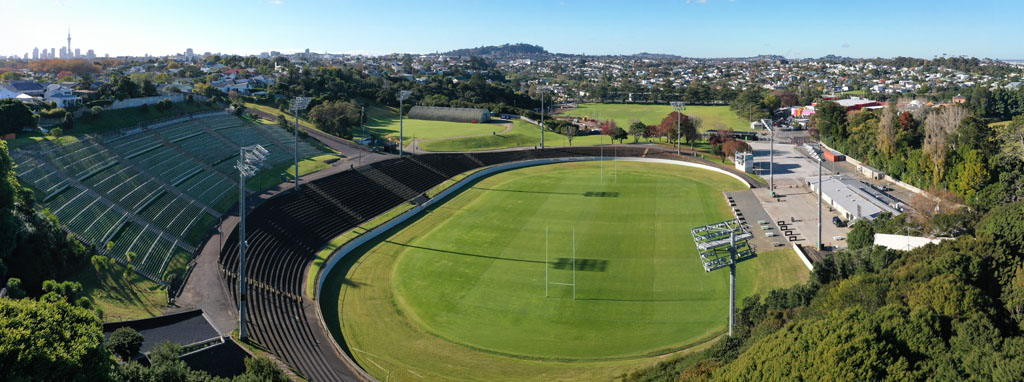
Campbell’s ambition goes well beyond filling the summer calendar. His north star has always been the Hollywood Bowl: a venue with an identity strong enough that artists actively want to play it. He wants Western Springs to offer something touring acts don’t get from another characterless interchangeable large venue: a natural amphitheatre, surrounded by trees, in the middle of the city:
“I’d love it to be a place that artists want to play; that they may say to each other, ‘I played this place in New Zealand and it was just awesome. It was different… you should play there.’”
For Campbell, that would be the real measure of success: not simply that promoters can make the numbers work, but that Western Springs Bowl becomes somewhere artists remember and recommend.
Subscribe
Published monthly since 1991, our famous AV industry magazine is free for download or pay for print. Subscribers also receive CX News, our free weekly email with the latest industry news and jobs.
Recent posts

Latest jobs