THE GAFFA TAPES
29 Jun 2026
Humanising AI in the Studio: When a Plugin Needs a Pulse
Subscribe to CX E-News
Snippets From the Archives of a Bygone Era
In April of 2026, I visited Opus Productions, a recording studio in Newcastle, NSW, operated by Matt McLaren and Nick Gill. I wanted to investigate a major shift, where a niche studio can now offer specialised services that were once the exclusive domain of the major recording studios. Additionally, I wanted to investigate how AI and digital plugins were reshaping the studio environment.
Today’s niche studios are a far cry from the 4-track joints of past eras that used 1/2-inch tape and were often located in basements and small business units. Technological advances have elevated studios like Opus to a level where they can now offer services like remote mixing, mastering, and specialised guidance for artists including bands, solo singers, songwriters, rappers, podcasters, and fledgling artists wanting to take their creations from the bedroom to the big time.
In all their projects, Matt and Nick still consider AI an assistive tool, sometimes taking the best of what it can provide within a plugin or other tools; however, they maintain firm reservations regarding generative AI models that may breach intellectual property by ‘scraping’, which is the automated process of extracting large volumes of data from websites to copy information into a new format without creator permission or remuneration. And Matt and Nick emphasise that performance and the human touch remain crucial ingredients at Opus.
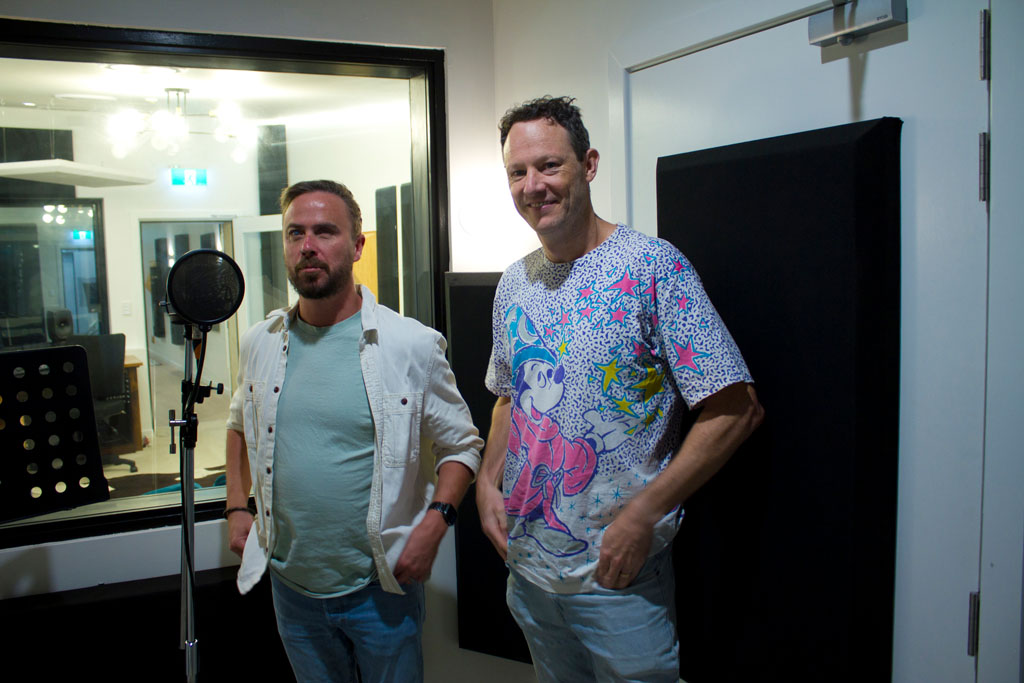
“Despite the fact that things like AI are coming for us, we try to offer more things peripherally to the digital hardware and software we use. A huge majority of our clients are singer/songwriters,” says Nick, adding, “One thing we really enjoy is taking a very green singer/songwriter, someone who might have never been in a studio before or never even written a complete song, and providing help and guidance to them.”
Nick points out that a lot of the former corporate production work has diminished. “That’s a space that is being eaten up by artificial intelligence at the moment. So, the sad reality, from a corporate perspective, is that I don’t know which decision-makers are going to decide to pay someone to create some backing music for an ad when they could put a prompt into a generative AI site and create it in seconds for a fraction of the price,” says Nick.
It was during his eight-year tenure on Newcastle’s Hit 106.9 breakfast show that Nick Gill met multi-instrumentalist Matt McLaren. At the time, Matt, who was born blind, was running a music company, S&M Productions, which specialised in recording, writing, teaching, performing, mixing, mastering and producing music. He was invited to play keyboards on a project that one of Nick’s friends had brought into the radio station. Nick was so impressed by Matt’s musicianship and production expertise that he commissioned him to produce a children’s song he had written for his daughter.
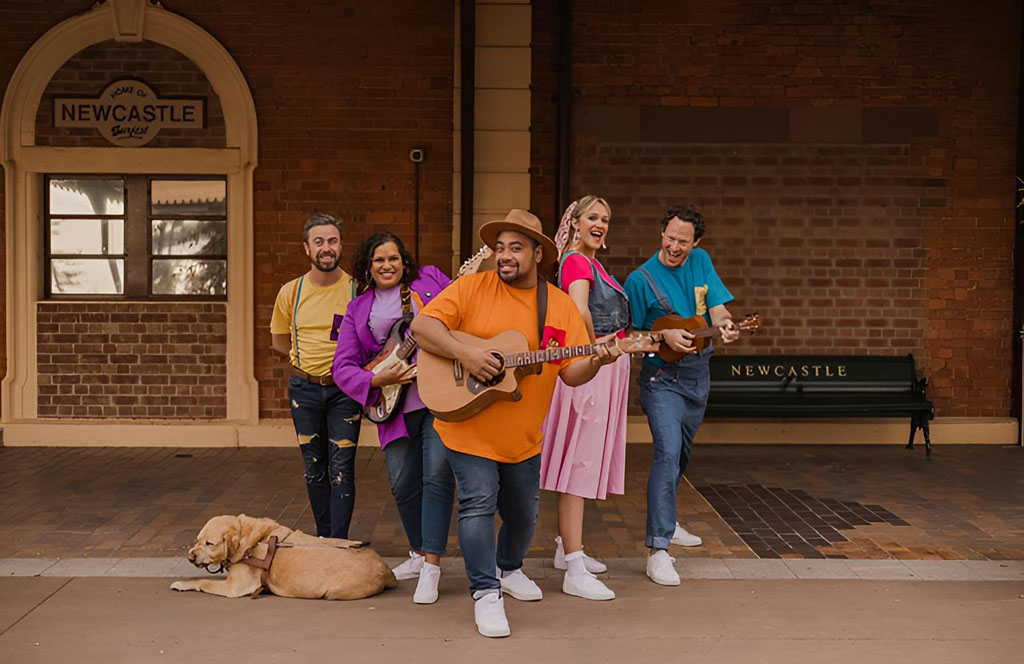
Matt’s talent was further demonstrated when he made it to the Grand Final of Australia’s Got Talent. And when Nick Gill conceived the children’s group The Quokkas, the inclusion of Matt McLaren completed the final line-up. In their joint venture at Opus, Nick and Matt work as producers and audio engineers on several client-based projects as well as writing and producing songs for The Quokkas.
While technological advances have simplified audio production, the technology has also ushered in a confusing plethora of ‘must-have’ outboard equipment, including microphone preamplifiers, EQ, analogue compressors, and a mass of digital plugins.
“There’s a lot of options out there, and I think that can be creatively inhibiting. You pull up a project, and you’ve got 600 plugins to choose from; where do you start? What do you use? Back in the day, even with digital, you didn’t have that many options, so you just used what you had, and you made it work, and there’s definitely something in that. I try to limit myself to certain plugins that I know really well, and I only use those.”
“The plugins I’m using now are the ones I’ve been using for about five years, and I’m really happy with those, but it took me a long time to find the ones I was happy with. I use FabFilter suite a lot; that’s my main go-to for compressors, saturators and EQs. I also use Soundtoys; that’s very good stuff, and Valhalla is a great reverb. It’s really important for me to work fast and efficiently, so I need to know my plugins really well. I need to be able to pull a sound really fast, and you don’t do that from drawing through 80 plugins,” says Matt.
Nick and Matt both stress the importance of the performance of the artist and getting the right signals into the mix. “It’s important to get the gain staging right on the way in, and the performance is everything, or there’s no point; you can’t squeeze life out of something that has no life to start with, no matter what plugin it is. I’m never out to criticise anyone’s work; that’s never been my goal at all. But I think it’s important to realise that the potential of the song could be so much greater if you get the performance right at the start,” says Matt.
Along with capturing the best performance, which is essential for maintaining a human element in an increasingly AI-driven world, Nick and Matt argue that channelling signals into the mix with the intent to fix them later in post can be counter-productive.
“There’s so much emphasis now on corrective editing. It’s really a sad way to record music because it defeats the purpose of what we’re trying to do in the first place, which is record something human and unique and all those good things,” says Matt.
Nick adds, “One thing I focus on is backup vocals. And often people are just like, ‘Well, it’s just an ‘ooh’ or an ‘ah’ or a harmony’ or something like that. I reckon you can convey a lot of emotion by doing a really good performance of the backup vocal as well and really leaning into a well-executed, just buried acoustic part. It can still give you emotion and vibe.”
With Matt’s expertise as a multi-instrumentalist and vocalist, paired with Nick’s experience as a guitarist and songwriter, the duo offers exceptional guidance for both emerging and established performers.
“We do a lot of guiding with them, including with backup vocals. Like, I’ll play the part on the piano and help them work it out. If they haven’t already got the harmonies all figured out, we’ll guide them through that and say, ‘Sing this G here and then go up to the A and change from ‘ooh’ to ‘ah’ here,’ and we sort of teach them as we go. A lot of people haven’t worked that much in backup vocals before, especially if they’re a lead vocalist, so it’s a bit of a different mindset for them,” says Matt.
Nick adds, “As Matt said, a lot of lead vocalists can’t hear the harmony. And even when you sing it to them, they revert back because they’re so used to singing the lead; they can’t execute the harmony. And so, Matt, in particular, is really good at playing along with them as they go so they can hear exactly what they’re supposed to be singing.”
Matt’s parents encouraged him to play piano when he was three and a half years old, and he later branched out into other forms of music that he felt more comfortable with.
“Yeah, so I grew up doing classical grades and all the rest of it. And then when I sort of got over that when I was a teenager, I started branching out and finding other music, and so that sort of took me on a bit of a different path. I’ve always been interested in recording. I was that kid running around with a tape recorder recording stuff like a weirdo, just making recording sounds and whatever,” says Matt.
Matt got his first computer in the 90s and started recording on Windows Sound Recorder. “So it was not great! But it was the start of something.
I learned about how computers routed audio and how to think about it conceptually, and I just played with every single piece of software I could get. That sort of led me to doing some production for some online companies when I was doing my HSC. I wanted to get into actually producing sound for movies and stuff like that, but as it turns out, I sort of moved back towards music, and that was actually way more fun because you get to work with people and recording bands and stuff.”
Matt didn’t get into MIDI in the early days of computerised recording because early DAWs were visual black boxes for the vision-impaired; they lacked the accessibility scripts and screen-reader compatibility that are available today.
“I need a screen reader to use my computer, and I couldn’t use it (MIDI),” says Matt, who used Cakewalk Pro Audio 9 as his first software DAW.
“I don’t know how I did anything on that because nothing was accessible at all. I used to move the mouse around and click on things and see what happened. Cakewalk Sonar was the first one that I could actually navigate because there was a guy who lives in Brisbane who developed scripts for it to make it accessible and navigable with a screen reader. That was when I could first record things and arm tracks and know when they were armed. It was like non-linear and non-destructive editing for the first time.
“I’m so disinterested in the whole conversation around who uses what; like, I use Reaper, and that allows me to have a job. And people say, ‘Oh, it’s not a proper DAW because it doesn’t cost eight grand’. It all sounds the same to me; they’re all using the same plugins,” says Matt.
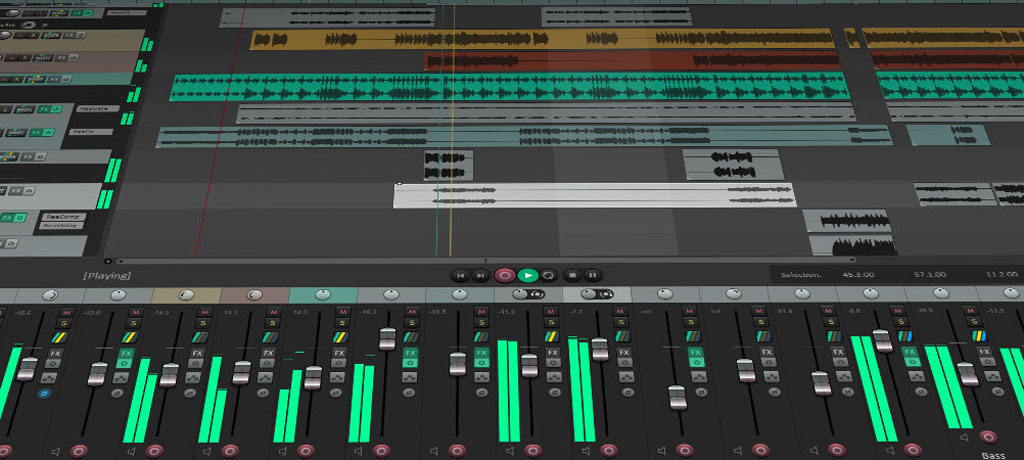
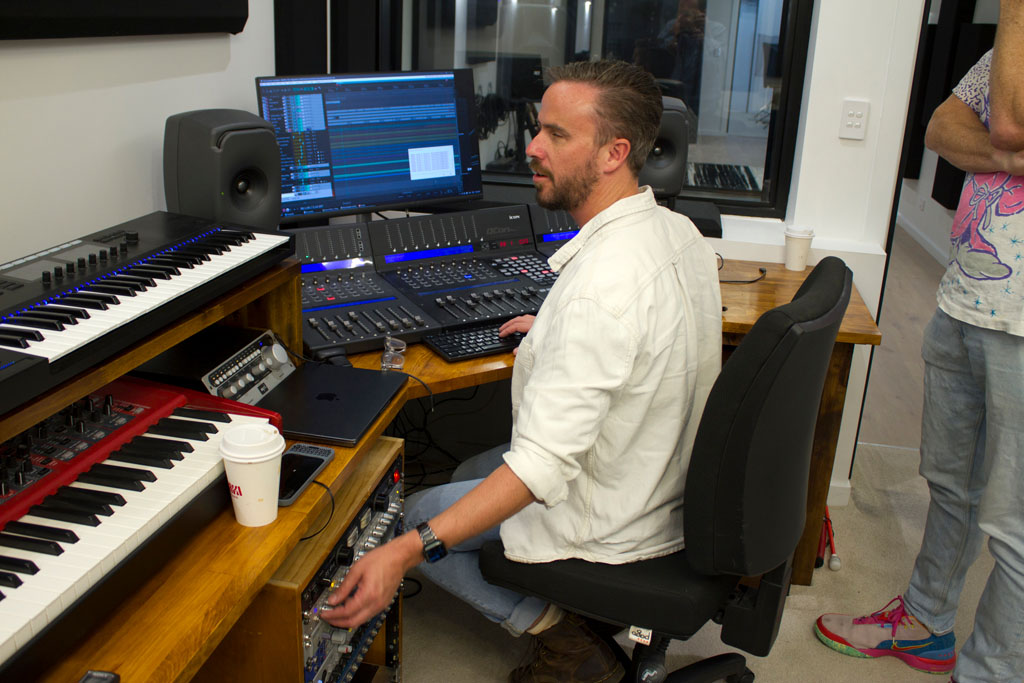
At this stage of the interview, Matt sits at the workstation and opens up Reaper (see images). As he scrolls through the audio tracks, a specialised extension called OSARA (Open Source Accessibility for the REAPER Application) acts as an audible translator. As Matt navigates with keyboard commands, the audio announces details like “Track 2: Vocals, Muted” or “Track 3: Bass, Armed for recording”. However, I couldn’t discern these readouts, as Matt utilises a skill called ‘speed listening’, which sounded alien and unintelligible to me because Matt speeds the audio up to rates far exceeding normal human speech so he can have a faster-paced workflow.
Prior to visiting Opus Productions, Nick briefed me over the phone on the unique synergy he and Matt brought to the studio.
“We work as a duo with very complementary skills. Matt is an absolute master arranger with perfect pitch. He can hear a song for the first time and not only play it, but he understands the internal workings and can execute an arrangement immediately. My strengths lie more in the early and final stages. I’ve written hundreds of songs, so I’m experienced in that area. And because I’ve released so many songs, I know how to guide artists through the post-mastering phase, how to give a release the best chance, how to try and get them playlisted on editorial playlists on streaming services, et cetera. I think a lot of studios ignore that. They give you the master and send you on your way, but we want to be a ‘snout-to-tail’ service. We can take a recording from a phone, even if it’s just you singing a hook, and turn it into a fully realised, radio-ready tune with a release plan. That’s why we started the business,” said Nick.
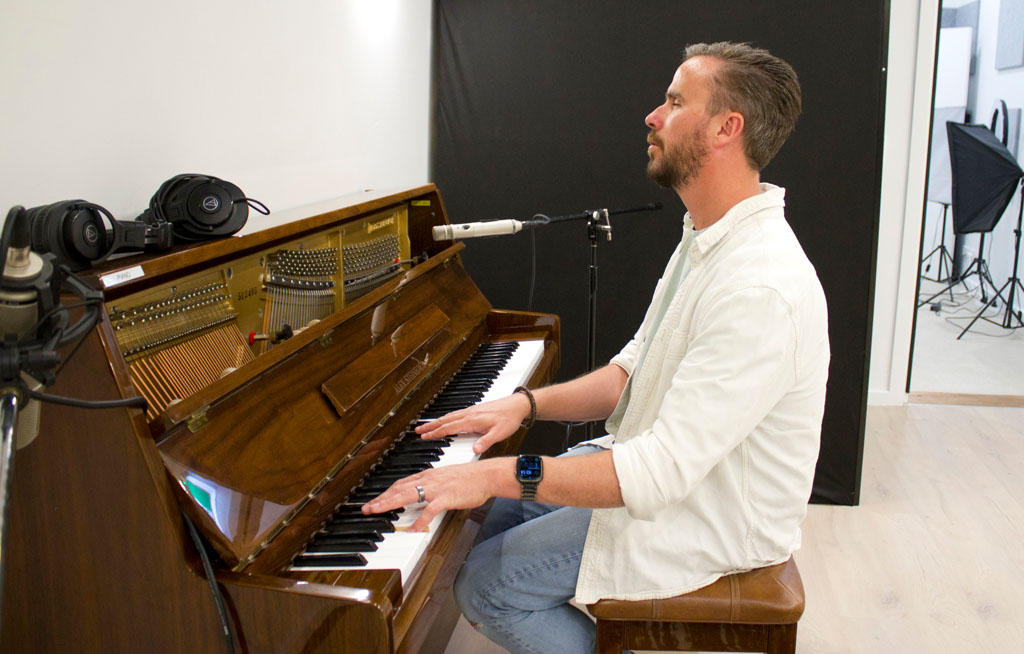
After learning that Matt McLaren had perfect pitch, I couldn’t resist attempting to sing a middle C note for him in the studio to see how close I could get. This was a task that my 1970s singing teacher insisted upon before I commenced each lesson. I think Matt had an inkling that I was testing him, as he knew my little Sony Notetaker recorder was running, and I could check it later. Matt instantly told me that I sang the E above middle C. I did check it, and he was right!
—
Main Pic: Matt McLaren Operating Reaper
Subscribe
Published monthly since 1991, our famous AV industry magazine is free for download or pay for print. Subscribers also receive CX News, our free weekly email with the latest industry news and jobs.
Recent posts