THE GAFFA TAPES
18 Aug 2026
Australia’s Fractured Film Industry
Subscribe to CX E-News
The Gaffa Tapes: Snippets from the archives of a bygone era
It’s been about 13 years since my two-year stint writing for IF (Inside Film) magazine. Back then, the publication had a print circulation of just under 4,000 copies; today, it exists solely online. My métier was reporting on the technical side of the film, television and digital media production industries, while features on actors, directors and screenwriters were left to the entertainment journalists.
One project, however, took me beyond my usual technical focus. Over several issues, I was commissioned to interview key personnel from a number of Australia’s post-production houses. While discussions centred on production technology, I’d often mischievously slip in probing questions, steering the conversation away from filmmaking mechanics to ask executives and engineers why the domestic market had reached a gridlock, where promising projects frequently hit dead ends while the same familiar outback narratives dominated the niche.
What consistently stood out during my interviews and visits was that the Australian film industry had positioned itself as a premier destination for global cinema post-production, rather than a nation producing its own creative films.
Some of these post-production houses, which started decades ago as smaller local operations focused on television commercials, have since transformed into powerhouse finishing houses catering almost exclusively to big-budget overseas films.
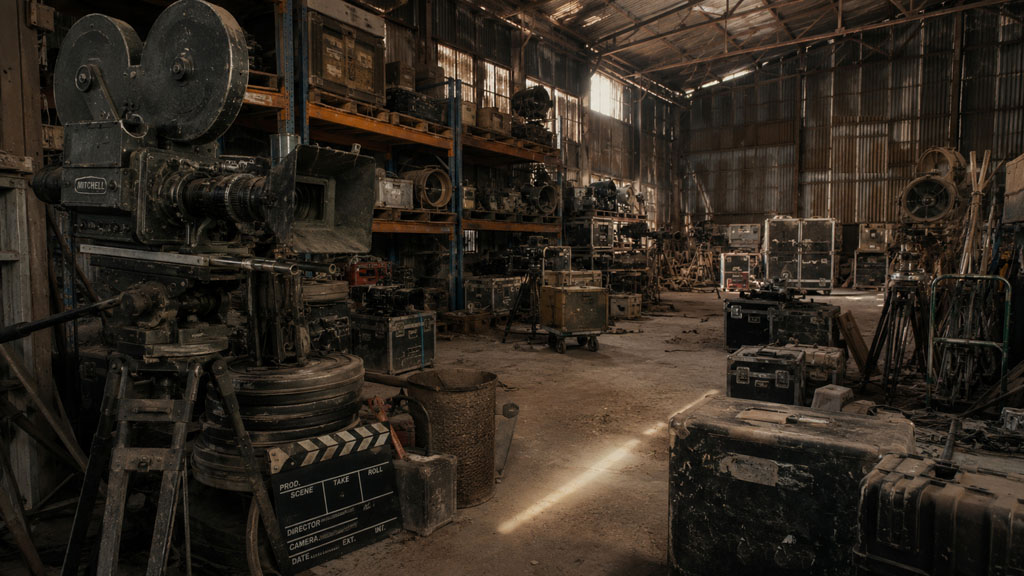
While this evolution brought global acclaim for visual effects and animation, it underscored a systemic dependency on foreign content. Instead of driving original Australian narratives from script to screen, the local industry became heavily committed to polishing the projects of overseas producers and directors. Local houses such as Animal Logic, Rising Sun Pictures, and Iloura proved their world-class capabilities as vital pipeline partners on Hollywood blockbusters, delivering standout VFX for The Matrix trilogy, Superman Returns, Knowing, Sucker Punch and multiple films in the Harry Potter franchise. This technical prowess also culminated in major animation feats such as Happy Feet, Walking with Dinosaurs 3D, and The Lego Movie.
In 1980, I enrolled in a series of scriptwriting workshops in Sydney hosted by John Pooley, a scriptwriter for the ABC, largely during the 1970s when the network was a primary hub for locally produced sketch comedies, sitcoms, and variety shows. The sessions focused heavily on industry standards, script formatting and scene architecture rather than basic writing skills. When writing projects were assigned, attendees would take on specific roles to act out the scripts alongside classic scenes from legendary playwrights such as Neil Simon. The one encouraging factor that stood out in those workshops was John Pooley consistently telling us, “They don’t knock back good scripts.” I completely bought into Pooley’s claim that the ABC would never reject a genuinely good script, which was probably true at the time, especially for established writers. However, the landscape has changed. The ABC’s official Commissioning and Independent Production portal currently states, “The ABC commissions content from independent producers with a proven track record. We do not accept unsolicited scripts, program ideas, or pitches from individual creators without an established production partner.”
By almost any practical definition, Australia’s film and television industry operates as a closed shop. Government agencies such as Screen Australia, Screen NSW, Screen Queensland and the South Australian Film Corporation (SAFC) do not read unsolicited scripts. They either demand that an established crew be attached to a project, such as a producer, director or secured budget, before considering a submission, or they drown the creative process in bureaucratic box-ticking. Writers trying to submit projects are confronted with mountains of paperwork and redundant forms in a bureaucratic run-around. Then, without reading the script, they patronisingly flood applicants with suggestions of enrolling in scriptwriting classes.
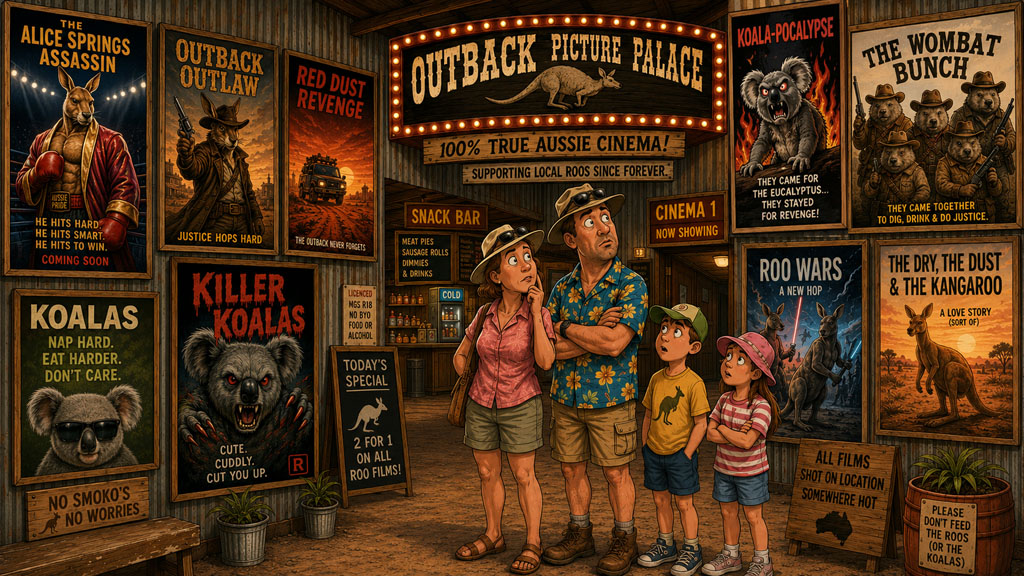
When Australian stories are featured on streaming services, they often rely on tired, recycled tropes: the gritty outback crime thriller or the predictable beachside drama, where the performances are frequently flat or overly melodramatic. Some critics attribute this to the legislative push to mandate that major global streaming platforms invest a percentage of their local revenue back into domestic drama, documentary and children’s programming. Because streaming services are forced by law to hit these quotas, they treat local production exactly like government funding bodies do. The creative process then becomes a corporate compliance exercise where executives look for scripts featuring stereotypical Australian settings because they believe that is what satisfies a local content checklist.
To submit one of my scripts to a major streaming service, I navigated its strict policy against unsolicited material by securing representation through an approved agency.
Fortunately, I already had a project in development with a post-production company that was a designated partner of the streaming service. They agreed to step in as my representative and submit the new script for me. The production company formally sent the script to a streaming executive on my behalf. It was blindly rejected without consideration; it didn’t even get a read. The bottom line of the communication back to my agent read: “It is tricky to navigate outside of existing content relationships and/or reputable representation.”
During the 1990s, I was a member of the Australian Writers’ Guild and submitted scripts to numerous film companies. The paradigm of rejection has shifted dramatically since those days when Australian production companies still accepted unsolicited material. The most encouraging response I ever received was from Crawfords Australia, which read: “Thank you for sending your script. We have now completed our assessment process. We believe the script exhibits great potential, although it certainly requires further work. Crawfords’ senior assessor is certainly impressed with the idea, and if you wished to contact him, he would be happy to make a series of suggestions to you which we think could take the script to the next stage.”
A series of telephone calls ensued; however, it coincided with the era when the financing model for independent Australian feature films virtually collapsed. Private investment dried up, and government film organisations altered their funding criteria.
Crawfords was heavily reliant on steady television revenue and under the new rules, an independent feature film became a massive financial gamble they simply couldn’t justify.
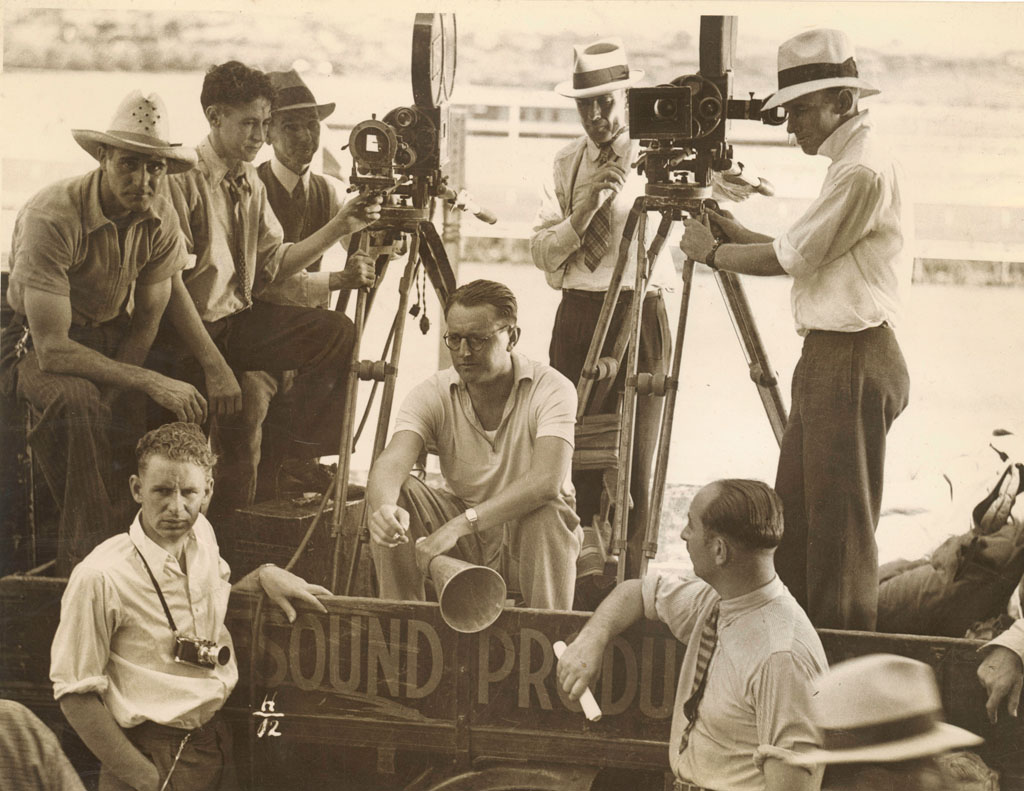
Previously, in the 1980s, Australian films were largely funded by the tax loophole known as Division 10BA, which allowed private investors to claim a massive 150% tax concession on money put into local films. By the early 1990s, the government drastically scaled this back to a flat 100% deduction to avoid lost tax revenue, and private funding for independent films instantly evaporated. During this financial crisis, the government established the Film Finance Corporation (FFC) to directly fund movies. However, by the mid-1990s, the FFC introduced a strict ‘market attachment’ policy. The government would no longer hand out grants just because a script was good; a producer had to prove commercial viability by securing a guaranteed local theatrical distributor, pre-sales financial guarantees and an international sales agent. For independent screenwriters, it became a classic Catch-22: you couldn’t get government funding unless you had a distribution company locked in, but distribution companies wouldn’t sign on until you already had the government funding secured.
Today, all unsolicited script submissions to film companies are waved away under the same blanket policy: “It is our company policy not to accept or consider unsolicited submissions, scripts or ideas. This policy is strictly enforced to avoid any potential misunderstandings or legal disputes when products developed internally by our staff or partners might appear similar to your own work.”
The digital world, however, has torn a massive hole in this industry rule. Millions of writers now bypass the gatekeepers entirely, self-publishing books on Amazon, as I did, or uploading short films and concept trailers to YouTube. Since these projects exist entirely in the public domain, studio executives have access to them every time they go online; therefore, the same legal disputes could easily arise without a formal script submission. The legal excuse falls apart even further when you consider standard submission waivers that indemnify film producers. I’ve signed several of these myself. By pretending they are wary of lawsuits, the industry feigns that the rule is about copyright protection. In reality, it is just a convenient excuse to avoid dealing with a mountain of submissions, allowing them to maintain a comfortably closed shop.
It is currently estimated that 75% of the financial investment and workload volume in feature films processed by Australian post-production houses comes from overseas projects, while purely local Australian stories make up the remaining 25%. Screen Australia’s own tracking data highlights this reality: “In 2025, feature films under Australian or shared creative control earned $25.1 million, or 2.6 per cent of the total Australian box office (including titles that screened in 2025, with a prior year of release).
This is down on the previous year, when the share was 3.8 per cent, and below the 10-year average of 4.9 per cent.” Screen Australia also notes, “Kangaroo was the highest-earning Australian film in 2025.”
Subscribe
Published monthly since 1991, our famous AV industry magazine is free for download or pay for print. Subscribers also receive CX News, our free weekly email with the latest industry news and jobs.
Recent posts



Latest jobs