News
12 Nov 2026
Flying High at Te Kaha
Subscribe to CX E-News
JoyMechanix and Raptor bring a new perspective to sports broadcasting at Christchurch’s landmark stadium
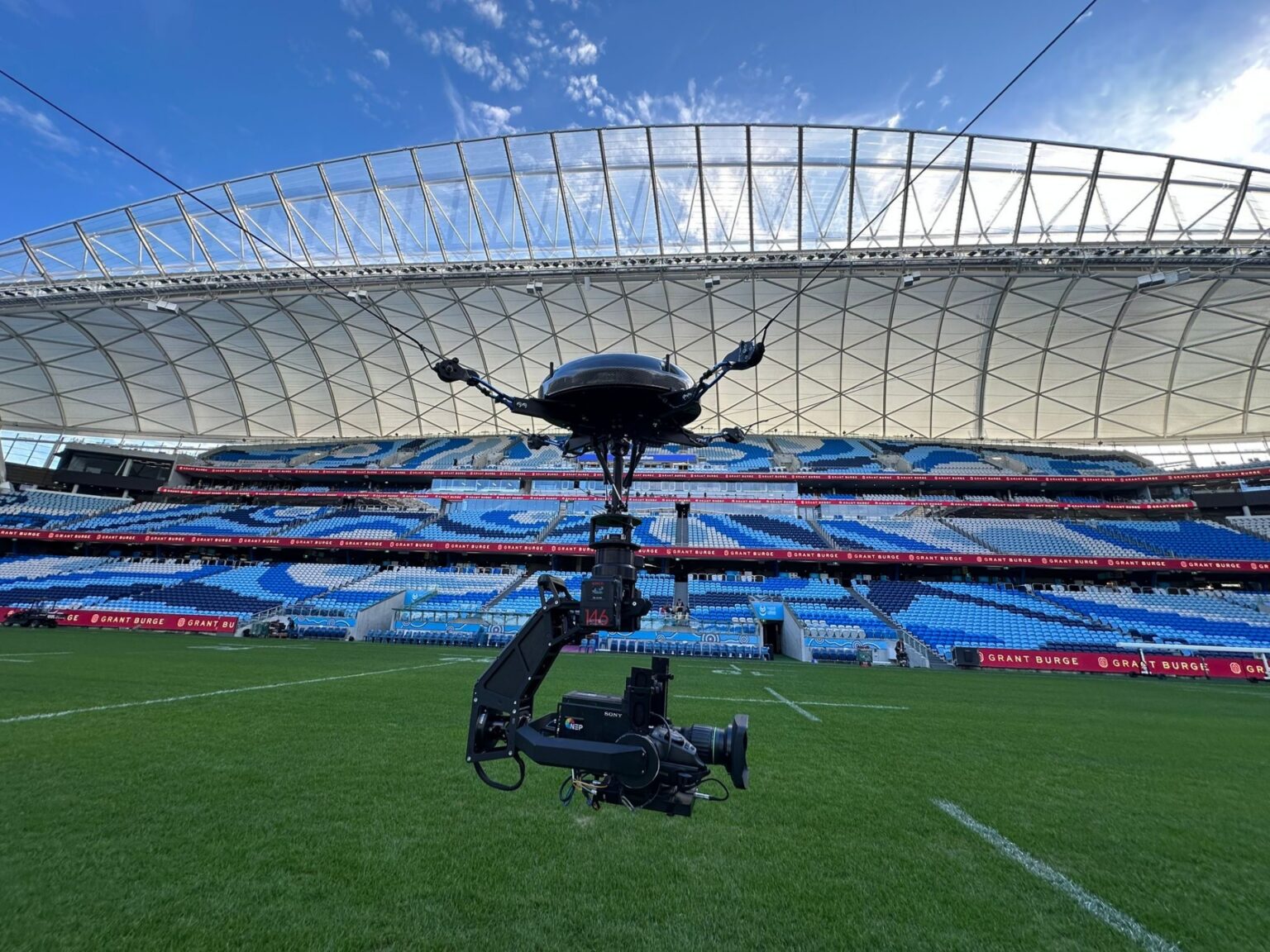
Te Kaha, Christchurch’s new stadium, is already earning praise for its design and operational efficiency. For broadcast technology company Raptor, the venue has proved particularly impressive, providing an ideal environment for the deployment of JoyMechanix’s four-point cable camera system during Super Rugby’s Super Round.
Contracted by Sky New Zealand, Raptor was tasked with delivering an aerial camera solution capable of travelling across the playing field, capturing dynamic footage from angles that conventional broadcast cameras cannot achieve. The project was also an opportunity for Sky to demonstrate the technology’s potential as part of its top-tier sports coverage.
Behind the successful deployment were two companies with a shared commitment to making sophisticated camera technology reliable and straightforward to operate. JoyMechanix, the international manufacturer of robotic camera motion systems, and Raptor, the Australian-based specialist responsible for installation and operation, have built a partnership that is proving its worth across major sporting venues throughout Australasia.
We talk to JoyMechanix founder and CEO Aleksei Ermishin about the technology and its evolution, and Raptor Managing Director Hamish Trott about bringing the system to Te Kaha.
From Theoretical Physics to Broadcast Robotics
Aleksei Ermishin is the fourth generation of scientists and engineers in his family, with a background in theoretical physics. His introduction to broadcast robotics came in 2012 when his father’s broadcast and telecommunications integration business was asked to source a four-point cable camera system.
At IBC in Amsterdam, Aleksei found fewer suitable options than expected, “There were only about three manufacturers worldwide at the time and their systems were really designed for their own rental operations. One company required six months of technician training and the pricing was through the roof. I was a very confident young graduate, so I decided I could build one myself!”
Two years later in 2014, JoyMechanix unveiled its first product, a cable camera system with ceiling-mounted winches designed to free up valuable floor space in studios, “It was unique at the time, but it took us much longer to develop a product that could deliver the quality and reliability we wanted across different applications.”
Today JoyMechanix operates from offices in Slovakia, the UAE and Australia, employing around forty people and supplying camera motion systems to more than twenty countries. Its equipment has been used at major international events including the Olympics, Wimbledon and world aquatics championships, and its growing product range encompasses four-point cable cameras, robotic cranes, stabilised gimbals and rail-mounted systems.
Rather than competing with customers in the rental market, JoyMechanix manufactures and sells equipment, “We make equipment specifically for our clients to own and operate. Our clients appreciate that we’re not competing with them for projects and are focused on how we can make it as reliable and straightforward as possible to install and operate.”
Four Points, Endless Possibilities
Aleksei explains the four-point cable camera system, “The basic idea is very simple. You have four winches, a stabilised camera platform and one computer controlling everything through a joystick. But there are thousands and thousands of components involved, from motors, brakes and gearboxes to cables and software. Every component requires precise engineering to make the system work reliably.”
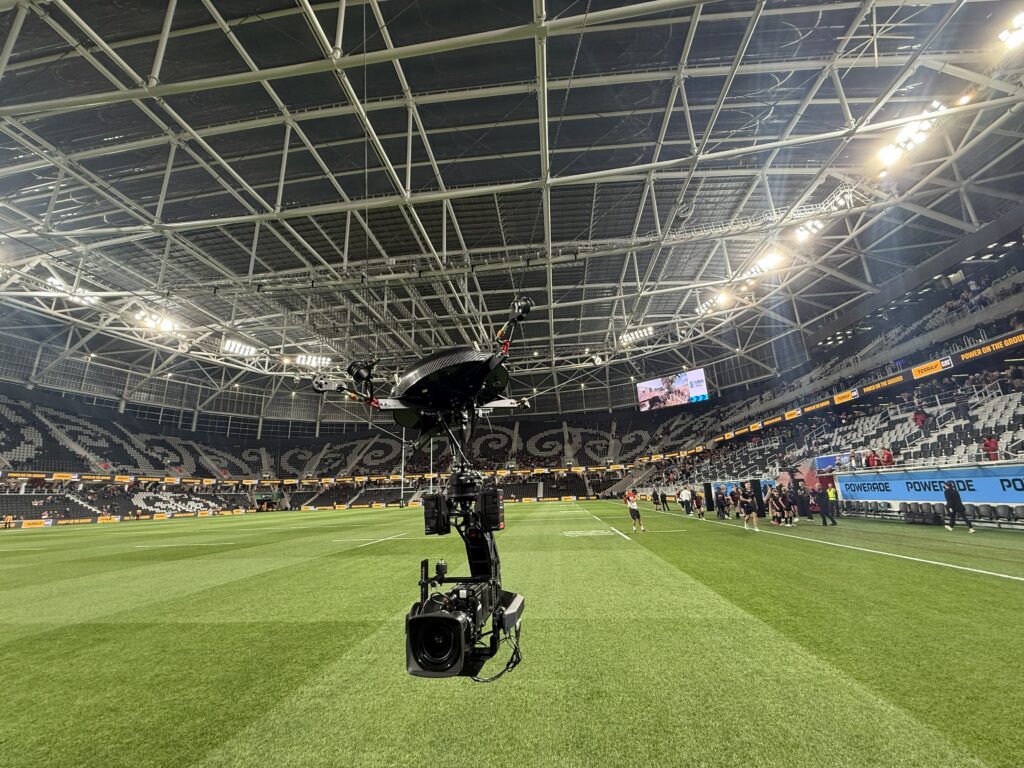
JoyMechanix has invested heavily in software to simplify operation and automate camera movements, an approach Aleksei believes has significantly reduced the training burden traditionally associated with cable camera systems, “An operator can learn to use the automated functions in a day, although we provide more extensive training to make sure teams are confident with the complete system. During Covid we were even able to supply equipment and train operators remotely, and they went straight into delivering major events without our technicians being there.”
Real-world performance remains the ultimate test. Stadiums vary enormously in their infrastructure, electrical supply and rigging opportunities, all of which can present unexpected challenges, “It’s relatively straightforward to make everything work in a laboratory. When you arrive at different stadiums, you can encounter unusual power fluctuations, unexpected rigging arrangements and all sorts of other challenges. We’ve spent years working with our clients to develop equipment that can cope with those situations.”
For Aleksei, creating the hardware is only half the story. Successful deployment depends on meticulous preparation, particularly when several tonnes of equipment must be installed, tested and ready for a live broadcast, “You can’t delay a live sporting event because your camera isn’t ready. That’s why procedures, training, checklists and preparation are so important. We work closely with our rental partners to make sure they can deliver on time.”
Raptor Takes Flight
One of those partners is Raptor, headed by Managing Director Hamish Trott. Hamish acquired an existing Australian business operating JoyMechanix systems in late 2024, rebranded it and substantially increased its equipment inventory. The company quickly expanded its operations, working with NEP Group and delivering its first major international project at the World Aquatics Championships in Singapore in July 2025, deploying two aerial systems and a JoyMechanix rail camera.
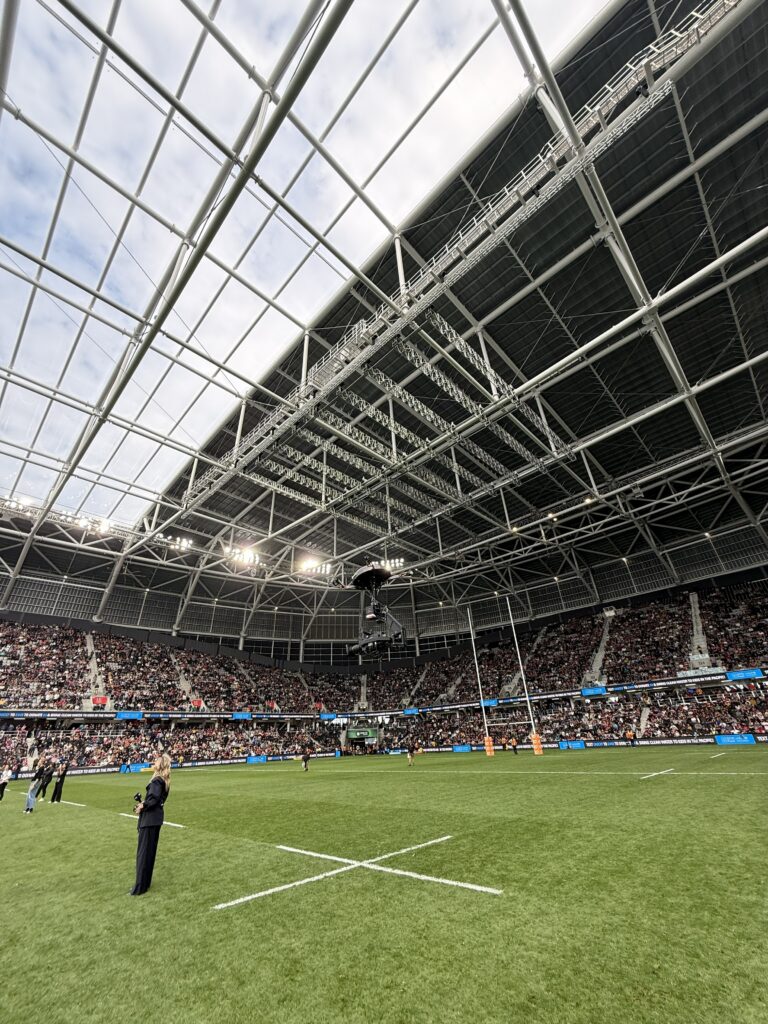
Te Kaha marked Raptor’s first New Zealand project, with Sky keen to explore the possibilities of integrating aerial camera coverage into its premium rugby broadcasts. Hamish was involved from the earliest stages of Sky’s stadium reconnaissance, alongside planning for conventional camera positions, cable routes and fibre infrastructure, “Before we commit to an event, we have to know that the system can physically fly in the space and achieve the shots the broadcaster wants. We measure the roof height and diagonal distances because the weight of the camera dolly and the length of the cables determine how low the camera might sit in the middle of the field.”
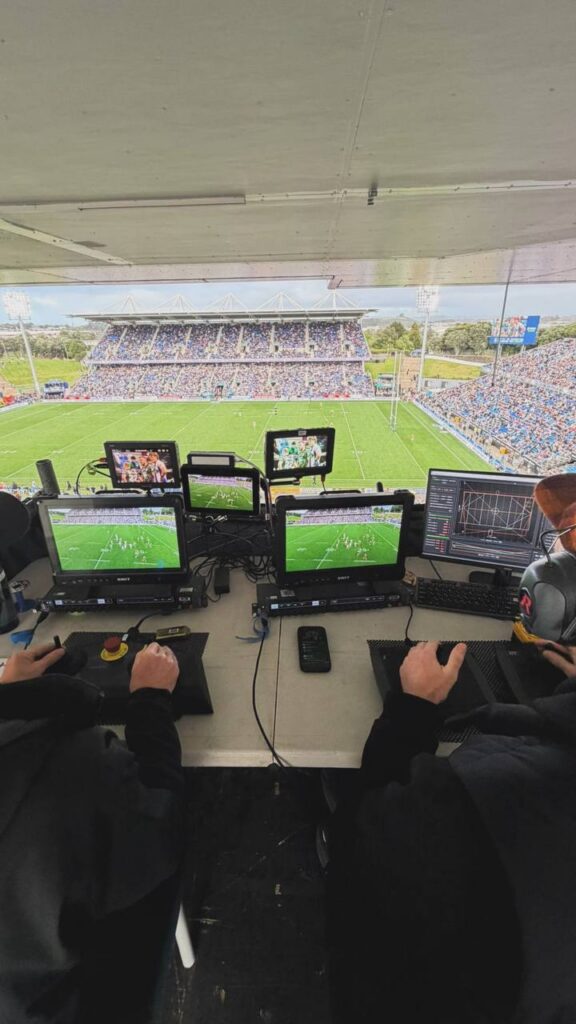
At Te Kaha, the roof height was approximately 30 to 33 metres, allowing a working camera height of around 26 to 28 metres, “It was pretty much perfect. Most of the Australian stadiums we work in are around 30 to 35 metres high, which gives us a really good working height above the rugby posts.”
A Stadium Designed to Deliver
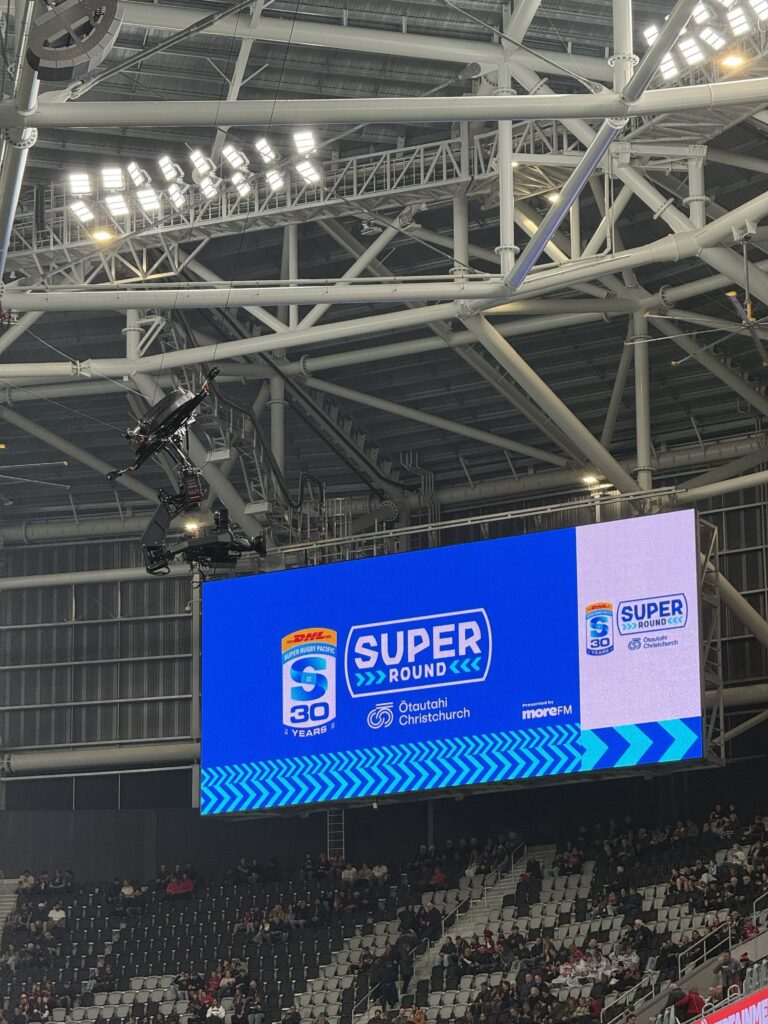
The primary challenge was accessing the four overhead rigging positions. Unlike stadiums with accessible roof gantries, Te Kaha required a boom lift exceeding 40 metres to reach the mounting locations. The team also had to adapt square truss to the stadium’s circular structural members. Once those challenges were resolved, Hamish discovered just how well the new stadium supported the operation, “It’s honestly one of the best stadiums we work in. Everything is so well thought out. There’s power right next to where we need our winches, the cable runs are short and connectivity is straightforward. It’s a really compact, efficient setup. Now that the pulleys are installed, it’s probably one of our easiest stadiums to work in.”
The experience was enhanced by the venue’s team, “The stadium staff were incredible, so easy to work with and happy to help with anything we needed. They made our lives so much easier. Everyone we’ve dealt with has been fantastic.”
The infrastructure installed for Super Round remains in place, with guide ropes allowing Raptor to pull the winch lines through the overhead pulleys from ground level for future deployments. For Hamish, this is a strong indication of the broadcaster’s commitment to making aerial camera coverage a more regular feature of sports production.
Confidence in the Air
Raptor provides a complete service, from rigging and safety checks through to camera operation and delivery of the live feed to Sky’s production truck.
Hamish is particularly enthusiastic about the JoyMechanix operating platform, describing its intuitive software and integrated safety systems as major advantages, “The software is the brain of the whole system, and it’s incredibly intuitive. Our operators find it easy to understand and it doesn’t take long to learn. JoyMechanix has also built multiple layers of safety into both the software and hardware.”
These include a safety circuit associated with the Ethernet connections between the winches and control desk, designed to trigger an emergency stop if the circuit is interrupted.
Hamish also praises JoyMechanix’s responsiveness when technical support or modifications are required, “If we’re unsure about something, their technical team will come back to us almost immediately. If a client needs something different, they’re prepared to make changes to the software to find a solution. They’re just a great company to work with.”
Perhaps the strongest endorsement comes from the operators themselves, “I’ve had experienced operators who use other systems tell me how relaxed they feel operating JoyMechanix equipment. There’s a lot of complex technology involved, often working in pretty tough weather conditions, but they have real confidence in it. That’s fantastic feedback to receive.”
The Next Generation
JoyMechanix is continuing to expand beyond four-point cable cameras. Re:Crane is a truss- or rail-mounted, modular upside-down jib designed for moving and positioning remote camera heads during live broadcasts and pre-planned motion control sequences. Lift&Slide combines horizontal rail movement with a cable-controlled vertical axis. Aleksei sees significant potential for these systems in entertainment venues where complex lighting rigs, LED screens and restricted operating space limit the practicality of a traditional four-point installation, “Our approach has always been to understand how our customers actually use the equipment and develop products that meet those needs. That’s what drives everything we do.”
Subscribe
Published monthly since 1991, our famous AV industry magazine is free for download or pay for print. Subscribers also receive CX News, our free weekly email with the latest industry news and jobs.
Recent posts

Latest jobs