COMMS
21 Sep 2026
Communications Without Limits
Subscribe to CX E-News
The Future of Broadcast and Live Production Communications
The best productions are often judged by what the audience never notices.
They don’t notice the camera operators coordinating a live sports broadcast across multiple venues. They don’t notice the stage manager cueing performers through a headset seconds before a key moment. They don’t notice the technical directors, engineers, producers and RF technicians constantly exchanging information behind the scenes. They simply experience a seamless production.
Yet communications remains the single most important technology layer underpinning every successful broadcast, live event, sports presentation, theatre production, house of worship and corporate event.
If audio is the heart of a production, communications is the nervous system.
And right now, that nervous system is undergoing one of the most significant transformations in its history.
From Partyline to IP
For decades, professional communications was relatively straightforward.
Production teams relied on a combination of wired intercom systems, two-way radios and, later, wireless intercom solutions. These systems often existed independently of the rest of the technology infrastructure around them.
Today, those boundaries have all but disappeared.
Modern communications systems are increasingly IP-based, network-aware and cloud-connected. They are no longer isolated systems sitting alongside production workflows. They have become integrated components within broader broadcast, AV and operational technology ecosystems.

Manufacturers including Riedel, Clear-Com, RTS, Pliant Technologies, Green-GO and VOGO, formerly Vokkero, have all recognised this shift and have all developed platforms that embrace Dante, AES67, cloud services and software-defined workflows.
This evolution mirrors what we have already witnessed in audio and video. Just as broadcasters moved from SDI to IP and from dedicated circuits to network infrastructure, communications is now following the same trajectory.
The result is greater flexibility, scalability and interoperability than ever before.
Different Tools for Different Conversations
One of the most common mistakes organisations make when evaluating communications technology is searching for a single solution that can do everything.
The reality is that different communication tools serve different operational requirements.
Two-way radio continues to be the preferred solution for security teams, venue operations, logistics staff and event management personnel. The coverage, simplicity and reliability of modern digital radio systems make them essential components of almost every major event.
Intercom systems serve an entirely different purpose.
Where radio is designed for operational coordination, intercom is designed for collaboration.
Directors, camera operators, vision switchers, EVS operators, audio and lighting directors, and production managers all require full-duplex communications that support multiple talk groups, point-to-point conversations and instantaneous decision-making.
This is where professional intercom manufacturers have continued to innovate.

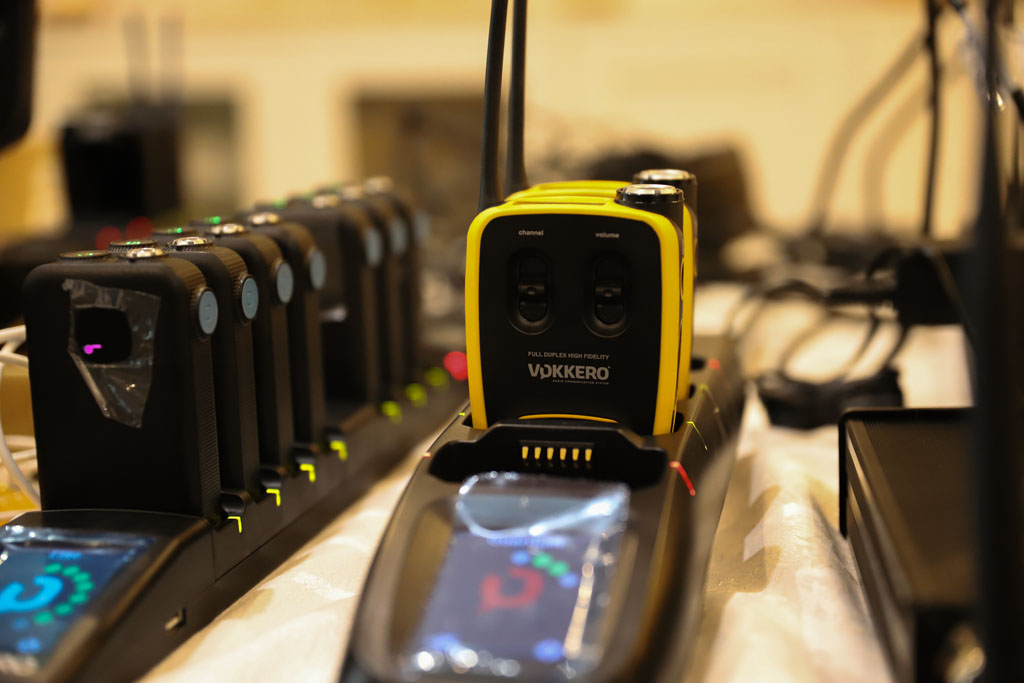
Riedel’s Artist and Bolero systems have become fixtures of major international sports broadcasts and live entertainment productions. Clear-Com continues to push the boundaries of distributed communications through Eclipse, Arcadia, cloud-native platforms and the newly released FreeSpeak Cell. RTS remains deeply embedded in broadcast infrastructure worldwide, recently expanding its wireless intercom offering with Nomad. Green-GO’s decentralised architecture has gained significant traction within live events and rental markets, while Pliant Technologies has become synonymous with highly reliable wireless communications systems.
Each manufacturer approaches the challenge differently, but they all share one common goal: helping teams communicate more effectively under pressure.
Because in live production, communication failures are almost always production failures.
Learning from the World’s Biggest Events
The importance of communications becomes most visible at the world’s largest sporting events.

Whether it is the Olympic Games, FIFA World Cup, Formula One, Rugby World Cup or ICC Cricket World Cup, communications solutions often become innovation platforms where new technologies are tested under demanding real-world conditions.
The Olympic Games, in particular, have historically served as a proving ground for communications technologies. The complexity of coordinating thousands of personnel across venues, broadcasters, security teams, volunteers and operations staff requires exceptionally robust communications infrastructure.
Formula One has similarly become synonymous with communications innovation. The sport’s adoption of highly integrated communications, data and operational systems has influenced broader broadcast and live production workflows for years.
Closer to home, innovations in communications are increasingly visible within Australian sport.
Centralised production models, remote commentary workflows and distributed broadcast operations are now common across sporting codes. What once required large on-site crews can increasingly be managed through a combination of remote production technologies and highly integrated communications platforms.
As rights holders continue seeking greater efficiency, communications solutions have become the glue holding these distributed workflows together.
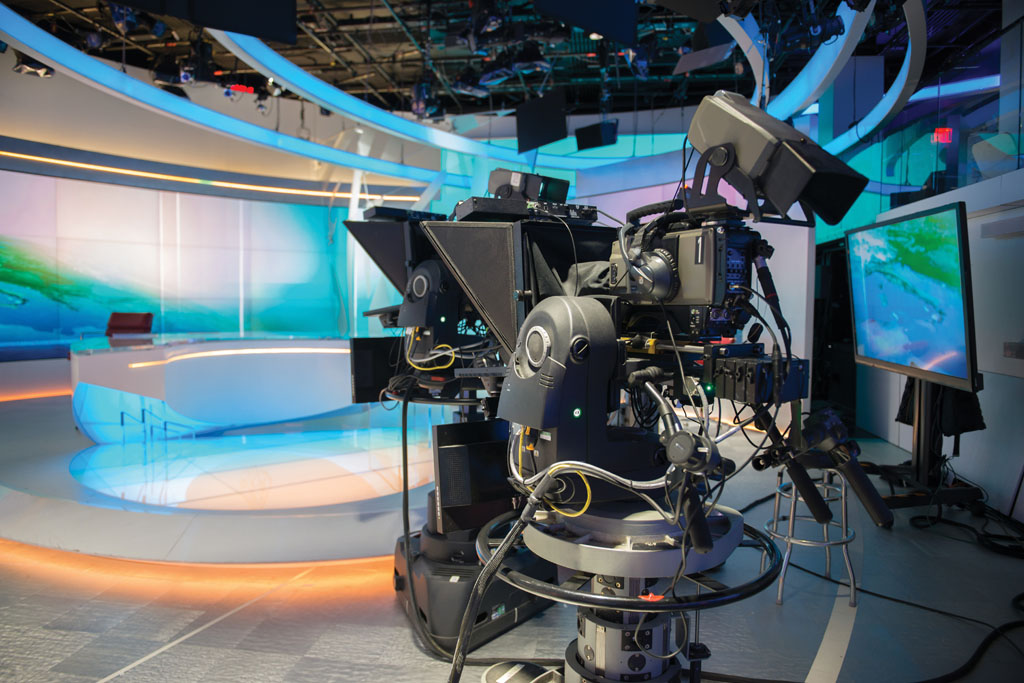
Remote Production Changes Everything
Perhaps the most significant shift of the past decade has been the rise of remote and distributed production. Broadcasters, production companies and venue operators have realised that expertise no longer has to reside physically at the event. A director may be located in Sydney. A graphics operator may be working in Melbourne. EVS operators may be somewhere else entirely.
Commentary teams might be working remotely. Camera crews remain on site.
Communications systems enable these teams to operate as though they are sitting in the same production truck. This shift has driven significant innovation throughout the communications industry. Cloud-connected intercom systems, software endpoints, mobile applications and virtual user panels are rapidly becoming standard components of professional communications deployments.
For organisations seeking to maximise resources while maintaining production quality, communications has become a strategic enabler rather than simply another equipment category.
LTE Is Changing the Conversation
One of the most exciting recent developments is the emergence of LTE-enabled communications devices. Historically, professional wireless intercom systems relied upon local RF infrastructure, DECT networks or venue-based connectivity. LTE introduces a fundamentally different model.
Rather than depending on local coverage, devices can utilise cellular infrastructure to connect users into wider communications ecosystems from virtually anywhere. The significance of this development extends beyond individual products.
Recent releases such as Clear-Com’s FreeSpeak Cell demonstrate that major manufacturers now view cellular infrastructure as a legitimate platform for mission-critical communications.
The technology itself is less important than what it represents. Intercom manufacturers are beginning to assume connectivity exists everywhere. That is a profound shift in thinking.
For broadcasters, it enables field journos, roaming camera operators and production personnel to maintain seamless communications without requiring extensive infrastructure deployment.
For live events, it creates opportunities to connect personnel operating well beyond traditional venue boundaries.
LTE is not replacing conventional wireless intercom systems, but it is creating an entirely new operational layer that did not previously exist.

Private 5G: The Next Frontier
While LTE is changing communications today, private 5G networks may ultimately reshape the industry over the coming decade. Most conversation around private 5G focuses on video contribution, IoT devices, automation and operational technology. Communications, however, may prove one of the most compelling applications.
Private 5G offers several characteristics particularly attractive to broadcast and live production environments:
- Deterministic performance
- Quality of Service controls
- Enhanced security
- High device density
- Low latency
- Seamless mobility
Imagine a convention centre, stadium precinct, university campus or major venue operating its own dedicated private cellular network. Intercom users could roam freely throughout the entire precinct while maintaining communications with production teams, venue operations, engineering departments and security personnel.
At the same time, the same network could potentially support camera contribution, telemetry, monitoring systems, operational data, remote production workflows and venue technology platforms.
For equipment manufacturers, this creates opportunities to rethink how wireless communications devices are designed. For owner-operators, it creates opportunities to maximise returns on a single infrastructure investment across multiple business units.
The communications industry spent the last decade converging onto IP networks. The next decade may see communications, mobility and collaboration converge onto private wireless infrastructure. The organisations exploring these opportunities today will likely be best positioned to benefit tomorrow.

Communications Is No Longer an Island
One of the biggest mistakes organisations make when planning communications systems is treating them as standalone purchases.
Modern communications solutions now intersect with:
- Networking
- RF design
- Cybersecurity
- Cloud infrastructure
- Audio transport
- Broadcast systems
- Operational technology
- Venue management platforms
The most successful projects increasingly involve collaboration between manufacturers, consultants, network specialists, broadcasters, venue operators and systems integrators.
Increasingly, success comes from designing integrated ecosystems rather than selecting individual products. The future belongs to organisations capable of bringing multiple technologies together into a cohesive operational workflow.
The Most Overlooked Part of Any Communications System
There is one topic that rarely receives the attention it deserves: accessories.
Headsets, earpieces, microphones, hearing protection, chargers, cabling, battery systems and carrying solutions often have a greater impact on user satisfaction than the communications equipment itself.
The most sophisticated intercom system in the world becomes frustrating if the headset is uncomfortable after six hours. A camera operator will remember a poorly fitting headset long after they forget which matrix frame powered it. Yet many manufacturers focus heavily on core technology while allocating comparatively little attention to the user experience surrounding accessories.
This is a missed opportunity. End users interact with accessories every minute of every shift; comfort, durability, noise isolation, hygiene and ergonomics matter.
Some of the greatest improvements in user acceptance can be achieved through accessory upgrades rather than wholesale equipment replacement. In many cases, improving how a system feels can be just as important as improving how it performs.
Getting More from Existing Investments
The good news for many organisations is that modernisation does not necessarily require replacement. Many communications systems deployed over the past decade remain highly capable platforms.
The biggest opportunities often come from integration and optimisation, for example: adding IP connectivity, improving RF design, introducing LTE-enabled endpoints, connecting systems through cloud infrastructure, improving accessories and extending interoperability between platforms.
The smartest organisations are not necessarily those purchasing the newest equipment every year. They are the organisations continually improving how their existing investments work together.
Collaboration Will Define the Future
The future of communications will not belong to a single manufacturer. It will belong to organisations that embrace collaboration.
Customers increasingly expect interoperability rather than isolation. They want systems that connect, workflows that scale, and infrastructure that remains relevant as technology evolves.
The communications platforms that succeed will be those that work well not only within their own ecosystems but alongside other technologies.
Open standards, network-based architectures and collaborative workflows will continue driving innovation throughout broadcast and live production.
Because communications is no longer simply about talking; it is about enabling people to work together regardless of location, platform or infrastructure.
As our industry moves further toward cloud workflows, LTE mobility and private 5G networks, one thing remains unchanged: great productions still depend on great communication. The technology may evolve, the infrastructure may change and the workflows may continue to become more distributed, but the objective remains exactly the same: getting the right information to the right person at precisely the right moment.
And that is something worth talking about.

Subscribe
Published monthly since 1991, our famous AV industry magazine is free for download or pay for print. Subscribers also receive CX News, our free weekly email with the latest industry news and jobs.