News
14 May 2026
Dreamer Rewrites the Light Festival Model
Subscribe to CX E-News
NZICC’s Ariki Hall becomes an all-day, weatherproof world of light
Outdoor light festivals have become part of the winter rhythm in many New Zealand towns and cities. They are beautiful, communal and often technically ambitious. They are also expensive, weather exposed, infrastructure heavy, and limited to the hours after dark.
For Paul van’t Hof, known across the industry as Goff, that equation had started to look increasingly difficult. Through The Production Co and his associated interests across audio, video, interactive and live event production, Goff has long sat in that practical space between creative ambition and operational reality. Dreamer, the new indoor light festival staged at NZICC during the April school holidays, came from looking hard at the realities of the outdoor model and asking whether there might be another way.
Testing the waters
Goff had watched regional light festivals grow on the back of Covid-era, council funding and the growth of Matariki festivals, then struggle as that support shifted or disappeared. His hometown of New Plymouth was front of mind, “The winter festival of lights had been cancelled after funding dried up and organisers were faced with balancing significant costs against uncertain returns as audiences fluctuated around potentially cold and wet conditions.”
New Plymouth’s summer Festival of Lights still works brilliantly, he says, helped by its longer season and established audience, but the basic outdoor constraints remain. You have to wait until dark, which in summer pushes the experience later into the evening; while producers still have to provide toilets, fencing, security and wider site infrastructure, all adding cost and risk.
Goff turned to Jamie Newman from Interesting Things, with whom he had already worked on several projects to develop an all year round alternative. Together they took a smaller version of their Dreamer concept to NZEA’s Eventing the Future conference at Claudelands in August, using the industry gathering as a proof of concept and a temperature check. The response from the regions was encouraging, but it was NZICC that moved first, “They wanted to be the first cab off the rank with the idea. So we said, yes, sounds great.”
Building the Dreamer experience
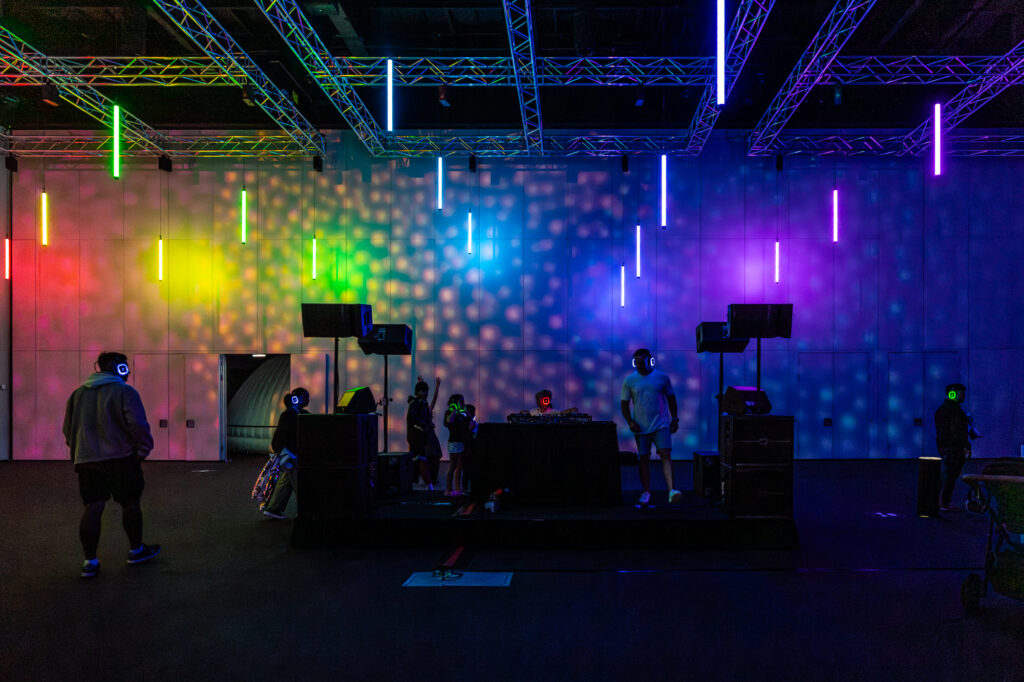
By then Goff already had some working knowledge of the new NZICC building. In his “other life” as a production manager he had looked after Six60 for the NZICC opening event and the subsequent Bic Runga show, as well as a number of corporate events in the venue, “It was always going to be hard being one of the first exhibits to use the 6,000 square metre Ariki Hall and to use it in the complex mode.” Existing relationships helped. So did the NZICC team. “Great communication, great team, great facility. So it all panned out. But it was definitely a bit of a learning curve at times.”
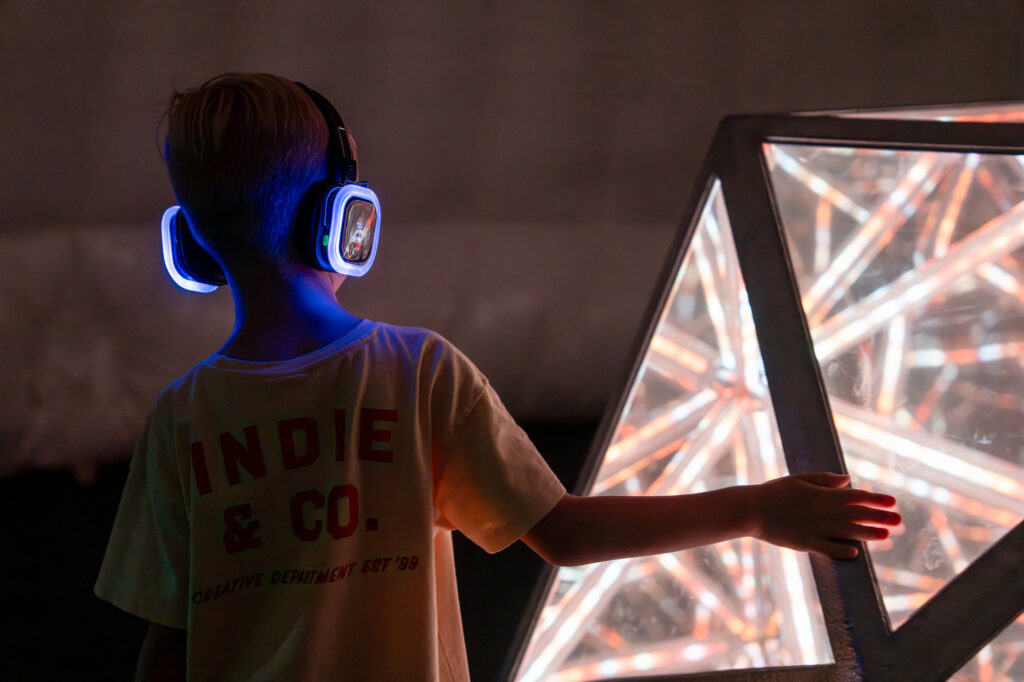
From a visitor’s perspective, Dreamer was deliberately loose and exploratory rather than linear. Visitors moved through a sequence of zones, with most rooms offering more than one thing to engage with. As for standouts, “If you asked 20 people, you’d get 15 different answers,” says Goff.
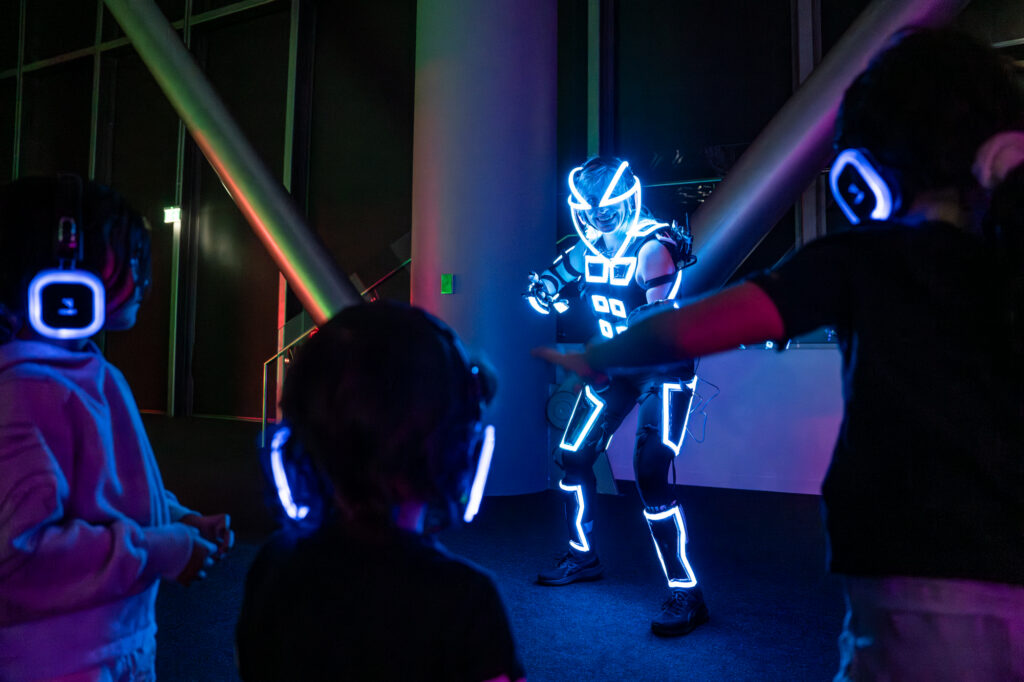
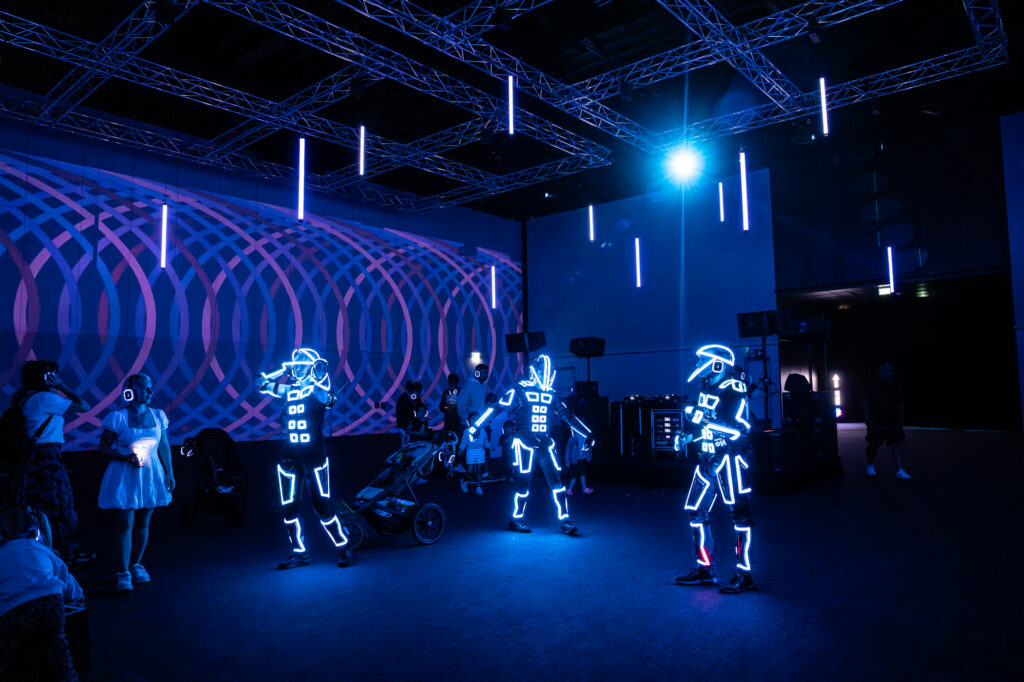
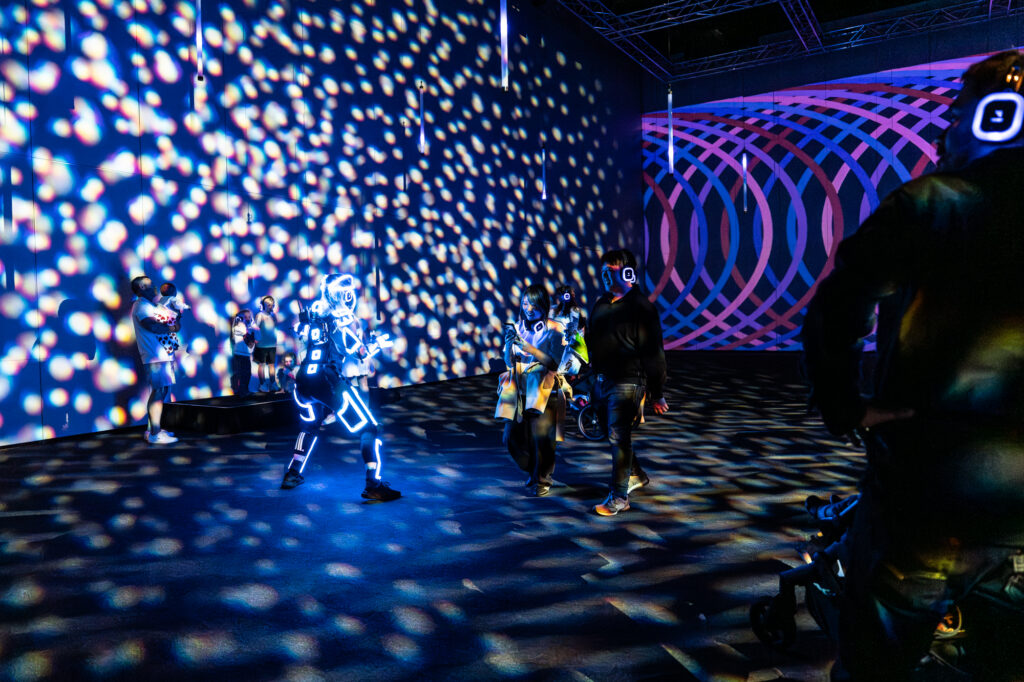
Vospertron’s Tron dancers were an obvious favourite. Created by Peter Vosper, the illuminated performers brought the kind of live, bodily interactivity that screens alone cannot deliver. Visitors could dance alongside them wearing silent disco headphones, switching headset colours to match the different “robots”.
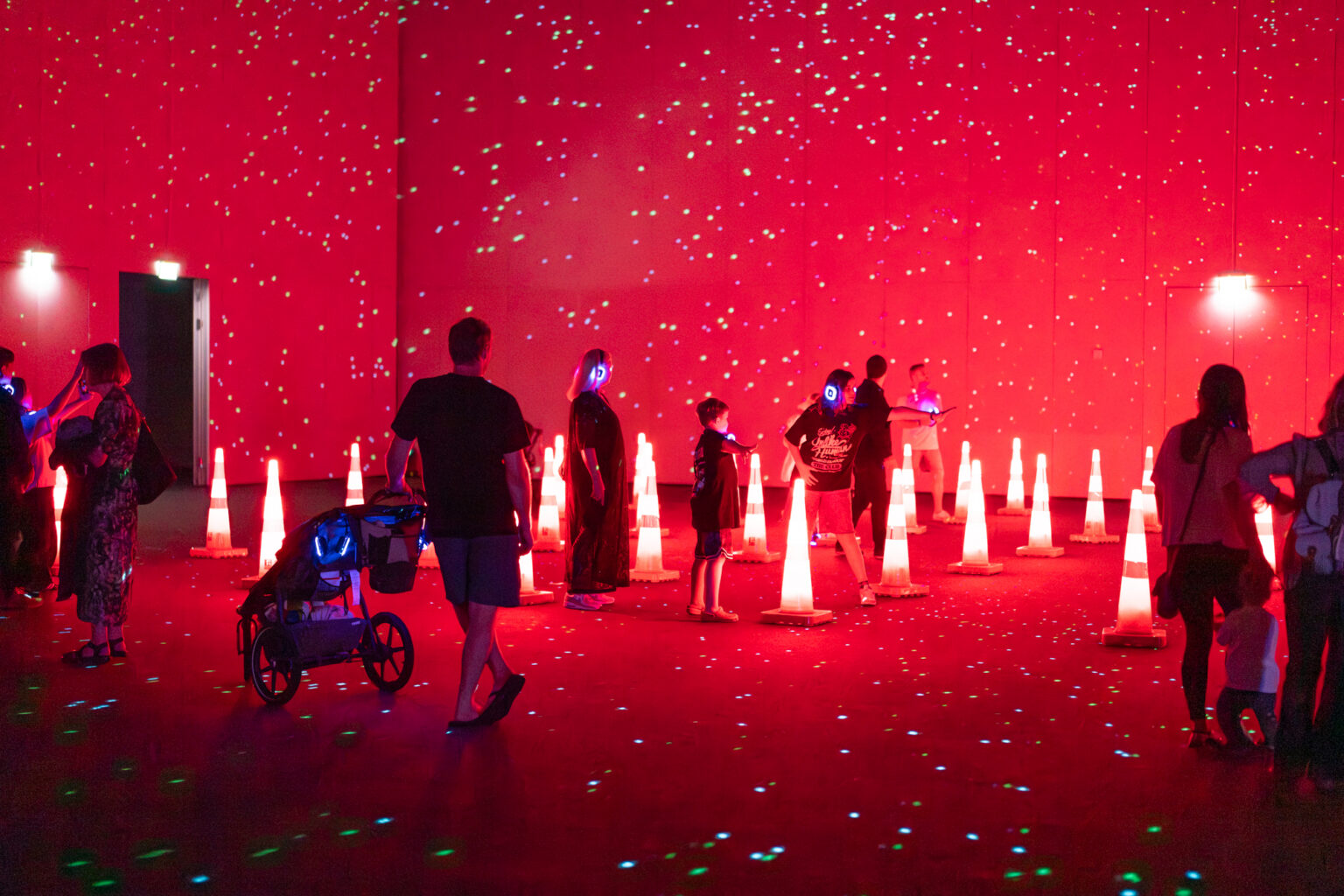
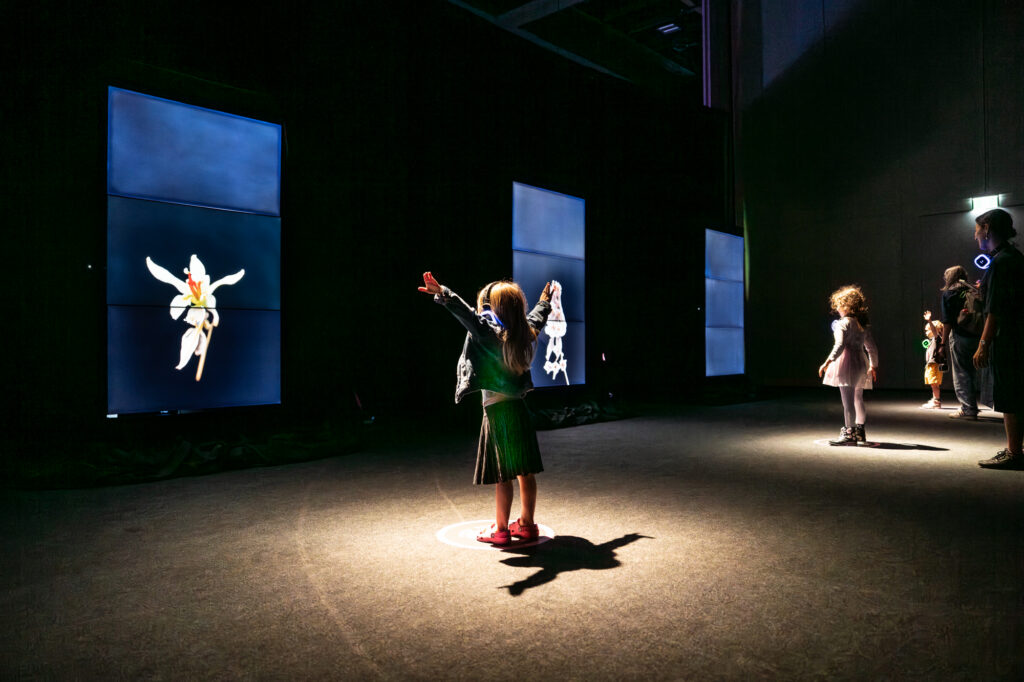
Creature Post contributed interactive screen experiences where participants could stand in front of a display and be transformed into a pile of rocks, a flower or a water feature. Giant Pong proved popular. Road Cone Wonderland, an installation that had been part of Goff’s world since Covid, remained what he happily calls “a banger”. Kids loved it.
There was also Ripple, another Creature Post digital installation and one of Goff’s personal favourites. Moving a hand across a sensor sent rings of light flowing across the wall, tracked in real time. In the same room were the Tron dancers, kinetic winches carrying lights, and a collection of moving lights, “That just all together had a really great vibe. We felt like it was super engaging.”
Under the hood
The mix was part curated, part purpose-built. The balance meant the show could avoid becoming a static exhibition, “Most of the things you could engage with had some level of interactivity. There was only a couple that you would class as exhibition-style things. Most things were pretty tactile.”
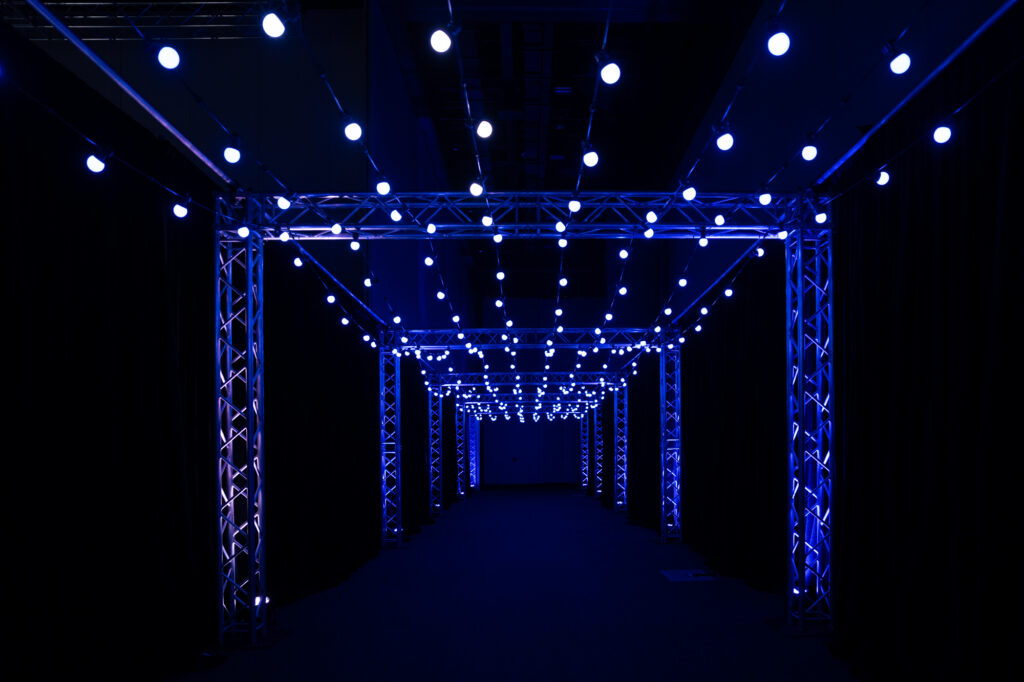
That tactility created its own production challenge: children, “Kids are like water. You don’t know where it’s going to flood or leak until you put the water in!” The team built for robustness and staffed accordingly. There were tweaks during the run, but no major rethink. One string drape, installed early in the journey, quickly proved too inviting for small bodies and was lifted higher to stop children getting tangled. Otherwise the show held up, despite what Goff describes as “some pretty ambitious children doing some pretty crazy things.”
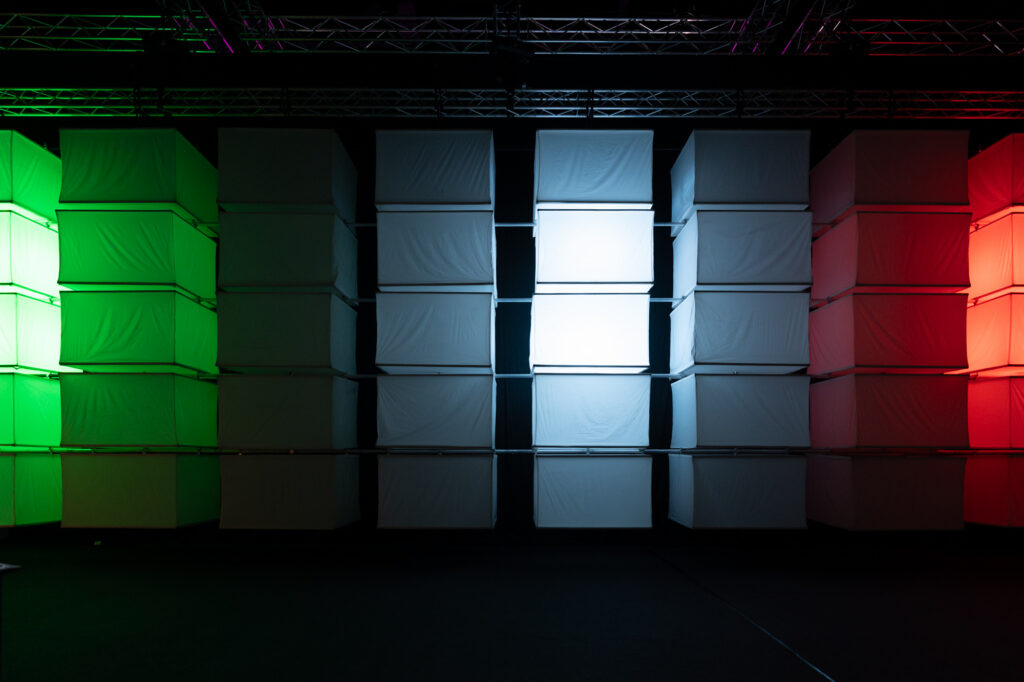
Technically, the room was approached as a series of zones. NZICC’s hall can be configured into multiple large and smaller rooms, and Dreamer worked with that divisibility. Some installations were camera-controlled through an interface to screen content; others sat closer to familiar DMX lighting control. Across the journey, various systems controlled different scenarios, from kinetic and moving light elements through to screen-based interaction and tactile inputs such as the pop-up piano, where playing notes changed the lights.
Audio was similarly zoned. Some areas carried atmospheric tracks, while others had more specific sound worlds. The silent disco had its own streams; the more disco-based areas had a different energy again. Spill between spaces was not treated as a problem to be eliminated at all costs. The hall’s design helped, and in an experience built around discovery, a little bleed could become part of the pull, “It wasn’t the sort of event that you didn’t mind hearing a little bit of something as you walked from one space to another. Certainly, the sense of anticipation in the loudest spaces, as you got closer to them, you’re thinking, what’s going on?”
The Dreamer Team
Dreamer was produced by The Production Co and Interesting Things, with Goff and Newman at the centre. Creature Post, Vospertron, Martin McNally from Airspace, Lux, Creative Technology and house supplier Norwest all contributed, with Tātaki Auckland Unlimited supporting the marketing push and 818 handling publicity.
Operationally, the experience was managed through timed Universe ticketing slots every half hour. The team began with lower capacities, then gradually increased the intake as they understood how the audience moved, where bottlenecks appeared, and how long people dwelled.
What’s Next?
For Goff, the success of Dreamer has given the team confidence to keep developing the format. There are conversations underway with multiple centres, alongside plans for new elements and a more provincial version designed for smaller spaces. He will not name names yet, but councils are interested.
For New Zealand conditions, an indoor light show may prove to be a more sustainable, scalable and family-friendly production model: all-day, all-weather, and less dependent on the sun going down. For Goff and the team though, it is not simply a wet weather workaround, but an environment in which to push the boundaries of interaction, immersion and creative technology. Freed from wind, rain, darkness and temporary outdoor infrastructure, Dreamer points to a model where light-based work can become more tactile, more responsive and more accessible. The next challenge is taking Dreamer beyond the country’s biggest venue and making it work across the motu.
Photos by Melissa Nickerson
Subscribe
Published monthly since 1991, our famous AV industry magazine is free for download or pay for print. Subscribers also receive CX News, our free weekly email with the latest industry news and jobs.
Recent posts