NEW ZEALAND
9 Jun 2026
Homegrown, Replanted
Subscribe to CX E-News
Kiwi Festival Shifts from Wellington Waterfront to the Mighty Waikato
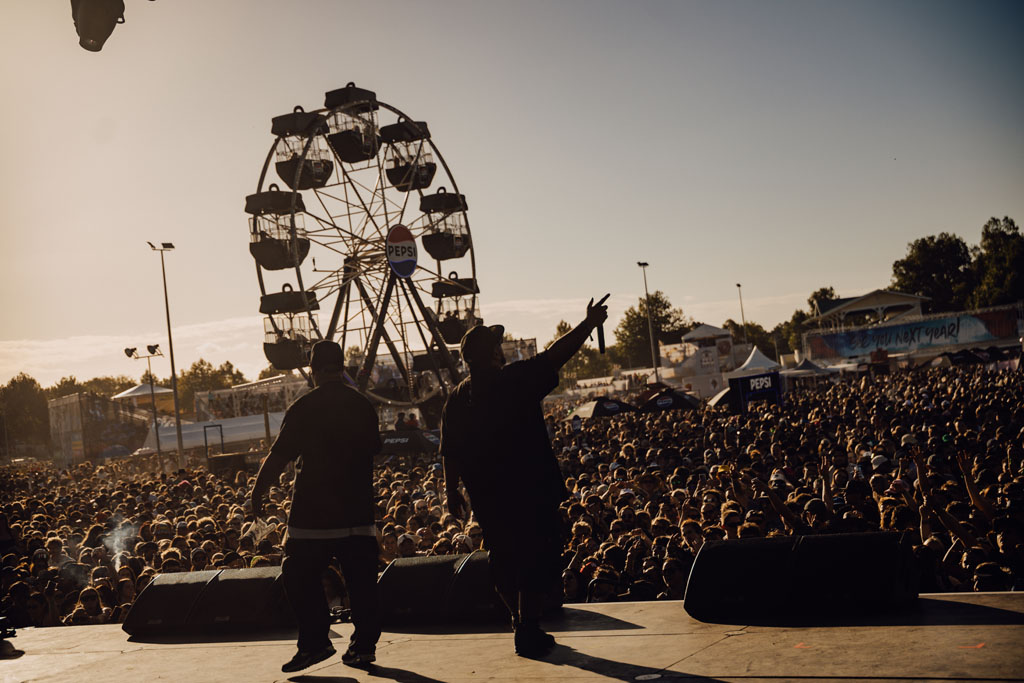
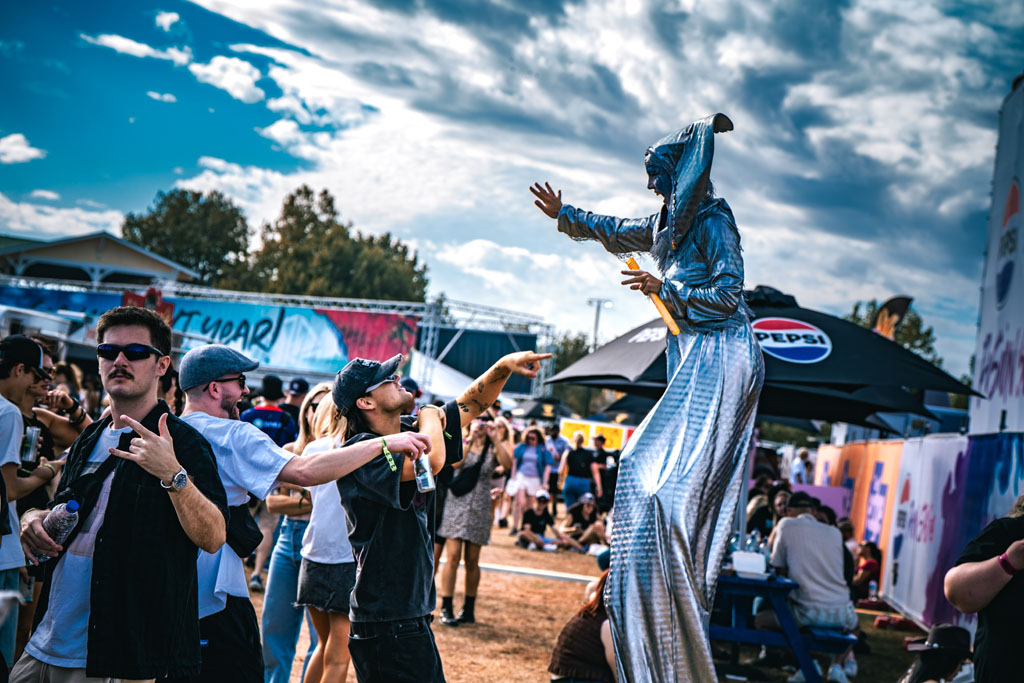
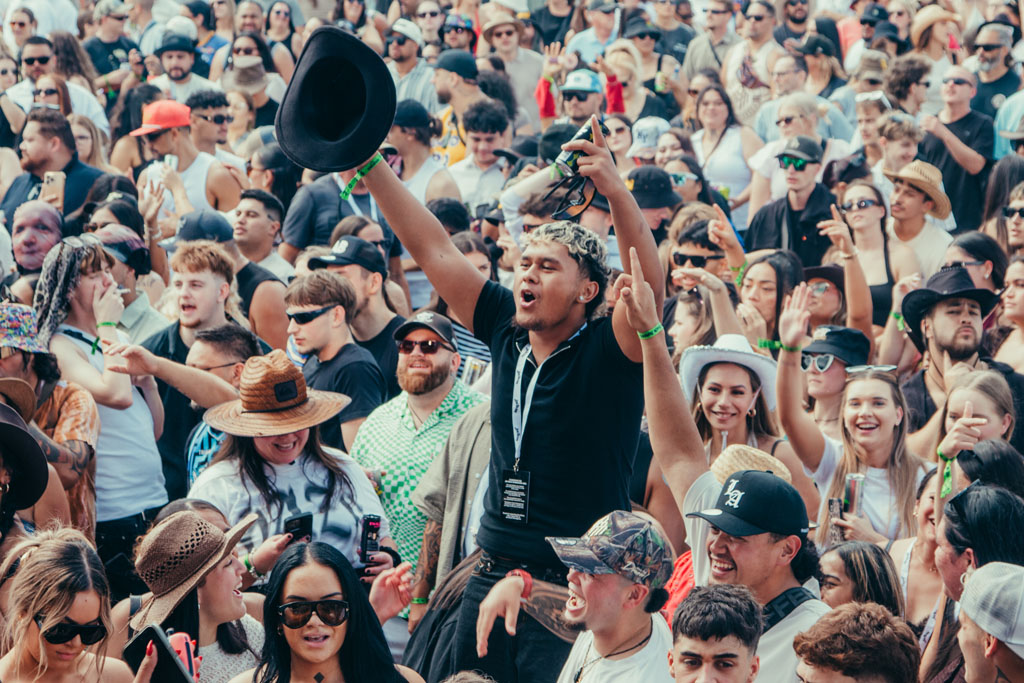
For 18 years, Jim Beam Homegrown was almost inseparable from Wellington’s waterfront. It was the festival where Aotearoa’s biggest local acts played within sight of the iconic harbour, where audiences moved between stages and city streets, and where the capital’s bars and restaurants effectively became part of the event footprint.
Then, in 2026, Homegrown moved, not just a few streets over or to another park in the same city, but out of Te Whanganui-a-Tara and into Kirikiriroa Hamilton. For any established event, that kind of shift is high risk. A festival is never just its line-up or its site map; it’s audience habit, supplier relationships, city texture, flow, memory, and a thousand small cues that tell people they’re exactly where they want to be.
Festival director Andrew Tuck faced twin challenges: making Claudelands work operationally and retaining the essence of Homegrown in a completely different place. He’s been in events for 28 years, and his approach is shaped as much by people as production. As he puts it: “Homegrown’s more than just a festival. Homegrown’s about the people. It’s about the audience. It’s about the artists. It’s about the people working together.” That philosophy mattered when the Wellington chapter reached its natural end.
When the waterfront ran out of room
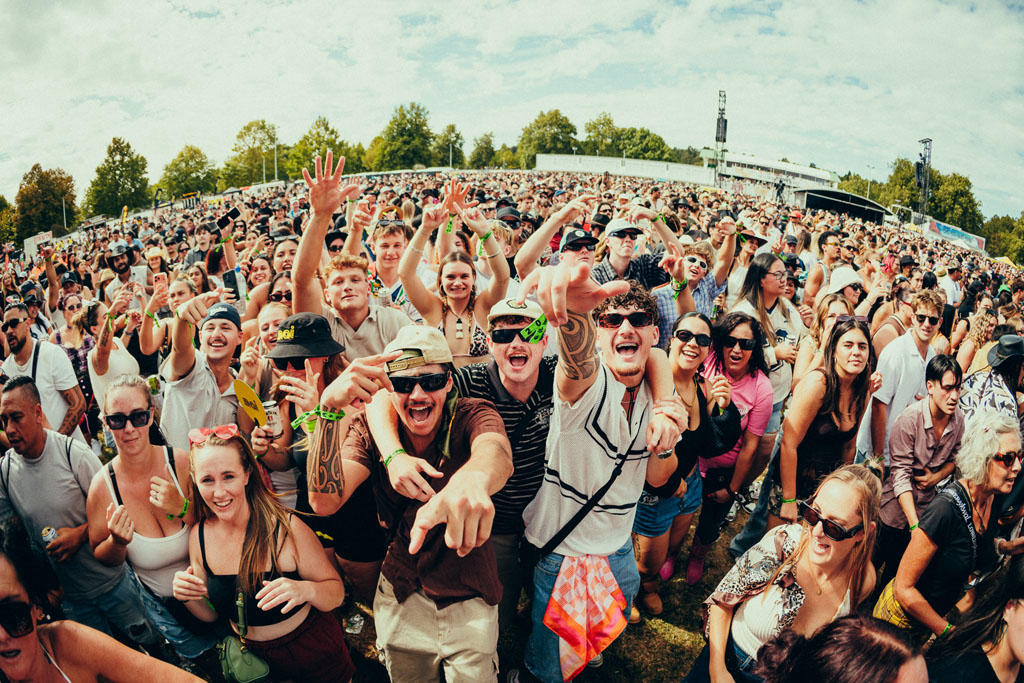
Homegrown’s story began in 2008, when the first festival was held on Wellington’s waterfront and featured 35 New Zealand acts. By 2010 it had become Jim Beam Homegrown, and over the years it grew into one of the country’s defining all-Kiwi music festivals, spanning rock, pop, roots, electronic, hip hop, and more.
Wellington’s strength had always been its openness. It wasn’t a contained greenfield site but stitched into the harbour edge and public realm. “It was the only festival in the country that you could come and go from,” Andrew explains. “At three in the afternoon you could decide, I feel like a steak and a glass of red wine, and you could pop into a restaurant.”
That permeability was part of the charm and eventually part of the problem. The site had no spare capacity. “We literally had scaffolding going up over gardens. Once you get to a point where you can’t change a festival anymore or make it any better, you’re going to become stagnant. People skip a year because they think they won’t miss anything. Then they stay home the next year, lose their connection, and your festival starts to die.”
Although the team looked for a way to stay in the city, the constraints were fundamental. “After a couple of years’ investigation, Wellington City Council realised there was nowhere that would work. By 2024, based on the way the event flowed that year, we knew it was time to find a new home.”
Building a new Homegrown from the ground up
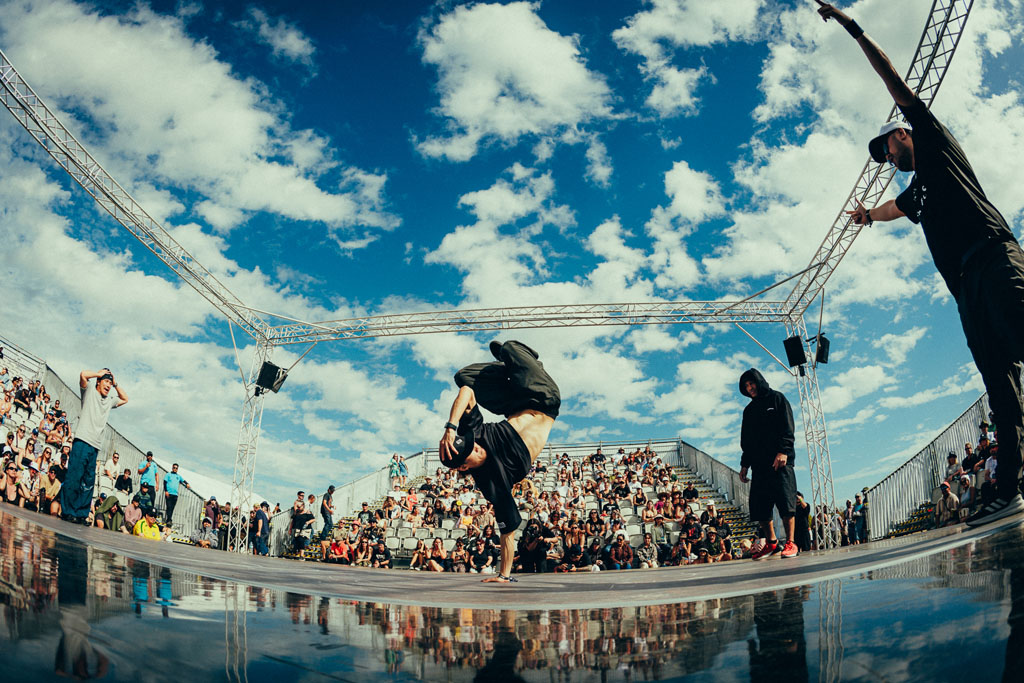
The search for a new home went to tender. Around nine cities explored the opportunity, with Hamilton and Dunedin emerging as the final two. Dunedin appealed partly because it didn’t already have another major event of this kind; Hamilton, likewise, had space in its calendar for something of Homegrown’s scale. Both offered viable options, but Claudelands won because it ticked the practical boxes: traffic flow, walking distance to town, nearby hospitality, and crucially the ability to manage a large-scale event without fighting the site.
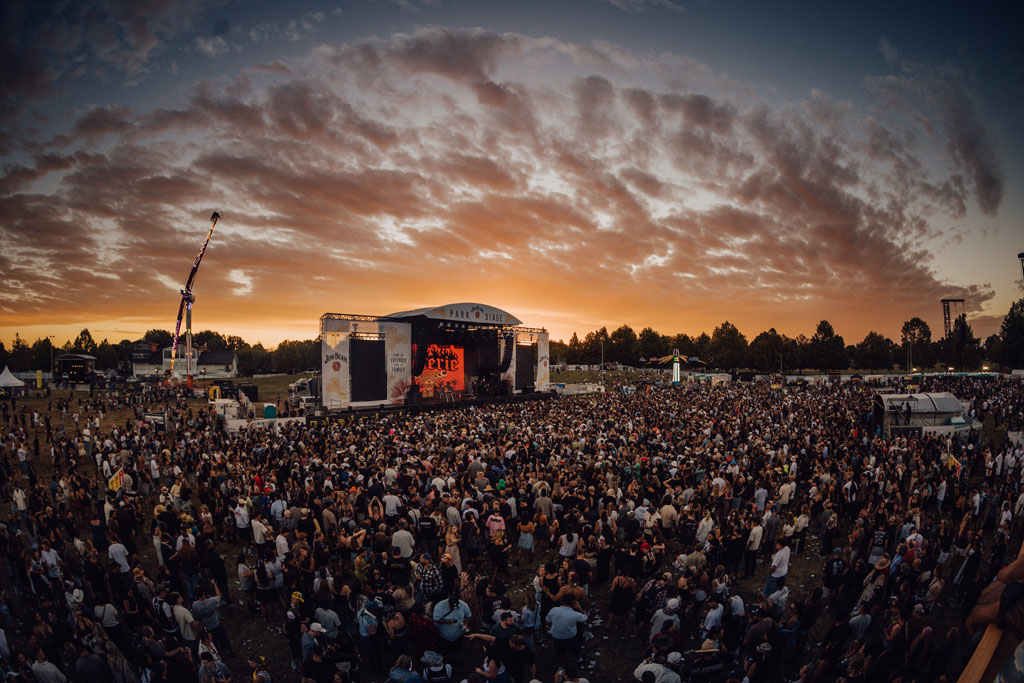
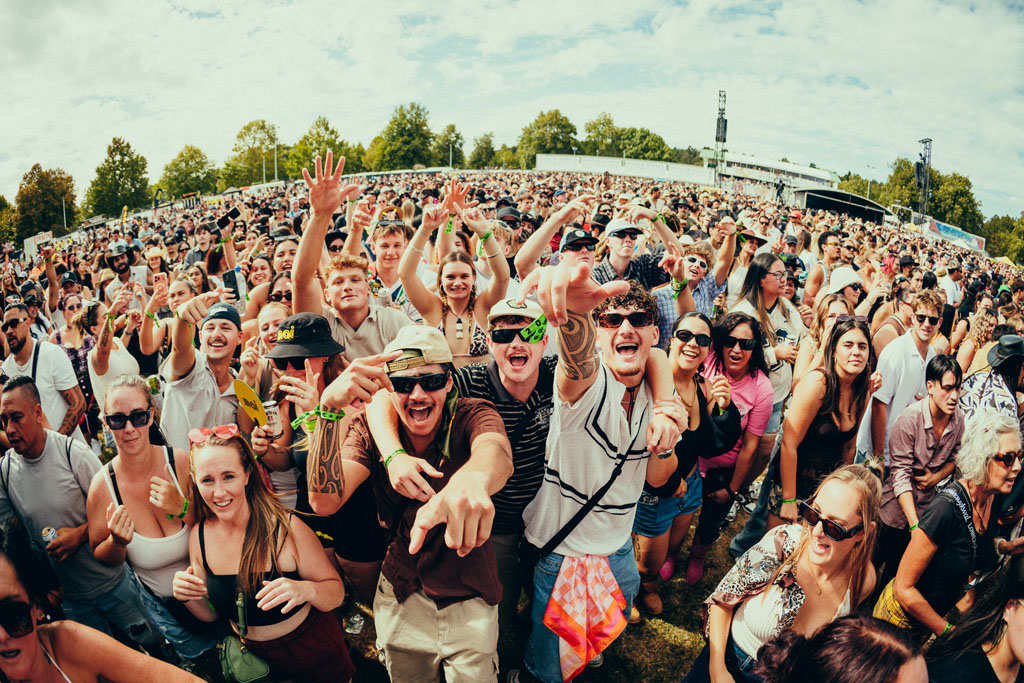
The physical contrast could hardly have been sharper. Wellington sprawled along the waterfront; Claudelands was contained. Wellington allowed the city to bleed into the festival. Claudelands required the festival to create its own world. The site-planning process was iterative and exacting. Andrew walked the grounds, identifying natural stage positions and flow paths, but the map kept evolving. “We moved our entrance three times from the first time we drew it. I think by the time we got to the end of the event this year, we were up to version 98 of the site map.”
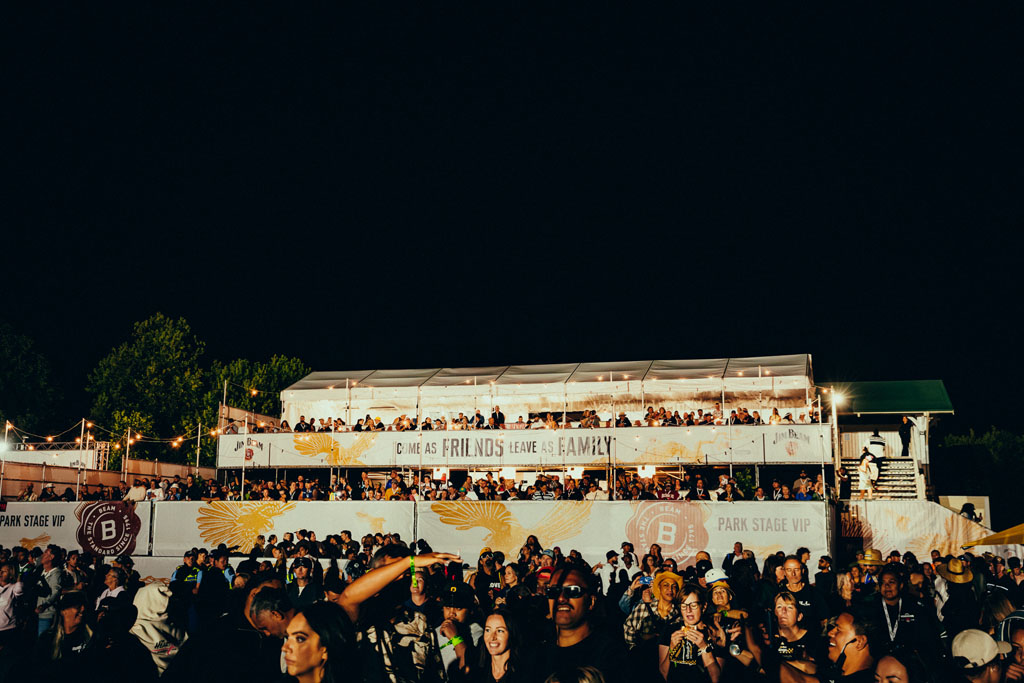
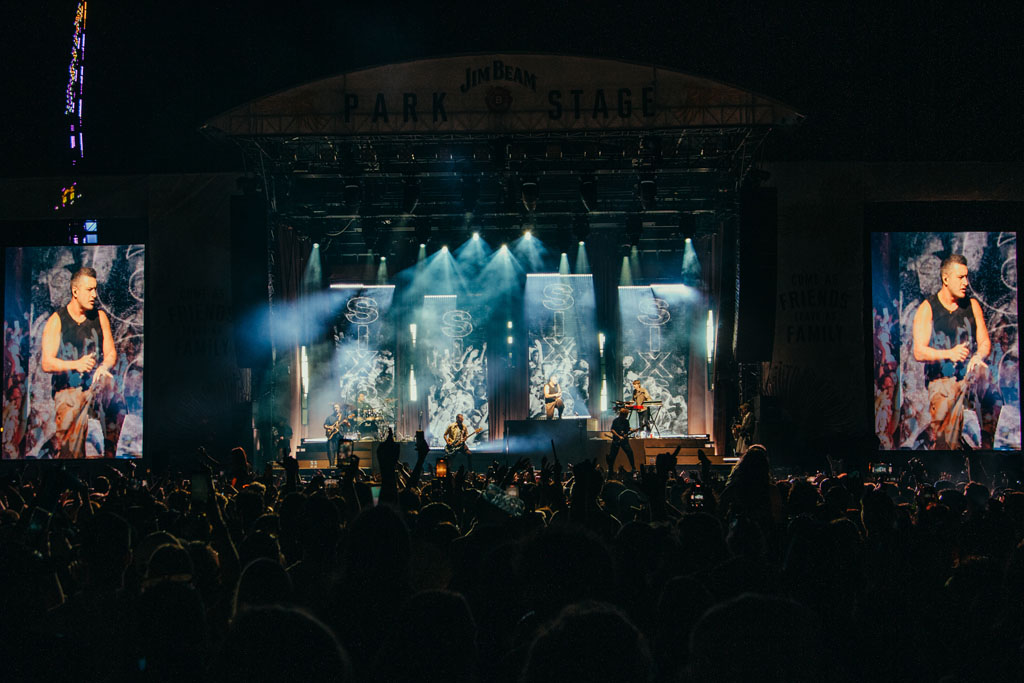
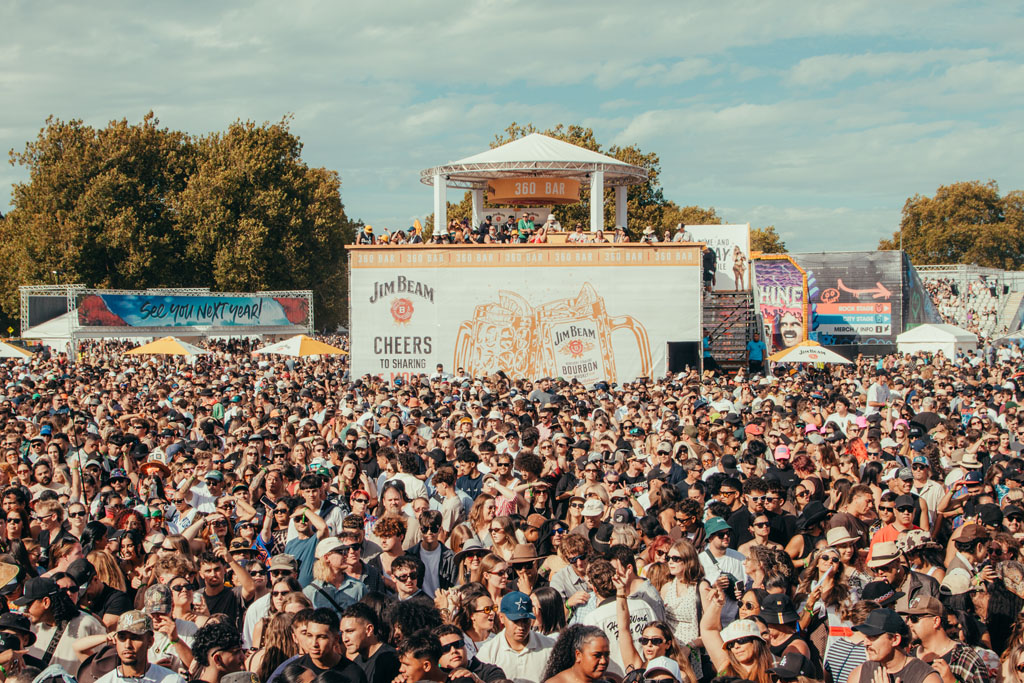
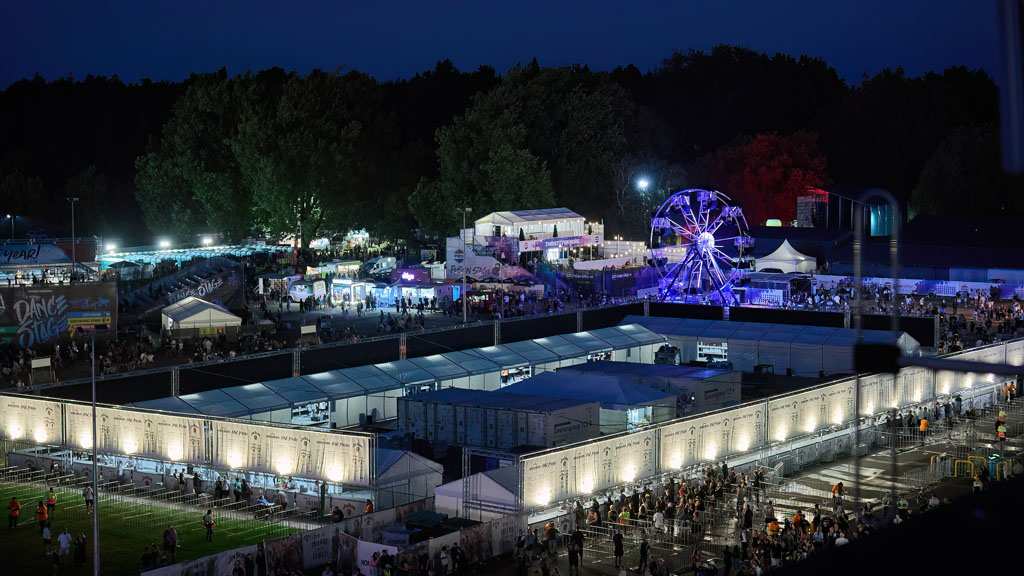
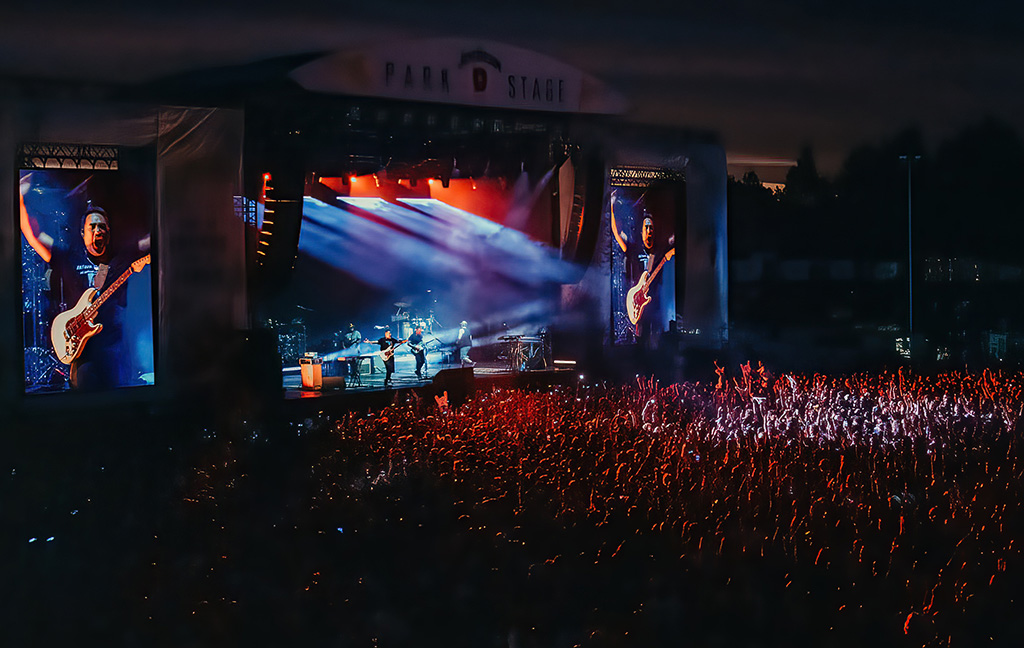
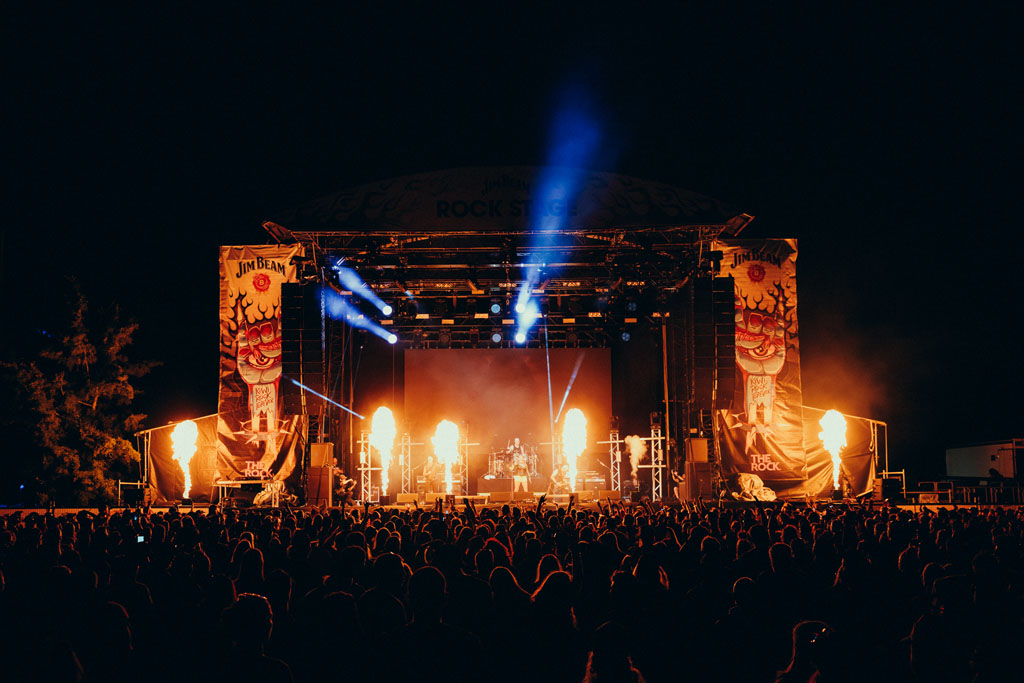
Sound was one of the biggest technical questions. Seven stages on a contained site had obvious potential for bleed. Andrew brought in a trusted sound technician to map the grounds, then adjusted stage positions accordingly. “We tweaked some stages, moved them three degrees this way, stepped this one slightly back, or angled that one. Then we got a whole noise-management plan done based around trajectory and mapping.”
On site, the theory held. The team used soundcheck to test the modelling in real conditions. “You walk from one stage; you could hear it to this point and then it disappeared. Everything was there for a particular reason. It wasn’t just thrown up. You can’t beat maths!”
Audience flow received the same treatment. In October, the team marked out the site and walked it as punters and VIPs, testing sightlines, travel distances, bar access, and potential pinch points. At one stage, they flipped a stage 180 degrees. “You’d think the sound’s great, but the traffic flow’s terrible. They’ll get jammed up. If I’m going to a bar, I’m going to get caught on this corner. It’s not wide enough.”
That kind of decision-making is invisible when it works, but it determines whether a festival feels easy or exhausting. “A lot of time was spent making sure the audience experience was the best one.”
Space to move
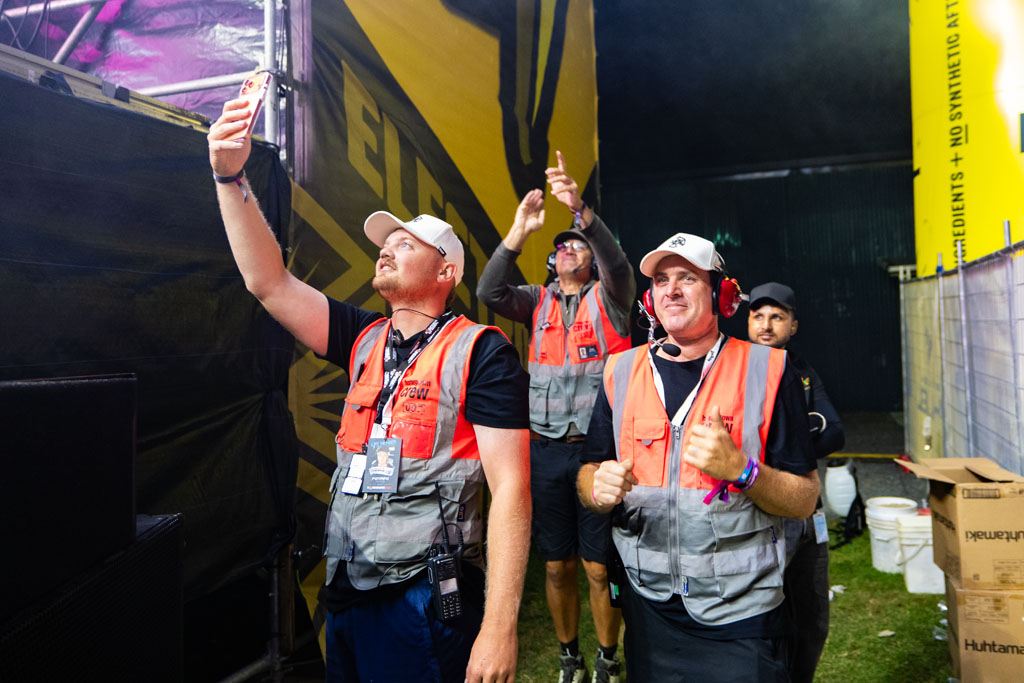
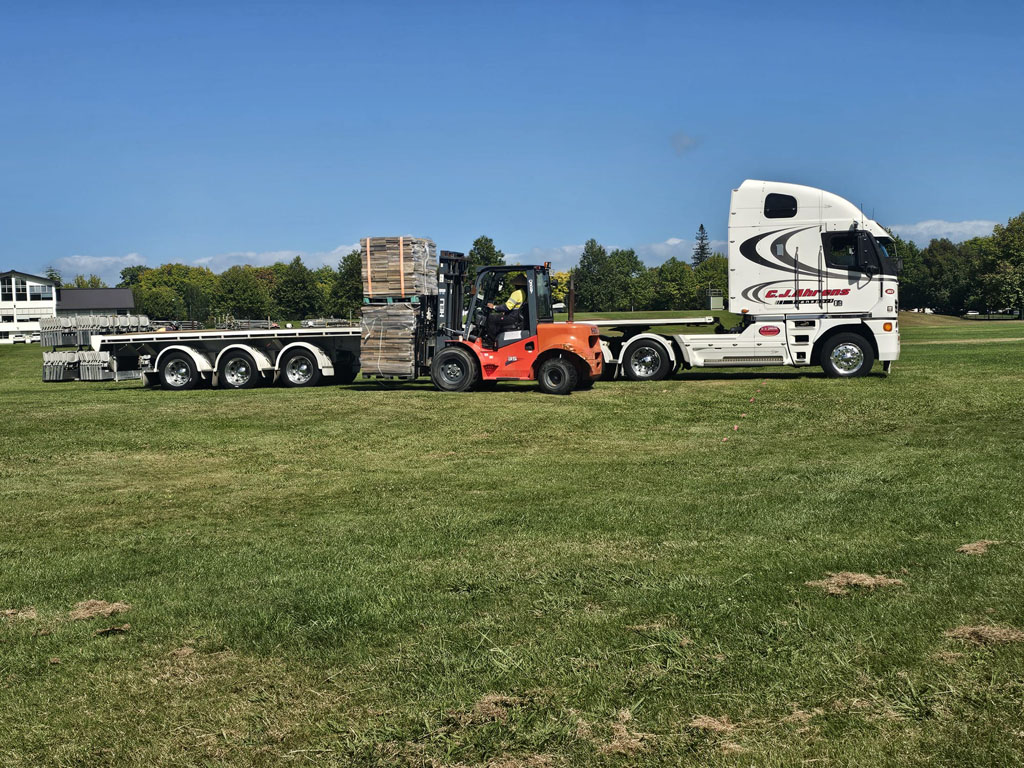
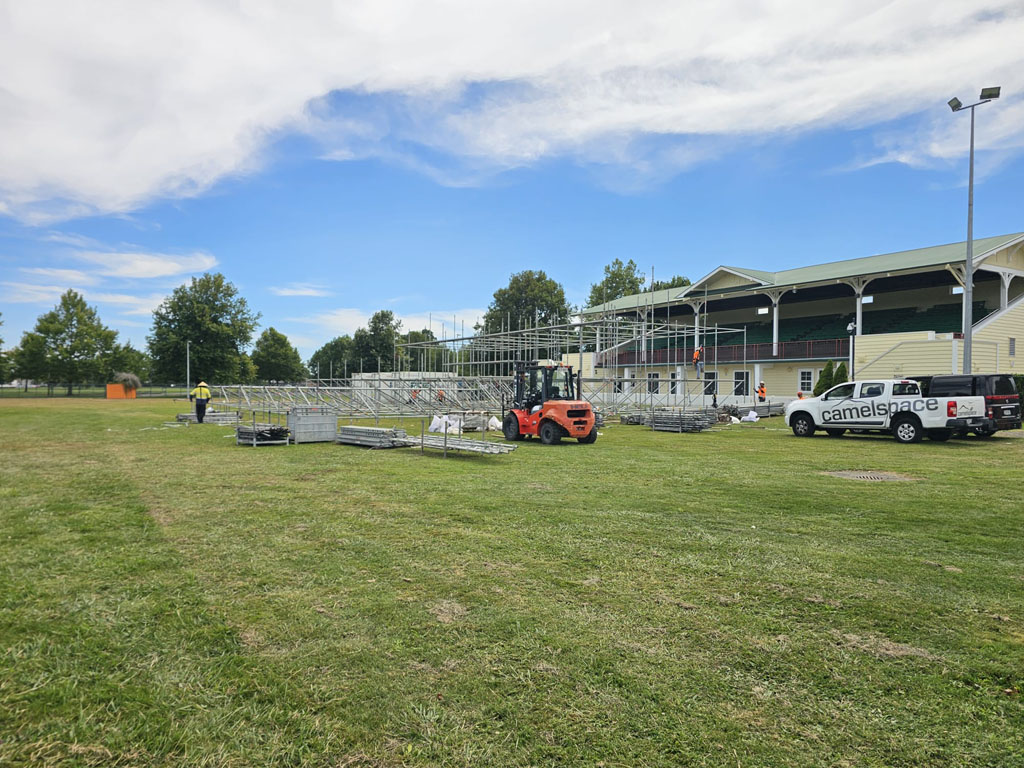
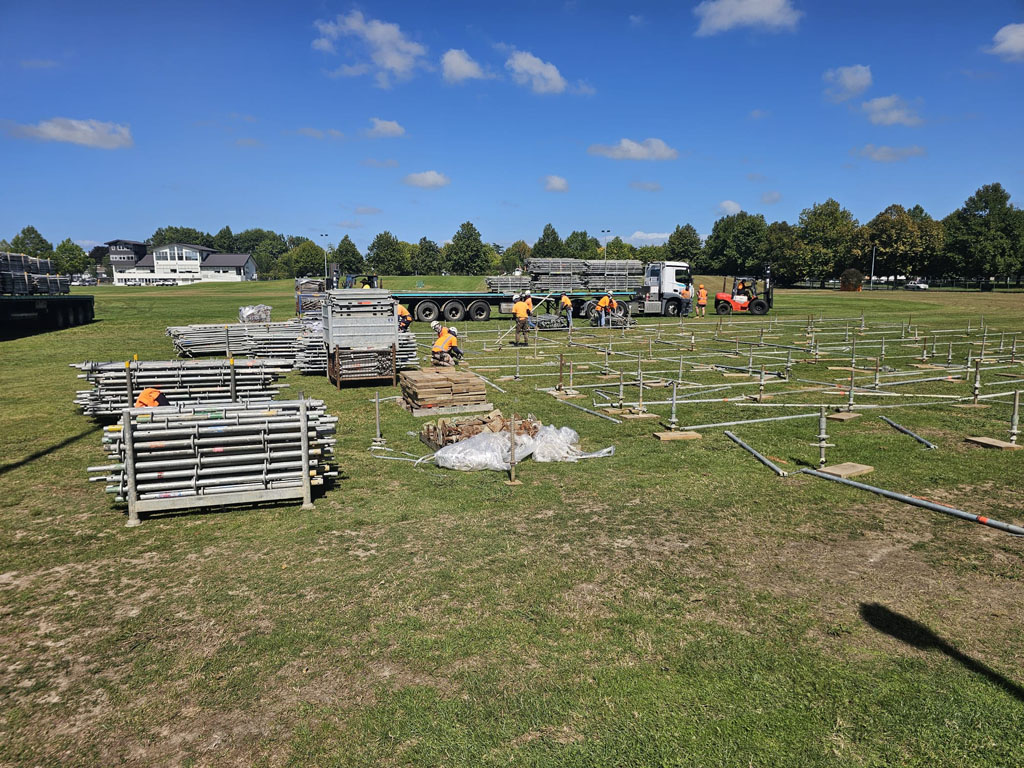
If the audience experience was the first test, the build was the second. It was substantial: around six days of marking out; three weeks on the ground; 21 B-trains of scaffolding in the first week alone; and approximately 146 tonnes of scaffolding installed.
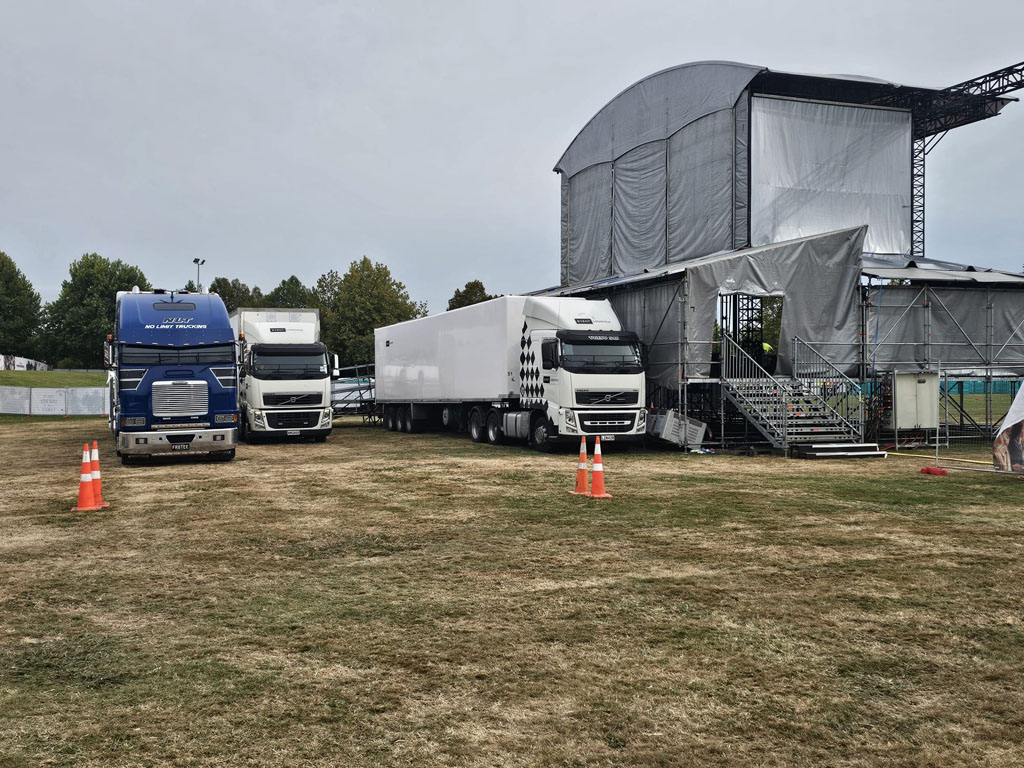
For crews used to squeezing a major festival into Wellington’s waterfront, easier logistics was the biggest win. “In Wellington, you could pretty much back one truck in and another was out on the road waiting.” Hamilton was a different proposition. “At one stage we had 22 truck-and-trailer units, plus a couple of 80-cube box trucks, all loading in at the same time. I think it was 350-odd trucks that came in for the build, and at no time was there any congestion. We’d get to the end of each day and almost marvel that there had been no traffic jams.”
The move also prompted a fresh look at suppliers. Wherever local capability could meet the brief, the team used it, but Andrew was careful not to lose hard-won knowledge. “Obviously there are savings on transport, and it’s nice to put money back into a city, but relationships matter. My toilet lady has been with me for 16 years. She’s been through three different companies, but she knows what I need: 40 cleaners cleaning toilets every ten minutes!”
That mix of local capability and trusted continuity was one of the less visible ways the relocated festival kept its character. Homegrown is local music on stage, but it also relies on event labour from across the country, suppliers, cleaners, scaffolders, security teams, sound crews, and production managers working to a shared standard.
Same festival, different ground
There were lessons. Unlike in Wellington, Claudelands remained an operating venue during the build, with conferences and other events using internal spaces and car parks. Early security arrangements were tweaked to pull trucks off the road, and future refinements are planned around contractor flow, inductions, high-vis, radios, and getting people onto site efficiently.
There are opportunities, too. “This year was our baseline. We’ve come out of it with very positive comments from the audience, contractors, police, and council. Everyone’s really, really happy so now we can grow.” The extra space creates programming and production flexibility. “The cool thing is we can add what’s hot in New Zealand. If there’s a genre that suddenly starts to blow up, like country or K-pop, we can jump on board with that now.
Whereas in Wellington, we would have had to drop a stage to pick up a stage. We can also move an existing stage and give returning audiences a different experience: trees, buildings, bouncing lighting off architecture, and so on.”
As to whether Homegrown retained what makes it Homegrown, Andrew says the heart of the move comes back to culture. “Our motto is that we treat everyone as you want to be treated yourself. Sure, you’re only as good as your last event, but you’re also only good if the people on the ground enjoy being there, want to come back, and do their best work.”
He saw that during the Claudelands build. “Scaffolding was going in, people were doing their mahi, but they were singing and laughing even though they were working hard. You’ve got to have people enjoying themselves, because that’s when the magic happens.”
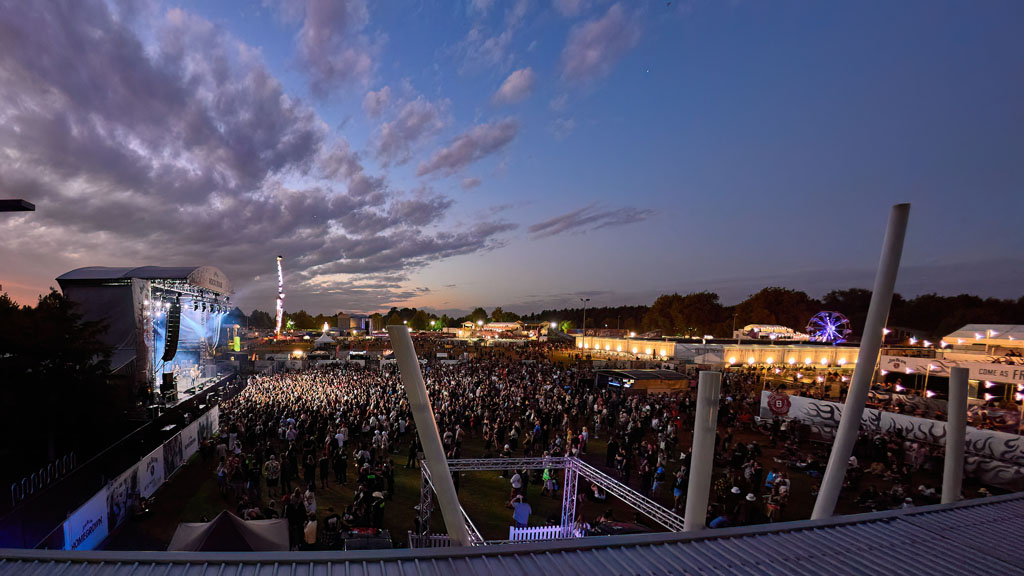
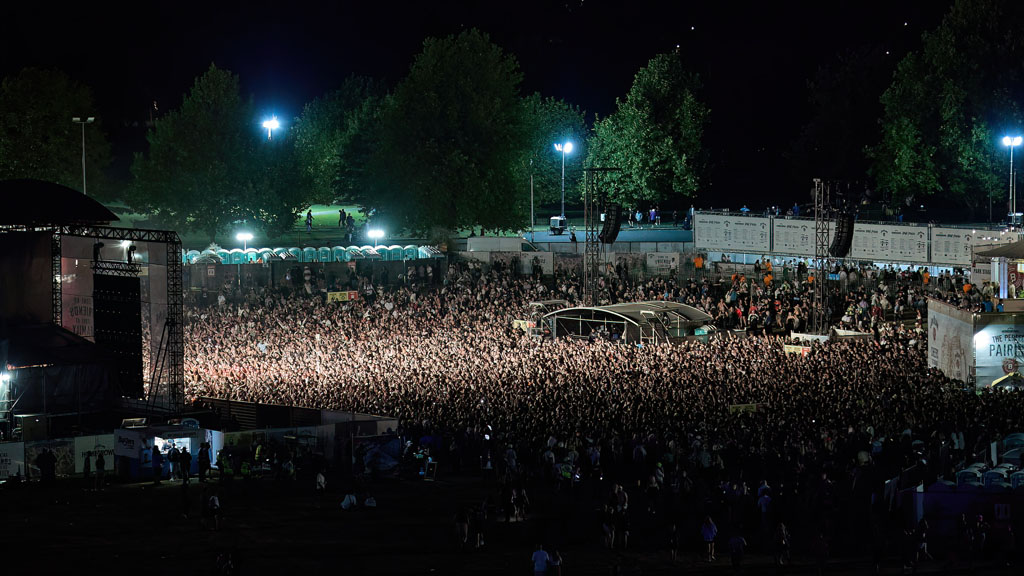
That extended to artists too. A joined-up green room created space for bands to hang out, reconnect, and collaborate. Andrew saw musicians jumping up to play with each other across the day, the kind of informal cross-pollination that only happens when the environment invites it. “That, to me, is what Homegrown’s about and will always be the essence of Homegrown, as long as my business partner and I are at the helm.”
There will be tweaks. There always are. Contractor flow will be sharpened, stage positions reconsidered, supplier feedback folded in, and the site map will no doubt move through another long series of versions before gates open again. But the first Claudelands edition gave Andrew and his team what they needed: a working baseline, room to move, and confidence that the festival’s character survived the shift.
Homegrown can live in Hamilton.
More than that, it can grow there.
Subscribe
Published monthly since 1991, our famous AV industry magazine is free for download or pay for print. Subscribers also receive CX News, our free weekly email with the latest industry news and jobs.
Recent posts