EDITORIAL
18 May 2026
My Essential 10
Subscribe to CX E-News
Software I Can’t Work Without in 2026
I’m constantly asked about the plugins I use day-to-day – which ones I use most, what makes them my favourites, and how any emulators among them compare to their original hardware units. So here’s a list of my Top 10 go-to plug-ins for 2026: some are new, others new to me, while a few may soon be superseded by others in the wings.
—
EQ
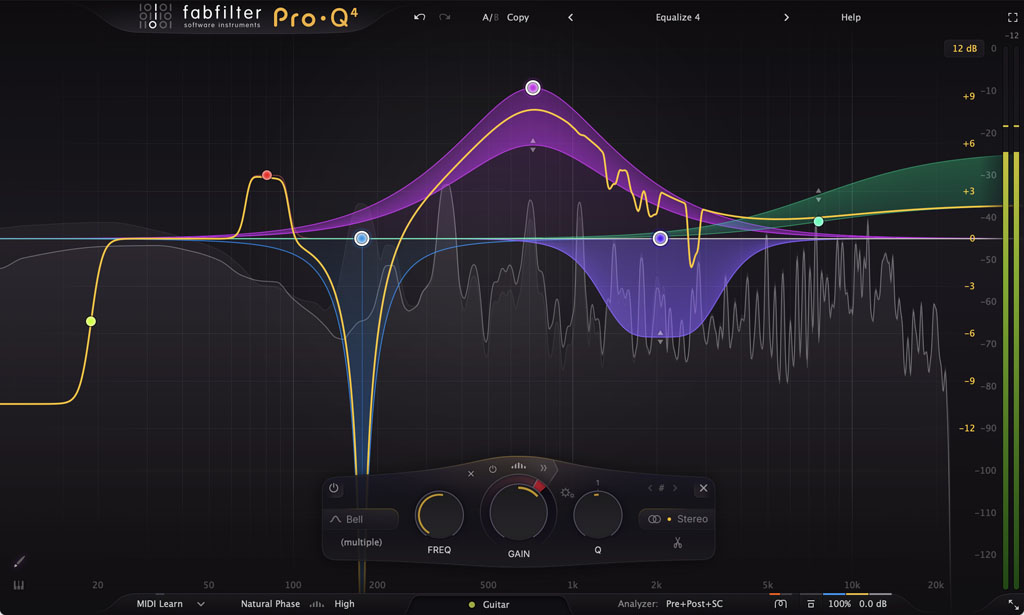
Fab-Filter Pro-Q4: If there’s one plug-in I use statistically more than any other it’s probably the FabFilter Pro-Q4. This EQ is a remarkable piece of software: versatile, surgical, effortless, intuitive, and competent. I use it almost every time I sit down at a computer to mix or master. The iconic FabFilter EQ is probably the most popular (now) dynamic EQ on earth. It makes complex tasks feel effortless – indeed, there’s never been a time when I’ve thought: “Oh no, I could never use the Q4 on that sound…”
Whether you’re shaping a vocal, tightening low-end, or performing detailed corrective dynamic tone-related work, the Pro-Q4 is a total monster. What truly sets this plugin apart is its incredibly intuitive workflow – it’s almost become an extension of my own mind.
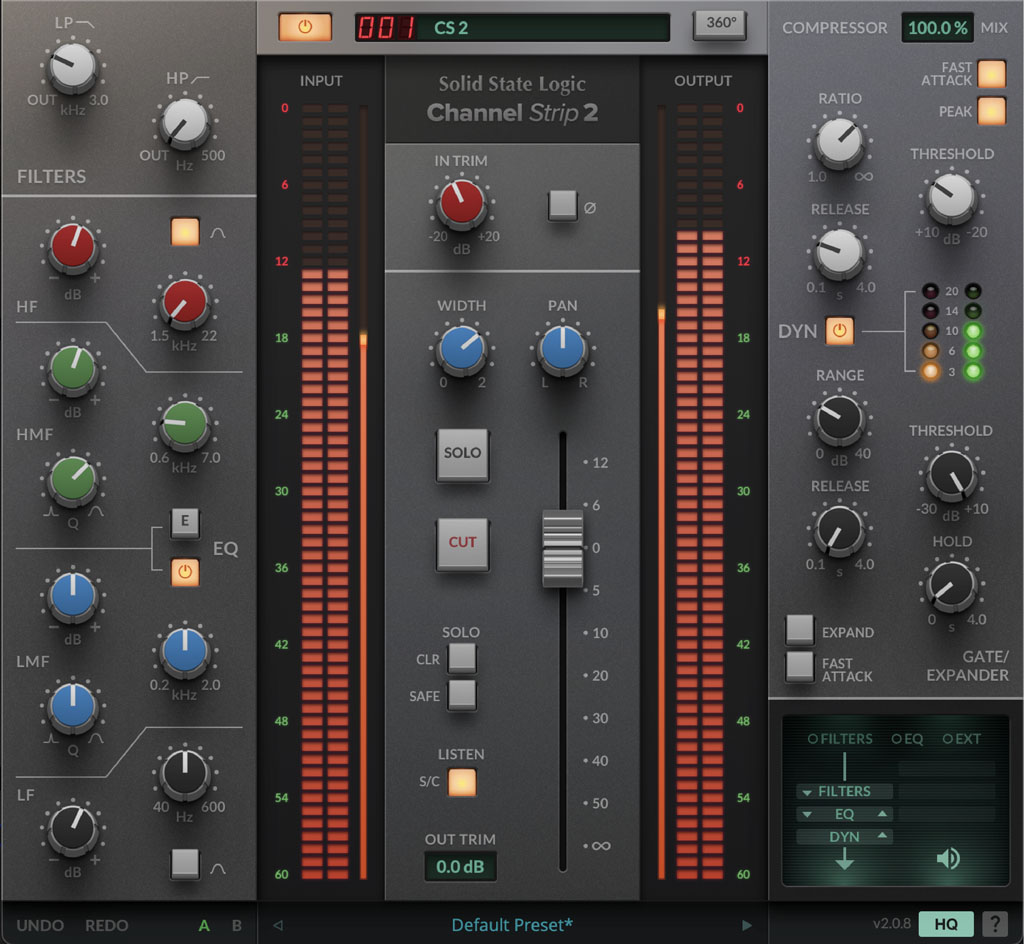
SSL Native Channel Strip 2: At the other end of theEQ plugin spectrum is SSL’s iconic emulation of its own hardware, which I coincidentally have 56 instances of laid out in front of me every day here at The Mill (my console is an SSL 9000K).
What I love most about this SSL plugin EQ (apart from being part of a larger channel strip layout) is how responsive it is – just like its hardware equivalent. Like a Formula 1 race car, this plugin can drive your sound into a wall very quickly if you’re not careful, so it pays to go easy on the throttle if you’re new to it.
The EQ on the SSL Native Channel Strip 2 can carve up sounds quickly and dramatically, without ever forcing you to ‘look’ at an EQ curve. Sometimes looking whilst listening can be a trap – this plugin puts you back in time to an older analogue mindset, which safeguards against that possibility. Of all the conventional console-styled, four-band parametric EQ plugins on the market, this is one I use constantly.
DYNAMICS
There are a million compressors, limiters, multi-band compressors, and de-esser plugins on the market today, alongside a burgeoning raft of next-generation plugins that blur the lines between EQ and dynamics. Some of these processors are faithful emulations of classic hardware, others are entirely on their own trip. I use dozens of different dynamics plugins, but the ones I use most in 2026 are these:

Universal Audio UADx 1176AE (Blue Stripe): This compressor/limiter, like the hardware it emulates, is a lightning fast dynamics processor that can handle just about anything. It can be aggressive if needs be, thanks to a scorchingly quick attack control, but this aggression can also be mitigated by its gentle 2:1 ratio. The 1176AE also has two relatively new controls masquerading as screws on the GUI. One is ‘HR’ (which stands for Headroom), that allows you to effectively raise the compressor’s threshold, thus making the plugin less sensitive to hotter incoming signals. The other is ‘Mix’, which more obviously, offers a blend of wet and dry (compressed and uncompressed) signal control.
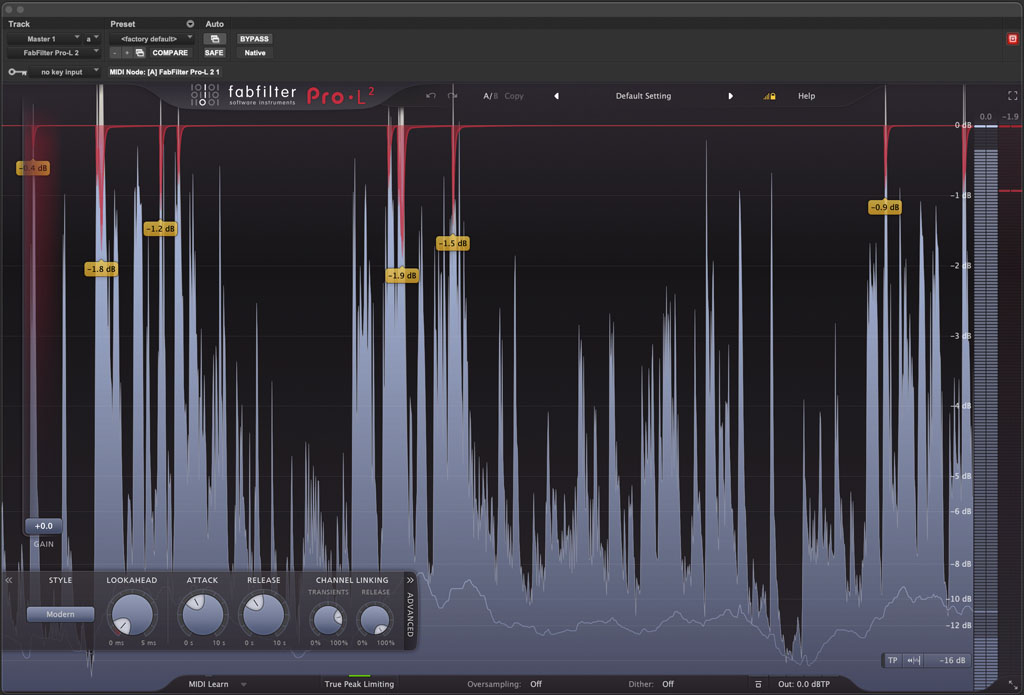
The FabFilter Pro-L2: This limiter is widely regarded as one of the most powerful and transparent available for modern mixing and mastering. It’s versatile, has a variety of controls that can take you deep into the process (which is great, provided you know what you’re doing), and offers multiple limiting algorithms. Its flexibility allows you to fine-tune sounds with precision, whether you’re working on a stereo master or adding the plugin to a single channel of audio in a mix. Visually, the plugin – just like its brothers, the Pro-Q4 and Pro-C3 – offers an impressive, intuitive and informative workflow. In a field where transparency is everything, Pro-L2 sets a remarkably high standard.
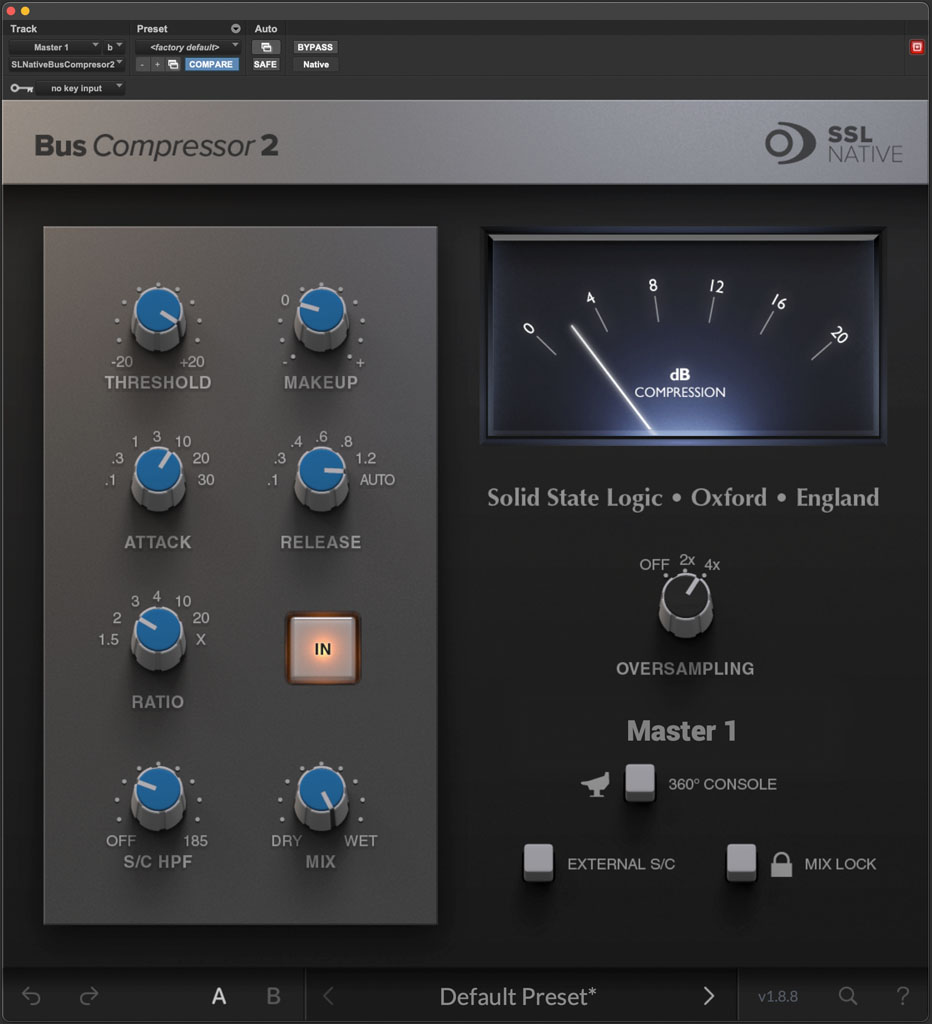
SSL Native Bus Compressor 2: This plugin is one of those tools I use regularly for its balance of simplicity and musicality. Like all SSL hardware, every adjustment you make on this plugin has a meaningful, audible impact – a little of this compression goes a long way. Even very subtle gain reduction can tighten a mix, enhance transients, and make tracks feel ‘finished’. It’s a tool that rewards restraint, and when used well, it makes a mix feel like a cohesive whole.
At last count I had five hardware equivalents of this style of mix bus compressor: the bus compressor on my 9k, an SSL SL520 compressor/limiter module housed in a rack, the incredible SSL Bus+, my Al Smart C2 and C1LA 500-series module. The Bus Compressor 2 holds it own amongst them.
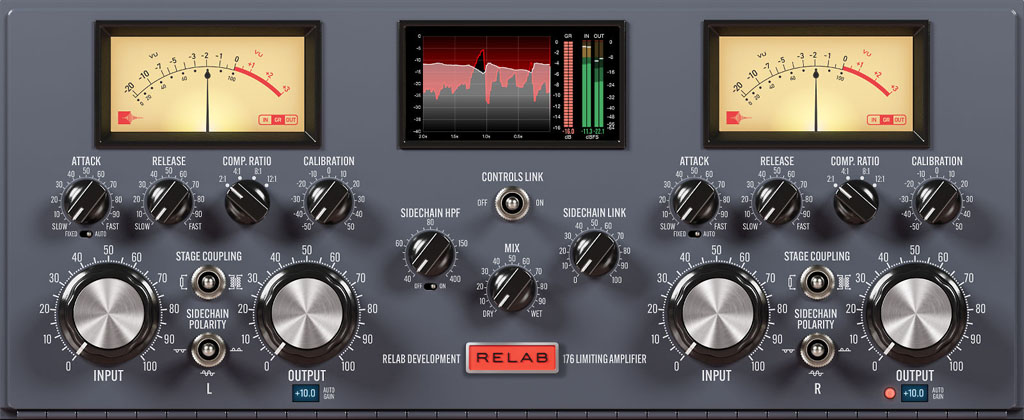
Relab 176 Compressor/Limiter: This is a stereo emulation of the brilliant mono Retro 176 tube compressor that I’ve used here at The Mill for many years. The Retro 176 is itself an emulation of the original UA 176 compressor/limiter, which was the ancestor of the iconic 1176. History lessons aside, this plugin boasts a component-for-component emulation of the Retro 176, and from what I’ve heard, the two are uncannily similar (although the hardware is mono). This plugin does what so many others merely promise – it adds a fat, warm, solid harmonic richness to everything that passes through it, and the harder it’s driven, the more overt this effect sounds. I may be falling in love with this plugin in a way I’ve not done before – I have to be careful not to overuse it in coming months. It’s rare to find a plugin that truly exceeds expectations when it comes to claims of analogue equivalence. But man, this thing really is a beast – creamy, enormous, extremely more-ish – well worth looking into if you don’t have something like it in your arsenal. Caveat: it ain’t cheap.
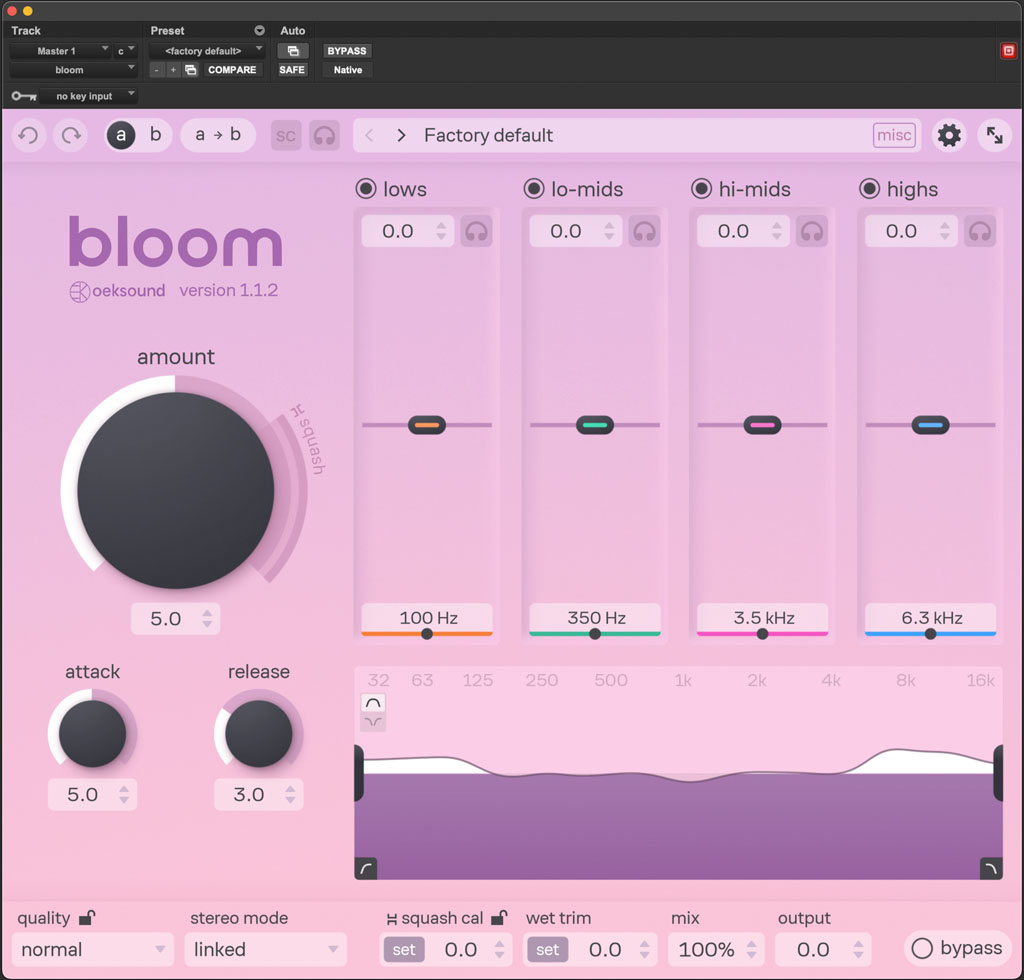
Oeksound Bloom: This is one of those plugins I use regularly in 2026 that has truly carved out its own path, blurring the lines between compression, EQ, saturation and who knows what else… I’m testing a few plugins in this (non) category at the moment: Waves’ Curves Equator and SoundTheory’s Gullfoss (among others), but Bloom is the one I use most consistently. It can perform extreme feats of audio gymnastics that were unheard of not too long ago: from taming resonances to clobbering signals to create über-bombast. Bloom is hard to get your head around – mainly because it really has no equivalent – but once you do, the GUI allows you to dial in some extreme changes to audio signals, or if you prefer, to simply control those harsh moments that emerge in a mix that other processors can’t catch.
REVERB & DELAY
To be honest, I’ve struggled lately with settling on plug-ins that thrill me in this category. I’ve tried dozens, incorporated them all into mixes here and there, never really settling on one in particular.
I have a Lexicon 480L hardware unit here at The Mill, alongside an AKG BX20 spring and several other hardware units by Lexicon, TC Electronic and Roland, all of which, for some reason, tend to leap out at me more – though I’m never clear why that is.
If I were to highlight a couple of plugin reverbs and delays I use constantly, it’s these two (or five):
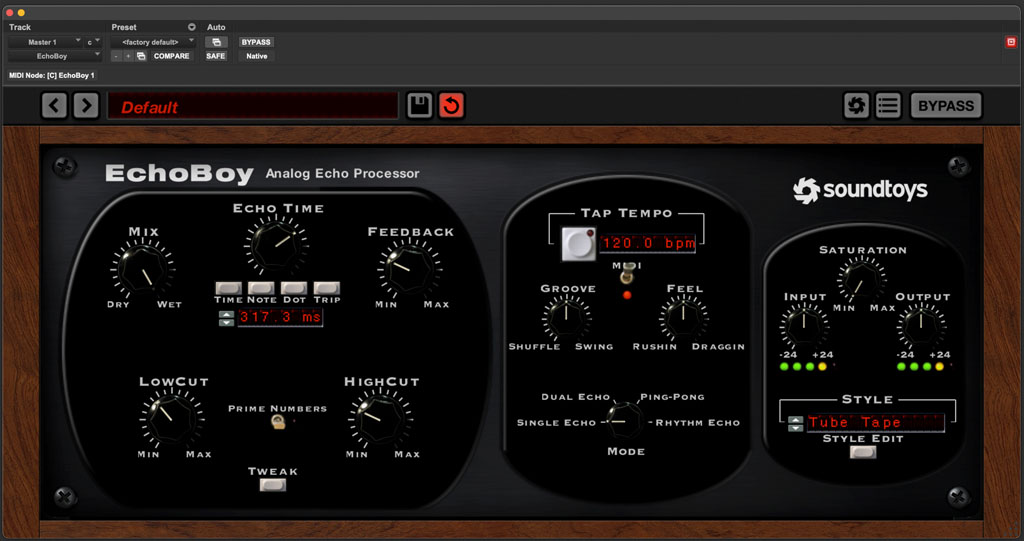
SoundToys Echo Boy: EchoBoy has been around for ages, but remains one of the most musical and character-rich delay plugins I’ve ever used. It brings the perfect combination of ease of use combined with great sound. It’s complex yet simple; which is why I use it so often.
At the heart of EchoBoy is its extensive collection of analog-inspired delay styles, emulating classic tape echoes, vintage digital units, and iconic hardware delays. Each mode captures subtle nonlinearities that give delays a sense of life and movement.
The interface encourages experimentation too, making it easy to dial in inspiring sounds quickly. I have lost count of the number of songs I’ve mixed using this one delay unit. It’s a creative tool that few plugins can match.
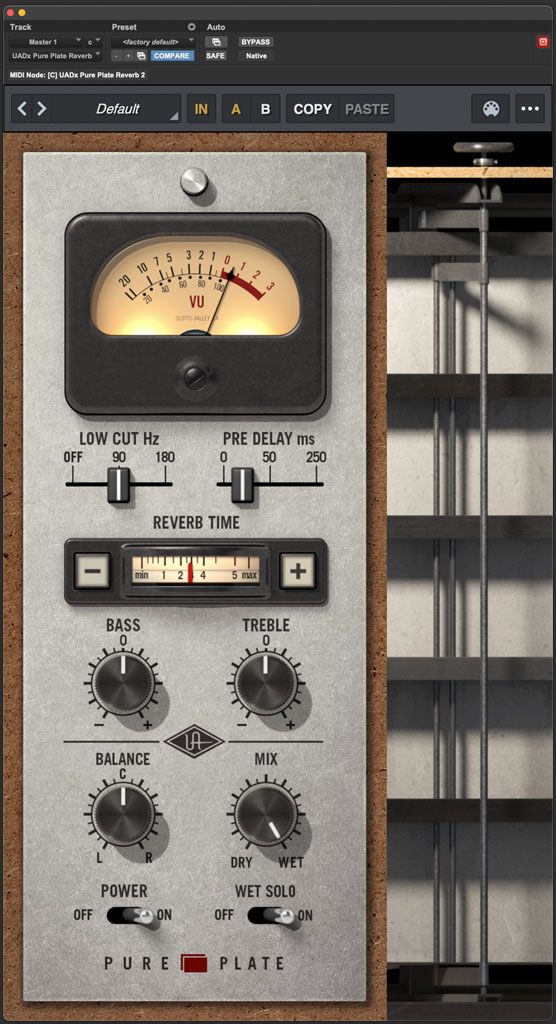
The reverb I probably turn to most often – this month at least – is the UAD Pure Plate: an old-school plate emulation that sounds beautiful, offers almost no control but works well in some aspect of most mixes. The other mainstay has for years been Altiverb, although my newest computer no longer has it installed – I must rectify that … at the other end of the spectrum I’ve been using Valhalla’s free Supermassive.
Other plugin reverbs of note are FabFilter’s Pro-R, the Valhalla VintageVerb, and Avid’s Space. There are many others, but can’t list them all. Things I’m looking into – in coming weeks – are likely the Relab LX480, LiquidSonics’ Seventh Heaven and the UAD AMS RMX16. If one of these lives up to its reputation, I’ll let you know.
DAW
AVID Pro Tools – But all these plugins have to reside somewhere, and for me no program has ever made me feel more comfortable in the studio, or offer so much in a relatively benign DAW format than Pro Tools. The evolution of this comprehensive audio tool has been long and expansive, and I’d wager more has been written about it over the years than all other pieces of audio software combined.
It’s quickly described by all and sundry as an ‘industry standard’ but in a rapidly changing world
– where the industry itself might be imploding
– I’m not so sure of the program’s current world ranking, if indeed that’s relevant now anyway.
Many have taken to Avid’s reputation with a hatchet over the years, and I’ve had a few choice words to say about it myself, but if there’s one program I turn to literally every day I’m in the studio, it’s this one. For me, there is no rival.
Subscribe
Published monthly since 1991, our famous AV industry magazine is free for download or pay for print. Subscribers also receive CX News, our free weekly email with the latest industry news and jobs.
Recent posts