THE GAFFA TAPES
21 Sep 2026
The Trip To Hong Kong
Subscribe to CX E-News
Back in the 1970s, Australia placed such high tariffs on pro music gear that buying equipment locally was a costly exercise.
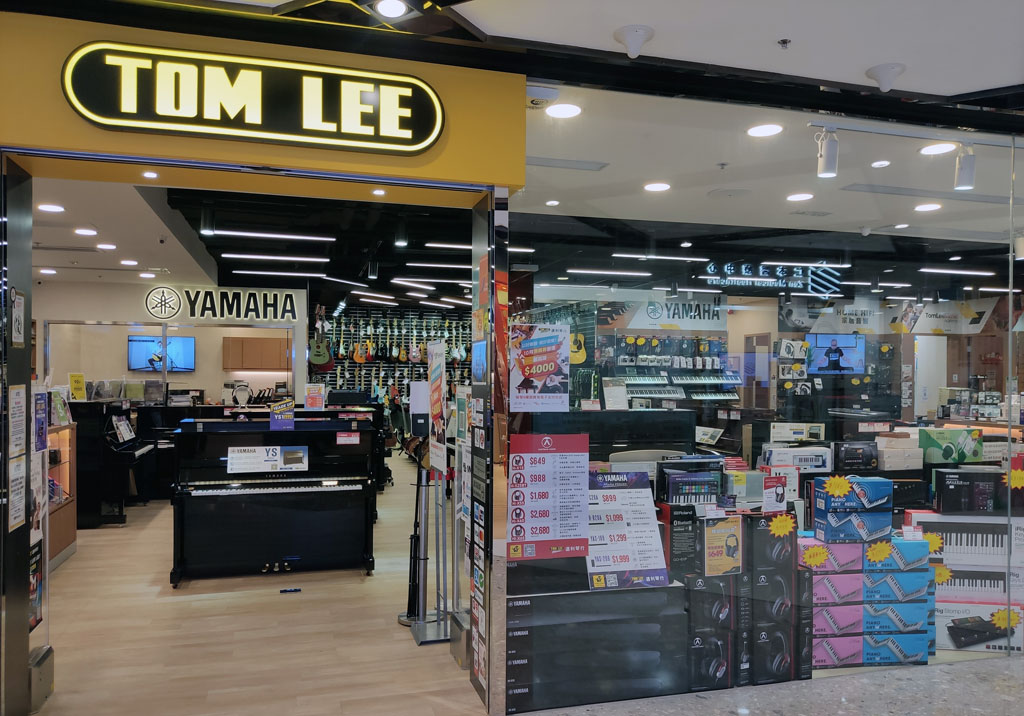
So, when my parents visited duty-free Hong Kong, they picked up a couple of Shure 545SD microphones (the forerunner to the legendary SM57) for me from Tom Lee Music. Some ten years later, I visited that same Tom Lee showroom along with several other stores to buy professional PA equipment for Rosie O’Grady’s, which was an American rock ‘n’ roll nightclub catering to U.S. Air Force personnel stationed in the Philippines. However, this Hong Kong excursion would leave me with some haunting memories.
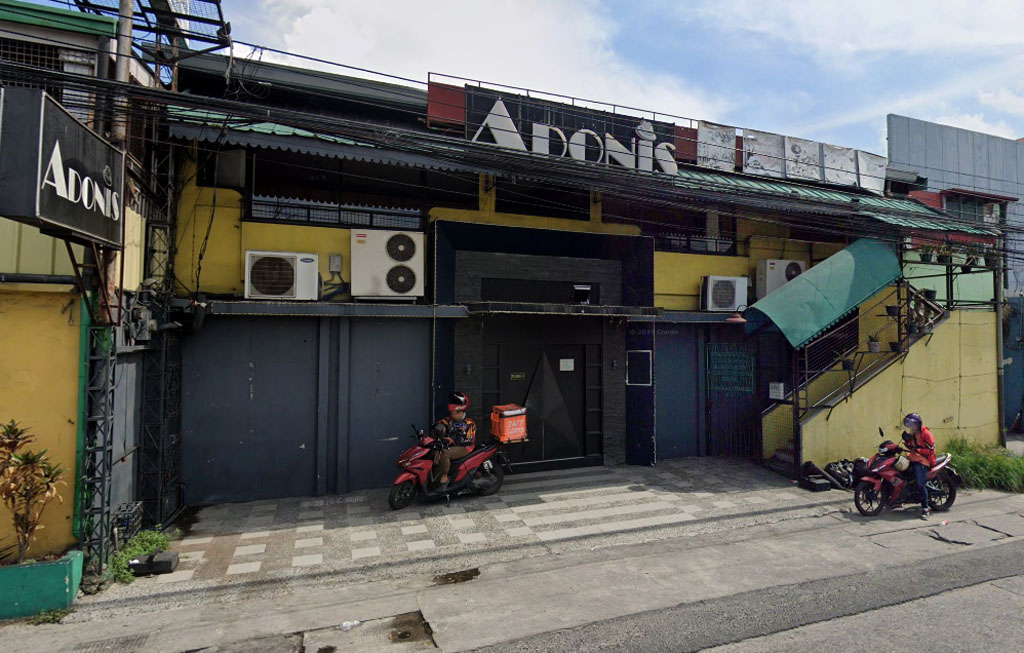
My first meeting with the major American partner in Rosie O’Grady’s, Ron, was when he approached me in an inebriated state and made a very generous offer for me to install sound and lighting equipment in his new venue. The project had hit a brick wall after his brother, who was his entertainment consultant, quit and returned to the US. Ron’s original concept was to model Rosie O’Grady’s after a Dixieland jazz venue of the same name in his hometown of Orlando, Florida, but now it was going to be a rock ‘n’ roll venue.
After finding a great band, we opened in March 1983. I lit the band with 16 1000W PAR 64 cans, which, while commonplace in Australia, was unprecedented for band lighting in the Philippines. However, we suffered with rented audio equipment that wasn’t up to standard. Since the club was packed every night and the money was rolling in, the partners didn’t object to upgrading the gear. But because tariffs in the Philippines on audio and lighting equipment were even higher than Australia’s, I suggested a shopping spree in duty-free Hong Kong. Ron rarely let money get in the way of progress, and the partners were reluctant to argue, as the venue was in the name of Ron’s Filipina wife, Vicky.
Foreigners weren’t allowed to own nightclubs in the Philippines.
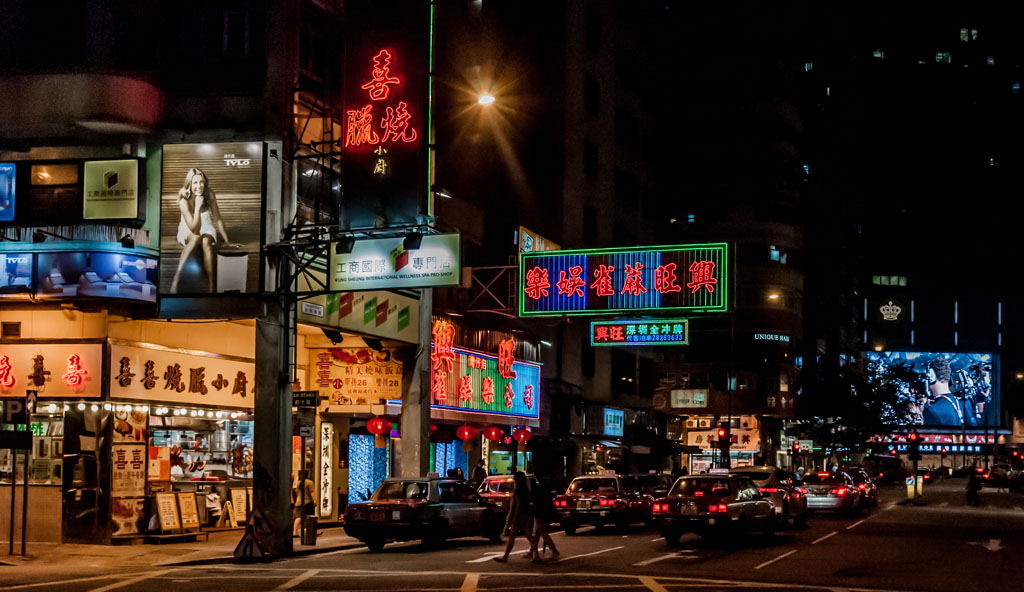
Ron booked our tickets to Hong Kong, and I wasn’t too pleased to learn that Vicky would be joining us, as she’d always been a little cold towards me. Ron and I had previously travelled to Manila on business trips, and we both liked to party, but on our very first night in Hong Kong, he and Vicky excluded me from dinner. Left on my own, I searched in vain for a decent nightclub or bar, but compared to Manila in the 80s, Hong Kong felt quite primitive. I took an instant dislike to the place, which seemed overly focused on business, with a lot of bowing and scraping taking the place of the authentic warmth I found in Manila, which, despite being regarded as a high-risk and volatile city, was also a city with a heart.
Ron drank heavily in Hong Kong, and at times it was difficult to even get him to venture out of the hotel room. The Sheraton had a vending-style mini-fridge in his room where he would insert his room card to purchase miniature liquor bottles. On one occasion, he got so upset when a bottle didn’t drop that he shook the machine violently until about half a dozen bottles spilled out of the bottom.
On Ron’s more sober days, we shopped for equipment on Hong Kong’s famous Nathan Road, historically nicknamed ‘The Golden Mile’, where there were myriad music retailers, offering everything from musical instruments to high-end audio recording and sound reinforcement equipment. Just a block off Nathan Road was Tom Lee’s multi-storey showroom packed with acoustic grand pianos, Yamaha uprights, keyboards, and professional stage equipment. Tom Lee’s sales staff initially offered us retail prices, but when I explained that we were outfitting a nightclub, they instantly reduced the prices by 40%. Here, we were able to purchase some much-needed equipment, such as a keyboard, graphic equalisers, and microphones, duty-free and at very low cost. Tom Lee was Hong Kong’s sole Yamaha distributor, and they were able to supply us with three Yamaha P2200 amplifiers, which were highly rated sound reinforcement amplifiers at the time.
At another store, we purchased one of the first 16-4-2 Soundtracs Omni mixers released to the market. This was a great desk with good headroom and EQ, and it is a much-sought-after item these days by analogue home recording enthusiasts. Soundtracs went on to build a worldwide reputation for well-engineered British consoles and eventually transitioned into digital mixing technology in the late 1990s, which gave us the DiGiCo D5 Live digital mixer in 2002.
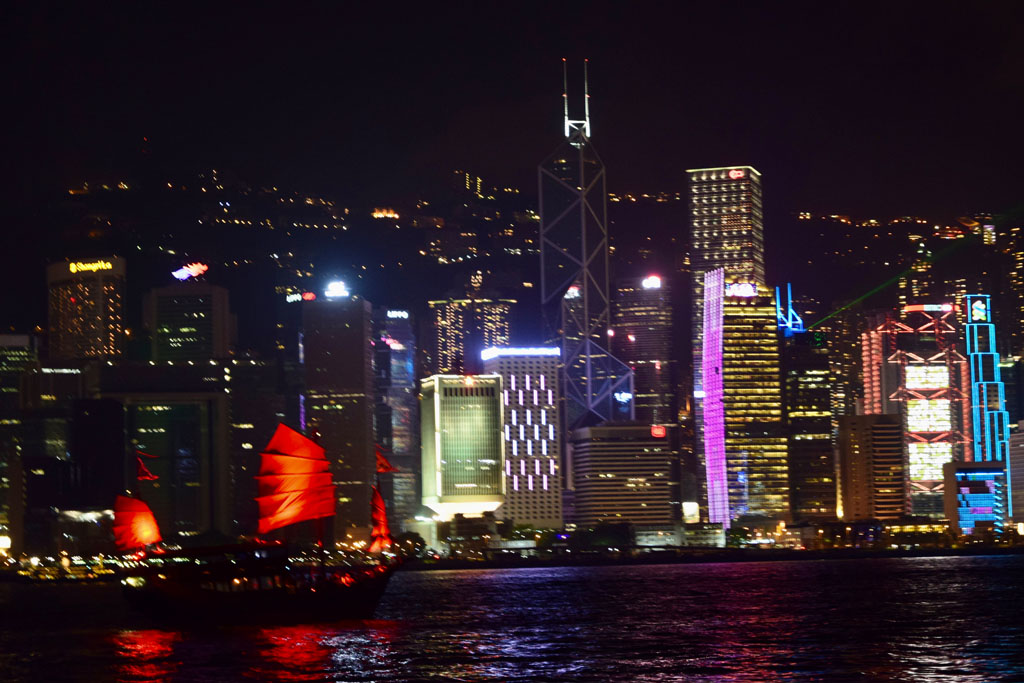
I was only invited out in the evening with Ron and Vicky on one occasion, when we took the ferry from the Kowloon Peninsula to the Hong Kong side to visit one of Ron’s friends at his luxury apartment high above Victoria Harbour. This was back when Hong Kong had the famous Kai Tak Airport, where the runway extended right out into the harbour. Looking through the large glass windows in the apartment, I watched commercial jets take off and land while traditional Chinese junks and other boats crisscrossed the harbour below. It was surreal. Ron’s friend was a government official in what was then British Hong Kong, and Ron was trying to entice him into investing in Rosie O’Grady’s and other ventures. I guessed he was parading me around as his hot-shot new entertainment manager just to help seal the deal.
Since Hong Kong had only started brewing Carlsberg a couple of years earlier, our host was eager to show it off. He kept the beer flowing, and after experiencing the earlier days of frustration, I was happy to indulge. Liebfraumilch wine was also served with dinner, and by late evening, I was well into the program, while, ironically, Ron was relatively sober.
I decided not to accompany Ron and Vicky back to the hotel, opting instead to go bar-hopping down in Wan Chai, a district tourists were warned to keep away from at the time. After an uneventful night where I was made to feel unwelcome, I hailed a taxi and fell asleep on the ride back to the hotel.
Upon waking at the Sheraton, the cab driver demanded an exorbitant fee, which included an overcharge for the tunnel toll. “What tunnel?” I remonstrated, having no idea at the time that such a harbour tunnel even existed. During the ensuing argument, a menacing street gang arrived, followed by the Hong Kong police.
I exited the cab to speak with the police, who were well aware of the overcharge scam. Still, they politely advised me,
“You’re too drunk to argue; why don’t you just pay him?” I took their advice and then had to weave my way through the street gang of leering youths, some adopting kung fu stances, to get inside the hotel.
I woke up the next morning with what still stands as the worst hangover of my life, only to endure the irony of being reprimanded by Ron for my intoxicated behaviour.
After arriving back in Manila, we stayed overnight at the five-star Midtown Ramada hotel, where I had breakfast alone downstairs in the restaurant the following morning. The waitress approached my table smiling and singing her favourite pop song. Manila was definitely more my kind of town. For years afterwards, the smell of burning incense that hung in the air of nearly every building in Hong Kong was a persistent reminder of my unpleasant experiences in a place I preferred to forget.
Ron was a larger-than-life character, regarded as an entrepreneurial master who designed nightclubs, bars, a seaside resort, and the most successful Spanish restaurant in town. However, his partners considered him ruthless, and he feuded with them frequently. He often fell into debt, was forced to close several operations, and became embroiled in bitter conflicts and court cases with investors.
Ron and I had our share of major clashes throughout the 1980s. I quit working for him on two separate occasions, with my final departure ending in a physical altercation after he threw a punch at me. Following that incident, he sent an intoxicated police officer over to the nightclub where I was working to warn me to get out of town. Ron also dragged me into a court case that spanned nearly a full year after he contested a management contract I held with one of my bands.
Despite our turbulent history, Ron engaged me a couple of years later to install audio and lighting systems in a couple of his venues. He passed away in Florida, US, in 2019 at age 71; quite a remarkable innings for a man who was sometimes so intoxicated that the staff at Rosie O’Grady’s had to carry him out of the nightclub and load him into his 1964 Mustang so he could drive home.
Subsequently, whenever people asked what the drink-driving rules were in the town, I’d usually jest, “Well, I guess, if you’re still conscious, you’re fit to drive.”
Subscribe
Published monthly since 1991, our famous AV industry magazine is free for download or pay for print. Subscribers also receive CX News, our free weekly email with the latest industry news and jobs.