News
23 Jun 2026
The White Card Still Isn’t a Silver Bullet for Event Safety
Subscribe to CX E-News
The recent discussion surrounding ENTECH’s withdrawal from Perth has once again put White Cards (Construction Induction Cards) under the spotlight within the events industry. Much of the debate has centred on whether White Cards should be required within event environments and what role they play in supporting safe workplaces.
While the circumstances surrounding the Perth situation are specific to the organisations involved, the broader questions being discussed are not new. In fact, they are remarkably similar to the questions that prompted me to write The White Card Isn’t a Silver Bullet for Event Safety late last year.
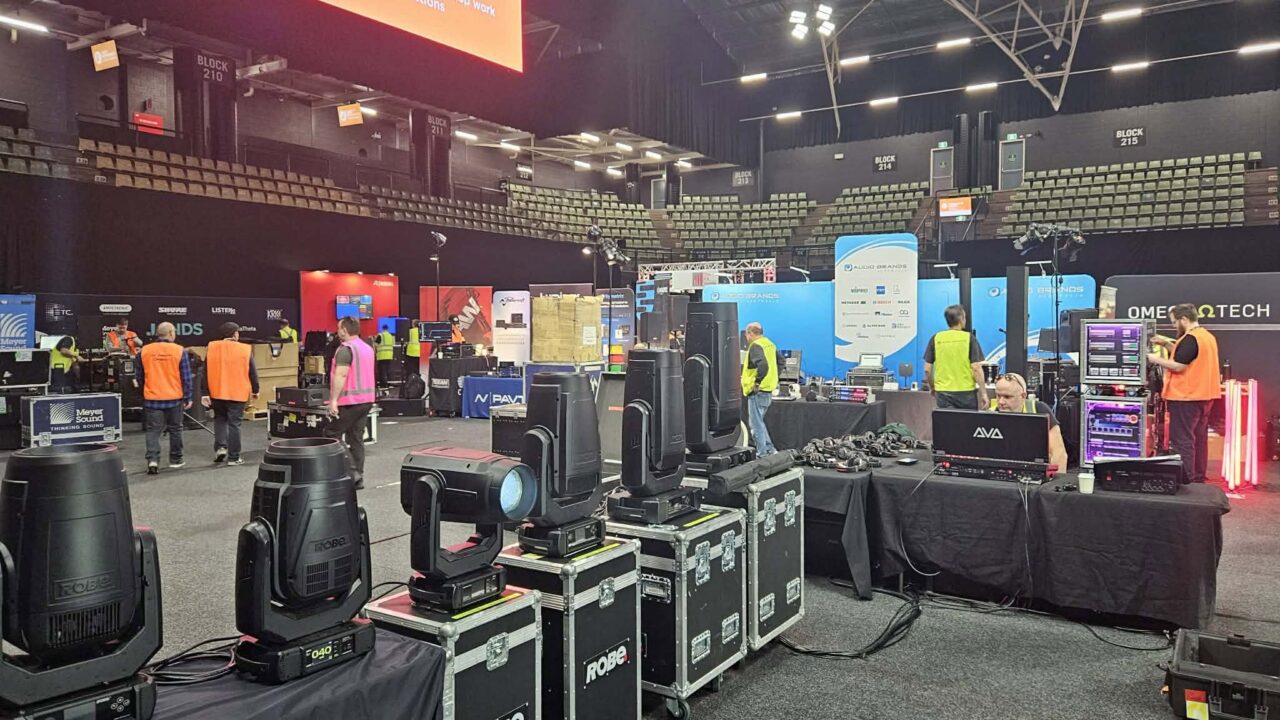
Many of the activities undertaken during a bump-in or bump-out often fall within is recognised as construction work. Temporary structures are erected, electrical systems are installed, elevated work platforms are used and multiple contractors working simultaneously within a changing workplace. Looking at many event sites during the build phase, it would be difficult to argue that there are not significant similarities with construction environments and many of the hazards commonly associated with them.
This reality is one of the reasons White Cards have become so widely adopted throughout the events sector. Workers exposed to construction-related risks should understand fundamental workplace health and safety principles, hazard identification, risk controls and their responsibilities within the workplace. General construction induction training was developed for exactly that purpose.
The challenge is that the events industry has never fitted neatly into a single category. While many event activities clearly align with construction work, event sites also operate under unique conditions. Tight timeframes, overlapping contractors, compressed schedules and rapidly changing site conditions are common features of event build and dismantle periods. A venue can transition from an active workplace to an operational event environment within a matter of hours, not months or even years.
This is where the discussion surrounding White Cards becomes more complicated.
A White Card demonstrates that an individual has completed general construction induction training. It provides a foundation in workplace health and safety principles, but it does not demonstrate competency in event operations, contractor coordination, exhibition builds, festival bump-ins or the practical realities of working within temporary event environments.
The issue is that event safety has always relied on a combination of skills, knowledge, experience and training rather than a single qualification. A person may hold a White Card yet have little understanding of how a major event operates. Equally, a person may have spent years successfully delivering exhibitions, festivals, sporting events or concerts without following a traditional construction pathway
The current discussion also raises a broader question about whether the White Card, in its current form, remains fit for purpose within the events industry. A person can obtain a White Card once and literally rely on it for the remainder of their career without any formal refresher training. Yet workplaces continue to evolve. Legislation changes. Guidance material changes. Equipment changes. Work practices change.
It is reasonable to ask whether a once-off construction induction undertaken many years earlier should continue to be viewed as evidence of current competency.
That question becomes particularly relevant when the White Card is increasingly being relied upon as an access requirement rather than simply evidence that somebody has completed a general construction induction.
If the objective is to improve safety outcomes within the events industry, then perhaps the discussion should extend beyond whether somebody holds a White Card and focus more broadly on what competencies are actually required to work safely within temporary event environments. The knowledge required to safely operate on a modern event site extends beyond the content of a general construction induction, particularly when multiple contractors, suppliers, exhibitors and event personnel are all working within the same space under significant time pressure.
This is not an argument against training. Nor is it an argument against ensuring workers understand fundamental workplace health and safety principles. The events industry should absolutely continue investing in training, competency development and safe systems of work.
The question is whether a lifetime construction induction card should be treated as the primary measure of competency within an industry that continues to evolve and which operates under conditions that are often very different from those found on traditional construction projects.
The recent discussion generated by the Perth situation demonstrates that the industry is still working through where construction requirements intersect with broader event operations. Given the temporary nature of event sites and the variety of activities undertaken within them, that conversation is unlikely to disappear any time soon.
That was the central point when I first wrote about the topic late last year and, judging by the discussions taking place today, it remains just as relevant now.
Subscribe
Published monthly since 1991, our famous AV industry magazine is free for download or pay for print. Subscribers also receive CX News, our free weekly email with the latest industry news and jobs.
Recent posts



Latest jobs