
ROAD TEST
1 Dec 2025
Allen & Heath’s New Qu Digital Console Range
Subscribe to CX E-News
The new Qu range of Allen & Heath digital consoles pushes hard up into SQ territory, offering well-conceived, fresh, yet familiar looking layouts and features. So similar is the new Qu range to an SQ at first glance, that two questions immediately spring to mind: which console should you purchase, and is the SQ range on the verge of an upgrade?
It’s been a long time coming, but finally the new Allen & Heath Qu range is here, and apparently taking the world by storm, just like its predecessor did back in 2013. And I can see why.
The range seems to have well and truly come of age, offering a decidedly modern spin on Allen & Heath’s long-running Qu “walk up and mix” philosophy (though I still see a good deal of “walk up and walk away” in 2025, frustratingly).
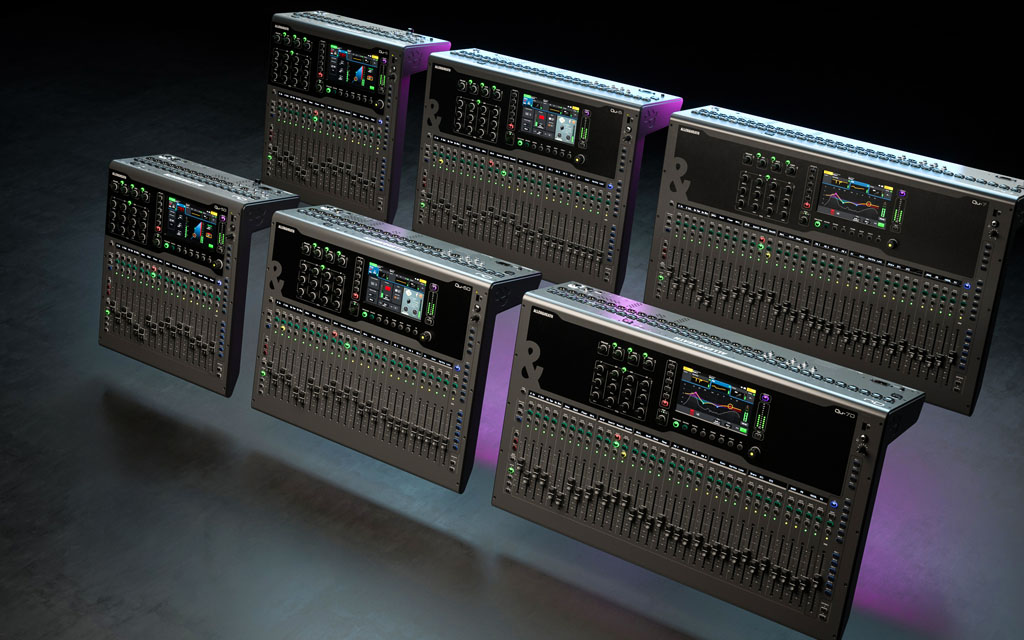
The new Qu range consists of three basic physical models: the Qu-5, with 17 motorised faders and 16 mic/line local inputs; the Qu-6, featuring 25 motorised faders and 24 mic/ line local inputs; and lastly the flagship Qu-7, that provides 33 motorised faders and 32 mic/ line local inputs, all of which are on combi jacks. Alongside these models there are three fixed-architecture Dante variants – the Qu-5D, 6D and 7D – making for a total of six in the new range, all of which are now vastly more capable of catering to a broad range of facilities and operators: from small- to medium-sized venues (pubs, town halls, houses of worship etc) to sub-contracting audio engineers who are always looking for a generous but affordable set of pro-level features in a compact, flexible form, without the cost or complexity of large-format touring consoles. Connected to S-Link stage boxes, all six models offer 32 mic preamps – a significant departure from the older generation Qu.
While the new Qu range is unquestionably more complex and versatile than the previous incarnation, the console remains a perfect introduction to digital mixing. If you’re a pub owner who dabbles in mixing bands on Friday night you may still struggle, but if you’re an audio engineer who understands the basics of routing structures, layers and bussing, you’ll hit the ground running. And if you’re already an Allen & Heath digital console user, things will feel remarkably familiar.
The new Qu console range is a fantastic blend of simple layouts, an upgraded (and larger) touch-screen user interface, higher audio sample rates, more inputs and outputs, and enough layers, mixes and soft keys to get your workflow humming without providing so many options that the console becomes cluttered or intimidating.
Comparison with the SQ Range… Inevitably
To digress on the Qu range specifically for a moment, it’s worth addressing the elephant in the room here – comparisons with the SQ range, since the two ranges appear to be on a collision course.
I’ve been mixing on an Allen & Heath SQ-7 live for a few years now and the specific comparisons between it and the new Qu-7 – which I’ve been working with for a month or so – are pretty striking. Here’s a brief impression of how the two compare.
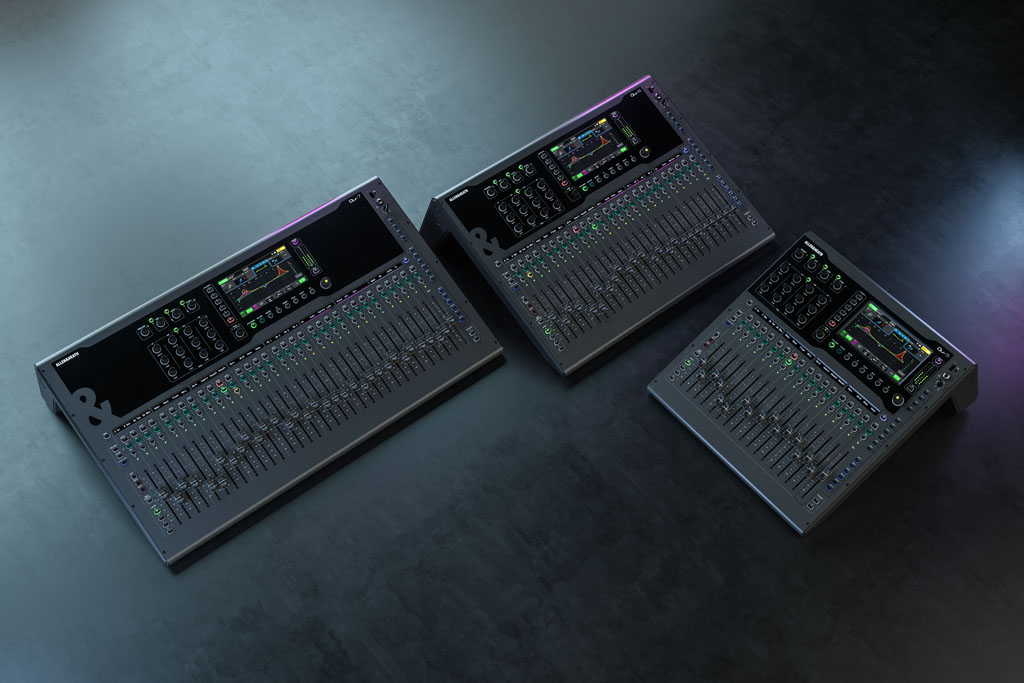
On paper and in workflow the two consoles now share a surprising amount in common: both run Allen & Heath’s XCVI 96kHz FPGA engine – which is now the company’s standard for low-latency, high-resolution mixing and for hosting DEEP processing modules – both offer motorised faders, an uncannily similar physical layout, a generous amount of local I/O, and an emphasis on hands-on control combined with touchscreen navigation. In practice, this means any engineer familiar with an SQ environment will find the Qu instantly familiar – same style of channel strip control, similar touchscreen integration and comparable soft-key/rotary assignability. They’re even basically identical in size, so much so that when both become dinosaurs in years to come their footprints will be barely distinguishable to a paleontologist.
Both digital consoles include seven-inch capacitive touchscreens paired with physical controls – which let you move fast with hands-on faders and dig deep into parameters on the screen – although, for mine, the QU’s new redesigned UI is superior all round: better on the eye in low-light, generally nicer to look at, and overall a step up from the SQ’s software, which now looks quite gaudy and dated by comparison.
And while superficially the two ranges of Allen & Heath console appear slightly different when compared button for button and switch for switch, in real mixing situations they’re similar enough that your muscle memory of juggling bussing, creating monitor mixes or setting up scenes transfers well between the two.
Both can run at 48k if necessary, allowing backwards compatibility with older stage boxes as well as anything in the S-Link ecosystem. Similarly, both ranges of the SQ and Qu lineups support Allen & Heath’s ecosystem of remote control apps and scene management tools.
Where They Differ
Where the two console ranges diverge is mainly in their scale of operation.
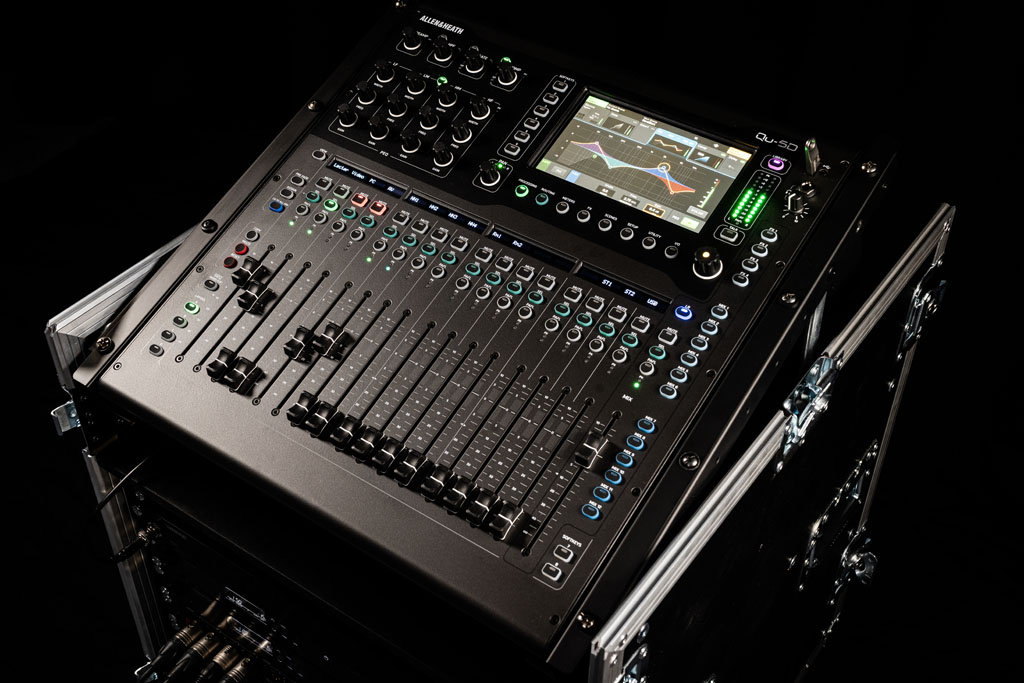
On the left-hand side of the Qu surface there are four custom mix layers, where the SQ provides six. Similarly, the SQ offers 16 customisable soft-keys while the Qu provides only eight. Regarding these two facilities in particular then, the question is simply about quantity: if 16 soft-keys seems like overkill or four mix layers seems ample for your needs, then the Qu immediately becomes a compelling new option in the Allen & Heath range, since in many respects it’s no longer the ‘cheaper’ option, but rather, the ‘leaner’ one.
One advantage I see the Qu having over the SQ, apart from its improved UI, is its full collection of EQ controls, held over from the previous model, which are neatly laid out on the left-hand side of the upper section of the console. I like having full control over all four bands at once like this. It allows you, for instance, to manipulate gain on a low-end bell while simultaneously adjusting the Q on the top-end. You can’t do that so easily on an SQ.
Similarly, the Qu offers peace of mind to less experienced operators with three key features: the Automatic Mic Mixer (AMM) found on other Allen & Heath consoles, which dynamically adjusts multiple microphone channels simultaneously to prioritise the dominant mic in a group; Auto Gain and Gain Monitoring modes per channel that analyse initial gain setting and then continuously monitor channel levels to avoid unexpected peaks; and thirdly the Feedback Assistant, which scans your mix outputs for problematic frequencies, which can then be either statically controlled manually or automatically and continuously, via notch filters, to reduce feedback – typically an inexperienced operator’s worst fear.
The SQ meanwhile has more layers, more inputs for routing and submix options, eight customisable rotary encoders (where the Qu range has none) making it the more natural fit for big theatre shows, broadcast trucks, larger houses of worship, or any venue that hosts a solo act one day and a 12-piece band with in-ears the next.
The SQ range offers a more advanced and flexible approach to auxiliary sends compared to the new Qu series. On the SQ consoles, each mix bus can be configured as mono or stereo, with up to 12 stereo mixes, plus groups and matrices – giving engineers far more control for complex monitor setups.
By contrast, the new Qu series simplifies this structure, providing 12 mix outputs (which can be linked for stereo) and a few matrix buses, but routing is more streamlined and fixed compared to the fully customisable architecture of the SQ range. The Qu’s auxes are still powerful enough for most live and recording situations, but the SQ’s deeper routing flexibility make it the better fit for complex or professional monitor and broadcast environments.
New Qu Vs Old
Without a doubt, the new Qu-5, 6 and 7 consoles (and their postmarked ‘D’ for Dante variants) represent a major step forward from the earlier generation Qu series. The most obvious of these is the shift to a 96kHz FPGA-powered core and high-performance 96kHz converters, which undoubtedly deliver noticeably greater clarity, lower latency, and more detailed transient response, resulting in mixes that feel cleaner, more open, and more precise across the frequency spectrum.
Beyond this major upgrade, connectivity and workflow have also been given a shot in the arm. The inclusion of S-Link networking allows seamless integration with Allen & Heath’s ecosystem of stage boxes and personal monitoring systems, providing flexible I/O routing options. New “D” models in the range feature built-in Dante capability, enabling 16×16 networked audio at up to 96kHz – ideal for broadcast, installed sound, or multi-room applications where digital audio distribution is key. In addition, a 32×32 USB-C interface replaces the older USB-B connection, allowing higher-bandwidth, low-latency recording and playback directly to modern computers or DAWs.
The additions of a vastly improved and larger touchscreen, along with monochrome channel-display scribble strips, cannot be understated here either. While the lack of channel strip colour-coding on the new Qu range (familiar to SQ console operators and above) is a missed opportunity to my eye, users of the previous generation ‘Q’ models will nonetheless notice a significant improvement here (for starters you can read the screen, and you may be able to ditch your roll of white electrical tape once and for all!)
To that end – operationally at least – the user interface offers arguably the greatest advance here, having been completely refreshed for faster, more intuitive operation. A brighter, higher-resolution touchscreen with improved metering and gesture control vastly enhances visibility and ease of use.
Having said that, I would contend that increasing the size of this screen even further to say 10 or 12 inches would have really knocked this console out of the park, making it a compelling option at almost any price.
Indeed, in some respects I can see that the advancements visible on the new Qu range have been actively curtailed by the popularity of the SQ range, which is a real shame. When so much work is done on screen these days, I find it remarkable that the latest console redesign doesn’t include the biggest screen it can practically accommodate, regardless of the potentially adverse effects on other models in the extended family! It didn’t stop Allen & Heath designing a bigger screen for Avantis, after all! I would have preferred the new Qu range to feature a larger screen that paved a clear upgrade path to the SQ family, rather than being limited by the SQ’s design. Unfortunately, Allen & Heath have opted for the latter.
Other than this gripe, overall, the latest Qu range significantly refines and upgrades every aspect of its predecessor. It delivers superior audio performance, modern connectivity, and workflow-enhancing automation – all in the same rugged, gig-ready format that made the original series so successful.
If you’re in the market for a digital console, and you’ve already contemplated the Qu and SQ ranges, to my thinking the decision on which console to buy rests mainly on I/O capacity, the Dante option (which, on the Qu range, is only offered via the 5D, 6D and 7D – you can’t install a Dante card at a later date), the need for higher native channel counts, and more flexible monitoring options. As far as sonic character and processing capability, the Qu and SQ ranges are all but identical.
If you’d prefer a console that’s a little cheaper to purchase, that offers a slightly reduced feature set, but which in most other respects is identical sounding, the modern Qu experience, with its freshly redesigned UI and flagship XCVI/DEEP horsepower, may be the one for you.
Product Info: allen-heath.com/hardware/qu
Distributor Australia: tag.com.au
Distributor New Zealand: jansen.nz
Subscribe
Published monthly since 1991, our famous AV industry magazine is free for download or pay for print. Subscribers also receive CX News, our free weekly email with the latest industry news and jobs.
Recent posts



Latest jobs