ROAD TEST
9 Jun 2026
ASTERA QUIKBEAM
Subscribe to CX E-News
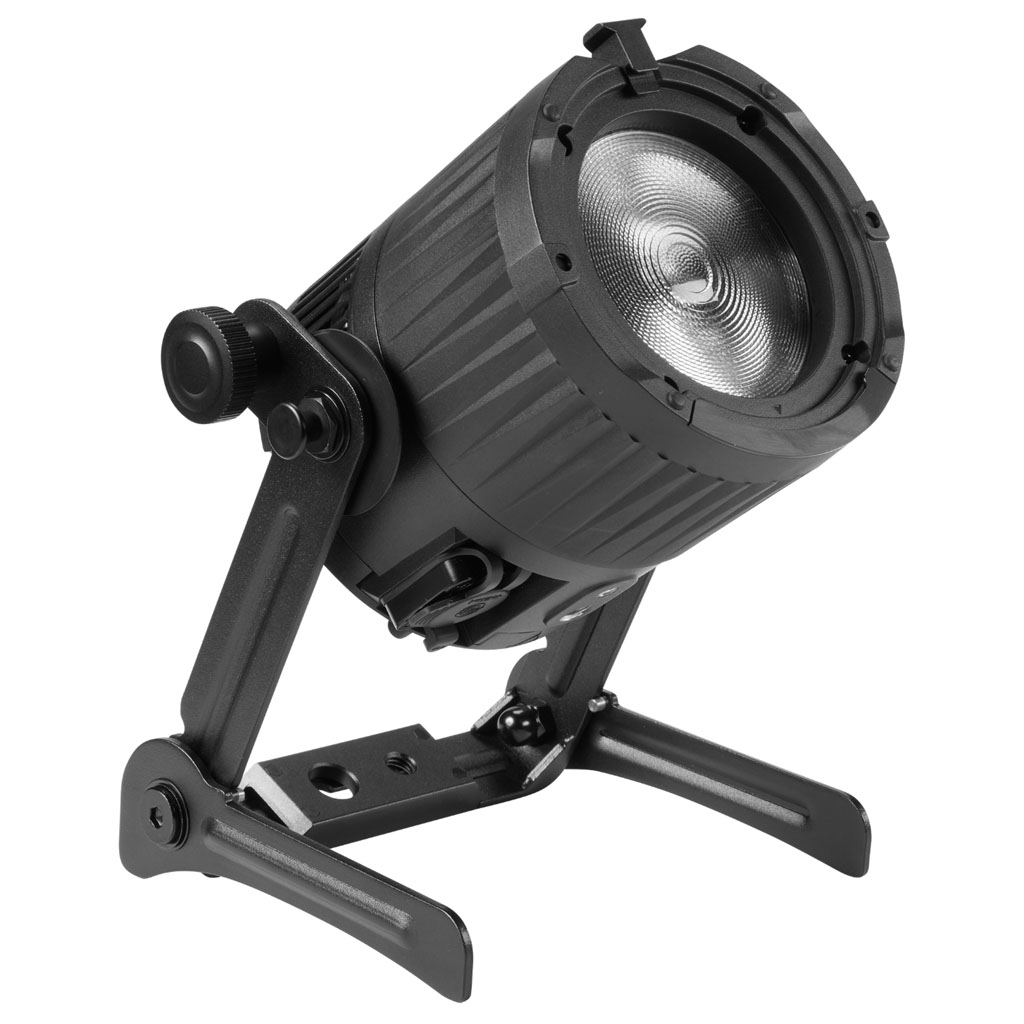
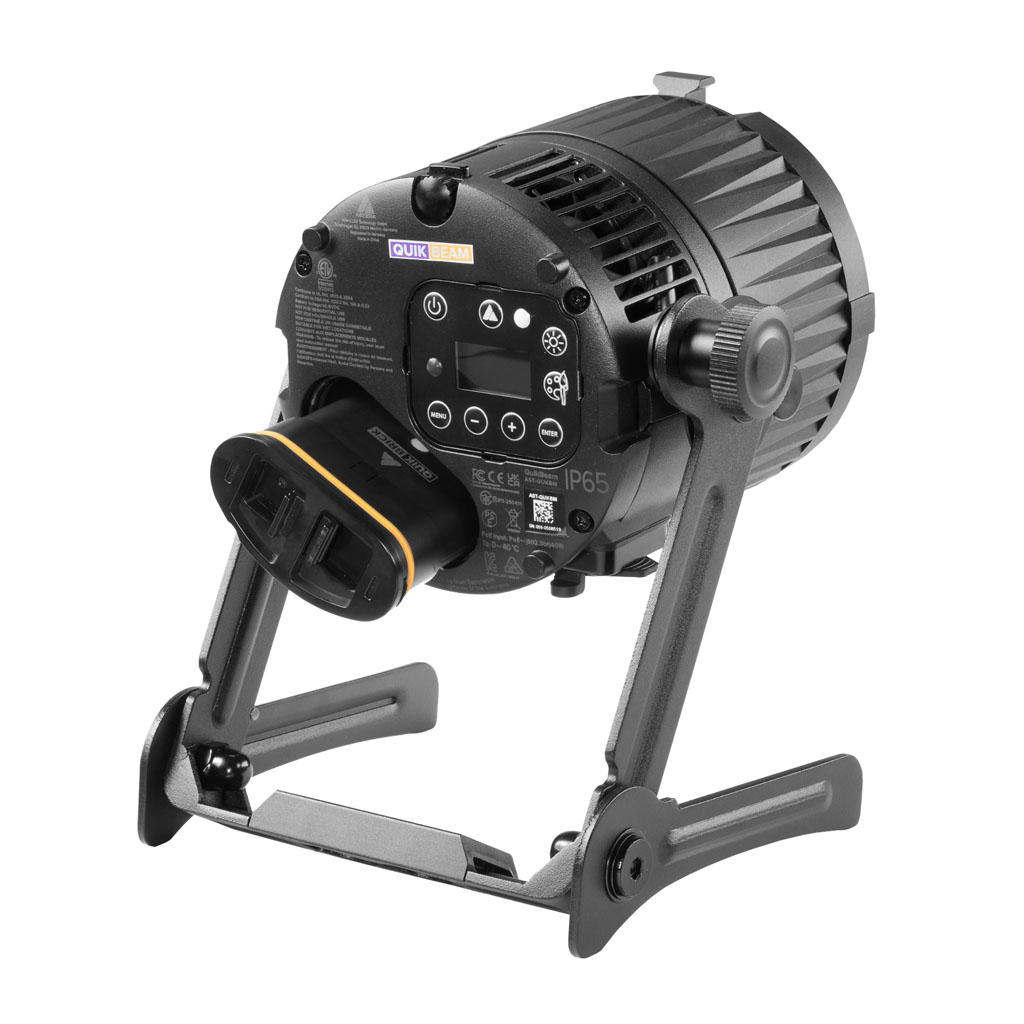
The Astera QuikBeam is a new static battery powered IP65 LED fixture. It plugs in seamlessly to the Astera Ecosystem. It has a Fresnel lens and has been designed to emulate a 200W tungsten light.
Astera is a German hardware, software and manufacturing specialist. Since the mid-2000s, Astera has been producing battery-powered, remote controlled LED lights. Arguably best known for the Titan Tube, they have a range of static lights and an accompanying ecosystem that supports them.
Construction
Astera have built a really good reputation over the years for creating durable and hard-wearing lights that still look good and are easy to move around. The QuikBeam continues this in what essentially looks like a smaller version of the QuikSpot and the QuikPunch. It is durable enough to be used outdoors, and it looks good enough to be used in a TV or corporate setting.
It has dimensions of 241 x 174 x 125mm (with yoke) / 136 x Ø 120mm (without yoke) and weighs less then 2kg; a good compact size. It is IP65 rated too, and it is still IP65 rated when cables are plugged into it.
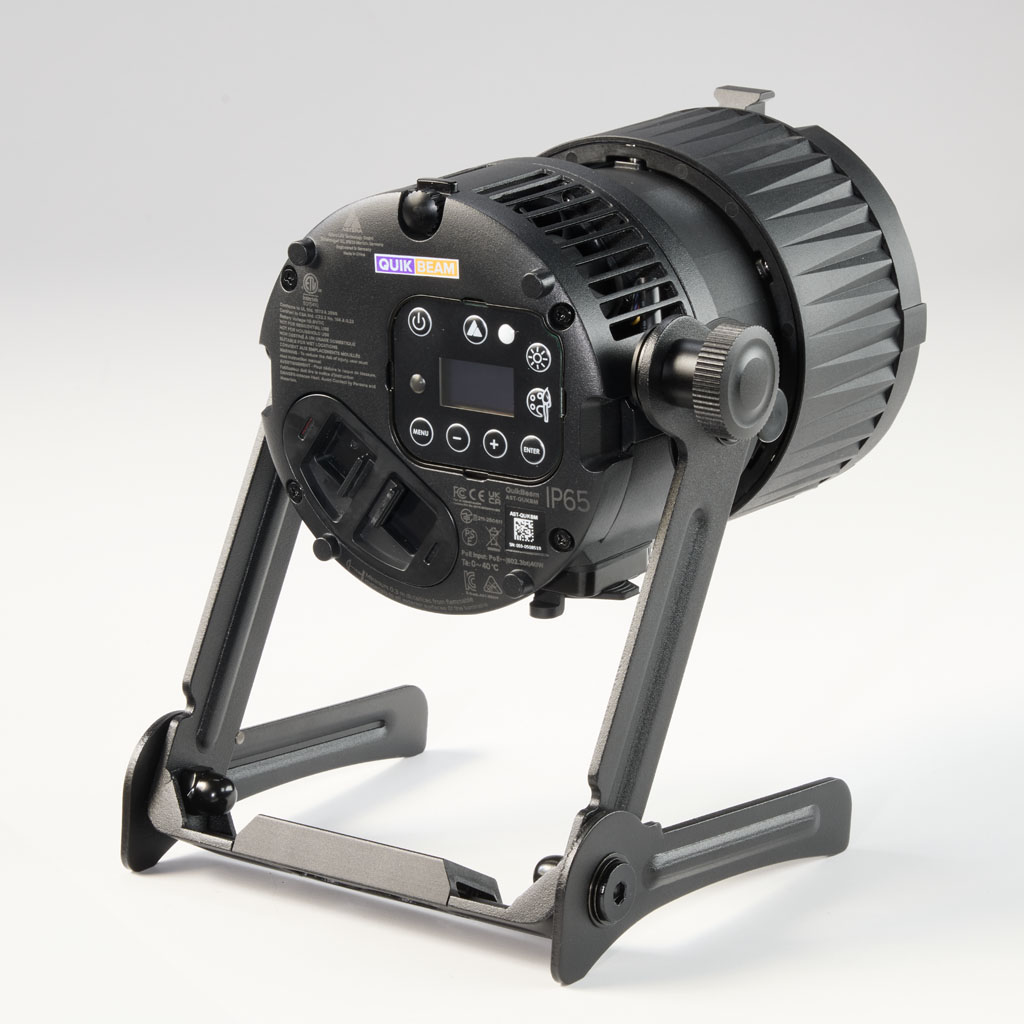
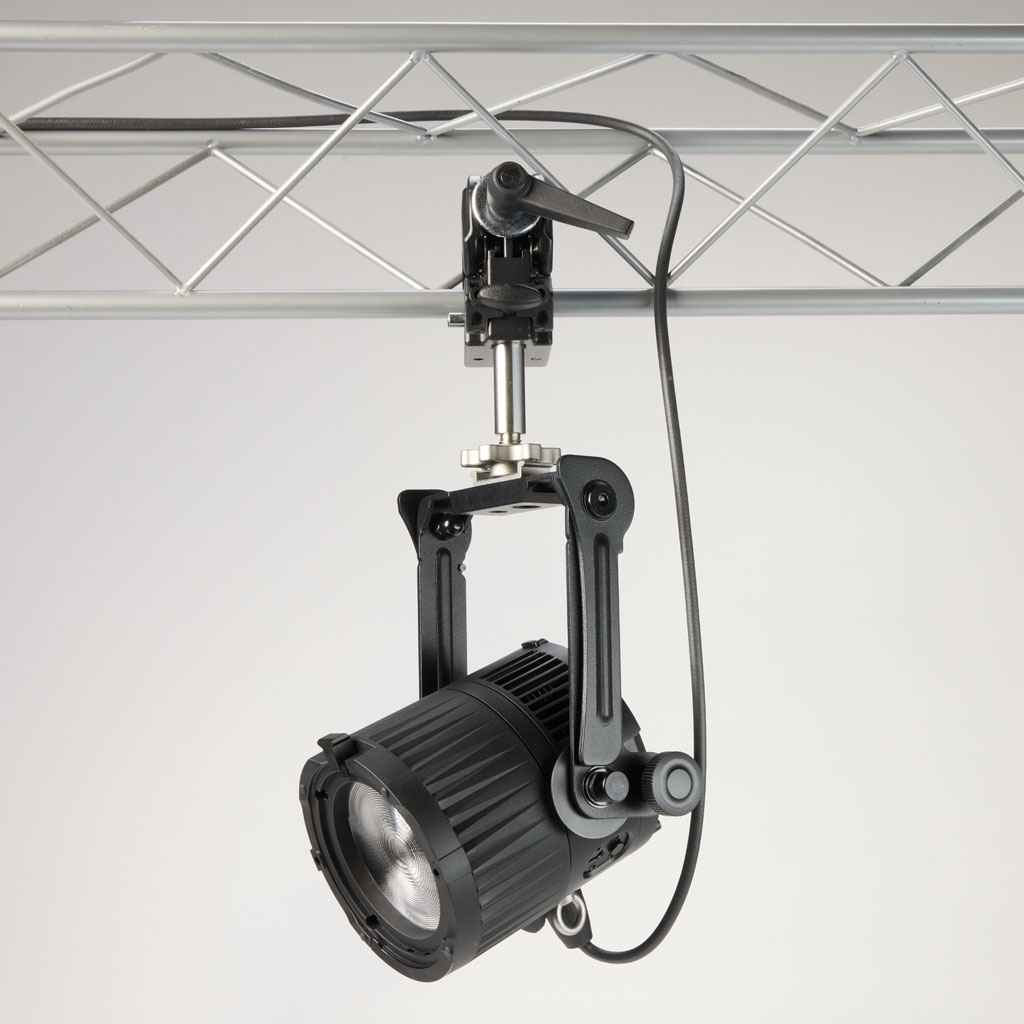
The QuikBeam has removable yoke and foldable feet, which provide flexibility in mounting and positioning, while Astera’s KickStand balances the light while being used as an uplight and allows for quick and accurate tilt adjustment. TrackPins, TrackSpigots, and airline-track accessories are available as well. They make it that much more useable and valuable, especially on a film set. These features are also available with the QuikSpot and the QuickPunch, building up a very solid and uniform Astera Ecosystem. The Astera Ecosystem itself is one of the main features with any Astera fixture, including the QuikBeam.
—
When shopping for a battery powered IP65 fixture, take a closer look and make sure that the IP rating still stands when cables are plugged into it.
—
Noteworthy too is Astera’s new QuikBrick, a swappable battery system. Batteries can be changed over in a few seconds, about the same amount of time as a V-lock battery. You can also operate the fixture without a battery via Power over Ethernet (PoE), making the QuikBeam that much more versatile.
The Astera stuff goes the distance. You buy it today and it is still good in 10 years’ time, provided you look after it.
Optics, Colour and Brightness
The QuikBeam delivers impressive output for its size, with it being positioned as a 200W tungsten equivalent. It is powered by the Titan LED Engine, the same LED engine used in all of Astera’s new products. QuikBeam uses Astera’s additive RGBMA (Red, Green, Blue, Mint, Amber) colour mixing system. The QuikBeam gives rich and true colour reproduction across the spectrum and has a colour temperature range from 1750 to 20,000K.
Colour rendering and optical quality would have to be one of the fixture’s biggest selling points. With a CRI and TLCI rating of 96+, the QuikBeam produces clean skin tones and accurate colour rendering that exceeds the demands of film, television, and high-end corporate events.
High CRI benefits extend beyond skin tones on TV. Light any object (the lighter the better) with a high CRI (90+) and a low CRI light at the same colour and you will be able to see the difference with your own eyes.
The Fresnel lens and twisting zoom system offers a beam angle range of 12.6° to 58.5°, with a field angle of 16.9° to 78.2°. You can move quickly and effortlessly between narrow spotlight out to a wide wash.
The QuikBeam also includes the OutputGain feature, allowing users to choose maximum brightness when colour precision and battery run time are less important. The trade-off here is that you have less battery output and lower quality light for more lumen output.
Battery runtime is impressive considering the fixture’s size and output. You can get up to 20 hours depending on settings, while maximum brightness runtime sits at approximately four and a half hours. Swappable QuikBricks mean you can technically run it for as long as you need.
Applications and Features
The QuikBeam has been designed with quality and versatility in mind. It can be used in just about any application. Those who know the Astera range will be able to speak highly of its use in film, TV and corporate settings. They would also work really well in any kind of activation due to their size and aesthetics. I think something like this is underrated as an architectural lighting fixture. Small enough to fit into a recess in a wall, yet powerful enough to uplight a two or three storey building at night.
Another underrated feature is the integration of Power over Ethernet (PoE). PoE allows both power and data to travel through a single Ethernet cable, as opposed to having a power cable and a DMX cable. This simplifies cable management and reduces setup time. Keep in mind, you can run these wirelessly too. At first glance it may not seem like much, but it’s a real game changer when quickness and convenience are key. QuikBeam’s PoE is compatible with sACN and Art-Net protocols while also charging the fixture battery.
Astera has accessories such as the NetBox and PowerInjector. The NetBox lets you prep, configure, and monitor multiple fixtures, saving all kinds of time and effort. PowerInjector helps prep too. The QuikBeam takes about two hours and 40 minutes to do a full charge.
The ecosystem also has a PrepCase Kit, which helps save time with charging and setting DMX addresses and other attributes while the 2-Unit Backpack Kit is a smaller, more portable version, which comes as a backpack.
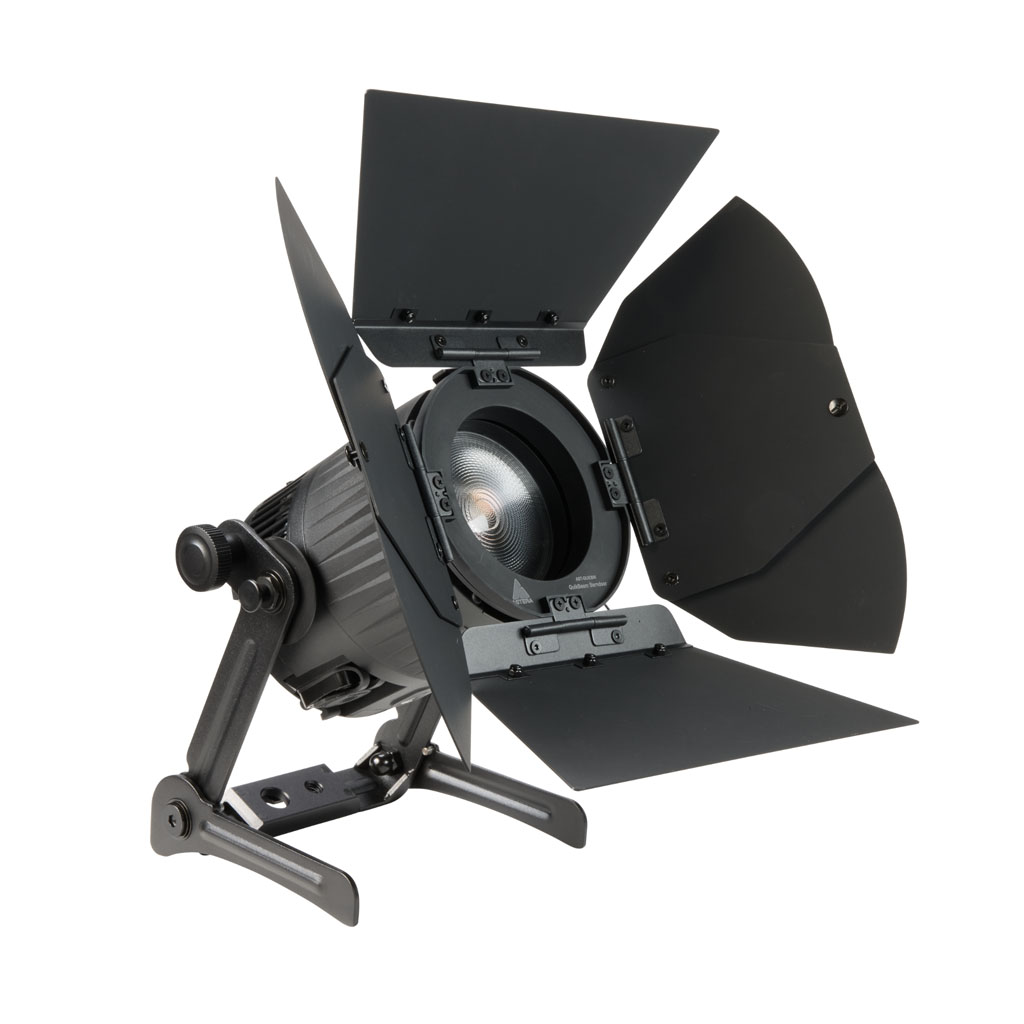
There are even more accessories such as barndoors, FlexCovers, TiltMeters (a personal favourite), and a range of other mounting adapters, all aimed at making the QuikBeam more useable and versatile. The Astera Ecosystem is really impressive and should definitely be factored in as a major positive. It is one of the main selling points of any Astera fixture.
Control and Programming
Built-in LumenRadio CRMX provides wireless DMX and RDM control for the QuikBeam. Wireless control has always been and remains one of Astera’s greatest strengths.
The AsteraApp is one of the best on the market, enabling you to set DMX addresses, create groups, change colours, and manage effects directly from a mobile device. Used properly, it’s a game changer.
QuikBeam supports ArtNet, sACN, Bluetooth, UHF, and Wi-Fi protocols. It can integrate into virtually any professional control environment/network.
If you run them powered, they only draw 20W, meaning you can fit a lot on a single circuit.
Verdict
If you have a real eye for detail and are chasing a top-quality, high-end look from a compact, static fixture, check out the Astera QuikBeam.
Product Info: astera-led.com/products/quikbeam/
Distributor: www.ulagroup.com
—
THE SPECS
Astera QuikBeam
- LED Engine: Titan LED Engine Colours: RGBMintAmber
- LED Power Draw: 20W
- CRI (Ra)/TLCI 1750 – 20000K
- (OutputGain disabled): ≥96 Beam Angle: 12.6° – 58.5°
- Field Angle: 16.9° – 78.2°
- Strobe: 0 – 25 Hertz
- Battery runtime up to 20 hours
- Battery runtime (max. brightness): 1h 20m Battery lifetime: 70% after 500 cycles Charging time (nominal): 2h 40m
- Wireless range: CRMX/UHF up to 300m, Bluetooth up to 3m
Subscribe
Published monthly since 1991, our famous AV industry magazine is free for download or pay for print. Subscribers also receive CX News, our free weekly email with the latest industry news and jobs.
Recent posts