THE GAFFA TAPES
27 Jul 2026
Beyond the Boom: The Changing World of Location Audio
Subscribe to CX E-News
Snippets From the Archives of a Bygone Era
Location sound recording and audio post-production technician Chris McCallum has spent 40 years in the business. I recently contacted Chris to get a heads-up on how the industry has transitioned from the days of the Nagra 4.2 analogue tape recorder and a single overhead boom to the advanced capabilities of today’s location audio recorders and the arrays of wireless microphone systems and digital equipment used on location for cinema and visual storytelling.
Chris McCallum began his career working with voiceover artists, including his friend, the legendary impressionist Keith Scott, who provided the official voices for various Warner Bros. Looney Tunes characters in international arena shows and commercials. “We go way back to the 80s and 90s when I was working predominantly in post in voiceover production studios around Sydney,” says Chris, who points out how affordable audio technology has changed the industry. “We’d spend hundreds of thousands of dollars acoustically treating and tuning rooms just to record voices, whereas now it’s done in a walk-in wardrobe with someone with a doona over their head and a $300 microphone. We’ve gone from the days of charging $300 to $400 an hour for studio time to people doing it themselves in their bedroom.”
I asked Chris how he balanced wireless lavalier microphones hidden underneath clothing with the use of boomed shotgun microphones, how he avoided clothing noise from lavalier microphones, and how it’s decided what ultimately makes it into the final audio mix.
“Often, we’ll have the wardrobe department stitch microphones into clothing collars so you can’t see them, making sure they’re away from areas that will rub. A lot of the sound that you’re hearing on dramas these days is still boom. You know, boom is still the primary way of capturing sound.”
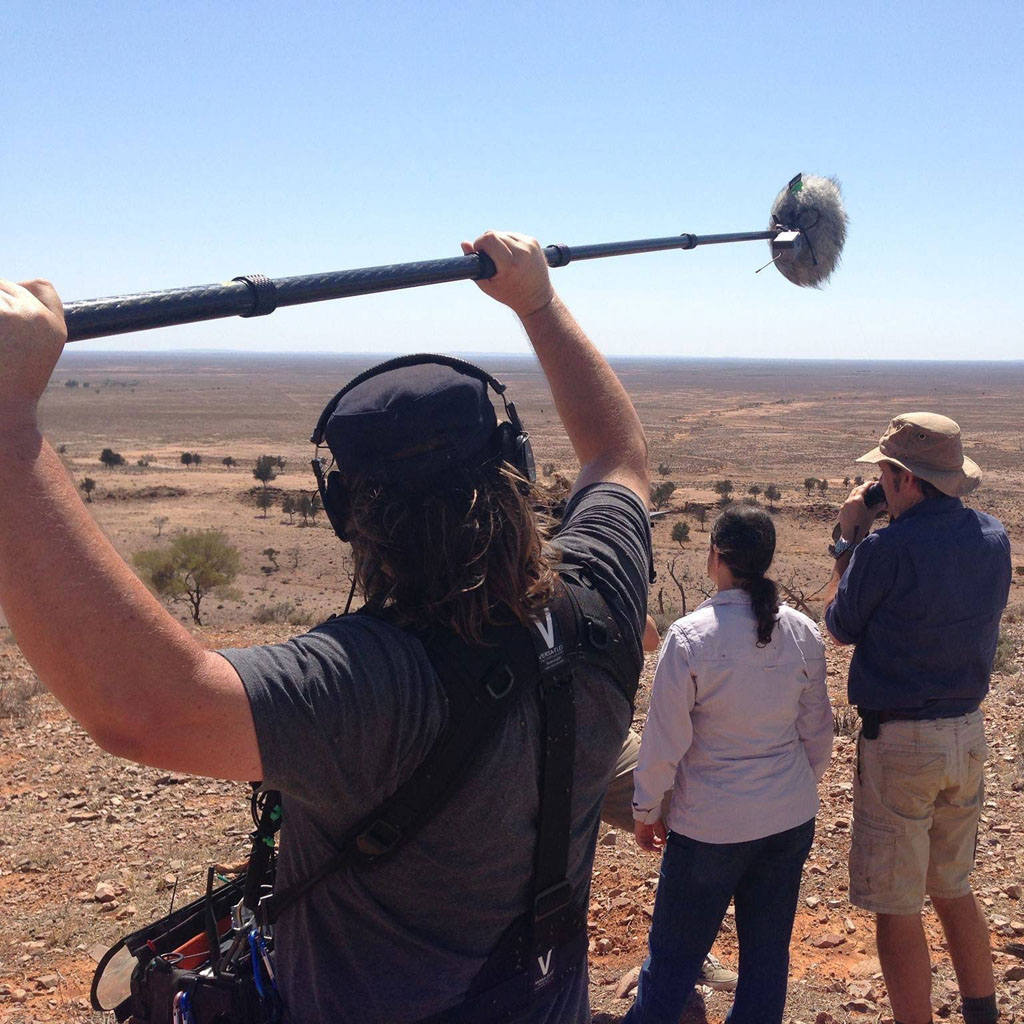
“Traditionally, when a drama was shot, you had a single camera that would shoot various angles of the wide shot, then you’d go for the mid-shot, then you’d go for the close-up. And usually, the sound for this whole scene would come from the close-up because that’s when you get a boom nice and close in there without it being in shot. But these days, of course, they’re shooting with two or three cameras simultaneously, and you can’t get a boom in shot. So while you’re still getting a close-up sound, you’re still relying a lot on lav mics for the wider shots if that’s what they’re using,” says Chris.
Technological advancements have undoubtedly made the industry more accessible. However, this influx of new creators, combined with clients having more tech options, has ultimately driven down budgets.
“Our industry is in a state of flux at the moment; things are changing rapidly because of technology. With technology making things very accessible and affordable, it is changing the economy of the industry. Where there used to be a lot of professionals fully employed, now a lot more aren’t going out every day and recording sound because when budgets are cut, sound is often one of the first things to go with it. Even to have a boom operator is a fantastic thing; that’s more in your upper-level drama sort of feature film arena, but I do a lot of observational documentary or lifestyle television where it’s just me. So, I’m handling the boom, I’m mixing the rads (radio mics), I’m multi-tracking the whole thing, and it’s up to me to capture what’s required on set. So it really comes down to the budget and the production. I passed on a job yesterday that was an observational documentary. They wanted a single operator to handle eight radio mics and a boom and feed into three cameras simultaneously, which, as I get older, is too much for my brain in one sitting,” says Chris.
Wireless microphone technology gave us beltpack lavalier microphones back in the 1980s, while digital equipment for location recording has been around since the DAT recorder knocked Nagra off its perch in the mid-1990s, and shotgun microphones have been around for eons. So, I asked Chris what have been the main advances in microphone technology and on-location sound mixing.
“The biggest change for field recording was the advent of the multi-track digital field recorder, and that kind of changed everything. It meant that we were no longer relying on one or two boom mics to capture sound. With some of the multi-track recorders now, you can have 16, 18, or 20 wireless mics and booms coming in simultaneously to a mobile field recorder, which opens up the scope for so much more capture of sound.”
“The Sanken COS-11D was the main lav mic forever, but Danish company DPA Microphones has taken over that realm now because they’re getting smaller and better all the time. I’ve got a collection of different mics but my primary (lavalier) mics are made by DPA. Each of those mic heads costs roughly $700 to $800 these days. So, they’ve become the new industry standard,” says Chris.
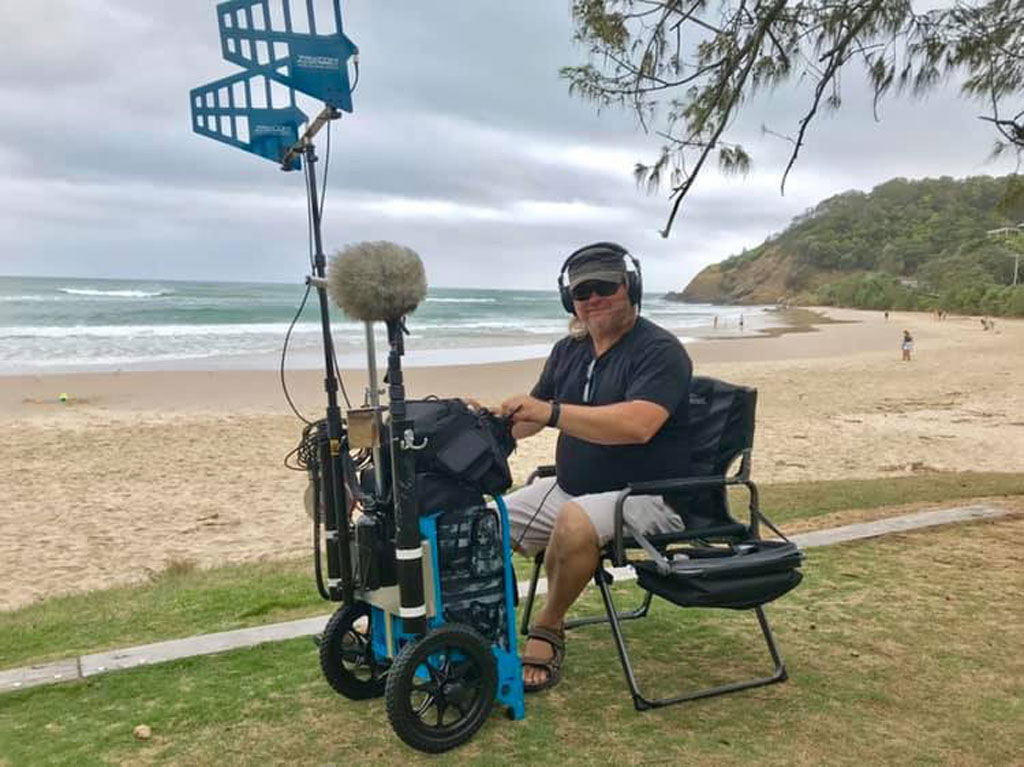
Chris uses an array of Zaxcom digital wireless bodypack transmitters, which feature a built-in microSD card slot for internal backup recording. “I’ve got multiple redundancies on mine, so all of my Zaxcom wireless transmitters record to microSD at the source before the signal is transmitted with timecode that matches the recorder and the camera. So even if someone wanders out of range, it’s still being recorded in the belt pack. Zaxcom, which is a company out of New Jersey in America, was the first to do that, and they hold the patent on recordable wireless bodypack transmission.”
“My shotgun mic of preference these days is a Sennheiser MKH 8060. I’ve got a few of those; it’s the modern version of the old 416 shotgun. It’s got the reach of what the 416 would give you, but all those shotgun mics were built in the 70s when the technology hadn’t really evolved, so the biggest problem with all of those was the off-axis sound. As you went off-axis, it didn’t tend to fade away; it tended to get very thin, whereas with the new versions of those, you can basically just turn the mic off-axis, and whatever you’re pointing at fades away to the distance. It doesn’t become thin and horrible,” says Chris.
Chris uses an array of location mixers, including a Sound Devices mixer, which can handle four wireless inputs, and also two Zaxcom 12-channel mixers, which are hardware control consoles.
He also has an Allen & Heath SQ-5, which is a 48-channel digital mixer that has motorised faders. “Interestingly, the biggest kit and the most expensive I have is purely for a YouTube channel; there’s about $80,000 worth of gear in that kit,” says Chris.
I couldn’t resist asking Chris about 32-bit float, which, in newer mixers, splits the analogue microphone signal after the mic preamp into dual analogue-to-digital converters, capturing an immense dynamic range that eliminates digital clipping.
“I still work on a gain structure. The problem with 32-bit float is you tend not to have a gain structure. What comes out of the mic level goes into 32-bit. What it does is it gives you higher headroom, but it also records at a lower level to give you that. Then it’s got to be post-processed to bring it back up to a usable level. As budgets get smaller and time constraints get shorter, the less work you have to do in adjusting every individual clip, the better it is,” says Chris.
Chris explains that the decision to use ADR (Automated Dialogue Replacement) depends largely on the nature and budget of the shoot. He refers to a recent horror film he worked on, Headless, which was shot in Queensland and directed by the Spierig brothers.
“The film was about headless motorcycle gangs, and there were endless shots of Harley Davidson motorcycles in formation going down roads, and there was gunfire; it was the antithesis of a perfect sound recording environment because there was so much noise. So they made the decision up front that if they had to ADR the whole lot, it would be fine. But if you’re in a situation where ADR isn’t an option, or there’s not the budget for it, or there’s not the need for it, then obviously we try and capture the best possible sound we can so it’s usable,” says Chris.
The ultimate goal of ADR is to seamlessly match the original environment’s spatial characteristics whether it’s an indoor or outdoor setting, and to precisely replicate the perceived distance of the actors based on the camera shot. Chris informed me that studio engineers will set up multiple microphones simultaneously in front of the actor doing ADR in the studio. This setup often includes a matching lavalier microphone, a shotgun mic such as a Sennheiser or Schoeps that mirrors what was used on set, or a studio microphone like a Neumann U87. These three or four distinct audio tracks are then blended to seamlessly match the sound caught on the day of filming.
“I’ve spoken to a lot of the guys that have worked on my sound for ADR, and with the sound- stretching software that’s available now, they’ll often get three or four takes of something, and if it’s close enough, they’ll move on. As long as you’ve got a good reference track, the software can then match those waveforms time-wise, whereas prior to that we had to do it over and over again until it was absolutely perfect. Now, basically, the software analyses the new waveform and the old waveform and stretches or shrinks the new waveform to match the old waveform,” says Chris.
Logically, you would assume that location audio would be the ultimate safe haven from AI infiltration. That’s because location audio relies critically on a mix of lavalier microphones carefully hidden beneath clothing, wireless beltpacks attached to the talent, and shotgun microphones that have to be skilfully manoeuvred by boom operators. Then there are the choices of microphones and the expertise required to get all those signals into the location recorder with backups. However, AI has already found its way into the studio for ‘Human Plus’ ADR recording.
Chris McCallum, in his long career, mentioned that he had also worked with a long-time friend of mine, respected voice artist, Tony Bellette, who was my songwriting partner in the late 1960s.
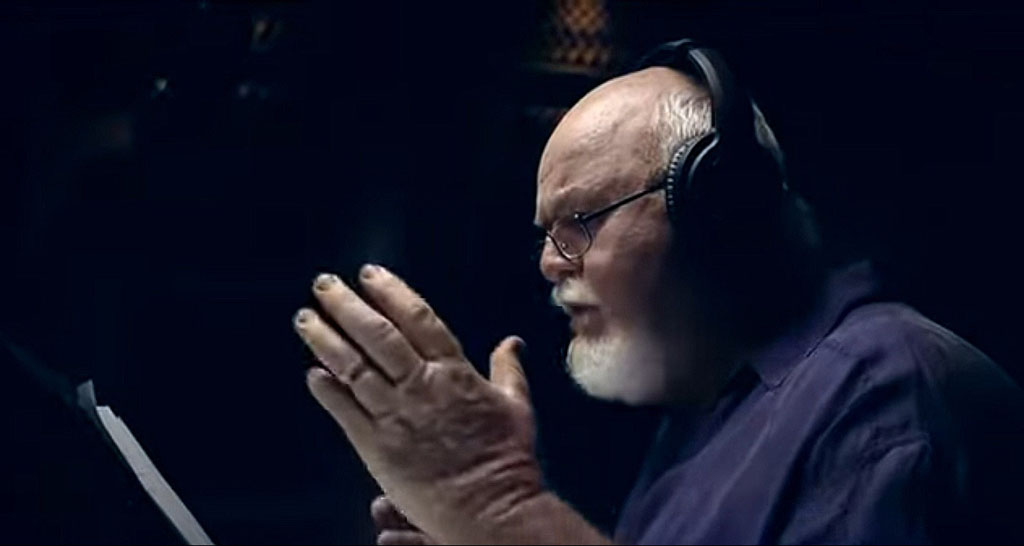
So, I rang Tony to get a heads-up on how AI was currently affecting voice artists. “That’s one of the most talked about aspects of AI in my industry at the moment,” he said, adding, “There are now actions within the voiceover industry to crack down on any unapproved use of a voice artist’s voice, but nothing is illegal at the moment; that’s the problem. Anybody that’s involved in this industry now has to be very careful about any job they do to ensure that their work is only going to be used for the purpose it was booked for and that there’s some sort of legal cover if it goes outside that,” said Tony. In fact, Tony informed me that hefty sums are being offered to voice artists to sign contracts allowing their previous voice takes, or a newly read script, to be manipulated by AI for future projects. Given that many actors notoriously dislike doing ADR, this could easily become common practice, though many in the industry remain deeply sceptical.
Ironically, for various reasons, ADR has been manipulated for many years. When Humphrey Bogart was injured in a car crash in 1953 during the filming of Beat the Devil, his injuries, which included a badly cut tongue and shattered dental bridge, caused him to speak his lines with a severe lisp. Director John Huston brought in Peter Sellers to dub all the dialogue for the scenes that followed. And, in one of my favourite films, Ryan’s Daughter, director David Lean ultimately decided to have Christopher Jones’s (the romantic protagonist) entire vocal performance dubbed over in post-production by British actor Julian Glover because Lean didn’t like the American’s imitation of a British accent.
—
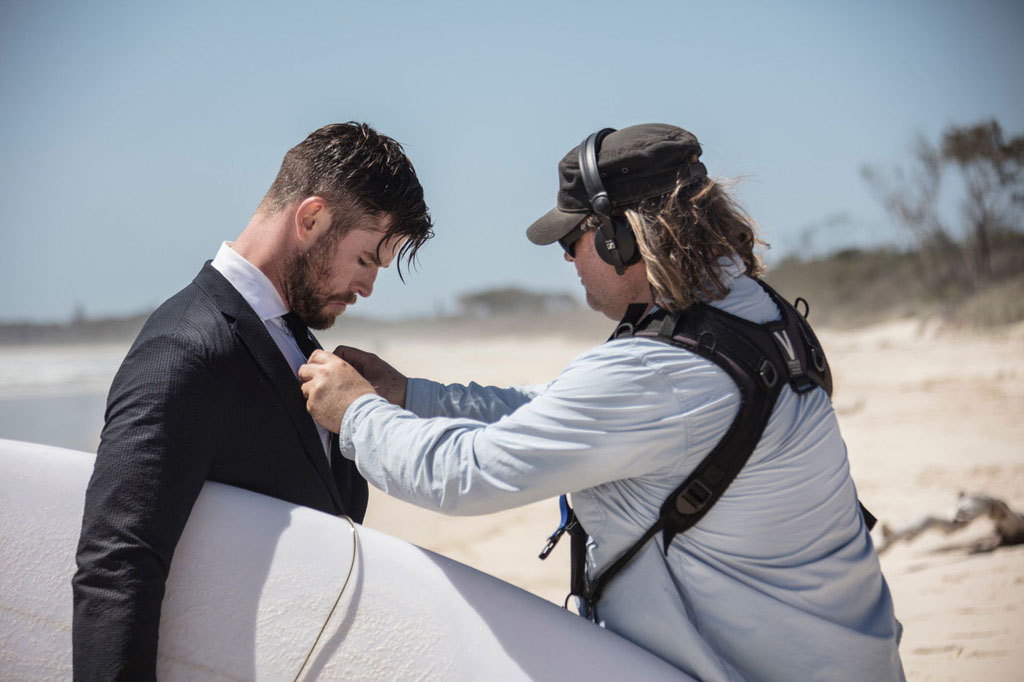
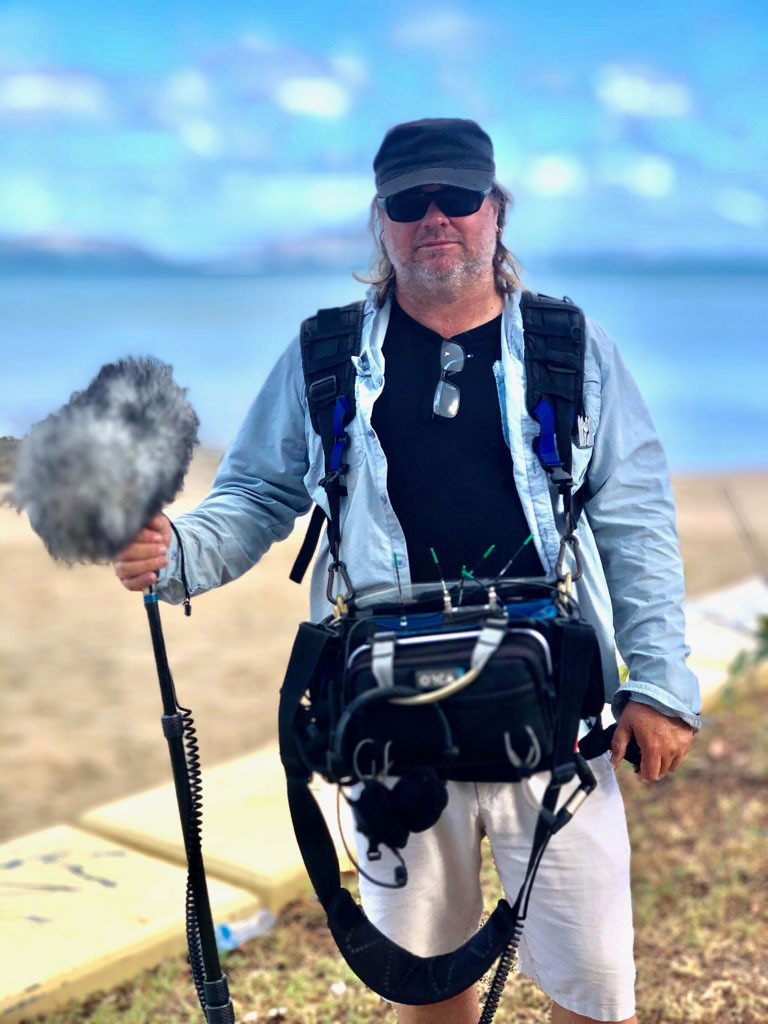
Main Pic: CHRIS MCCALLUM WITH CHRIS HEMSWORTH
Subscribe
Published monthly since 1991, our famous AV industry magazine is free for download or pay for print. Subscribers also receive CX News, our free weekly email with the latest industry news and jobs.
Recent posts