THE GAFFA TAPES
26 May 2026
Club Nights and Close Calls
Subscribe to CX E-News
Snippets From the Archives of a Bygone Era
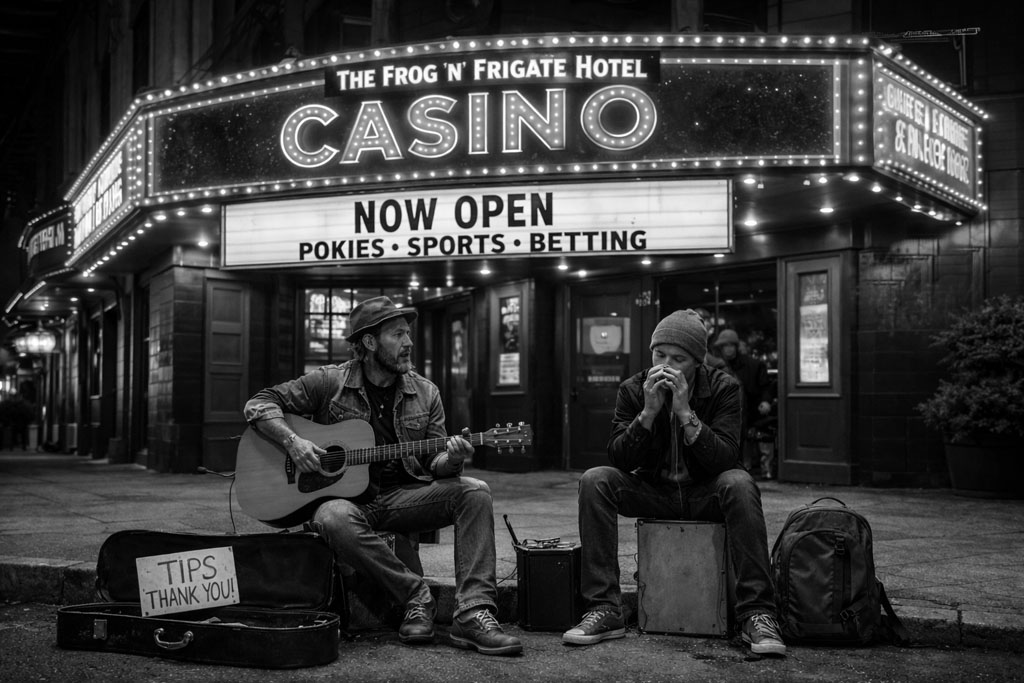
In the late 1980s and continuing into the new millennium, the Australian pub-rock scene was sliding into the abyss. Pubs had been screaming out for poker machines for many years, and when deregulation finally arrived in the ’90s, it sounded the death knell for entertainment as pubs became virtual casinos. Another hidden factor that largely disadvantaged hotels prior to deregulation was that some clubs were running entertainment at a loss knowing that patrons playing the pokies would more than make up the shortfall.
It wasn’t all about the pokies either. Authorities clamped down on audience numbers, and noise abatement laws were strictly enforced. Venues had been flaunting crowd capacity rules for years. The practice of removing all the tables and chairs in a venue and reducing the punters to a surging mass was referred to as ‘animal’. In the late ’70s my band did a non-paying support gig at the infamous Stage Door Tavern, Sydney, managed by the legendary Pat Jay, who, when I asked about the venue’s crowd capacity, said: “I can stick 600 people in here” – the venue was only licensed for 200.
During the downward spiral of entertainment venues, gigs were getting harder to find. I had stints in entertainment management, PA hire, one-man-band performances, karaoke and sound engineering, but these were mostly short-lived.
I gave up searching for quality entertainment venues in the evenings, and instead filled my spare time coaching junior rugby league and socialising with the football community on weekends and evenings. Having been involved in entertainment, I was invited to join the committee as the social director in two of the three clubs I was associated with over a 10-year period. Football clubs, schools, and religious organisations all have ready-made audiences, so all I had to do was deliver a show that entertained and made money for the club.
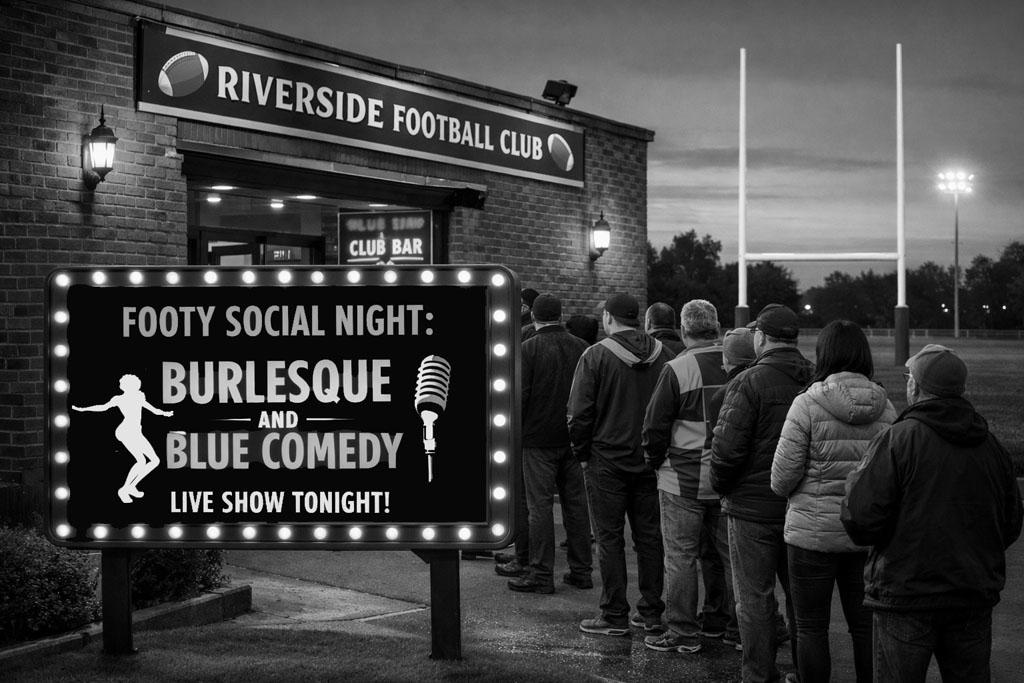
Although I had debuted as a footy social club director in the late ‘80s at my first club, my last two events as football club social director in the ’90s involved a karaoke show and a bush dance. The karaoke show was easy as I owned all the equipment from my former disastrous Karaoke Showtime promotion, which I had prematurely pulled the plug on because I couldn’t stand the drunken punters and the tiresome marketing of the show. When I ultimately sold the equipment, I was light-heartedly labelled a ‘rat fink’ by the footy club members, so I had to come up with another promotion.
The last event I ever organised was a bush dance. I was initially asked to engage a ‘caller’ who was supposed to emulate the traditional hillbilly square dance calls to recorded music. I couldn’t see how this would work or even hold up for the entire evening. Furthermore, this was to be the inaugural social event at the club’s newly built clubhouse. Visions of the Bugs Bunny ‘Hillbilly Hare’ cartoon came to mind, where Bugs’ square dance calling tricked a couple of hillbillies into beating each other up. “Grab a fence post, hold it tight, womp your partner with all your might.” Ultimately, I steered the committee around to letting me hire a noted bush band. We decorated the clubhouse with bales of hay and other bush paraphernalia, and I hired caterers to do a boutique barbeque. From memory, the club made about $2,000 profit on the night.
Earlier, from 1987 to 1998, I had coached juniors for two years at my first club, which was sponsored by a major hotel in the Canterbury-Bankstown football district. The popular format in those days for football club functions was beer, blue comedy, and burlesque shows, and so the function room of the hotel was made available for my first promotion. I had no trouble hiring a troupe of burlesque/striptease performers via an agency, but the agency’s stand-up comics were too expensive, so I went looking for new talent.
I visited the original Comedy Store in the Sydney CBD on ‘try-out night’. I watched a progression of amateur stand-up comics, including an established comic who used to do the Luna Park ads on television. I sat with him for drinks after his act, and I tried to book him for the footy social night, but his fee was out of our budget. We discussed some of the other acts, and he warned me that most of them only had about 5 or 10 minutes of material. I ultimately approached one of the young comics who had done an amusing impression of Michael Jackson. He admitted not having enough material, and I foolishly said that I could write an act for him.
We met a couple of times to rehearse the new act, some of which I had lifted from an old Buddy Hackett performance, as Hackett was noted for his raunchy routines. I also wrote a bunch of New Zealand sheep jokes, which were in vogue at the time. The rehearsals seemed to go well, and we even talked about management, as I had contacts with a few agencies – I even gave him a new stage name: Ricky Lee Moss.
I was hiring out a scaled-down PA with column speakers on tripods at the time, which came complete with a black backdrop and six Par 56 cans on stands. There was no raised stage in the function room, so it was set-up on the floor, where I spanned the black backdrop between the two speakers and tied it to the stands. This, I thought, was a clever idea, as the backdrop hid the toilets directly behind on the back wall, and I left a one-metre passage so people could access the toilets unseen.
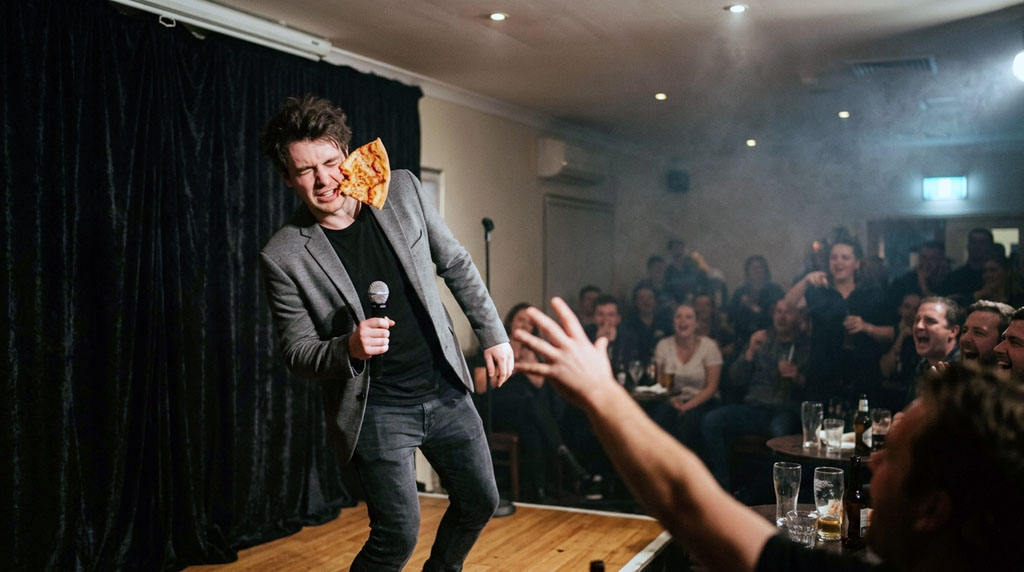
I stood in the wings of the hotel function room with Ricky Lee Moss as he nervously fiddled with some last-minute notes. I introduced him, and he hurriedly tucked the notes into his coat pocket and burst onto the stage, breaking into his Michael Jackson act, which was singing Billy Jean and beat-boxing with the microphone. When he finished the song, there was dead silence from the hardened football crowd. Ricky Lee then followed with one of my New Zealand gags about Kiwis and their relationships with sheep. However, sitting only a few metres from him was a large Maori staring daggers at him, and he froze in the middle of the joke. He stood speechless staring blankly at the audience for a moment before nervously reaching into the top pocket of his coat for his notes. But as he dragged out the notes, a pen spilt onto the floor. When he bent down to pick up the pen, more pens and paraphernalia spilt out of his pocket onto the stage floor, and he got down on his hands and knees and began to recover all the items. This brought about huge laughter and ridicule from the crowd, which unnerved Ricky Lee, who then abruptly left the stage area.
I met Ricky Lee backstage, and I told him he had to go back and finish the act. “I’m not going back out there,” he said. But after a brief exchange I managed to nudge him back under the lights, where he gave a stumbling performance of muddled gags, all met by a chorus of jeers and hostile whistling. The crowd then began pelting him with rubbish, which culminated in him being hit by a half-eaten pizza. As he was scraping off the remnants, a drunken patron, who was making his way down the one-metre passage to the toilet, lost his balance and crashed into the backdrop, toppling one of the speakers, which struck Ricky Lee on the head. He again stormed off the stage.
Meanwhile, I was having trouble with the strip show girls out the back who were very apprehensive about facing the unruly crowd.
Some of the girls even insisted on being paid before they did their act, and I had to cave in to their requests. As the girls made their entrance, I remember thinking, “If this show takes a dive, I’m in big trouble.” However, the girls were fantastic; they engaged the rough-house audience with a sense of poise and professionalism, winning them over with charisma, expression, and stage presence rather than overt sexuality. I was later to learn that they became a major touring act around the country.
I telephoned Ricky Lee the next morning to check on his health and his state of mind, as I had never seen a performer so rattled in my entire career. Ricky Lee told me that he was quitting show business forever.
Subscribe
Published monthly since 1991, our famous AV industry magazine is free for download or pay for print. Subscribers also receive CX News, our free weekly email with the latest industry news and jobs.
Recent posts