NEWS
9 Jun 2026
Drone Shows Look Simple. They Are Not.
Subscribe to CX E-News
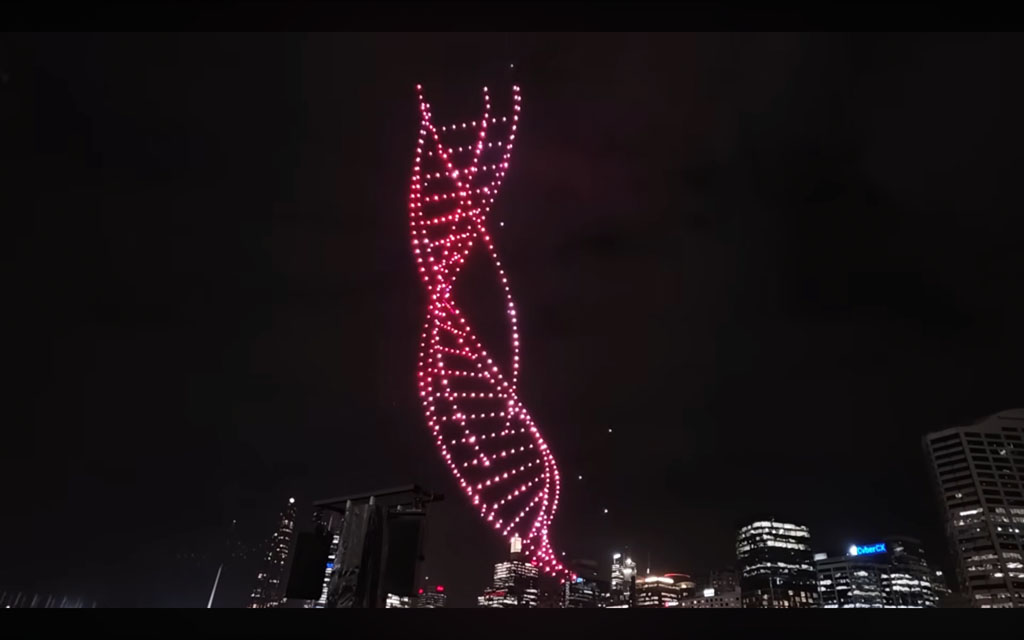
Vivid Sydney’s drone show was supposed to be one of the centrepieces of this year’s program. Instead, videos started appearing online on 25 May showing drones dropping into Darling Harbour while confused spectators tried to work out whether what they were seeing was actually part of the performance.
According to reports, 89 drones entered failsafe procedures during Monday 25’s “Star-Bound” performance after what operators described as an “unforeseen change in the radio frequency environment”. Witnesses described drones dropping into the water, striking marina infrastructure, and landing close to workers before subsequent shows were cancelled pending investigation.
I think one of the biggest issues here is that people often see drone shows as simple entertainment when in reality they are incredibly complicated operational systems sitting above crowded public spaces.
These are not just decorative lights floating around in the sky. They are hundreds of autonomous aircraft all trying to maintain positioning, communication, timing, separation distances, collision avoidance, and coordinated movement at the same time while operating in the middle of a live city environment full of competing signals and infrastructure. And that is where things can become complicated very quickly.
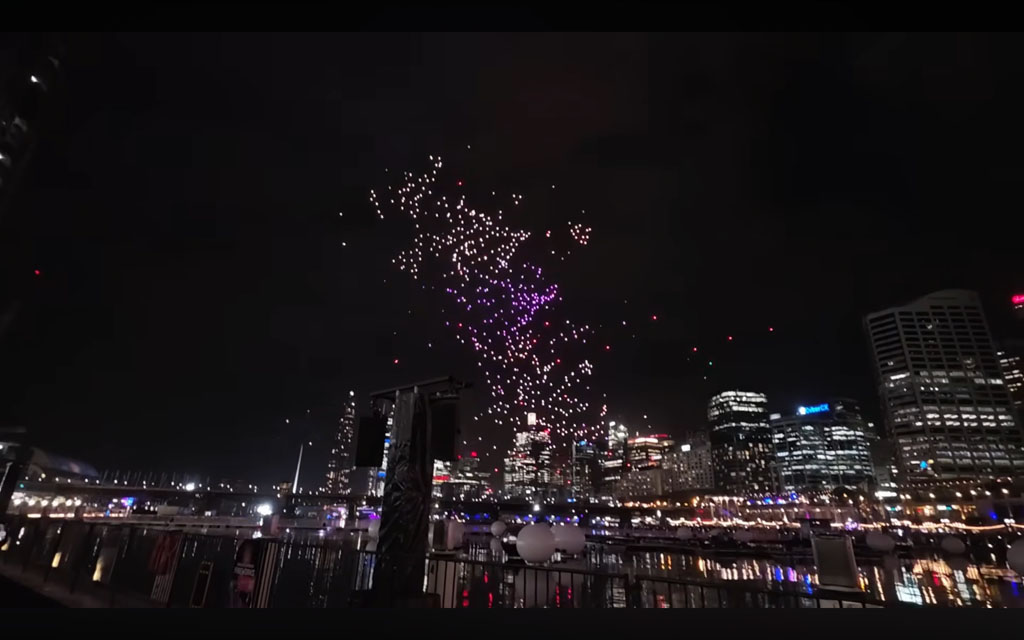
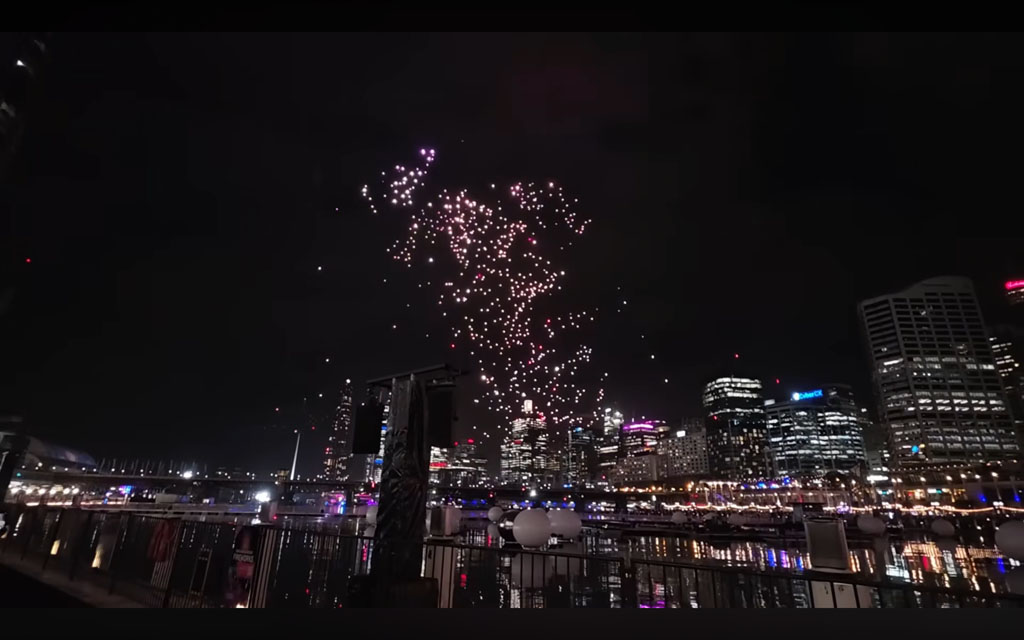
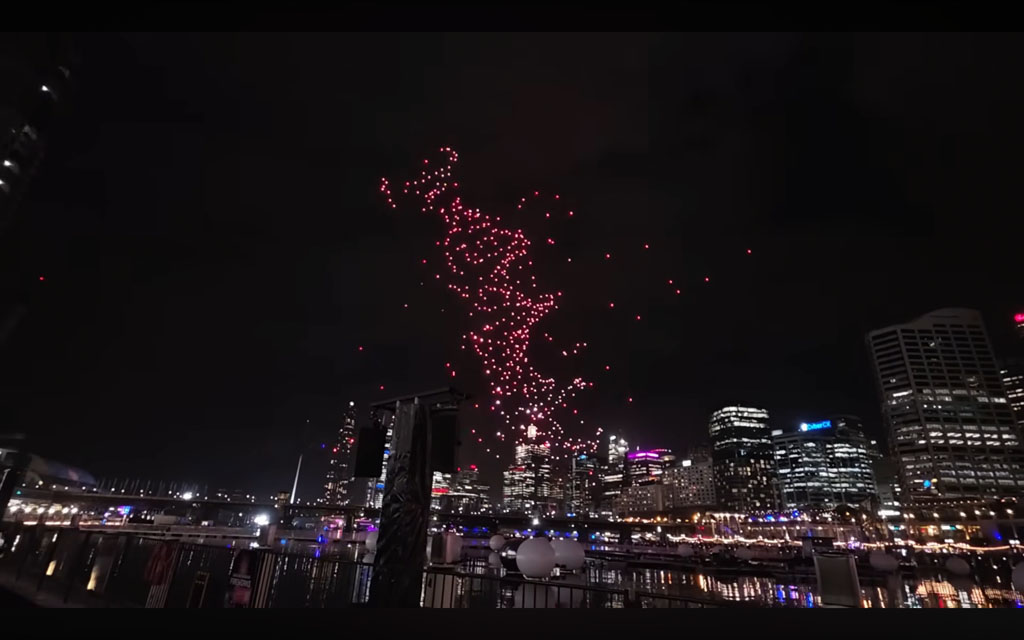
And another detail that has not received nearly as much attention publicly is that reports stated around 100 of the 1,000 drones involved in the performance were also carrying pyrotechnic effects. This is not just about lighting effects anymore. You are talking about autonomous aircraft carrying pyrotechnic components while operating above a live public environment surrounded by watercraft, infrastructure, workers, and large crowds.
And I think this is the part many people outside the industry do not fully see. The public watches a 10 minute spectacle. Behind the scenes, operators are managing aviation systems, battery systems, communications systems, autonomous positioning, environmental conditions, exclusion zones, emergency procedures, crowd management, maritime environments, and pyrotechnic risks simultaneously.
A lot of people probably imagine there is somebody standing there manually flying the drones around like giant remote-control toys. That is not really how these shows operate. The drones are generally following pre-programmed flight paths while constantly communicating with wider control systems and with each other. They rely heavily on stable positioning data and stable communications to keep formation and operate safely.
If that communication becomes unreliable or the drones lose confidence in where they are meant to be, the systems are designed to react. Depending on how they are configured, drones may freeze, hover, flash warning sequences, return to base, or initiate emergency landing procedures.
That appears consistent with what some witnesses described during the Vivid incident itself.
One witness posted online:
“You can see them going into emergency loop mode (flashing green blue red white). They then froze like that for about five minutes before finally getting some resemblance of a connection then going back to base. I don’t think most people realised until they went back to base (and they couldn’t turn the lights off for ages even after they landed).”
What I actually found interesting in that description was that the drones apparently did not just instantly fall out of the sky. They reportedly froze, flashed emergency sequences, partially reconnected, then struggled through what sounded like attempts to regain control and return home. Because failures in systems like this are not always immediate crashes where everything suddenly stops working at once.
Sometimes systems reconnect. Sometimes they partially recover. Sometimes operators are trying to work out in real time whether the problem is stabilising or getting worse. And that creates a very different operational situation compared to a straightforward equipment failure.
Another witness also claimed they had seen similar behaviour during rehearsals before Vivid officially opened:
“I saw this happen during their testing before Vivid started. At a nearby hotel and watched the rehearsal when suddenly a bunch of the drones broke away and dive bombed in the water. It coincided with the launch of the Mandalorian and we joked maybe they were some cinematic battle scene.”
Now obviously, rehearsals are specifically designed to identify issues before public operations proceed, and isolated observations do not automatically mean operators ignored known failures. But it does raise important questions about escalation thresholds and how organisations assess recurring technical anomalies during testing.
Because one of the hardest operational decisions in live events is determining when a problem remains manageable versus when it may point towards a larger systems issue that requires redesign, operational restrictions, or cancellation.
And with emerging technology, operators are often still learning how systems behave under real-world conditions at scale. That is particularly important with drone operations because the environment around them is constantly changing. Wind changes. Signal environments change.
Crowd density changes. Maritime conditions change. Infrastructure changes. The city itself changes minute by minute.
Which is why the reported “radio frequency environment” issue is interesting.
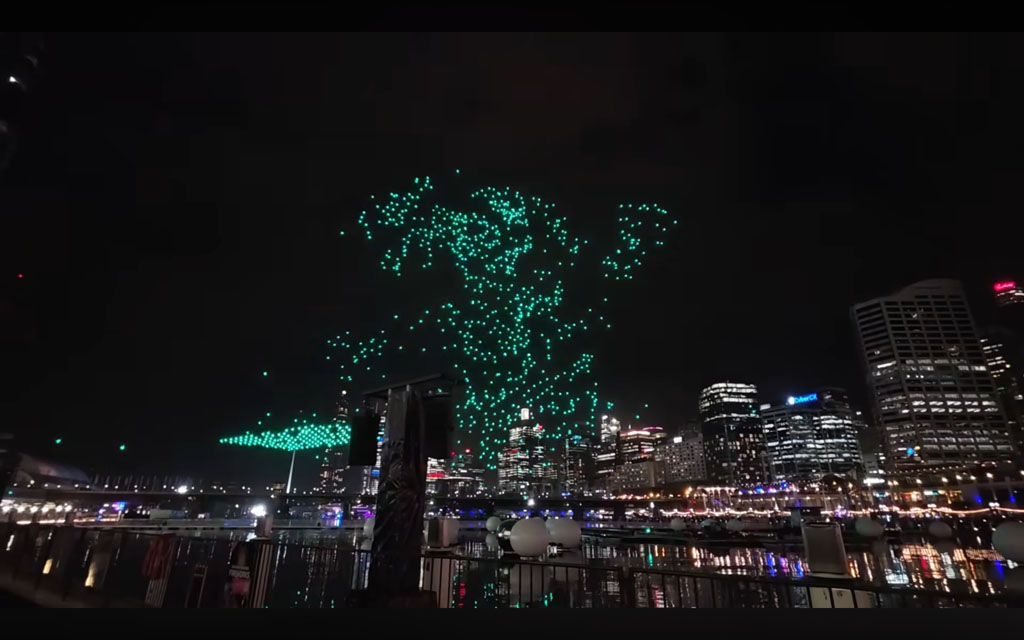
At major events, the signal environment is crowded before the first drone even leaves the ground. You have police radios, emergency services communications, Wi-Fi networks, mobile phone towers, Bluetooth devices, maritime systems, broadcast infrastructure, security systems, production equipment, nearby buildings, and tens of thousands of people all carrying connected devices.
Then add a harbour environment into the mix where reflections, interference, and surrounding infrastructure can affect signal behaviour again.
So when operators refer to a change in the radio frequency environment, it does not necessarily mean one dramatic thing suddenly happened. It can simply mean the environment shifted enough that communication reliability or positional confidence dropped outside safe tolerances. And unlike a closed testing facility, operators do not fully control those surrounding environments.
This is also not the first time Australia has seen large-scale drone issues publicly.
Back in 2023, hundreds of drones fell into Melbourne’s Yarra River during a Women’s World Cup light show after technical problems occurred shortly after launch. Around 500 drones reportedly took off, with more than 400 ending up in the river below. Later investigations reportedly identified strong winds, autopilot issues, and problems relating to operator awareness of software alerts and system data.
And Vivid itself has already faced multiple drone show disruptions over recent years with the final Vivid drone show in 2024 cancelled because of forecast weather conditions and associated operational safety concerns. Then in 2025, organisers cancelled the drone program entirely amid crowd management and safety concerns linked to the scale of the event.
Now in 2026, there has been a major technical malfunction involving radio frequency disruption and autonomous failsafe responses that reportedly resulted in drones falling into the harbour.
Individually, these are different issues.
- Weather.
- Crowd management.
- Technical systems.
- Communications reliability.
But together they show just how many moving parts now sit underneath these productions. Because the drone show itself is no longer just the drone show. It depends on weather tolerances, communications systems, exclusion zones, aviation controls, software reliability, waterways management, emergency planning, crowd behaviour, operational decision-making, and a whole range of technical systems all functioning properly at the same time.
“And I think that is the bit the public rarely sees. They see 10 minutes of lights in the sky. They do not see the operational balancing act underneath it all.”
None of this means drone shows are inherently unsafe or that they should stop. But I do think the industry needs to be careful about treating them as simple “safe alternatives” to fireworks without acknowledging they introduce completely different operational risks. Because replacing explosives with flying computers does not remove risk. It just changes the type of risk you are managing. And when those systems are operating above public spaces, waterways, workers, infrastructure, and crowds, the consequences of failure can escalate quickly.
From the information publicly available so far, the decision to cancel subsequent shows appears appropriate. That is what contingency planning is supposed to look like. The goal of safety systems is not proving nothing can ever fail. The goal is understanding what happens when something does.
—
This article reflects professional observations and commentary regarding publicly reported information available at the time of writing. It is intended to encourage discussion around event safety, operational planning, and risk management practices. It does not attribute fault or allege wrongdoing by any rganization or individual involved.
—
Photo Credit: EggMan28 www.youtube.com/watch?v=Y4jm_ASEKHU
Subscribe
Published monthly since 1991, our famous AV industry magazine is free for download or pay for print. Subscribers also receive CX News, our free weekly email with the latest industry news and jobs.