BACKSTAGE
27 Jul 2026
Maths, Maps and Squiggles
Subscribe to CX E-News
Projecting Onto the Built Environment
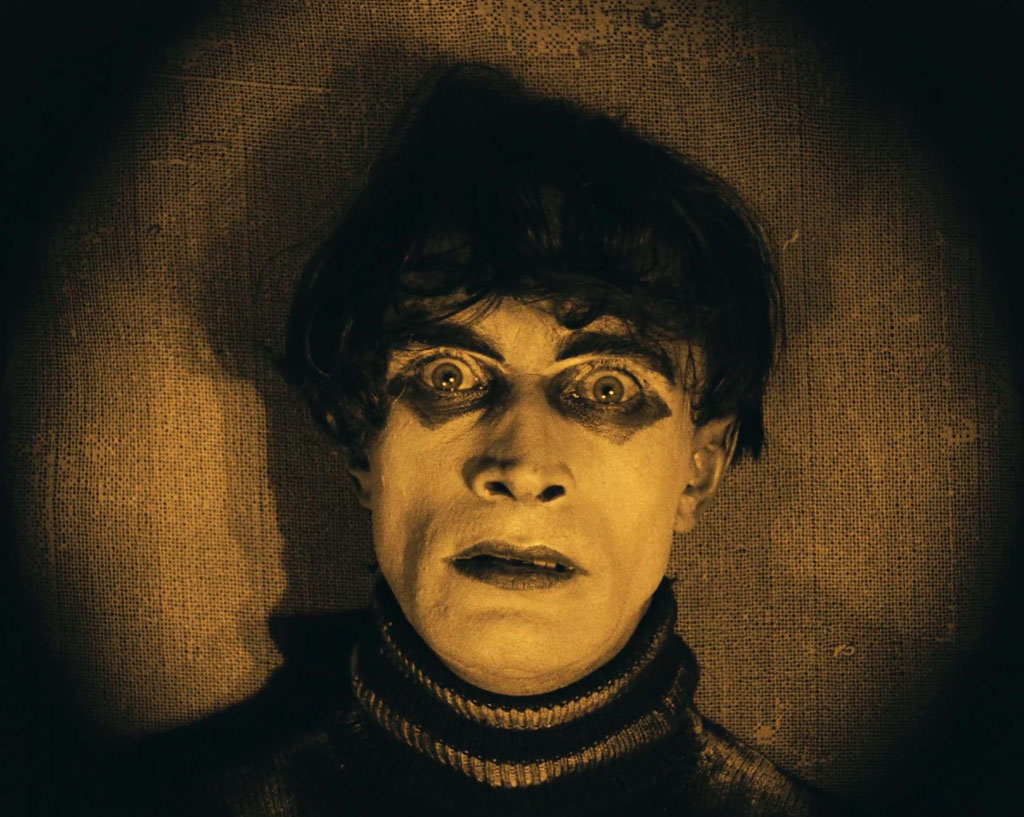
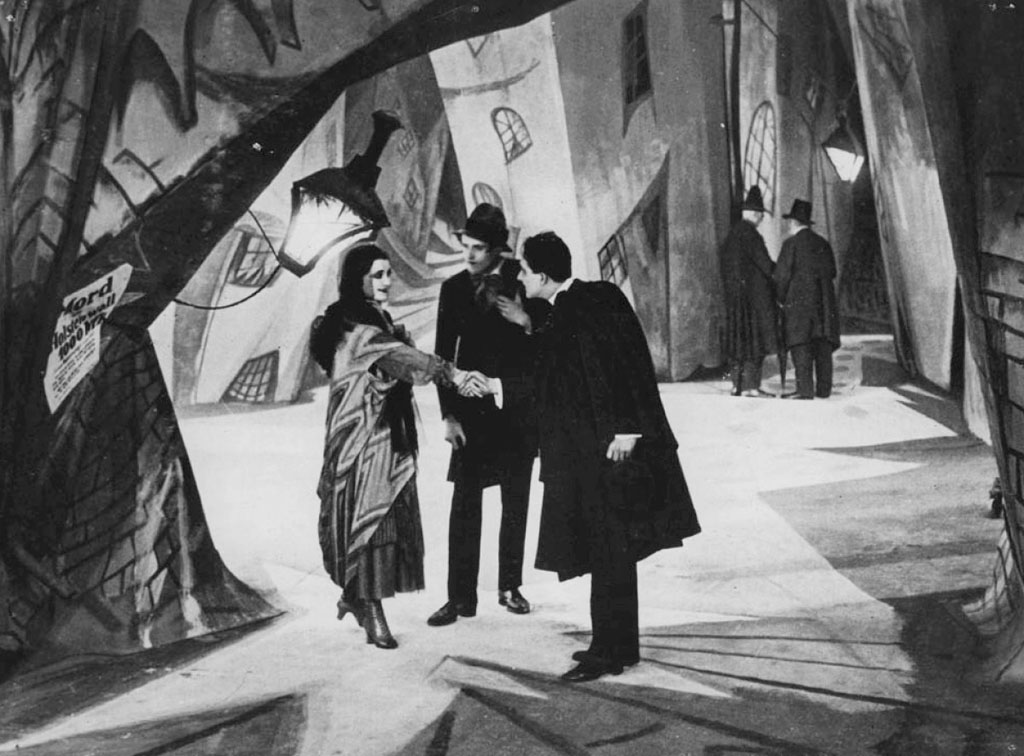
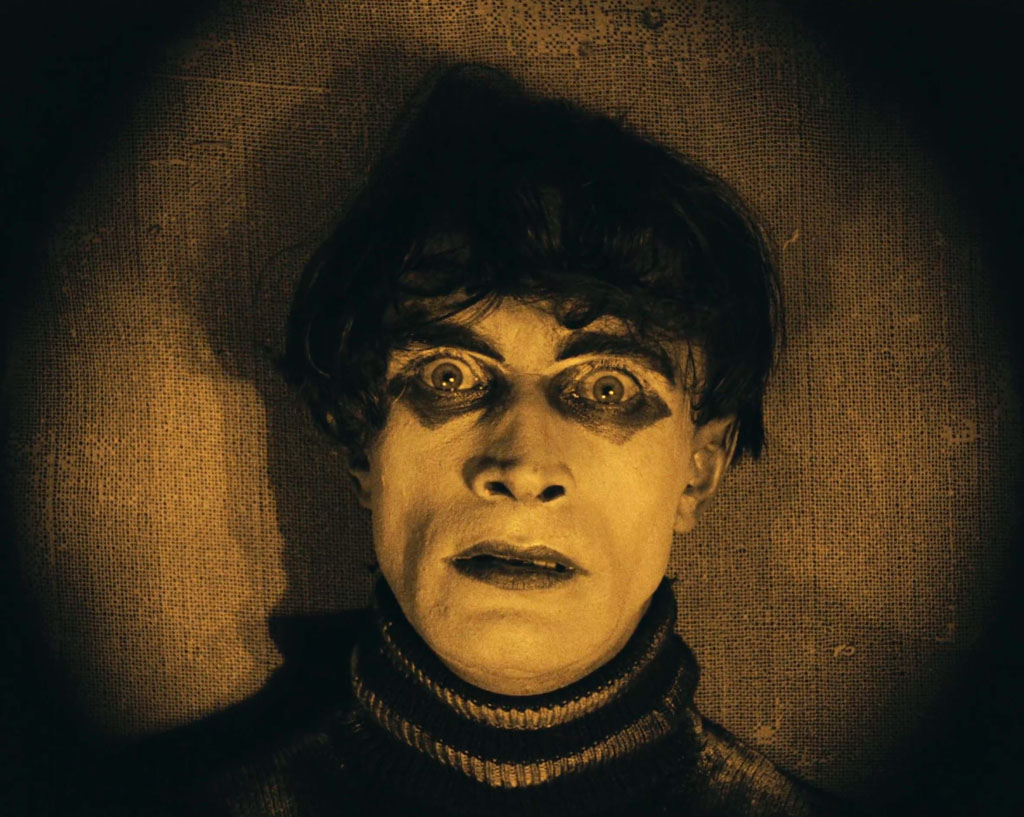
The Cabinet of Dr Caligari is a film full of lines, angles, curves and harsh lighting. It paints a bleak landscape, a perfectly disturbing setting for allegorical studies of irrational authority. The theme is dreadfully prescient right now.
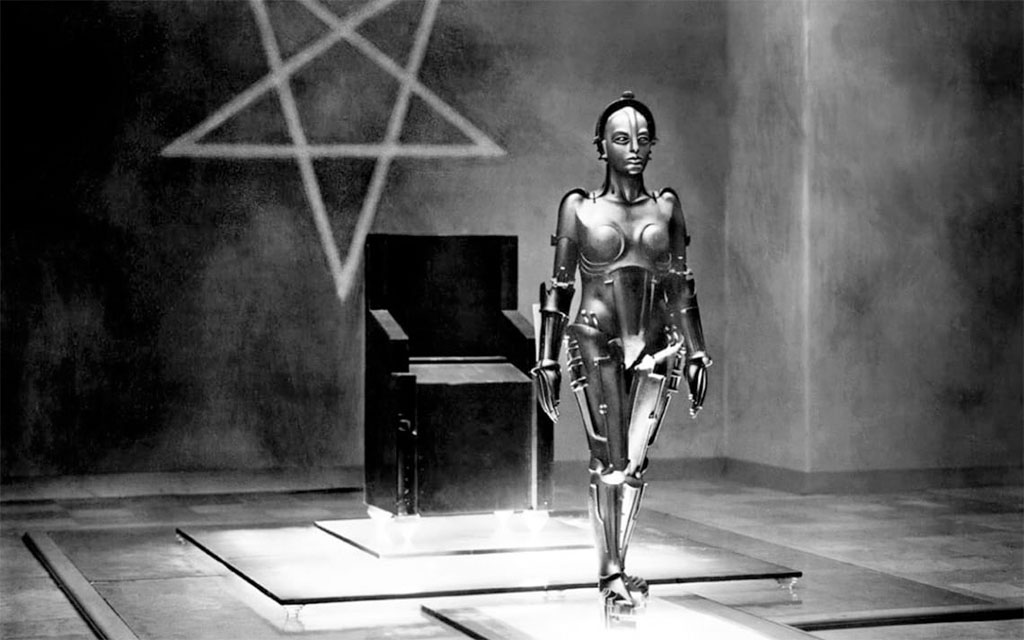
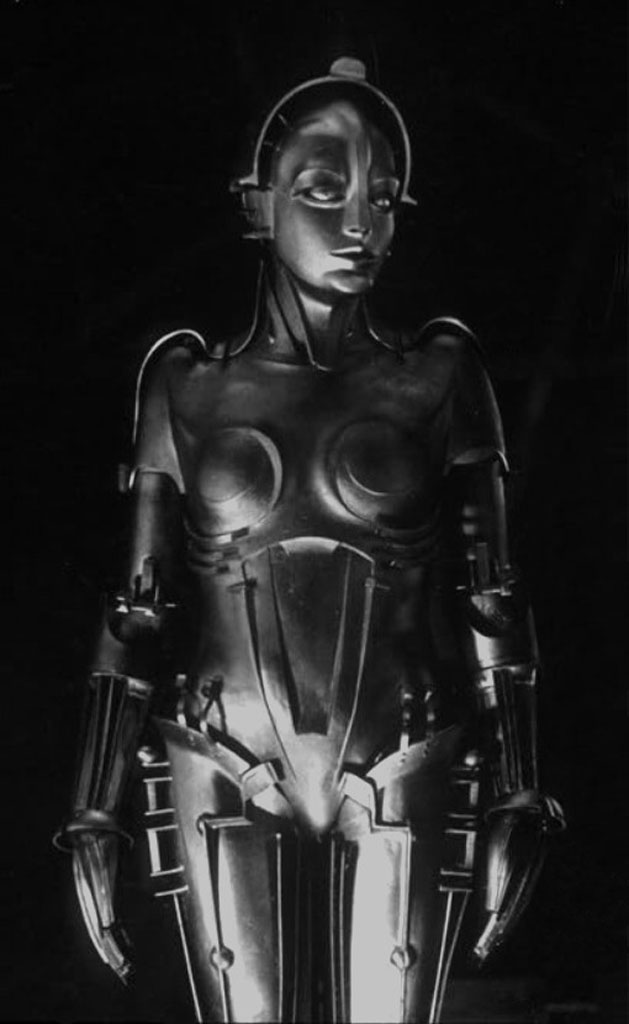
Released seven years before Fritz Lang’s Metropolis (1), this 1920 German expressionist silent horror film became required viewing for University of Melbourne Architecture students some 65 years later. It introduced the concept of how a built form might influence its inhabitants. It also showed how lines intersect with other lines and planes to form new shapes.
These two concepts are behind one of the coolest, and arguably most impactful, technologies for large scale events: projection mapping. Using the built environment as a canvas for static or moving images is a brilliant ability. This technique is an excellent example of building to personal interaction.
The ‘painting an object with light’ effect is made to work convincingly with any one of the many software platforms designed to do all the hard geometric work and let the user quickly get into visual trickery. It looks awesome at all scales, making it relatively easy to achieve a huge look.
Underpinning how this all functions is the key science of geometry.
“Yeh Mr. White! Yeh science!”
At its fundamental core, (geometric) projection is all mathematics. It’s maths that defines points in space by their geometric relationship to each other. My teenage brain very much enjoyed the number crunching, but was challenged by its links to geometry.
When I studied Architecture, I found that I’m one of the lucky ones who can intuitively visualise 3D from a 2D drawing. Amazingly to me, there are many who cannot, including a large percentage of my fellow neophyte Le Corbusiers.
Alongside history, design, structural mechanics and more esoteric minors, we studied geometry. This was 1985 and, although CAD existed, it was in its infancy. For reference, the entire faculty had only two terminals available for hundreds of students to practise on. Pencils and ink on paper were still very much the dominant technology.
As we scribbled and drew, erasers and razor blades always within arm’s reach, we practised applying geometric theory on the page. The wonderfully eccentric Edoardo Rimondini led us through the theory and techniques of converting fanciful ideas into practical drawings.
Geometric projections for beginners
Edoardo introduced us to the three main types of geometric projection: orthographic, isometric, and perspective. The easiest for me to both comprehend and execute is the orthographic – using two dimensions to produce plan (length x width), elevation (width x height), and sectional (also width x height) representations of a 3D solid.
Isometric is only slightly trickier to draw but the perceptual distortion it creates still disturbs me. Perspective is where it all gets fun. Having all lines converge towards one or more vanishing points (VP) creates real world 3D impressions in 2D drawings. With sizing of objects scaled relative to distance, the image takes on much greater depth and realism. However, these types of drawing can get very complex, very quickly. Especially with multiple VP.
Translating these points and vectors onto a real-world surface could mess your mind up and take hundreds of hours or more to map and transcribe accurately. Thankfully, much of this arcane gibberish is hidden deep within the projection mapping software, which generally uses a combination of the three types of geometric projection.
After setting up your projector(s), source and control software, a crucial early step is visual alignment with the veneer that you are projecting onto. Mapping software grid generators are used to align the projection accurately on the surface and set focus across varying depths. The ones that I have seen recently are so much more friendly than the convergence tools that we used on 3-gun CRT projectors when they were the bling tech. Even those tools were infinitely less time sucking than tracing each line, highlighting each intersection and trying vainly to not end up with a huge ink blob at the VP.
I can’t imagine the brain-melt in trying to manually transcribe such lines onto a large 3D object like a building. Visions of a hundred or more strings converging on a point, then hundreds more linking intersections are as terrifying as Caligari’s world. If nothing else, it would be a nightmare equivalent to setting up multiple weaving looms all working on different dimensions of the same tapestry.
Mapping software also takes care of masking and mesh-warping for complex surfaces, compensates for shadows, and adjusts textures and colours to best suit the media with that particular facade. The tools for keystoning and corner pinning alone are far advanced from what I used last century for 3-gun alignments.
Depending on which platform you use, the mapping system can also cater for multiple projectors and edge blend them seamlessly. Most have some sort of show control IO, via DMX, Art-Net, OSC, MIDI or other methods. Interfacing elegantly with media servers is also crucial to a successful show.
Doggone it
While vectors, lines and perspectives were scribbling mad shapes in my head, I got a call from a neighbour. His game camera traps had spotted a wee black dog near our shared fenceline. Given that our demented mutt had gone walkabout there recently, it was a fair bet this was our 13-year-old kelpie Polly Jean.
While we scoured the neighbourhood, all I could think of was the following Dad joke: ‘Polly has gone while I write about polygons.’ After several stressful hours searching the local haunts, she just turned up on her own time. Tired, panting but grinning. It is hard to scold something that makes you smile so.
What’s your screen?
Another big reason to smile of late is watching videos of tech nerds projection mapping common household spaces. Kitchens, living rooms and furniture are all valid canvases for electronic painting. I’ve seen some rippers online.
The piece de resistance so far is a techo who mapped his toilet bowl and cistern, which quickly got bathed in the light of the video streams programmed into his show. He might have an immediate audience of just one (sans sharing online) but what a great way to practise work skills at home?
If I had a projector handy, I’d be sorely tempted into allocating some part of my house for a repeat viewing of Dr Caligari. Perhaps inserted into an odd shaped geometric frame outlined by MadMapper, disguise, or the like.
Footnote:
1. Metropolis is arguably a far better cinematic experience – Dr Caligari is quaint in comparison – but 1920 was very early in the technology curve.
Subscribe
Published monthly since 1991, our famous AV industry magazine is free for download or pay for print. Subscribers also receive CX News, our free weekly email with the latest industry news and jobs.
Recent posts