GTX 2026
16 Mar 2026
GTX 2026 – the product range
Subscribe to CX E-News
Group Technologies’ GTX event featured 20 visiting product experts from their brands, travelling from as far afield as the UK and Europe. Often the founders of the companies or creators of the products themselves, getting access to these experts is worth its weight in gold. The nature of the event means that everyone who attends has an opportunity to talk one-on-one in a relaxed environment, quite different to the experience you have at a giant show like ISE. In no particular order, here’s a run-down of what was new at GTX, and what I learned from speaking to the people behind the products.
—
DIGICO, FOURIER AUDIO, AND KLANG
Stationed at a commanding DiGiCo Quantum 852 sitting next to a petite Quantum112, DiGiCo’s Ian Staddon and Dave Bigg were also representing KLANG immersive monitoring, and working together with neighbouring Fourier Audio’s Elliot Sinclair.
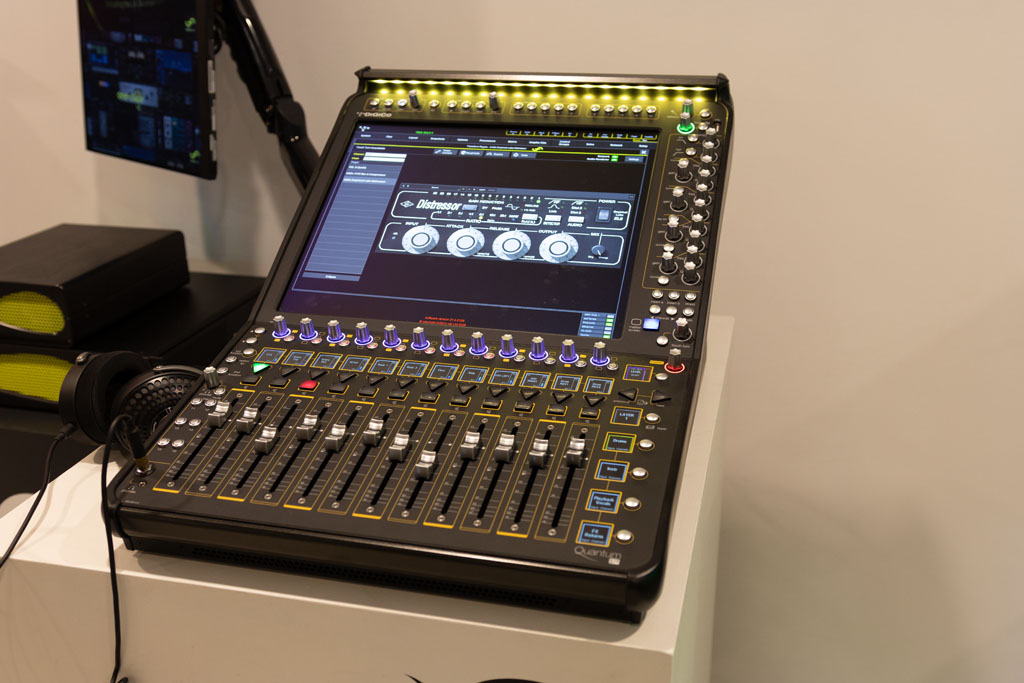
The big yet small deal was the new Quantum112 flyweight mixer, which clocks in at the magic 23kg checked baggage limit when housed in a custom Pelican case, bringing DiGiCo power to flying rigs.
“The Quantum112 was launched to distributors last November,” explains Ian Staddon. “On the launch date, we had a live band playing, with Jerry Harvey of Jerry Harvey IEMs (now available through Group Technologies) the FoH mixer for the band. He flew in on a helicopter with the 112 in a Pelican case, walked in, and set up. We had more than a dozen 112s at the launch event, and Group Technologies walked away with one of them. We have started shipping in limited volumes, we’re back-ordered, and we can’t make them fast enough. Because it’s a full-blown Quantum mixer in a small box, it does everything that the Quantum852 does, but with fewer channels. The engine and processing are pretty much exactly the same, which means the test time at the factory is more or less the same a Quantum338.”
Ian also teased new Quantum software due to be released by the end of March, with new features including tight integration with Sound Devices wireless mics and support for Fourier Audio’s new Hyperport connection to its transform.engine and new transform. go VST effects engines.
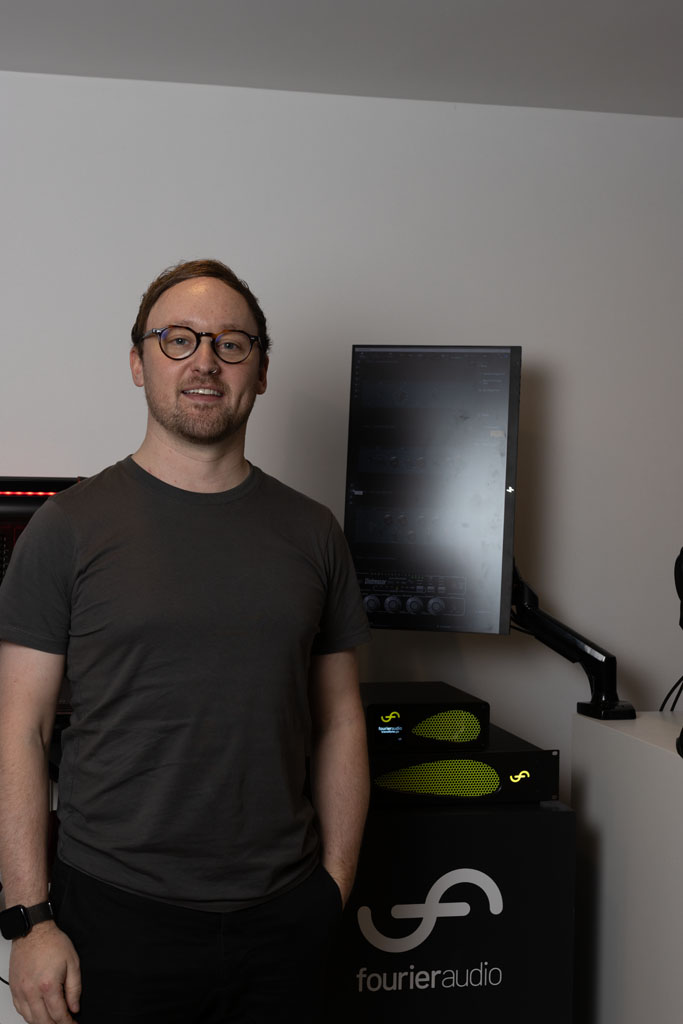
Fourier Audio’s Elliot Sinclair explains; “Hyperport brings the round-trip signal latency from the console, through the engine, and back to the console, down from three milliseconds via standard Dante to 1.2 milliseconds. This opens up the market for monitor engineers. The really cool part is that existing Dante hardware will support Hyperport. We’ll switch the card to a different firmware, so it’s a free upgrade all round. Hyperport clocks automatically, and patches one-to-one; it’s literally plug and play with two cables, one being a redundant connection. It removes the headache of dealing with Dante Controller and needing to understand networks.”
“A lot of people are using Fourier Audio’s transform.engine at Front of House,” outlines Dave Bigg. “But with the latency within standard Dante, it makes it tricky working with monitors. In monitor world, latency is everything. We work on a budget of about five milliseconds; it’s two milliseconds for a radio transmitter and two for the console, and that only leaves one millisecond. We need to do everything we can to squeeze that down to make transform. engine and transfor.go useful for monitor engineers. With Hyperport, we’ll now be able to easily utilise Fourier at both ends.”
With Fourier Audio’s 64 channel transform.engine enthusiastically adopted by sound engineers around the world, Fourier have just introduced the transform.go for smaller shows. “The transform.go is 16 channels instead of 64, with two DSP cores instead of six,” states Eliiot Sinclair. “In terms of feature set, it’s exactly the same.”
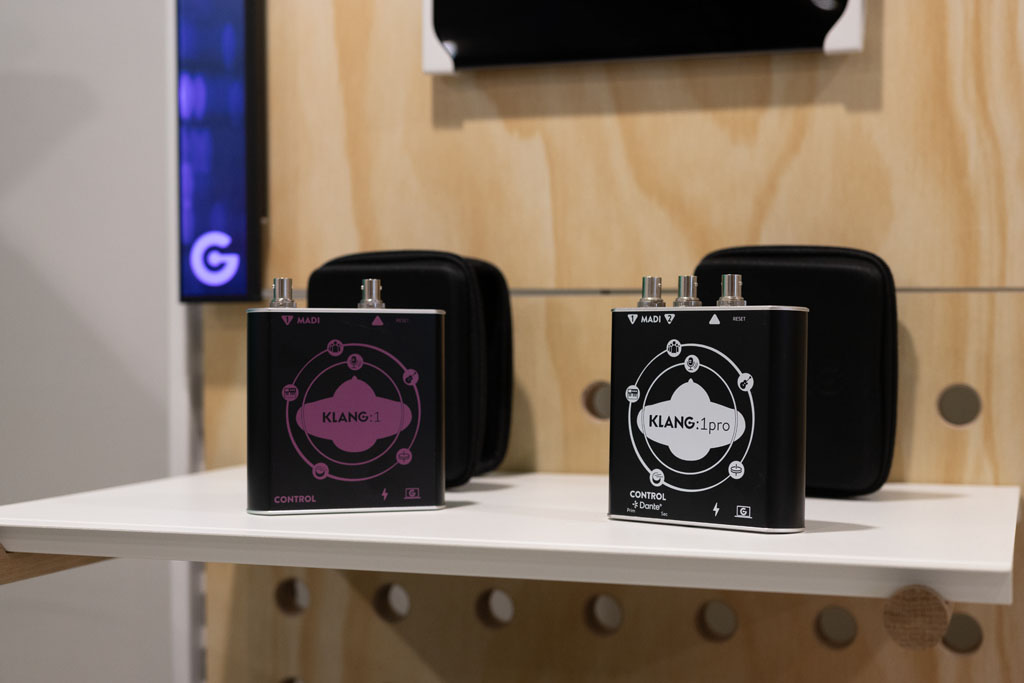
Just released at NAMM, KLANG’s new single mix immersive monitoring devices integrate natively with DiGiCo surfaces. “KLANG:1 and KLANG:1pro are designed to give you a single mix of KLANG immersive monitoring in any environment,” continues Dave Bigg. “The feedback we got from some KLANG users was that the artists they were working with loved using it, but on small fly shows where they couldn’t take any gear, they weren’t getting the monitoring they had gotten used to. The idea is you can throw them in your backpack and take your immersive mix anywhere you’re traveling. You can cascade them as well, so you could create multiple mixes on the KLANG app. KLANG:1 is MADI in and out, and KLANG:1pro has two MADI in and one out, plus Dante, so it connects to just about any device.”
—
FOCAL
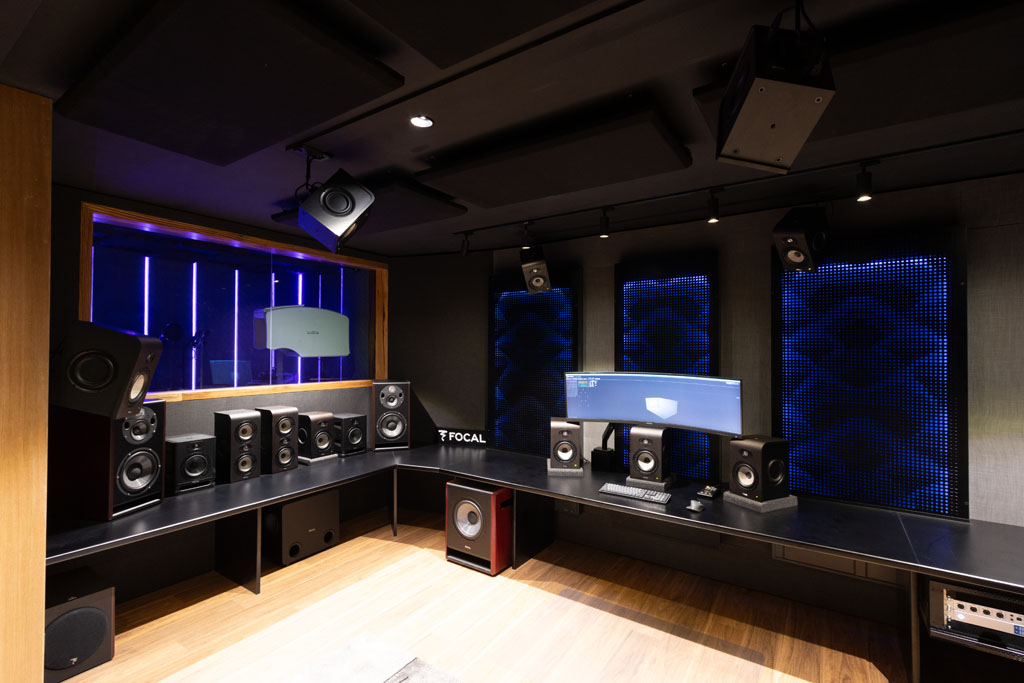
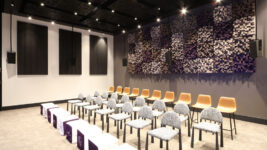
Group Technologies have refreshed and updated their Studio space, adding Dolby Atmos capability with Focal monitoring. I heard an electronic work played back through the system, and the quality was breathtaking. Focal’s own Vincent Moreuille talked me through what GT had done in the room.
“This is 7.1.4 system built to Dolby’s Atmos standard,” says Vincent, “It showcases the Focal Shape series, which is our premium near-field monitoring range, and is coupled with two Sub One subwoofers. They have a very slim profile and are very shallow, so you can put them under a desk and still have space for your feet!”
With Apple Music championing Dolby Atmos, and companies like Netflix making it standard, Vincent is convinced it’s here to stay. “I think Atmos is not just ‘yet another format’. It is a new creative tool for artists, producers, and mixers. If you use it as a tool to express yourself in the creation of a work, you can get results that are really stunning. Also, while Focal are renowned in the stereo world, with Atmos, we are now present from the genesis of the content, all the way to your lounge room; we just released an all-in-one immersive speaker called Mu-So Hekla that features the Dolby decoding algorithm as well as our own, which is called Focal Sphere.”
—
RME
GTX 2026 marked the first time German audio interface manufacturer RME had exhibited, with GT acquiring distribution back in April 2025. RME’s Max Holtmann showed us the new HDSPe AoX-M, a 512 channel PCI Express Card with Milan and optional MADI.
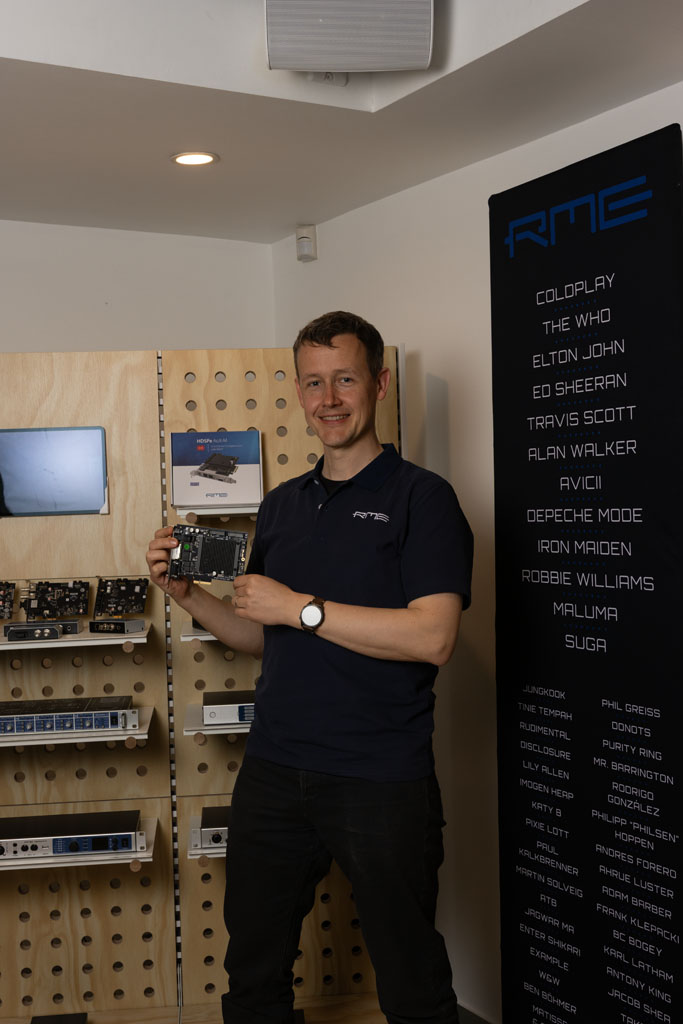
“The two network ports can be extended with two MADI ports,” says Max. “You can have a total of 256 MADI channels in addition to the 256 channels via the network ports. Via the ports, it can handle 512 channels of Dante or Milan. In AVB configuration it can accommodate larger stream sizes of 32 channels per stream.”
—
NST AUDIO
It’s always lovely to catch up with NST Audio’s founder and chief engineer Dan Cartman, and he showed me their new DM88 System Processor.
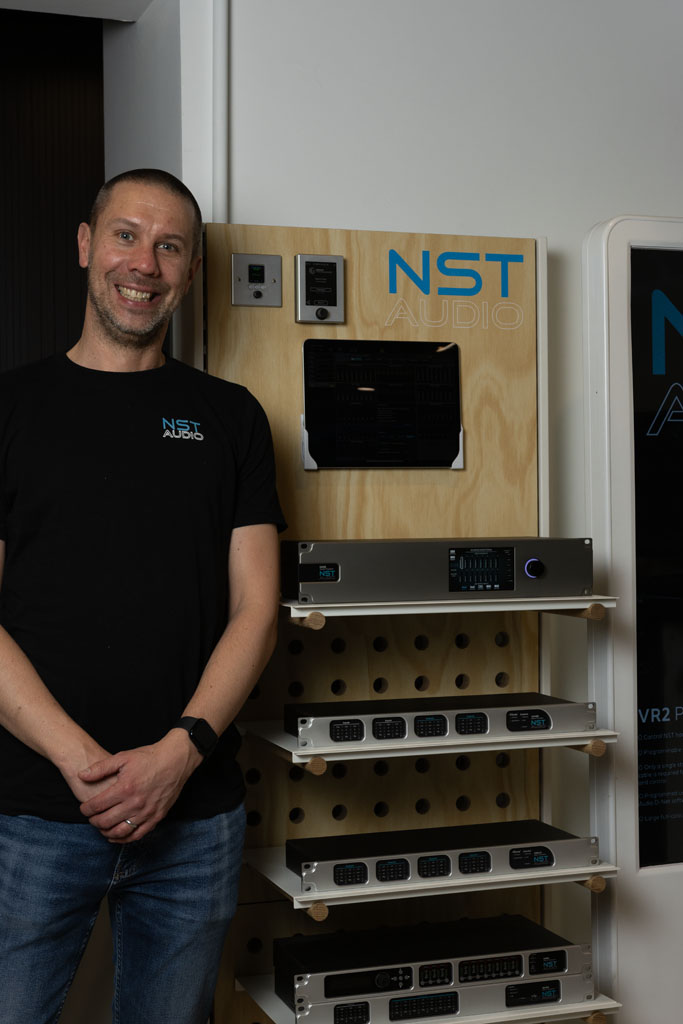
“The DM88 is our new matrix processor for live sound and installation,” Dan explains. “It’s intended to go between a mixing desk and an amplifier rack. It’s a desk switcher, it’s a signal router, it’s a house EQ, it’s a format converter; it’s a total toolbox for a FoH system engineer.”
The DM88 comes standard with eight analog ins and outs, eight AES/EBU ins and outs, and 16 Dante inputs and outputs. “You can route inputs and outputs however you want,” continues Dan. “You can use processing, or you can not use processing. It’s a semi open architecture format; if you want to use it as say, a four in, eight out loudspeaker processor, you can do that. Or if you just need to get two AES channels onto the Dante network, you can just plug those in and use it as format converter, configured using the same D-Net software that we use with our other products. There’s a ton of new features that we’ve added, including grouping and linking channels, and multiple device grouping. You can have a whole system group where you can delay, gain, and EQ the entire system via a single object, rather than individual channels. You can also layer different subgroups, so you can have a subwoofer group, a delay group, and so on. It makes administrating a large system much more efficient.”
—
AUSTRIAN AUDIO
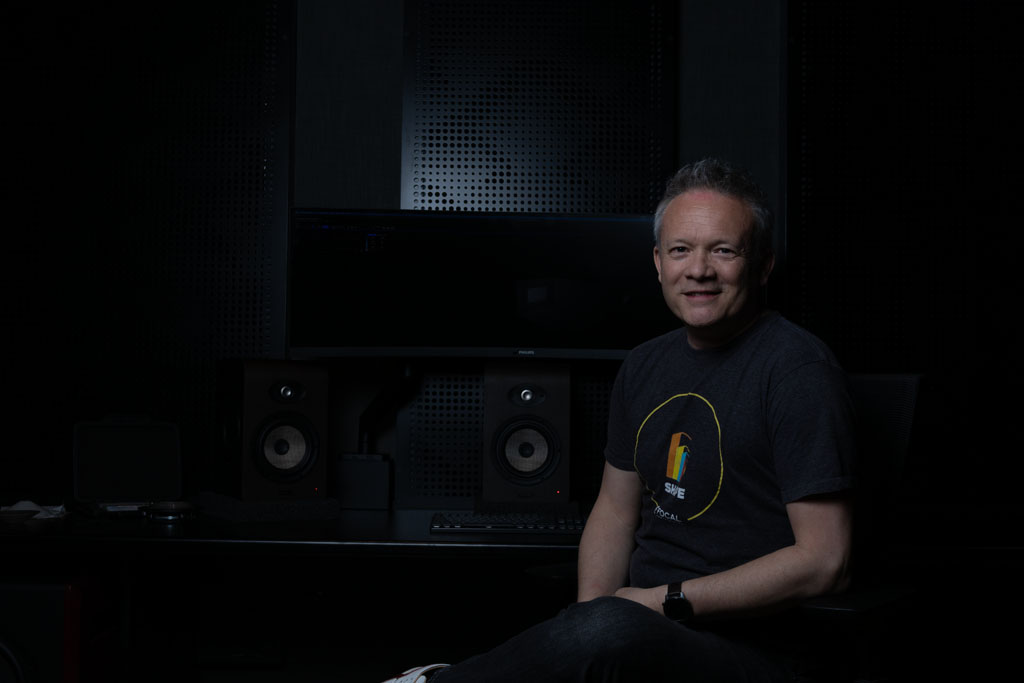
Austrian Audio sent no less than their CEO himself, Martin Seidl, to GTX, carrying his very own OC-B6 kick drum mic.
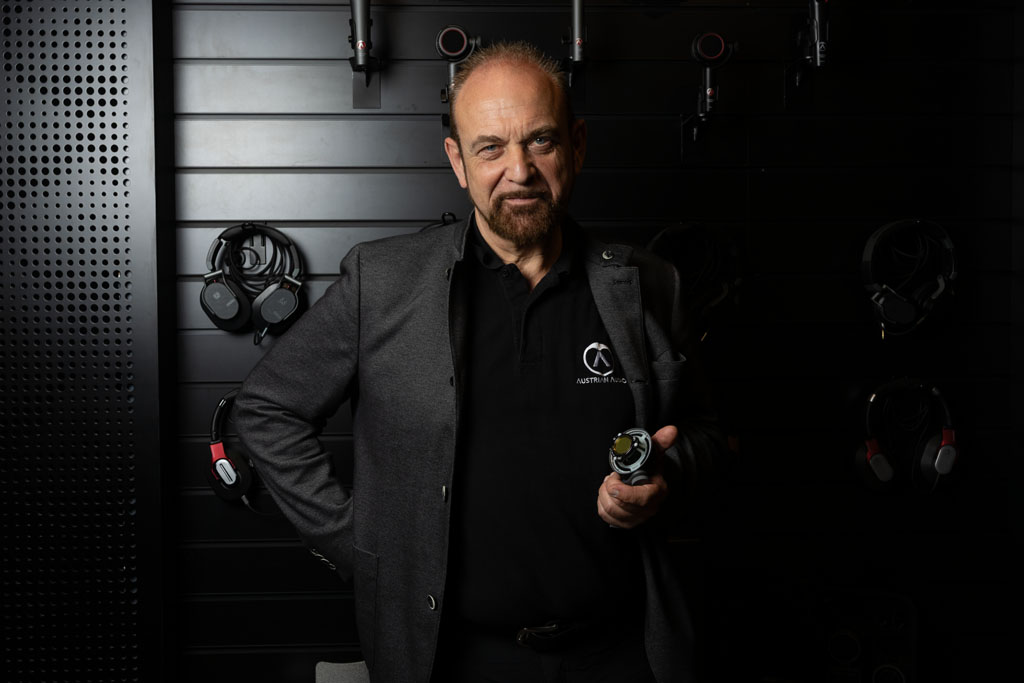
“This is absolutely brand new, and I’m really proud to say it’s the first kick drum mic that has a capsule designed especially for the kick,” says Martin. “It’s a large diaphragm condenser, so it’s a full one-inch condenser capsule. We have made the capsule capable of coping with SPL in excess of 170dB. I have just announced the challenge – ‘bring me the drummer who plays a kick drum that loud’. The mic’s sound character is designed to be the same as a normal condenser. In a drum mix, for example, if you just turn up the overheads and kick drum, you very often have a sound mismatch. The OC-B6 is not EQ-shaped like a traditional kick drum mic in any way. It is a very flat frequency response. You can use it in any position; it works brilliantly in front of the bass drum, at the port, or in the drum.”
—
L-ACOUSTICS
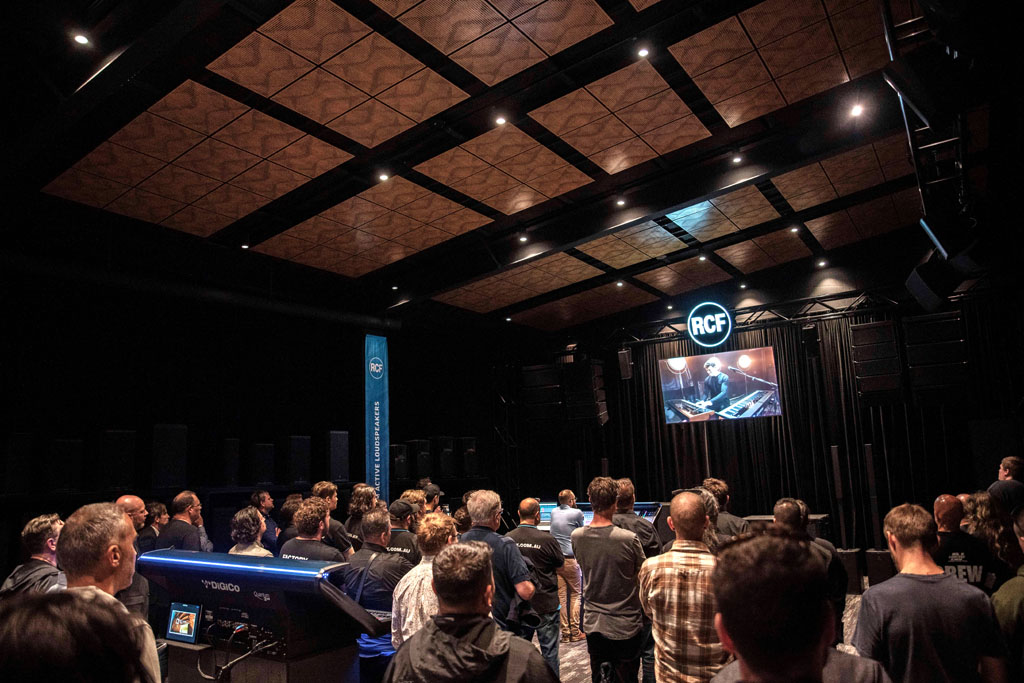
In addition to the L-ISA Auditorium, L-Acoustics PAs are now hanging in Group Technologies excellent Live Space, a huge room in which you can listen to just about any loudspeaker in their portfolio.
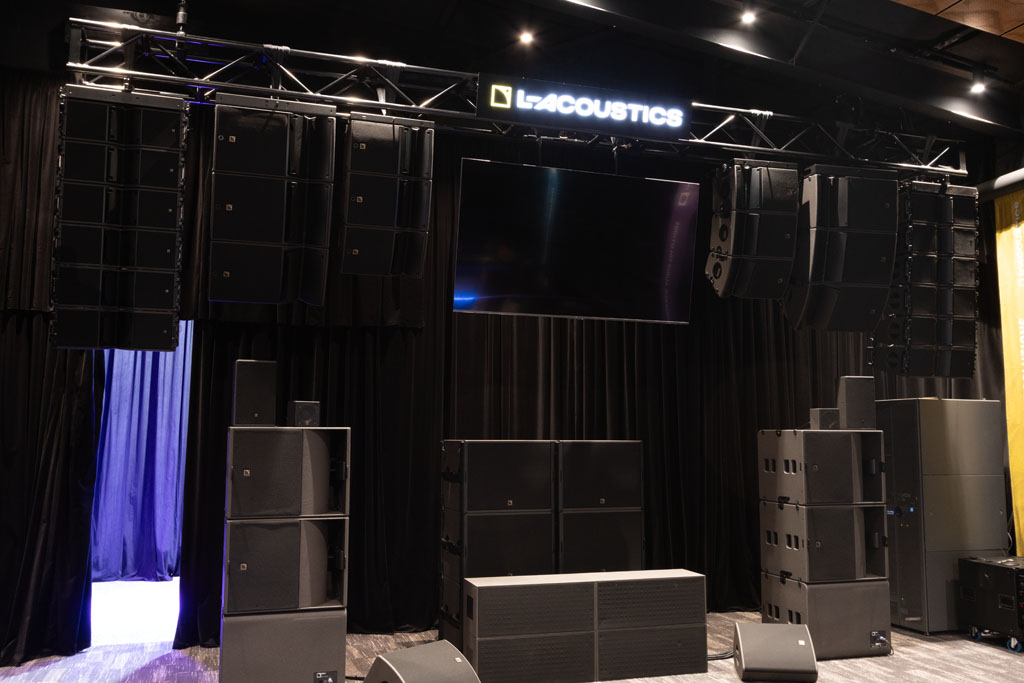
I caught the demo, which really showed off just how much punch their extremely flexible and affordable A Series medium throw line arrays have.
—
RCF AND TT+ AUDIO
At the opposite end of the Live Space, RCF and its flagship brand TT+ Audio demoed the new RCF EVOX J three-way column arrays speakers and TT+ Audio GTX line arrays.
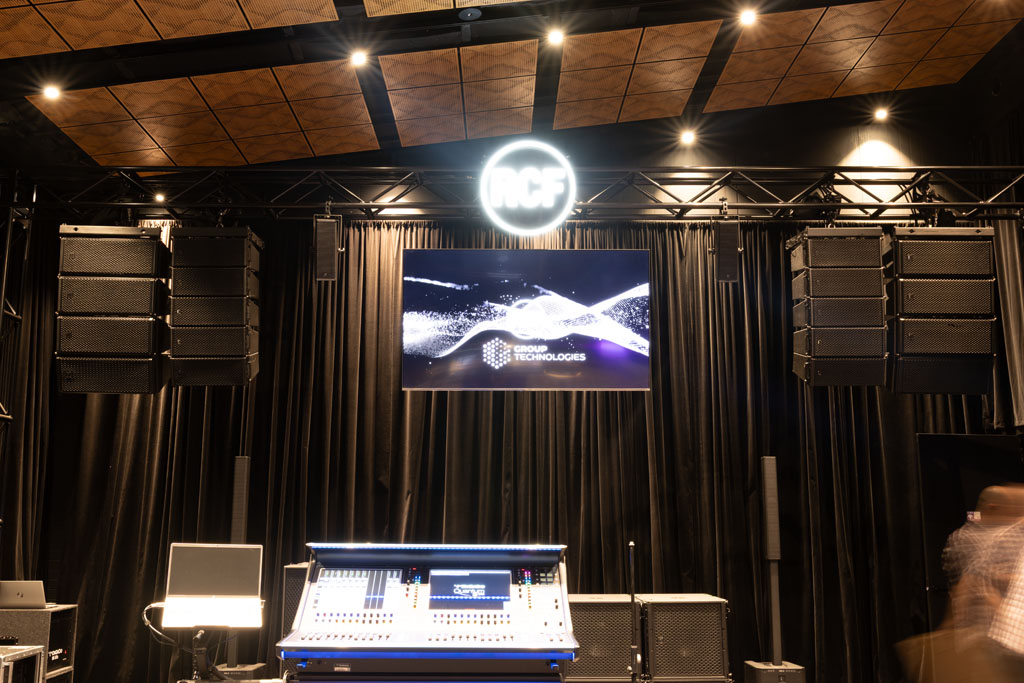
EVOX J comes in three models, the largest being the EVOX J11, with one 1.75” Neo compression driver, 12 3” full-range Neo transducers, and a 12” RCF subwoofer. While light, portable and brilliantly easy to set-up, both the smaller EVOX J9 and the J11 absolutely filled the Live Space with punchy sound, and would both be at home handling live band gigs up to 500 pax.
I talked to RCF’s Executive Sales Director Alberto Ruozzi about the distinction drawn between the RCF brand and TT+ Audio. “RCF is RCF,” explains Alberto. “We created a division within RCF which we branded as TT+ Audio. What does TT+ Audio mean for us? It is where we give our best with absolutely no compromises. With RCF, we pursue excellence in performance while balancing attention to price and value. TT+ Audio is more like our Formula One team, representing the best possible product we can manufacture.”
We heard two TT+ Audio line arrays, GTX10 and the brand new GTX7c. “The GTX10 is a conventional dual 10” two-way system,” continues Alberto. “The GTX7c is a cardioid compact line array with dual 7”s in the front, a compression driver, and two 5”s in the back for the cardioid cancellation.
The uniqueness of this system is that our system is active; we have a separate channel for the front and back. Because of this, we have better control of the cancellation at the rear, and can vary the setup; conventional cardioid cancellation, or hypercardioid, or another setting for ground stacking.”
Both systems absolutely shone, and as is becoming more and more common with cardioid line arrays, going behind the speakers to hear what wasn’t coming out of the back was just as important as hearing what was coming out of the front!
Subscribe
Published monthly since 1991, our famous AV industry magazine is free for download or pay for print. Subscribers also receive CX News, our free weekly email with the latest industry news and jobs.
Recent posts

Latest jobs