NEWS
4 Nov 2025
HYPERREAL AUDIO FOR HOUSES OF WORSHIP
Subscribe to CX E-News
Brisbane Sound Group and L-Acoustics Run First Australian L-ISA Mixing Demo
In late October, I had the absolute pleasure of attending an event run by Brisbane Sound Group (BSG) and L-Acoustics at Bridgeman Baptist Community Church in Brisbane showcasing L-ISA Hyperreal Audio for Houses of Worship. I’ve experienced L-ISA Hyperreal audio before, in 2018 when it debuted in Australia with the Adelaide Symphony Orchestra (covered in CX143 December 2018) and again at international tradeshows, but this was the first time I’ve had the revelatory experience of being guided through a real mix while listening on a Hyperreal PA.
Hyperreal (as opposed to ‘immersive’) is the term L-Acoustics use for the application of the L-ISA spatial processor to create a realistic sound field experience for the majority of the audience using at least five frontal arrays. The processing, and positioning of audio sources in the three-dimensional space defined by the L-ISA interface, can match the perception of where the audio sources are on stage to what the audience is actually seeing. It defeats the phenomenon in standard stereo systems by which you perceive the sound of any source to be coming from whatever loudspeaker is closest to you.
A Hyperreal system provides a superior experience for the audience. In a standard stereo system, only around 15% of the audience experiences the centre ‘sweet spot’ in which the stereo effect creates a sense of source localisation, with the rest of the audience experiencing a form of dual mono localised to their closest speaker. This also causes variability in the mix according to where you are in the audience. With L-ISA, the sweet spot expands to around 70% of the audience, with no variability, and the remaining 30% get a spatialised experience that converges on the centre.

On the other side of the mixing desk, it’s even more revolutionary. While I understood how the L-ISA interface could be used to create a perceived position for a source on the stage, I did not realise how much this fundamentally changes the workflow of mixing.
I have previously experienced how spatialisation changes mixing workflow on a KLANG system for in-ear monitoring; assigning instruments their own physical ‘space’ in a 3D field can separate and define sources operating in the same frequency ranges – kick drums and bass guitars being an example. This is what we usually achieve with EQ, sidechaining, and other sonic tactics, which are all compromises in some sense.
What I didn’t realise was the extent to which spatialisation itself becomes a form of EQ, compression, expansion, and more.
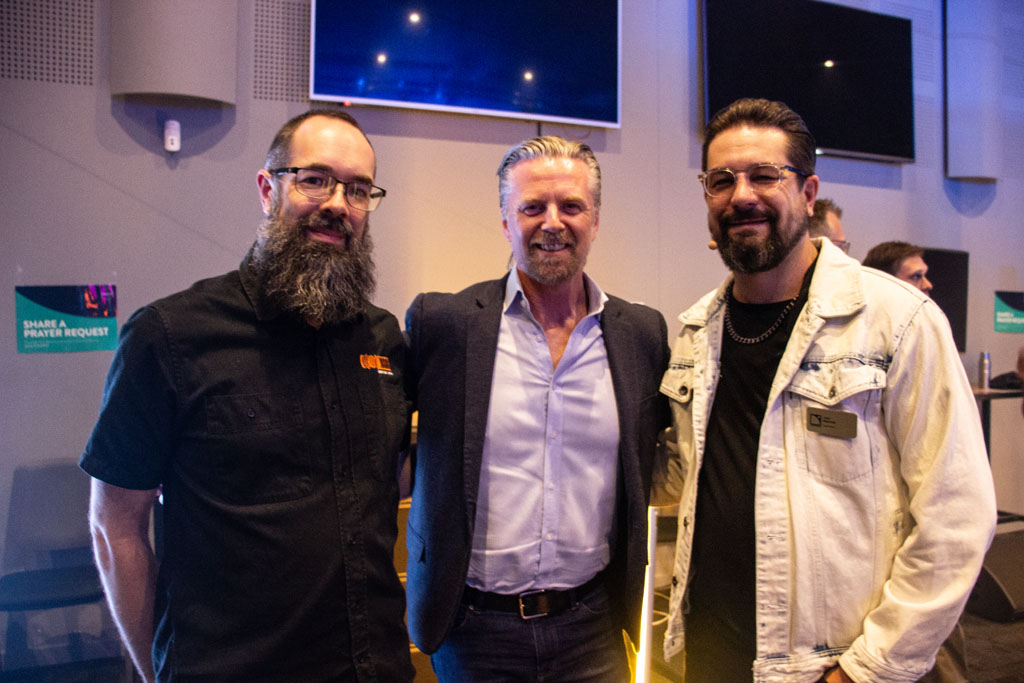
With the evening’s presentation opened by Brian Vayler, General Manager of Brisbane Sound Group, we then heard from L-Acoustics’ APAC Sales Manager Chris D’Bais, before Joshua Maichele, L-Acoustics’ Global Applications Lead for Houses of Worship, fresh from the USA, took on the bulk of the presentation and demo duties.
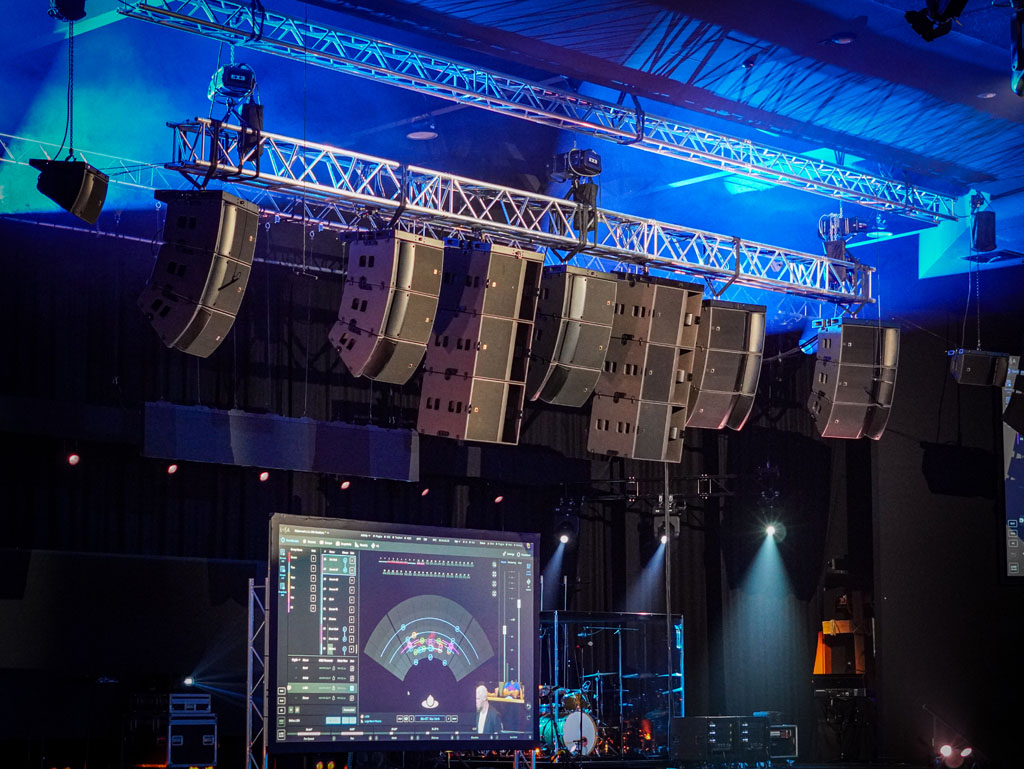
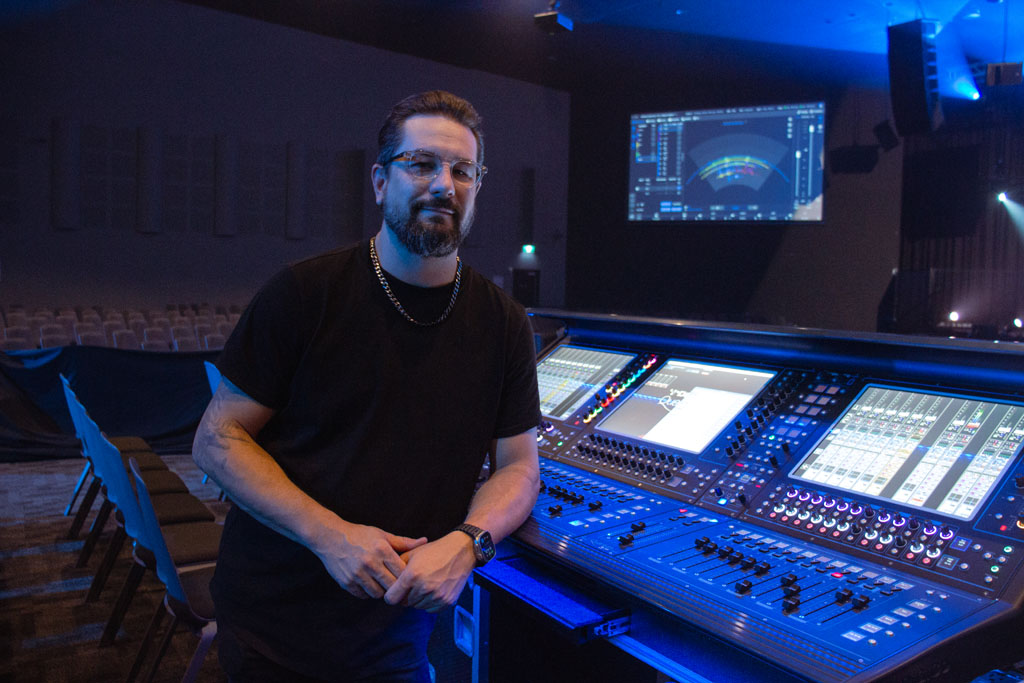
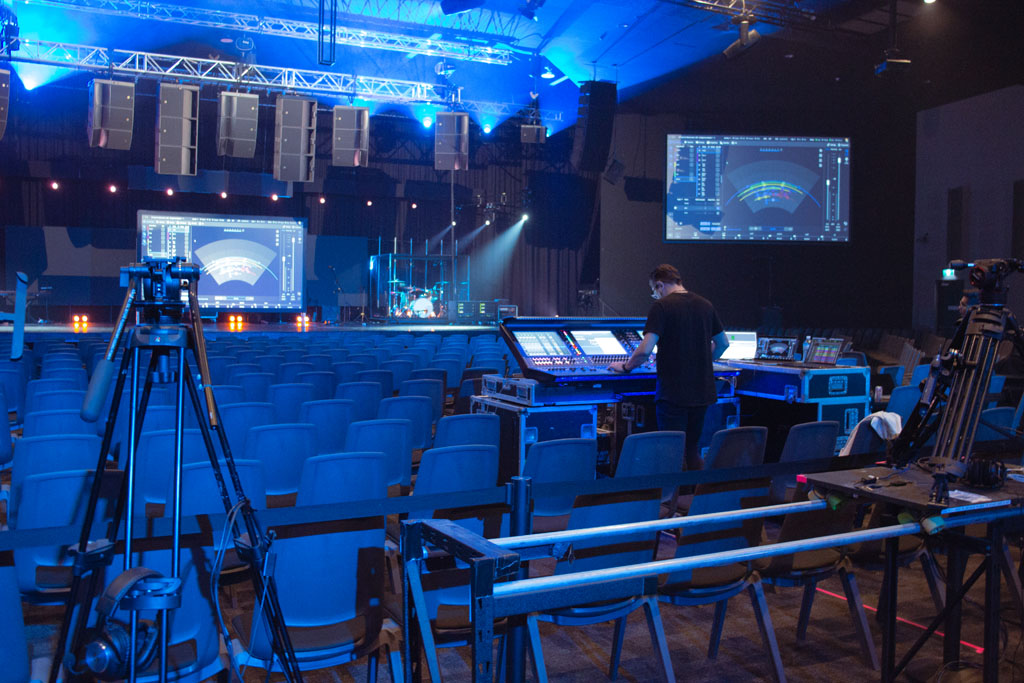
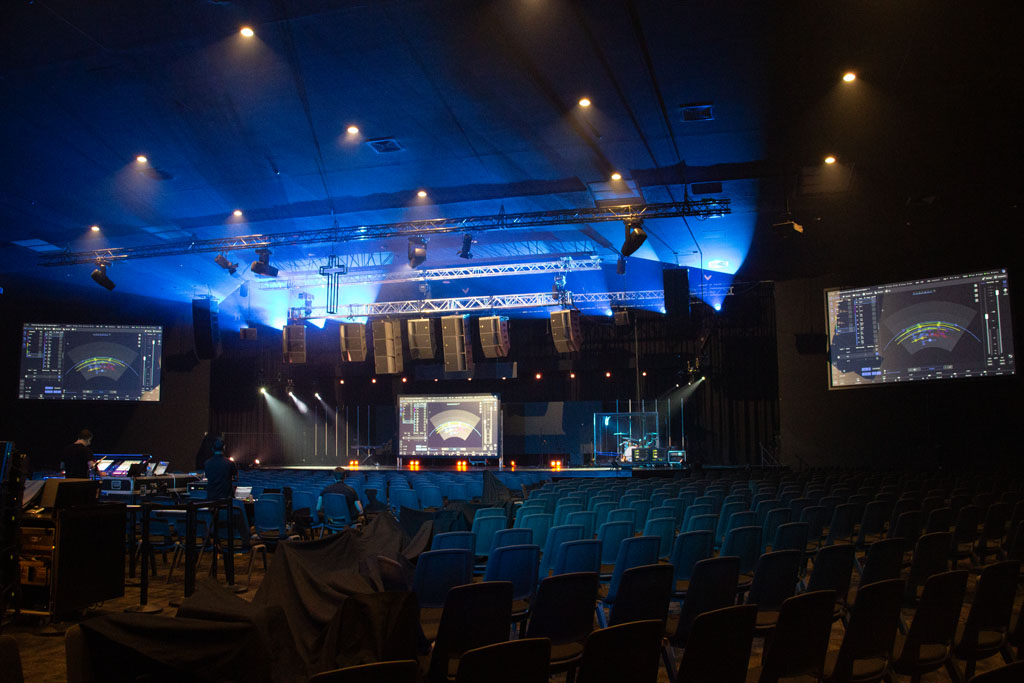
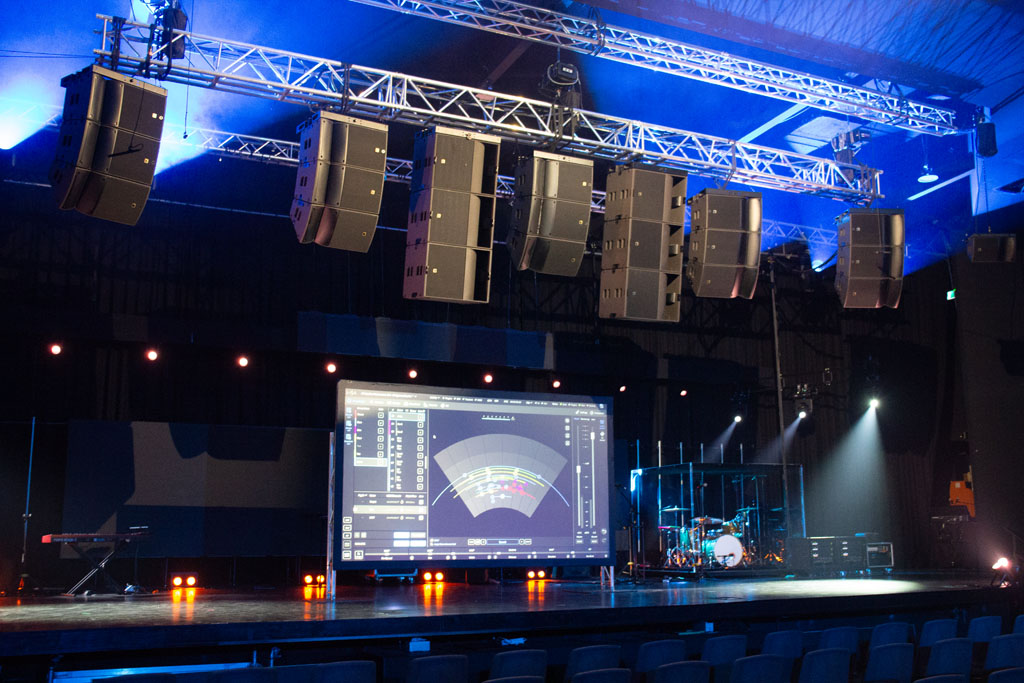
BSG and L-Acoustics had brought in a system consisting of five arrays of three A15 constant curvature line array elements, accompanied by two hangs of three KS21 subwoofers each, and two A10s for outfill. This represents a realistically affordable system for a church of this size. Joshua, who mixes for his own church in Michigan, had multitrack files of excellent (and quite big) worship bands, and talked us through his L-ISA mixes, letting us compare L-ISA to stereo. While the stereo mix was excellent, the comparison became stark when you walked the room and noticed the variation seat by seat.
The really mind-blowing thing for me was a video they ran of renowned American worship mixer Lee Fields talking about his use of L-ISA while mixing a multitrack through the system – we were hearing his L-ISA mix and watching his L-ISA interface. He built a mix from a multitrack from scratch, quite quickly. His sources were going through his SSL desk straight into L-ISA, with the only console processing used being the occasional low or high pass filter; L-ISA did the rest.
Simply by altering a source’s location on the L-ISA interface, most of what we used to achieve with EQ, compression, and panning is done by spatialisation. My real ‘aha’ moment was when Lee was explaining that, when you’re in charge of audio and you’re training a volunteer to mix “who is a welder five days a week”, it’s hard to explain why a signal is crunchy at 3K and how to EQ it. He then took a pair of overhead mics that were indeed crunchy at 3K and moved them ‘upstage’ in the L-ISA interface. It took out the harshness. He then explained that when something is unpleasant or harsh, you can just tell a non-audio person to move it ‘back’. The level didn’t drop much, but the sound was totally altered.
The rest of the mix came together brilliantly, with almost no traditional ‘mixing’ taking place at all. The presenters stressed that if you “just do the panning’ in the 3D space, you’ve done 99% of the job, and it was true. Simply by assigning sources to take up their own ‘space’ and not sit on top of each other, you achieve a remarkably realistic and polished result.
Lee did have a couple of other tricks up his sleeve that definitely weren’t ‘realistic’ spatialisations. One is to take reverb reruns and spread them across the soundstage to make things like pad sounds and backing vocals seem much bigger than they are; same with the main vocal. He used the same technique in reverse to deal with two excessively processed electric guitars, localising them apart from one another and reigning in their out-of-phase effects. All of this has now changed my perception of what a live mixing workflow can be.
With my mind blown, we came back to reality with L-Acoustics APAC Application Manager for Houses of Worship APC Zohar Pajela explaining how the L-ISA system and PA in the room had been priced as cost neutral against a mid-level stereo setup, and only slightly more expensive than a ‘value engineered’ stereo system. Brisbane Sound Group’s Installation and Projects Team Manager Rob Bird rounded the evening off by inviting anyone in the audience who were interested to come and ask questions of any of the representatives from BSG, L-Acoustics, or new L-Acoustics distributor Group Technologies that were present. Interestingly, despite being promoted as an event for houses of worship, attendee information indicated that 50% of the audience were from other markets, including venues, engineering consultants, and production houses.
L-ISA in the USA
Before proceedings kicked off, I had some time to interview L-Acoustics’ Joshua Maichele about the use of L-ISA in the house of worship sector in the USA, which I had no idea had become so common, with 80 installs (and climbing) into the market.
“The first system we installed was in 2018 at Mount Paran Church in Atlanta, Georgia,” says Joshua. “In the first five churches that we did, it wasn’t the audio technology that sold it, it was the advantages of sightlines. We’d go into these churches that have big LED walls and projection screens, and what was happening with a left-right array with a longer hang was that the PA was cutting into the congregation’s sightlines. Because we could use short hangs of products like A15s and A10s and spread the SPL out laterally, we didn’t need long arrays.”
After getting their foot in the door, the sonic and practical advantages of L-ISA became apparent; “It was the fact it was easier for volunteers to mix on,” continues Joshua. “One of the hardest things to teach a volunteer is EQ and dynamics. We’re asking an electrician or a baker to come in and volunteer; they’re not all audio engineers and they don’t live this every day. When an audio engineer is mixing on a stereo system and the acoustic guitar and the keys are on top of each other, we’re triaging things with EQ and dynamics to create space for each, and they don’t sound natural. To just take the acoustic guitar and pan it away, all of a sudden it becomes alive, and we’re not masking anymore. If a volunteer or a mixing engineer comes up and they do nothing else but pan on L-ISA, they’re going to have a better mix than they would on a stereo PA.”

“I talk about this a lot in pre-sales,” adds Joshua. “As an audio engineer, we’ve been given this palette, and we’ve been given two brushes, no water to wash them out, and a bunch of colours, and at the end of the day, what do we get? We get brown and gray. What L-ISA has given us is multiple brushes with multiple colors, and now we bring the art back to mixing. We’re less about triaging sound and more about being artistic.”
There’s a strong focus at L-Acoustics on making L-ISA as simple as possible to operate.
“We spend a lot of time making sure we have an ‘Apple-esque’ workflow,” illustrates Joshua. “All of the parameters – pan, distance, and elevation – are all on one screen. If you’re on a DiGiCo, SSL, Avid, or Yamaha Rivage desk, you have direct control of L-ISA from the console; it’s no different than the pan knob that you’re used to. At my church, we’re on an Allen and Heath Avantis, so I don’t have that direct desk link, but I just have a couple snapshots song by song, and the L-ISA and desk snapshots fire together. It’s really quite easy and seamless. I’ve found that the younger generation of mixers are so used to working in DAWs creating their own music that this is an easy workflow for them.”
The adoption of L-ISA into worship is physically changing how churches function. “There’s been a trend in churches where they were building thrust stages that go further and further into the room,” relates Joshua. “It’s an attempt by the pastor to feel more connected to the people that they’re speaking to. What you realise is that people are actually looking at their side or their back when they get out far enough, and most people are just looking at them on the screens.
It makes them feel less connected when people aren’t looking at them. With L-ISA, the pastors have said they don’t need the thrusts anymore, because people are looking directly at them when they speak. Their position is localised, and it’s less distracting for them because they’re not hearing their voice come from somewhere else, it’s above their head. It feels natural to be speaking, and you don’t even feel like you’re amplified.”
While you don’t need overhead or surround speakers to run L-ISA, some churches add them later after adopting L-ISA Hyperreal systems. “I’m seeing it more and more,” confirms Joshua. “It’s not for making things spin around the room, but to be able to use things like the vocal backing tracks to bring them around the room to enhance the worship experience. We don’t always fill a room all the way. The first Sunday service at my church, we’re maybe a third full. How do I create the same experience for that congregation as when we’re at capacity with 1,200 people? If you can make those vocal tracks really wide and envelop people, they’re much more likely to engage in worship when they don’t feel like it’s just a few people singing. That’s been the greatest thing for me, the emotion it brings, and watching people have their guard brought down because they don’t feel isolated when a room isn’t completely full. We’ve all had that wonderful experience of being in a 15,000-seat arena with everybody singing every word; how do we bring that to the local church? I think L-ISA has really opened up opportunities for us to do that in an organic and not manipulative way.”
Main Pic: Photo Credit: Josh Bonnici (BSG)
Subscribe
Published monthly since 1991, our famous AV industry magazine is free for download or pay for print. Subscribers also receive CX News, our free weekly email with the latest industry news and jobs.
Recent posts