NEW ZEALAND
5 May 2026
Making It Fit: Delivering Breathe | Mauri Ora at Te Papa
Subscribe to CX E-News
Adapting A Touring Immersive Exhibition For Te Papa’s Gallery
Breathe | Mauri Ora arrived at Te Papa as a fully realised exhibition, developed by London-based studio Marshmallow Laser Feast and produced by ACMI, Australia’s national museum of screen culture. The exhibition blends large-scale projection, spatial audio, and guided interaction to explore the relationship between breath, body, and environment. It sits somewhere between artwork and system: a constructed environment where audio, visual, and interaction need to operate in sync to hold the experience together.
For Te Papa’s project team, including AV project lead, Mark Olliver, Technology Solutions Systems Engineer, the challenge was to translate ACMI’s exhibition into a different building, with different constraints, without losing the intent of the original.
Starting with someone else’s design
Mark and Te Papa’s technical team were involved as soon as the decision was made to bring Breathe | Mauri Ora to Wellington. That timing proved critical: “If we’d come to the project at the last minute and just been given a spec, we wouldn’t have had the result we did. There were minimum requirements across each of the artworks that ensured we delivered the work without reducing its scale. This included minimum sizes, 4K projection in some cases, and minimum speaker/channel counts.”
Exactly what needed to be achieved was reinforced during a visit to ACMI by the Te Papa team, “We got to spend time with them upfront, which meant we had a really good understanding of the curatorial decisions behind the exhibition. We knew where things had to be done a certain way to remain true to the work, and where there was some flexibility.”
That understanding became essential once the team began mapping the exhibition into Te Papa’s gallery: “ACMI’s space was larger than ours. Their gallery is long and narrow, whereas ours is more of a triangle with a curved top, so we had less usable floor space to work with. Trying to fit the overall audience flow through the exhibition, while keeping the elements in the right sequence so it all makes sense, was probably the biggest challenge.”
Designing before access
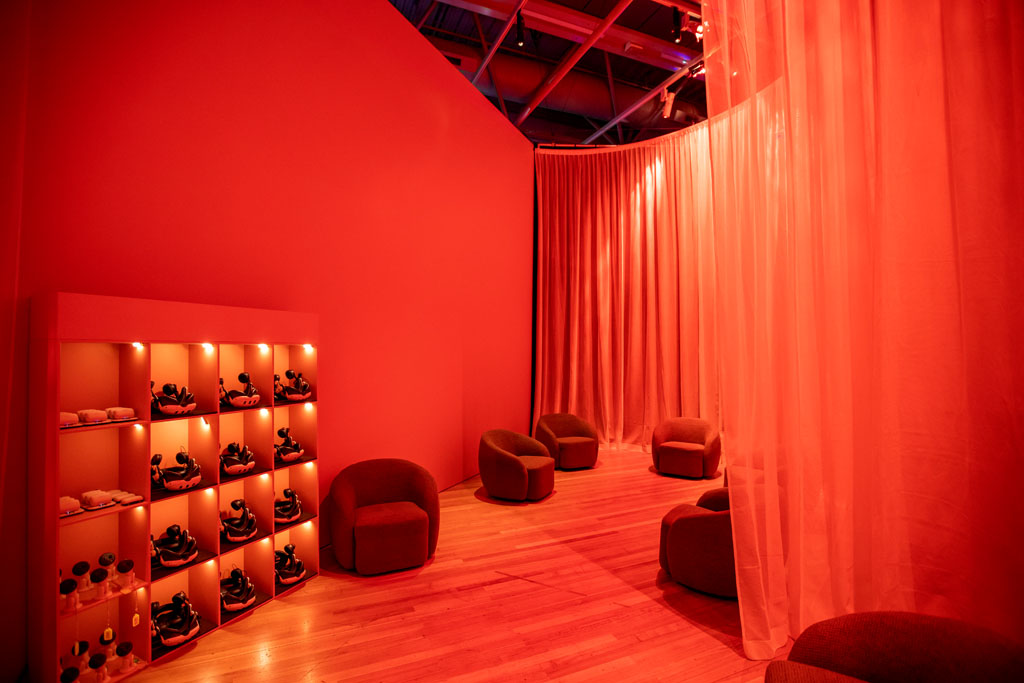
Time in the gallery was limited from the outset: “Our installation period was essentially five and a half weeks to take the gallery – which is an event venue for part of the year – and transform it into an exhibition space. That involved removing the events rig, installing new rigging for all the flown projectors, speakers and custom drapes, and working around five-metre high wall builds going in at the same time.”
It quickly became clear that as much of the system as possible needed to be resolved before stepping into the space. As a result, work was pushed into pre-production. Playback systems, VR headsets, custom computers and media players supplied by ACMI arrived a month ahead of the install, giving the team a window to begin integration.
Everything else was defined and sourced locally: “We had to provide and procure all of the speakers, projectors, subwoofers – everything required to actually present the exhibition. There was a lot of design work required upfront to figure out what would meet the specs of the show.”
Equipment acquired, the team built and tested as much of the system as possible: “We use a lot of Dante, so all of our audio routing was pre-configured before we even got into the gallery. Right from QLab outputs through to the DSP and amplifiers, everything was set up and tested in advance.”
Alongside the technical systems, the team also began testing how the exhibition would operate from a visitor perspective: “We used staff as guinea pigs, particularly for the VR components. It was about understanding timings, how often we could cycle people through, and making sure the hosts were confident before we opened.”
Projection and audio at scale
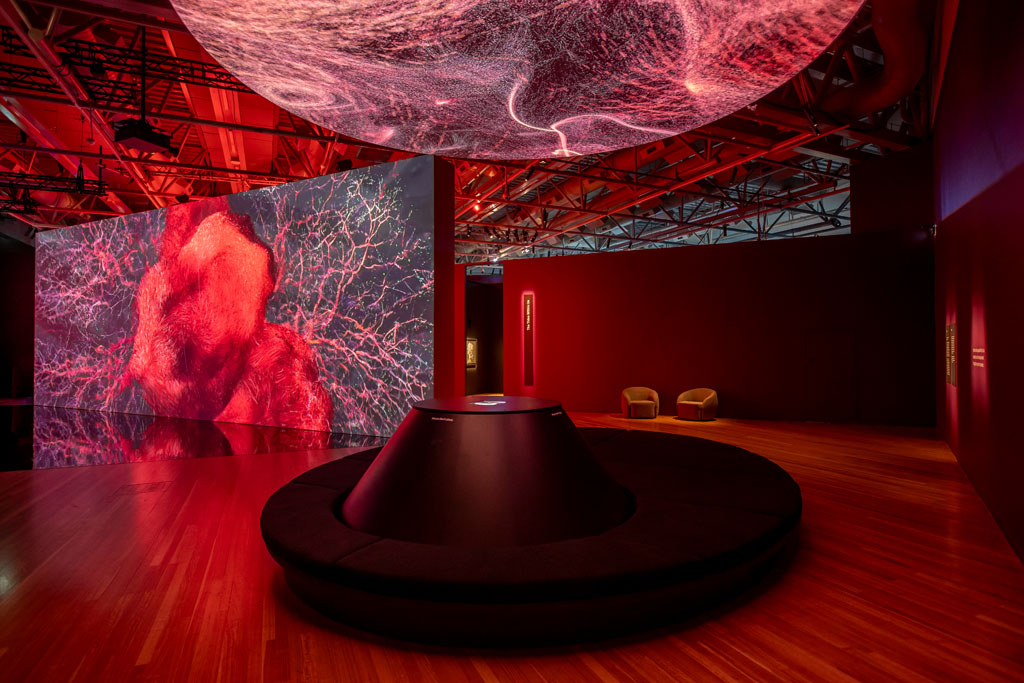
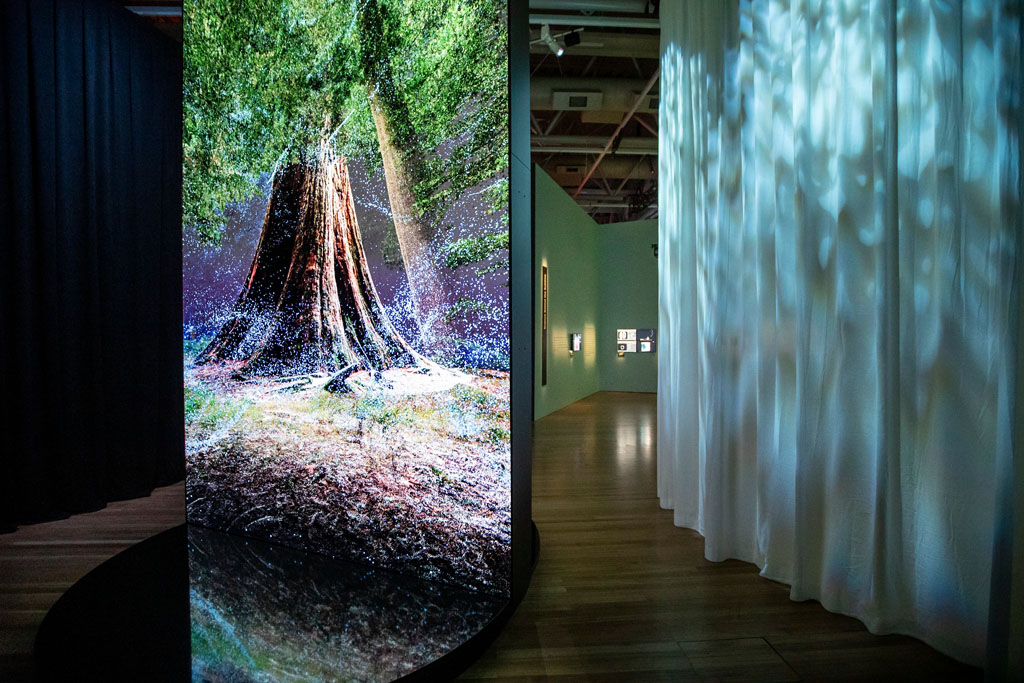
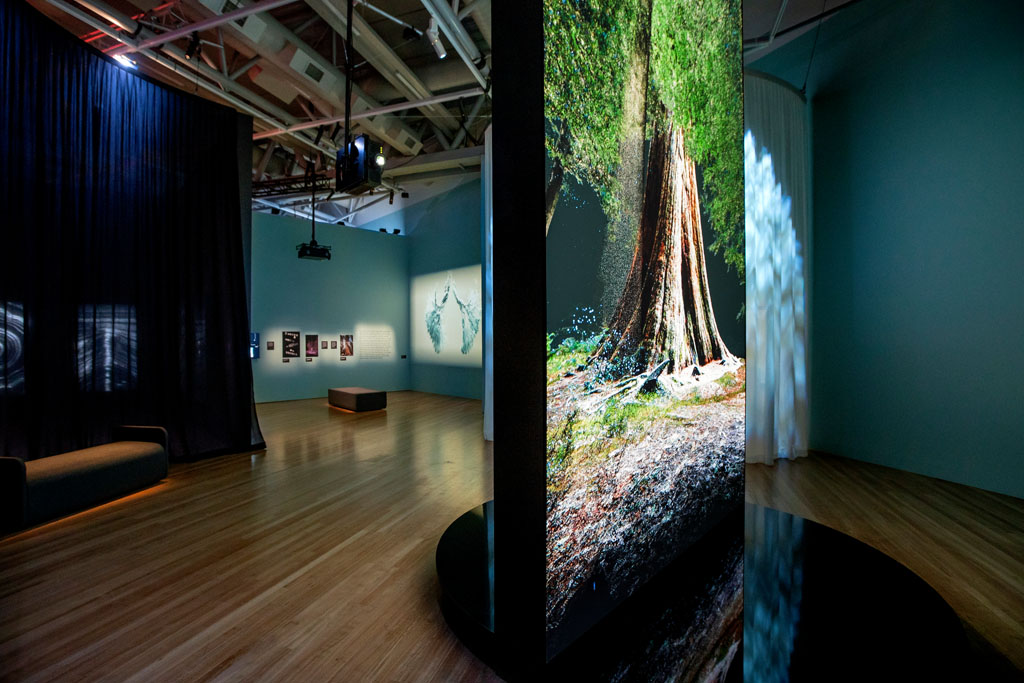
By the time installation began, most of the unknowns had already been worked through but the system install itself was substantial. 13 Panasonic projectors, a mix of HD and 4K units were deployed across the exhibition. Specs included everything from portrait and landscape blended projection to vertical projection onto screens suspended above seating, alongside a range of lenses, including ultra short throw: “Out of all the gear we used, the Panasonic projectors were the most crucial. The REQ range delivered high brightness in a small and lightweight chassis, and paired with ultra short throw lenses, we were able to deliver these 4K projections in stunning quality.”
The audio system was equally extensive, with 85 speakers and six subwoofers distributed throughout the space. Playback was handled through a combination of BrightSign media players and Mac Minis running QLab, with multiple Dante audio outputs assigned to each installation alongside additional networked soundscape elements. From there, audio was routed through BSS DSPs, allowing the team to manage system-wide tuning, including level control, EQ, muting and dynamic processing, across the different zones.
Amplification was distributed using 22 Dante PoE+ powered units, a decision that had a significant impact on the overall system design: “With that many speakers across the exhibition, being able to locate PoE-powered amplifiers locally throughout the gallery made a big difference. It reduced the amount of speaker cabling we needed and simplified the install.”
Given the nature of the exhibition, high output wasn’t the priority: “We weren’t trying to push huge power, we weren’t looking for 1000W per channel, so PoE amplifiers were a really practical and cost-effective solution for us.”
The entire system was carried over a network of five Netgear AV Line M4250 switches, forming the backbone of the Dante audio network: “That allowed us to integrate everything into our wider building network, tie into our master Dante clock and manage it remotely. It also gave us a really solid, stable network for all the Dante audio to run across.”
Once installed, the system needed to behave like part of Te Papa: “We integrated the show into our building-wide automation and monitoring system, aligning the exhibition with existing control systems and network infrastructure. It’s quite a complex network with a lot of control messages everywhere.”
The result was a system that ran fully automated day-to-day: “With daily technology checks and our monitoring system, we often identify and resolve faults before they’re reported. We can schedule and automate the on and off process of the exhibition, with the ability to manually control elements or extend hours for late-night events.”
Building immersion
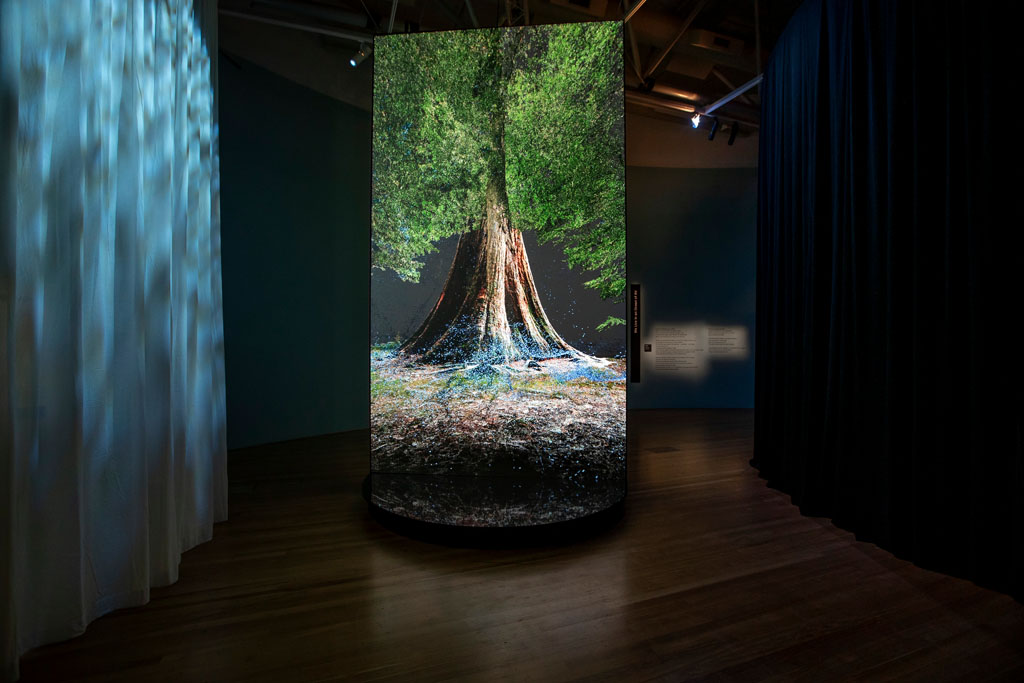
For an exhibition built around breath and perception, the relationship between audio and visual systems was critical: “One exhibit invites the audience to move around a tree and hear the sounds from the roots, up the trunk and into the leaves. We had a custom micro-perforated projection screen housing a subwoofer and eight speakers behind the projection itself, with four more channels of surround sound. By placing the audio directly behind the image, the system allowed sound to originate from the object itself. That’s something a lot of people probably wouldn’t notice but it makes a big difference.”
Alongside the projection environments, the exhibition also incorporates a series of VR experiences. These were delivered using Meta Quest 3 headsets supplied by ACMI, adapted with custom mounts to integrate Sennheiser headphones directly into the unit: “The VR experience is completely wireless for the audience, which has been really important. There’s no tethering, no hand controllers; people can turn 360 degrees and just experience it.”
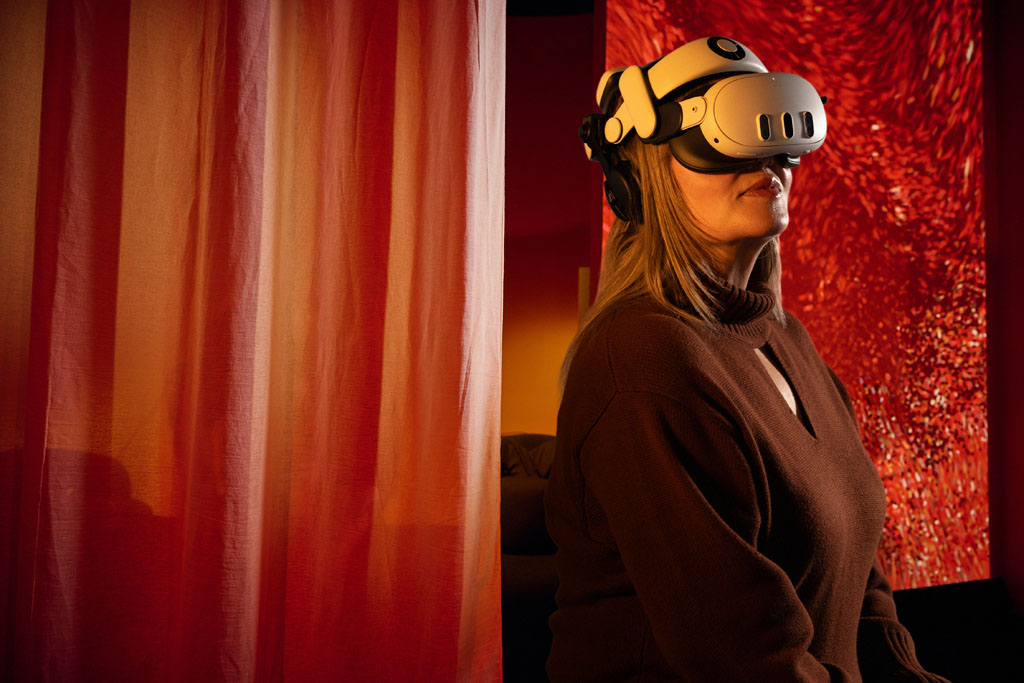
From an operational perspective, the VR system was designed to be run by front-of-house hosts rather than technicians: “There’s a central control PC with a touchscreen, so hosts who aren’t from a technical background can start and stop the VR experience. All of the playback and custom application run on the headset itself, so once it’s on, the experience just begins.”
That simplicity was deliberate, utilising the latest hardware while disabling unnecessary consumer features: “It removes all of the complexity you’d normally associate with VR. The audience doesn’t have to think about it, they just put the headset on and it works, and the system is really reliable.”
Together, the layers of spatial audio, large-scale projection and untethered VR created an environment where the digital art felt natural.
Looking ahead
For Mark Olliver, projects like Breathe | Mauri Ora sit within a broader shift. Immersive experiences, particularly VR, are becoming an increasingly visible part of the exhibition mix, but not necessarily a replacement for more traditional formats: “In a museum context, you still have those close-up, personal experiences alongside larger-scale works that multiple people can engage with at once. What we’ve seen here is that the people who do the VR component really enjoy how fully immersed they are; everything else drops away and it’s just them in that environment.”
At the same time, that level of immersion comes with its own considerations: “The technology moves quickly, so there’s an ongoing need to maintain and support it. There’s also a hosting requirement, you need staff there to run sessions, manage headsets and keep everything moving.”
For Te Papa, the challenge and the opportunity lie in continuing to adapt. In that sense, ‘making it fit’ doesn’t end with an installation, embracing immersive exhibitions is an ongoing process.
Subscribe
Published monthly since 1991, our famous AV industry magazine is free for download or pay for print. Subscribers also receive CX News, our free weekly email with the latest industry news and jobs.
Recent posts