PRODUCTION
8 Dec 2025
METALLICA’S M72 END-ON DOWN UNDER
Subscribe to CX E-News
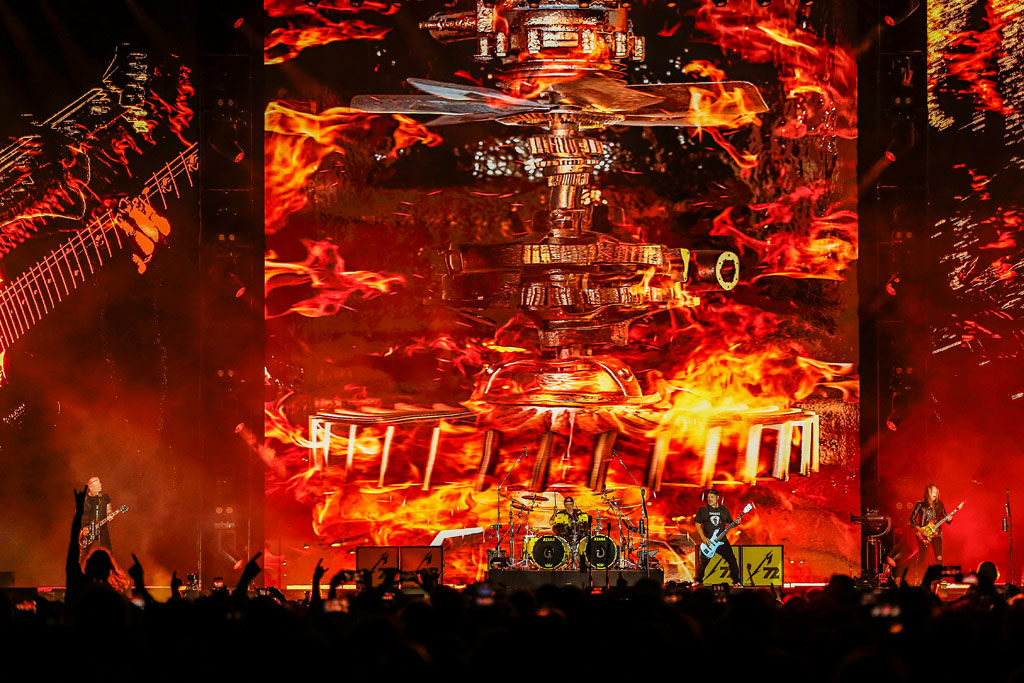
After a long wait, the Metallica M72 tour finally made it to the Antipodes, taking in Perth, Adelaide, Melbourne, Brisbane and Sydney, before crossing the ditch to Auckland. The M72 Tour has been stalking the globe since April 2023, when it kicked off in Amsterdam. The shows are often performed in the round, but for this leg, which saw the band playing to audiences of about 60,000, Metallica’s Creative Director Dan Braun and Meyer Sound’s Director of System Optimization Bob McCarthy redesigned the show’s PA for the end-on performances of the southern run.
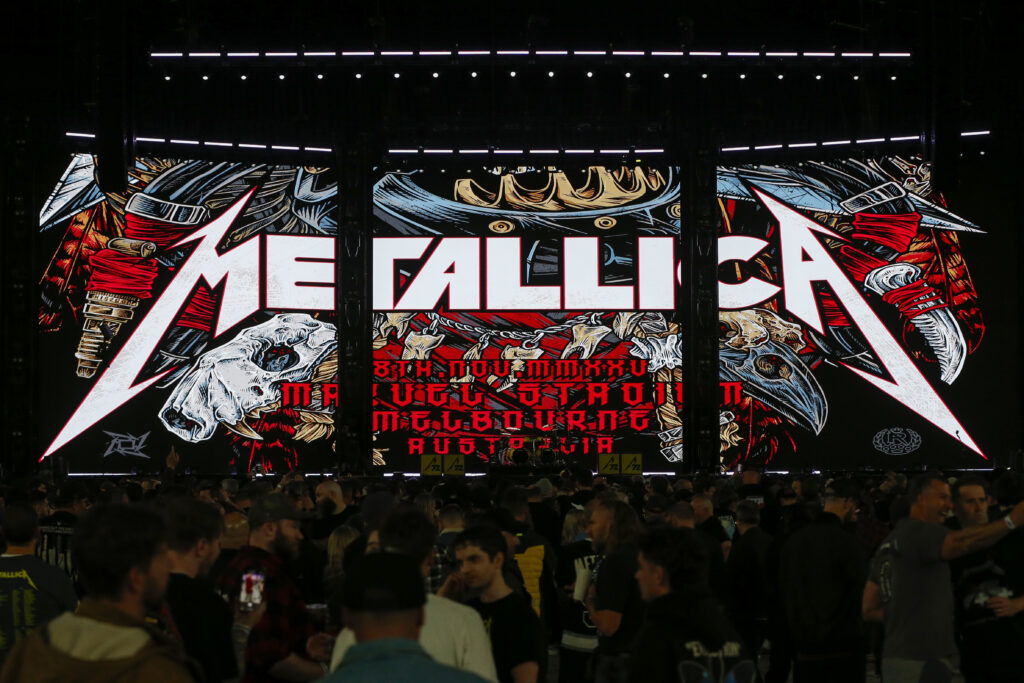
I had the pleasure of catching Metallica at Melbourne’s Marvel Stadium show, and Bob himself was on-hand to walk guests of Meyer Sound through his PA design, generously showing us the system plots and predictions in Meyer Sound’s MAPP 3D system design and prediction tool.

I sat down with Bob after the show to discuss how they had translated the in-the-round show to end-on, and just how he got the imaging so good at a stadium show. Turns out, I was listening to a type of PA deployment I have never experienced before.
“Dan Braun is the visionary for Metallica’s show designs,” explains Bob. “He wanted to do the show in the round to create a more intimate experience in stadia. That really started to come to life after we had done shows with the San Francisco Symphony in 2019 and the 40th anniversary shows in 2021. They were the proving grounds for the aspects that became incorporated into M72, which I call a ‘more stereo’ approach. We built the show in Belgium; it went through several iterations of concepts over about a nine-month period, and that became M72.”
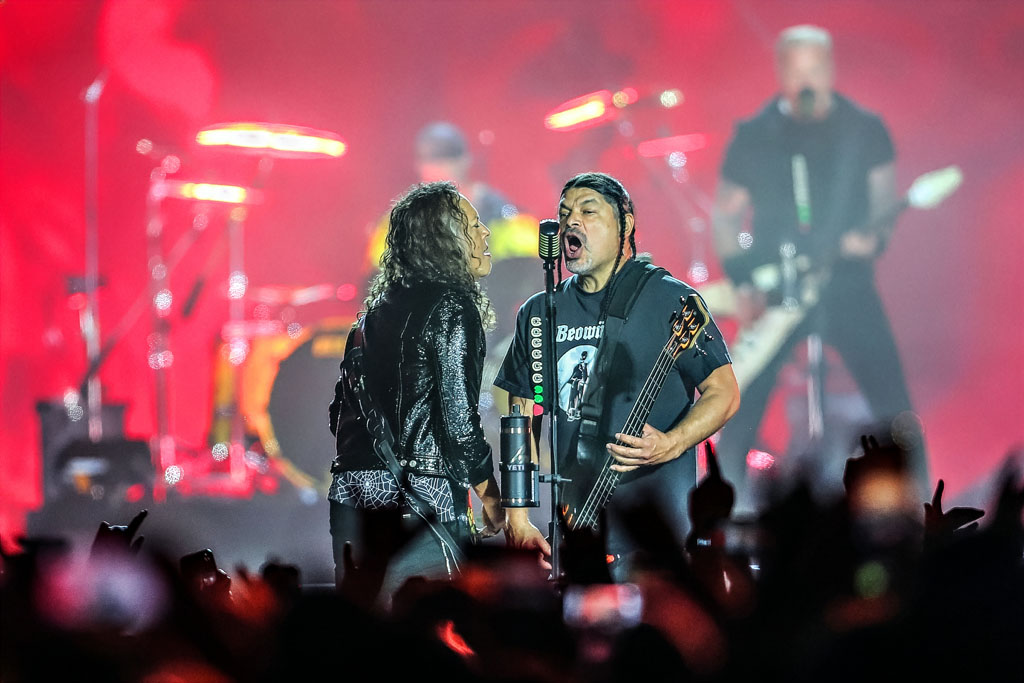
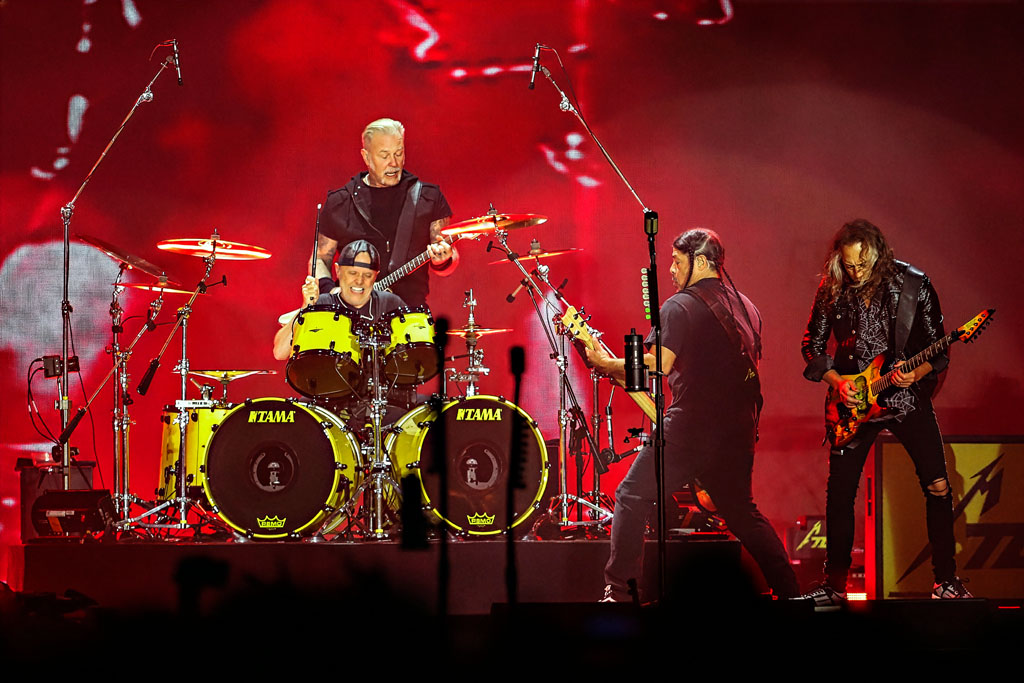
Bob’s been collaborating with Dan on Metallica’s tour sound design since 2017. “One of Dan’s guiding principles for M72 was he wanted everybody in the audience to feel like they’re listening to the show on a pair of Meyer Sound’s top-end Amie studio monitors,” relates Bob. For the Australia and New Zealand shows, the design builds on concepts from the 2018-2019 tour. Here, we added something that we first did at the Power Trip festival in Indio, California, which was to add extra sets of PA hangs across the front to bring a full stereo experience down onto the floor of the stadium. That’s the big difference between this and other end-on stage stadium shows: there are actually six hangs across the front alternating between left and right channels.”
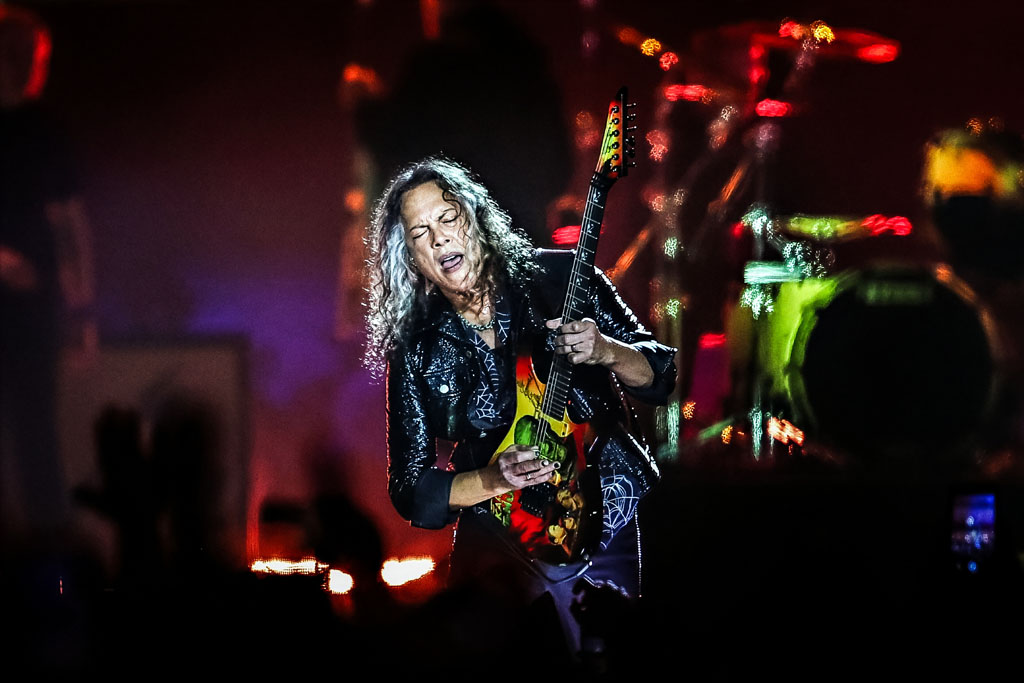
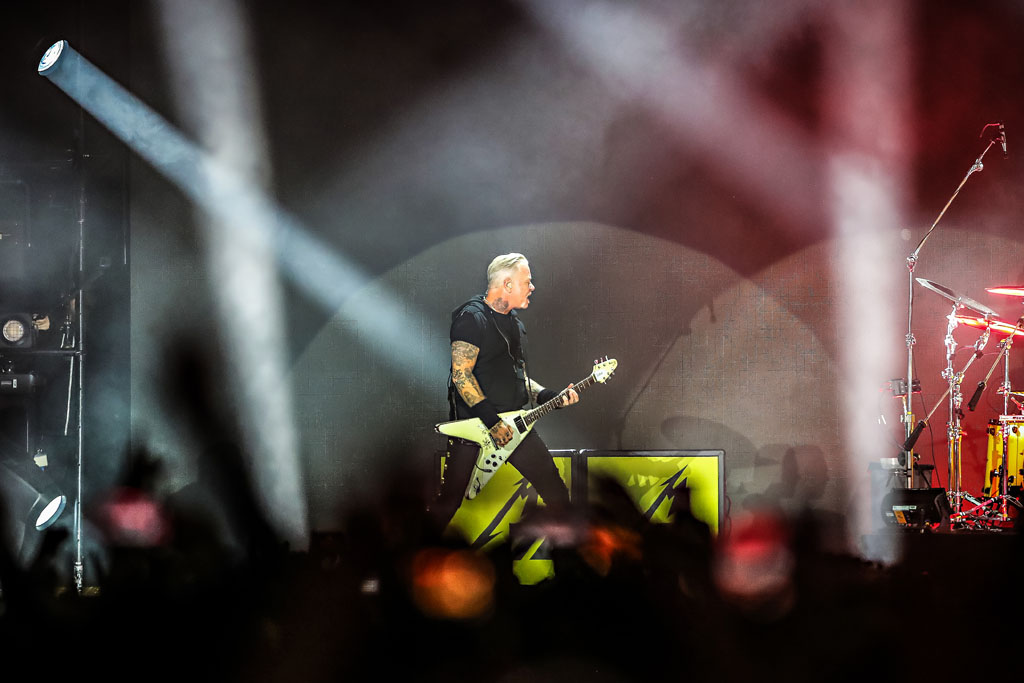
“James’s guitar is hard panned left, and Kirk’s guitar is hard panned right. The drums are also hard panned,” Bob explains. “The show ‘mixes itself’ in the air. It’s delivering stereo to most of the audience.”
The main front hangs each comprise 18 Meyer Sound PANTHER line array elements and nine 2100-LFC low-frequency control elements.
The outer hangs comprise 22 PANTHER loudspeakers each. Eight ULTRA-X80 point source loudspeakers serve as front fills along the front of the stage. Then there’s what Bob refers to as “a farm” of subwoofers ground-stacked on each side of the stage, consisting of 12 2100-LFCs along with 12 VLFCs (Very Low Frequency Control Element) per side, which provide subsonic low-end support. Three delay hangs, each consisting of 16 PANTHER plus six 2100-LFC on the ground, sit behind the FoH mix position.
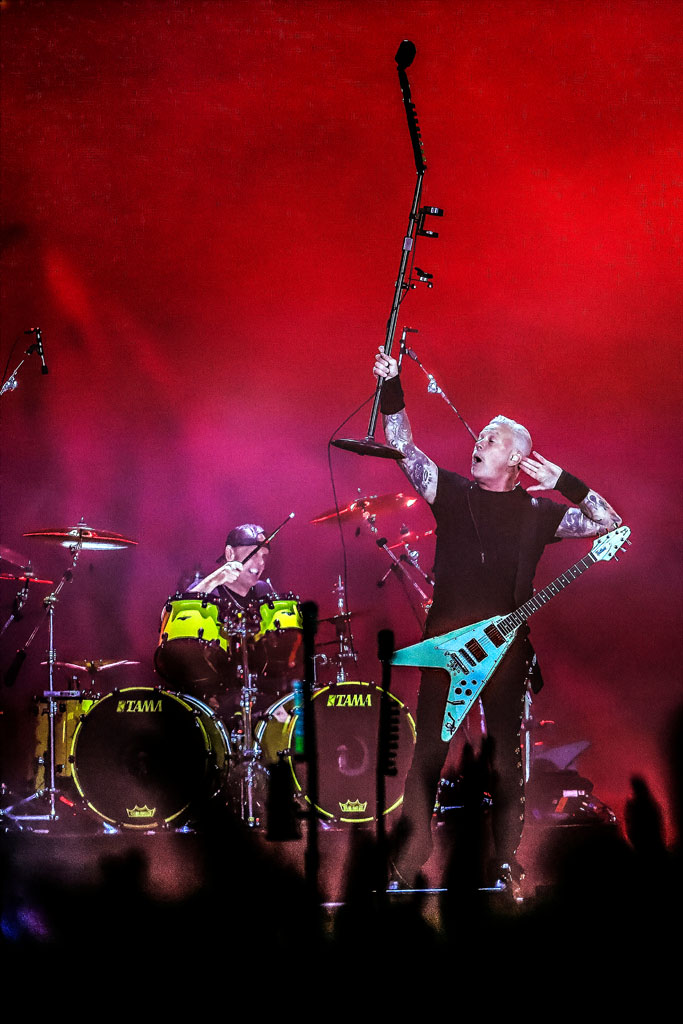

“One subtle thing that makes the drums sound more realistic is the use of VLFCs to extend the low-frequency range down to 13Hz,” divulges Bob. “When you listen to a natural kick drum, its range extends much lower than what a typical subwoofer reproduces, so the VLFC offers a more realistic representation. It also puts the kick drum, the bottom of the bass guitar, and the toms in a ‘lane’ of their own, so to speak. You can reveal those instruments in the mix without having to put on a bunch of extra high end in to make them punch through. Metallica’s FoH engineer, Greg Price, is a tremendously musical mixer who focuses on keeping sounds true to themselves instead of manufacturing them in the mix.”
With the roof closed at Marvel due to the inclement weather forecast and the stadium’s less-than-ideal acoustics, Bob and Metallica’s system engineer Chris Rushin had their work cut out keeping acoustic energy away from where it shouldn’t be. “The most concerning thing to me was how terrible it sounded when the room was empty,” he admits. “I had spent a day and a half in there. I knew it was going to have big reflections, but it had the most unmusical-sounding reflections I’ve ever heard. Between the stadium itself, the plastic floor covering the turf, and the plastic chairs, every drum hit produced reflections that sounded like somebody shuffling a deck of cards or crunching a pile of aluminium foil.
When the show started, we exhaled with relief; the audience fixed it!”
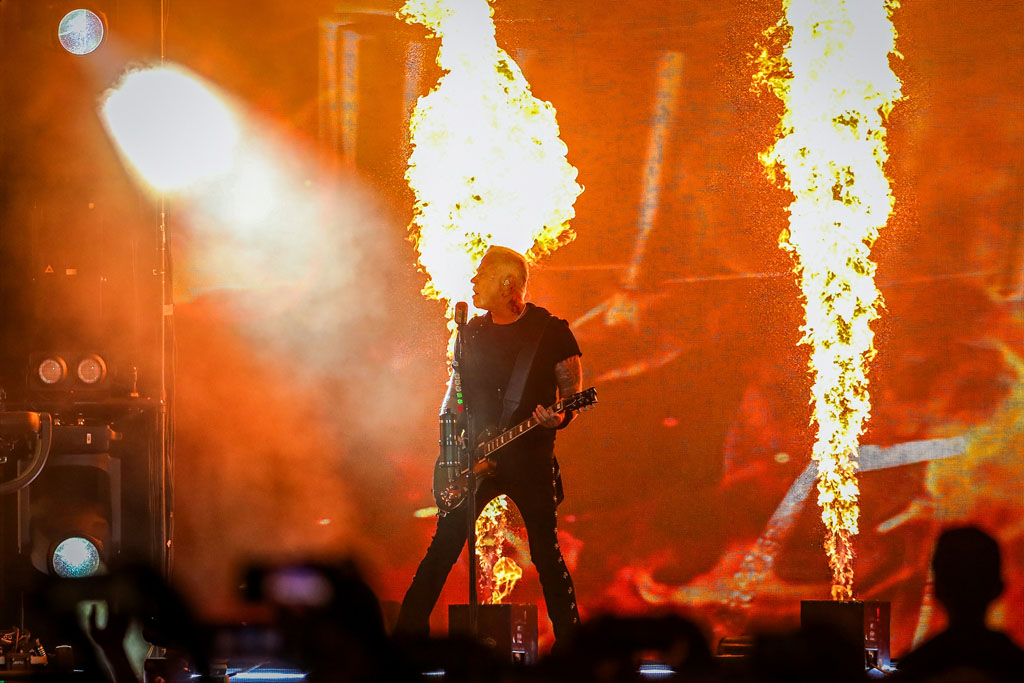
With multiple generations of loyal fans, Metallica continues to sell out massive stadia. “The most important thing that they ask of the sound is that the whole audience is fully included,” observes Bob. “The thing that strikes me over and over again about Metallica is that they want everybody to have a great experience, and they are willing to invest in that and to give our team the time we need to get it right. They always make sure that it happens.”
Subscribe
Published monthly since 1991, our famous AV industry magazine is free for download or pay for print. Subscribers also receive CX News, our free weekly email with the latest industry news and jobs.
Recent posts

Latest jobs