Listen Here
2 Sep 2026
Preparation, Communication & Trust
Subscribe to CX E-News
Creating the Conditions for Great Performances
The best engineers understand that technical excellence alone is never enough. Recording sessions and live performances succeed when preparation, communication and adaptability combine to create an environment where musicians feel confident, supported and free to focus on what matters most: the music.
Music has always been about communication.
There is, of course, a science behind audio production too. Sound is energy moving through air, electricity travelling through circuits and vibrations being captured, shaped and reproduced. Understanding that process is fundamental to recording and live production, and without that knowledge, we cannot do the job properly.
But audio has never been merely about the technical side of sound.
At the centre of every recording session and live performance are people trying to communicate something. These ideas, emotions, experiences and moments all have to pass through the machinery of microphones, consoles, speakers and sound systems before they reach an audience. But the engineer’s role is not simply to manage those tools, but to understand the human beings using them.
That requires a different kind of skill.
Knowing where to place a microphone or how to shape a mix is essential, but so is understanding when a musician needs reassurance, when a suggestion needs to be handled carefully, or when the best technical decision is the one that allows a performer to feel confident.
The ability to manage those human relationships and emotions is not separate from the craft of engineering. It is central to it.
Face-to-Face Relationships
The relationship between musicians and engineers has always been an interesting one. On paper, everyone involved has the same goal: to make something great. Yet the process can be complicated sometimes, particularly when two very different perspectives meet.
Engineers are often focused on the technical challenges of achieving a result. Musicians, meanwhile, tend to be focused on delivering the performance itself. Both are essential, but the pressures being experienced on each side are not always understood by the other.
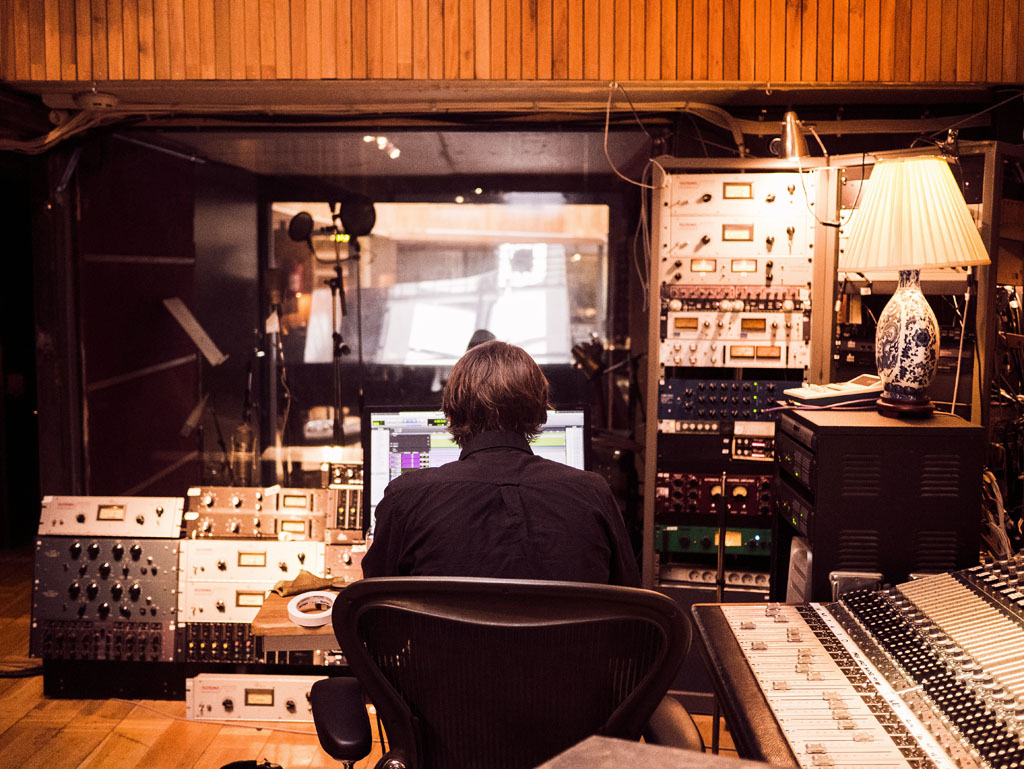
For a musician, particularly one recording in a studio for the first time, the experience can be deeply confronting. A performance that might normally exist only in the moment is suddenly being captured, scrutinised and preserved for posterity. Every note, every hesitation and mistake can feel magnified. What might have passed unnoticed in a rehearsal room can suddenly feel impossible to ignore when it comes back through a pair of headphones.
There is a real vulnerability in that process.
The engineer, however, is usually operating from a position of familiarity. The studio is their environment, their workplace and the place where experience provides confidence. They understand the equipment, the processes and the language being used. For the musician, particularly someone new to the experience, it can feel like stepping into someone else’s world.
That difference in perspective matters.
A great engineer understands that technical knowledge is not there to create distance between themselves and the musician. It exists to support the musician. Knowing where to place a microphone, how to solve a technical problem or how to shape a sound is only part of the role.
Knowing when someone needs reassurance, when a suggestion needs to be handled carefully, or when confidence needs rebuilding is equally important.
The best engineers do not simply capture performances. They create the conditions that allow those performances to happen. Nobody performs at their best when they feel uncomfortable, dismissed or judged.
This does not mean that musicians should be protected from honest feedback. On the contrary, constructive criticism is part of any creative process. But there’s a significant difference between helping someone improve and making them feel inadequate. The best engineers understand that confidence is fragile, especially when someone is already putting themselves under enormous pressure.
Sometimes a few carefully chosen words can make the difference between a musician giving up on an idea and finding the confidence to deliver something remarkable.
From Screen To Stage
The same principles apply outside the studio.
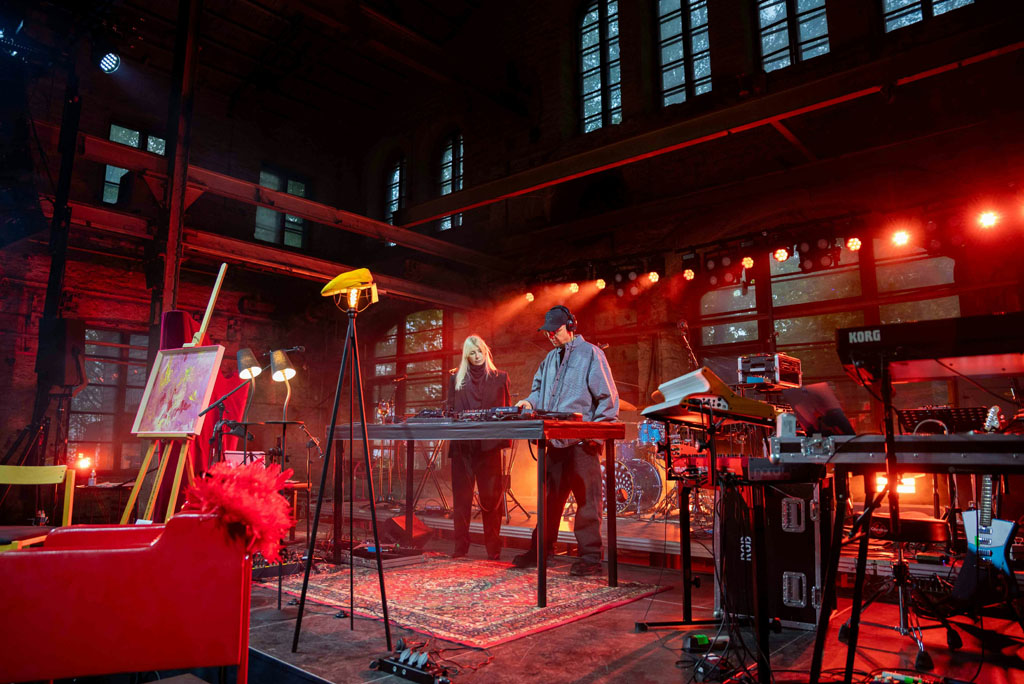
When a performance moves onto the stage, the environment changes, but the engineer’s role remains the same: to create the conditions that will allow musicians to perform at their best.
And this is where preparation becomes so important.
Good preparation is one of the clearest signs of professionalism. It shows respect for the musicians, the venue, the crew and the audience. Knowing the requirements, understanding the music, preparing equipment and anticipating potential problems before they occur allows everyone to focus on the performance rather than avoidable distractions.
However, preparation should never be confused with control. A plan is not something to wrap in barbed wire and defend at all costs; it’s something to work with. The best plans leave enough room for people to respond intelligently when change inevitably arrives.
One of the biggest mistakes people can make in any technical role is becoming so attached to a plan that they forget the reason the plan exists in the first place.
The purpose of preparation is not to prevent change. It’s to make change easier.
I recently worked with a group of very experienced musicians who quite rightly expected that everything would be well prepared before they arrived. The technical details had been scrutinised well beforehand, and on the day the stage was set up according to the spec sheet well before the band arrived.
What seemed to make the biggest impression, however, was not simply the preparation itself, but what happened when changes were inevitably suggested by the band when they first arrived.
Once the musicians saw the stage and experienced the space for the first time, it became clear that some adjustments to the layout were necessary for them to occupy the space comfortably. These changes were discussed, accommodated and implemented without fuss.
What struck me at the time was how genuinely surprised, some might have even said ‘shocked’, the musicians seemed by the straightforward nature of our friendly responses to their requests. Perhaps they had become so accustomed to these sorts of changes being met with defensiveness that they had steeled themselves for a battle.
Instead, the adjustments were simply treated by our team as part of creating the best possible environment for the performance. The main reason for this was that we were well prepared and had created time and space for just such an eventuality.
That set the tone for the entire evening. Everyone understood that the goal was not to defend a plan that had already been made; it was to work together to create the best show possible.
But this is exactly where good preparation should always lead.
When the important groundwork has been done, change is no longer a threat to the process. It becomes part of the process. A well-prepared team has the confidence to adapt because everyone understands the goal is not to protect the original plan but rather to create a welcoming, comfortable space for the musicians to perform in.
Within reasonable practical limits, the needs of the musicians should always be accommodated. Not because every request can always be met, but because everyone involved is working towards the same outcome. The best productions are not built on one person’s plan surviving unchanged; they are built on experienced people listening, adapting and making good decisions together.
That balance is what separates good production from merely efficient production. A rigid approach may get you through a checklist, but it doesn’t always engender good working relationships or encourage the best performance. This is particularly true during soundcheck.
Checklist One, Two
A soundcheck should be organised and respectful of everyone’s time, but its success should not be measured simply by how quickly it is completed. Its true value is realised later, when the musicians walk onto the stage for the show feeling prepared, comfortable and confident that everything is in place to support their performance.
So, if musicians need to clarify a song arrangement, work through a transition, adjust their position on stage or spend extra time becoming comfortable with their monitoring, those things should be considered part of the process, not a special favour or an unreasonable request by an unreasonable musician. A few extra minutes before a show can prevent much larger problems once the performance begins.
Of course, every situation has practical limitations. Venues have schedules, crews have responsibilities and time is always a factor. Good judgement is required here, and not every request can always be met immediately. But there is a difference between unnecessary delay and something that genuinely contributes to a better performance.
The question should not simply be, “How quickly can we finish this?” It should be, “What does everyone need to deliver the best show possible?”
That requires communication.
The best working relationships between musicians and engineers are built on listening. Musicians need to be able to explain what they need without feeling like they are causing inconvenience. Likewise, engineers need to be able to offer solutions without making performers feel that their concerns are being dismissed.
A simple request for more vocal in a monitor, a change in stage position or a different approach to a technical problem is not an inconvenience. It is information. The engineer’s role is to understand that information and use their experience to find the best solution.
The same applies in the studio.
A musician saying, “Something doesn’t feel right,” may not be able to explain the underlying technical reason for that feeling, but the feeling itself is still valuable information. Sometimes the answer is not another adjustment to the equipment. Sometimes the answer is a conversation, a change in approach or simply giving someone the confidence to try again.
The best engineers learn to listen beyond the technical details to interpret what is really being communicated by a musician on the other end of a signal chain, without becoming defensive, acerbic or patronising. They understand that behind every microphone is a person trying to communicate something.
Technical expertise matters enormously, but expertise without empathy has limitations. The most respected engineers are rarely the ones who make everyone aware of how much they know. They are the ones who quietly use that knowledge to make the entire process better.
Confidence and humility can exist together.
An experienced engineer should be confident enough to make decisions, solve problems and guide a session or performance. But they should also be humble enough to recognise that musicians bring their own expertise. A performer may understand something about the music, the arrangement or the feel of a performance that cannot be measured through equipment alone.
The best results come when those different forms of knowledge work together.
Whether recording in a studio or preparing for a live show, the principle remains the same: the technology serves the music, and the people serve the performance.
Audiences rarely know how many conversations, adjustments, compromises and decisions happen before they hear the first note. They do not see the preparation behind the scenes or the small problems that were solved before they became big ones. They simply experience the result.
That is why the human side of engineering matters so much. A great engineer does not just make equipment work. They create confidence, solve problems, communicate clearly and help musicians deliver something they can be proud of.
The microphones, consoles, speakers and systems all matter. But at the centre of it all are people trying to make something meaningful, and helping them do that is the real job.
—
Andy Stewart owns and operates The Mill in Victoria, a world-class production, mixing and mastering facility. He’s happy to respond to any pleas for pro audio help. Contact him at: andy@themill.net.au
—
Main Pic: Photo By Sander Hallaste On Unsplash
Subscribe
Published monthly since 1991, our famous AV industry magazine is free for download or pay for print. Subscribers also receive CX News, our free weekly email with the latest industry news and jobs.
Recent posts