BACKSTAGE
28 Sep 2026
WHEN A TEMPORARY FIX BECOMES A PERMANENT SOLUTION
Subscribe to CX E-News
Necessity is the mother of invention, or so the saying goes. But it holds great truth, particularly when you only have so much in the toolkit.
When there’s a problem with a deadline, you have to find an acceptable fix before the bell tolls. It might be something as mundane as a flat tyre, which is easily fixed if you have a spare and your jack has not been hocked by the car’s owner! At that point, you either wait hours for roadside assistance or get creative. A few strategically placed rocks and stout tree limbs later, it is possible to raise a corner of the car and change a flat. Ask me how I know…
Here today, gone tomorrow
Shows and events are temporary by nature. They also have unforgiving deadlines of doors, set times and noise curfews. Because of these constraints, event crew are great at finding temporary solutions. When we are left to our own devices, we are brilliant at coming up with answers and implementing them pronto. Unfortunately, sometimes these remedies don’t pass muster when coming up against a bureaucracy designed for another industry that runs on an entirely different time clock.
Precisely because we are so good at them, the event industry is its own worst enemy when it comes to temporary fixes. This is most evident when dealing with regulations. Julius Grafton’s recent exposé on electrical regulatory compliance for ENTECH Road Show highlights this disconnect. There is little doubt that the intent behind these regs is to keep workers safe. Where they fall over is in their application. Electrical regulations tend to be made for more permanent installations like construction or manufacturing, which are delivered over months and years.
They do not take into account the tighter timelines and turnarounds involved in events. A metaphorical approach might be that construction is like concrete, taking weeks to set up and locked in place for years beyond. Gigs are more like plasticine: often set up, run and packed down in the one day.
This does not remove the need for safety for gig workers but does bring into focus the gaps between thankless compliance and industry best practice. Having nearly been, numerous times, the statistic that triggered a permanent change in event rules, I cannot back this sort of initiative enough! I’m both lucky and relieved that there is not a ‘John’s Law’ statute on the books.
Permanent planning for the temporary fix
Before my worst near misses, I was involved in setting up AV production for Moomba. Specifically, the audio and lighting for opening and closing spectacles along the Yarra. Temporarily installing speakers along the riverbank every year came with the dual hazards of public safety and cable routing. Speakers on winch-ups and cables on the ground were a no-go.
Some smart person came up with the idea of embedding truss plates into concrete pads that were embedded about 100 mm shy of the soil surface. Every year, we would locate the plates, take out a chunk of turf, dig down to the plastic cover and wipe away the protective grease, then bolt a standard piece of aluminium tri-truss to the adaptor. Speakers could then be securely mounted to the top of the truss and cables sent along catenaries to trees and lampposts. Clean, safe and permanent where need be, but no more.
This is a great example of interfacing show knowledge with safe, sensible and legal infrastructure.

Tools of the trade
The most ubiquitous tool in the gig bag is gaffa tape. What can this magic sticky fabric not fix? Cleaning up cables, tidying stage dressings, holding doors open, you name it: there are a thousand and one applications for the ol’ 357. Half of my existence has been held together by this stuff. If it were UV-stable and had an IP address, who knows where we’d be by now.
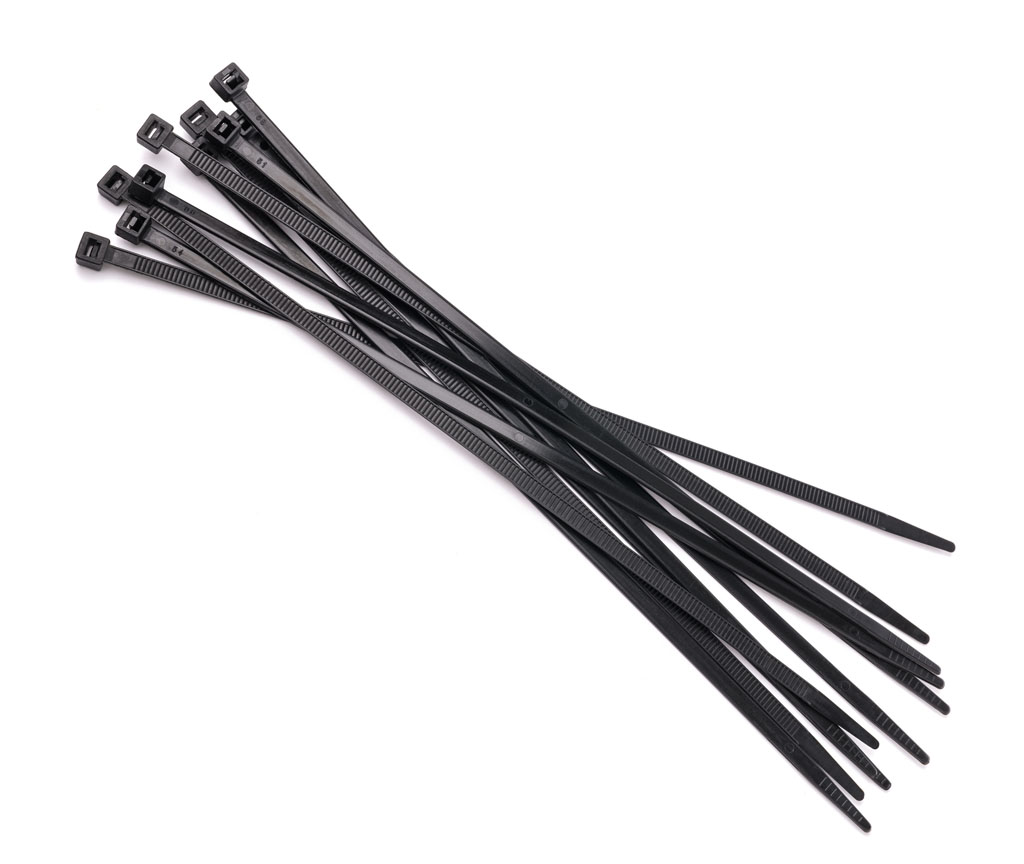
Also popular are cable ties, an equally adaptable and useful invention. Just don’t dare try looming non-permanent cables with them. On the downside, both are one-use only and can form quite a mountain of detritus after the show.
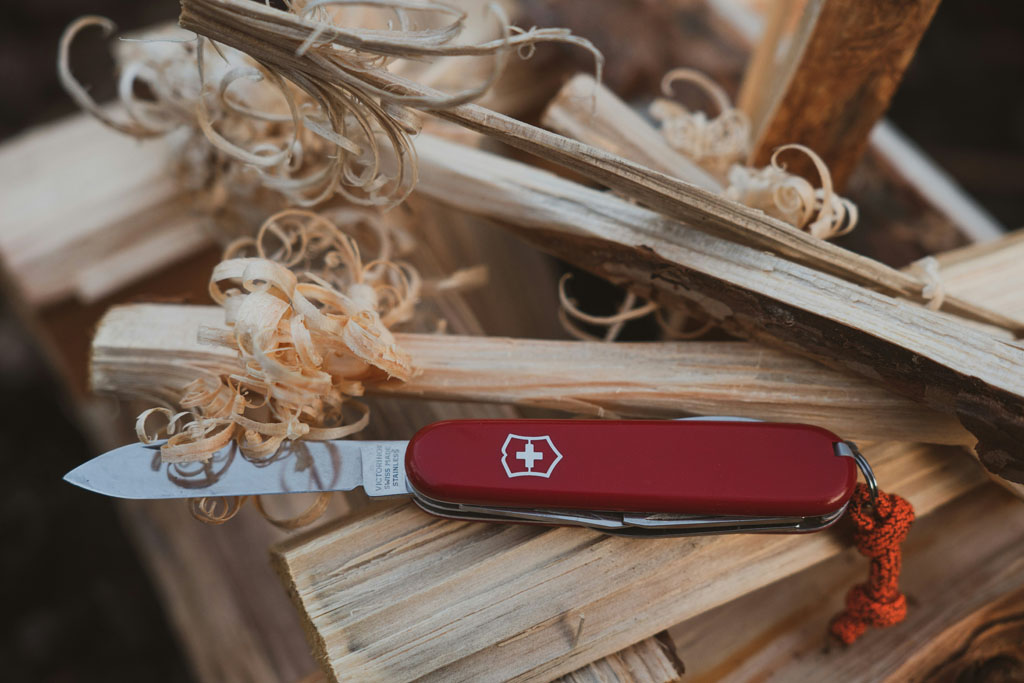
Out here in the country, many people travel with a few lengths of fencing wire, odd bits of rope and baling twine. I’ve used all of the above, and more, to solve problems at one time or another.
People who are made of sugar and spice quickly learn that those condiments can sweeten any bland meal. Snips and snails, or puppy dog tails, might be less immediately useful, but an inventive mind finds a purpose for anything. It is amazing what variety of knick-knacks can be MacGyvered into a satisfactory outcome.
Will it blend?
Sometimes, good enough is just that: good enough. Your immediate problem is solved, and you can move on to other tasks. It might not be elegant, but it is at least functional. Cool, but don’t forget the can you just kicked down the road. You may trip over it later when you are not paying full attention to your steps. If you do the hack job well enough, it is likely that you will get a decent outcome that lasts nearly as long as doing it ‘the right way’.
Perhaps this is where we have missed a trick in the live entertainment industry. We have become so used to the temporary hack that the permanent fix seems unnecessary, or at least frivolous. When our ‘get it done before doors open’ methodology comes up against the slow-moving machinery of government, there is friction.
This discord is not a bad thing. While it means our industry has to continually demonstrate our skills and proficiencies to policymakers, it also codifies safety procedures and makes for a safer workplace for us all. We can learn from other industries and use their experience to improve our own best practice.
Conditions on event sites now are so much safer and better organised than when I started many decades ago. As these changes are implemented one-by-one, initially resented by old-schoolers, they eventually become the standard approach. This iterative process adapts over time and requires all parties to be patient but persistent.
Apples and oranges are both still fruit
The same process happened in the construction game. In my grandparents’ era, building workers had no PPE, no harnesses, no OHS and no bloody hope if they got injured. Unionisation might have its ugly sides, but it means that today’s tradies are very well looked after in comparison to their forebears.
Every step that we take towards a safer event working environment is a good one. We will find a way to incorporate updated approaches into our workflow, because we always do. And though we may also follow the stereotype and grumble about it as it happens, we will likely be better off for it.
Subscribe
Published monthly since 1991, our famous AV industry magazine is free for download or pay for print. Subscribers also receive CX News, our free weekly email with the latest industry news and jobs.
Recent posts