NEW ZEALAND
6 Jul 2026
Who’s Picking Up Your Cable Ties?
Subscribe to CX E-News
Without Waste Founder Kate Gislason Wants Events to Get Serious About Waste, One Bin, One Cable Tie at a Time
Kate Gislason has a question for the production world: who exactly is picking up your cable ties?
It sounds small. Yet to Kate, founder and director of Without Waste, the 8,000 to 20,000 cable ties typically used on a large event represent something much bigger, “I’m seriously considering putting it into agreements that people have to pick up their own cable ties,” she laughs. “So many people seem to think that once they snip them off, someone else is going to deal with them.”
For anyone who has ever packed down a festival site, the image is familiar: little plastic tails scattered behind temporary structures. They are operationally hard to beat. Kate is not pretending otherwise. In fact, she is currently planning her own wedding and admits the one thing standing between her and a genuine 100% zero-waste celebration may well be zip ties, “There are reusable alternatives, but when you talk to the lighting guys, it’s often the labour involved that makes them cost prohibitive. That’s why the international standard for a zero-waste event is 90% diversion. There are some things we still haven’t found a practical alternative for.”
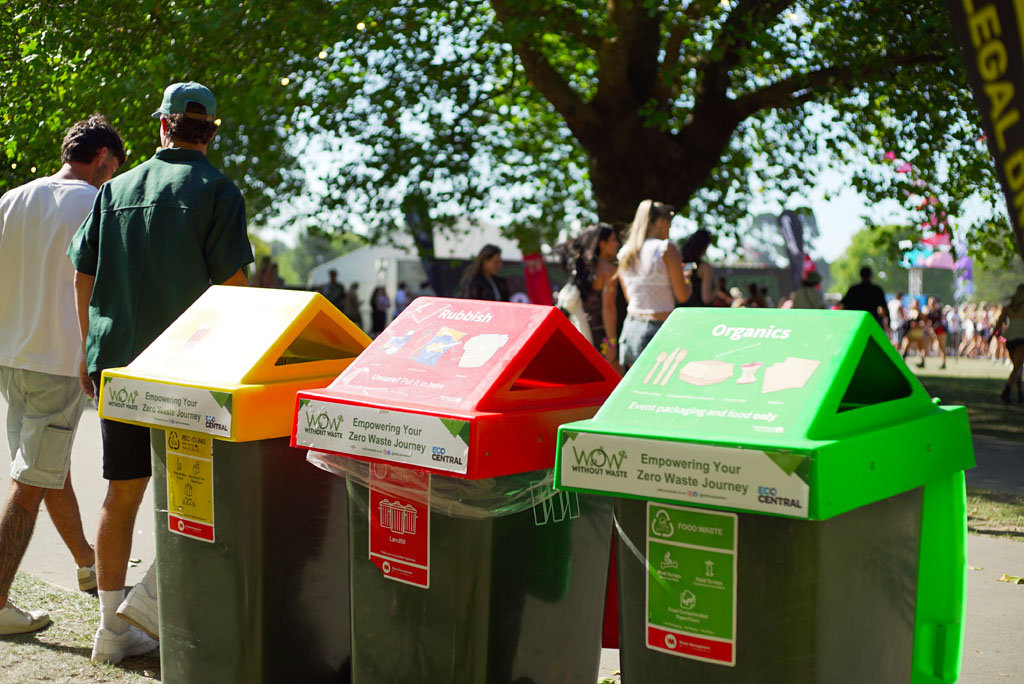
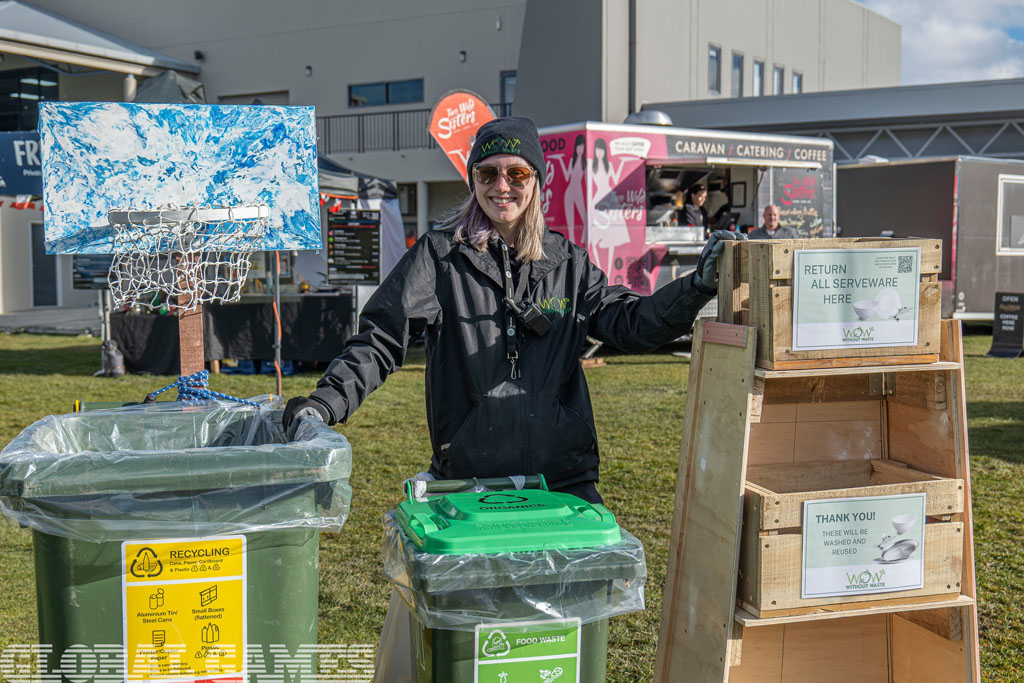
Still, for Kate, cable ties are the perfect hook because it brings the waste conversation back to where it belongs: in the hands of every person involved in the delivery, “This is about everyone getting their head in the game. Waste is not someone else’s job.”
From Michigan to Lincoln to Event Waste
Originally from Ohio, Kate was studying environmental management at Michigan State University when a course visit to the university’s recycling centre changed the direction of her career, “I just thought, wow, this is so cool,” she says. “I started volunteering, then working part time.” In early 2020, she came to Aotearoa on a study abroad programme at Lincoln University. Then Covid hit. While other international students went home, Kate found ways to stay. “This was where my passion was.”
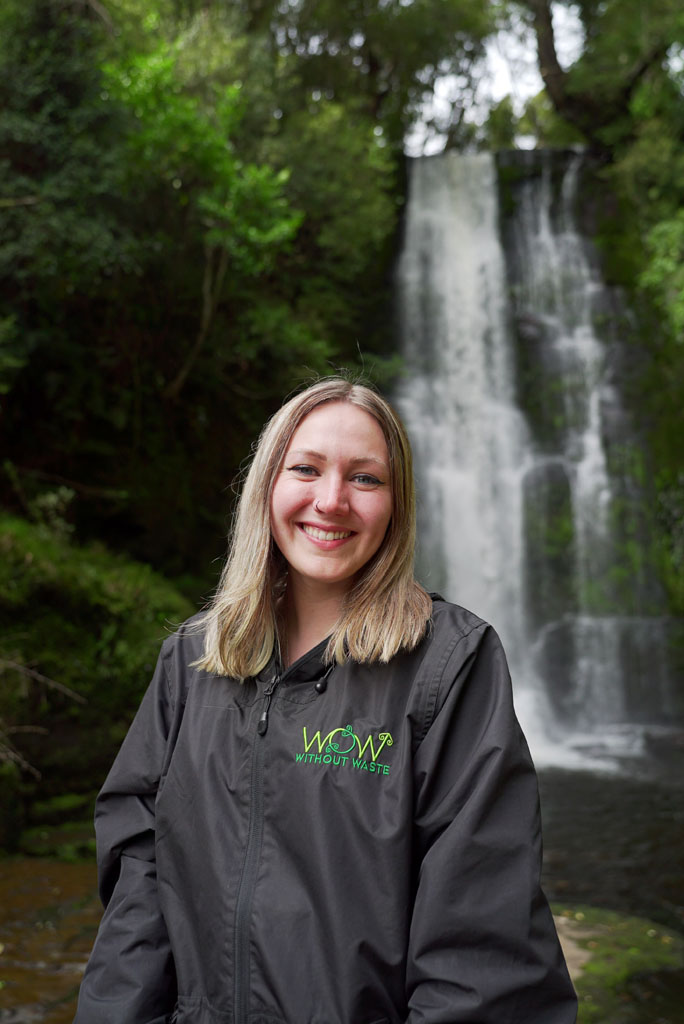
Her first opportunity came through Total Waste Solutions, a Christchurch family business focused on event waste. Working on major Hagley Park and City Council events gave Kate a fast education in operational reality: the scale of contamination, the complexity of vendors, the speed of audience behaviour, the impact of poor systems, “I started to realise how much the industry was struggling with waste.”
When Total Waste Solutions was sold and the new arrangement didn’t fit, Kate decided to start her own thing. She found a mentor in Sharon McIver, who had been running Our Daily Waste in Christchurch for over a decade, “She basically handed me the torch and the bin lids and said, ‘Keep doing the work.'”
A Minimisation Company, Not a Waste Company
From the outset, Kate was clear about what Without Waste would and would not be, “I knew I wasn’t going to be a transport company. I wasn’t going to own bins and skips because, in my mind that’s what I’m fighting. You don’t want the waste. You don’t need the skips.”
For Kate, the difference sits in the word “minimisation”. Without Waste is not there simply to drop bins, collect bags, and issue a generic report, “I’m not looking to deliver a rinse-and-repeat service. I don’t want events to say, ‘We’ll just get the waste sorting company in and we’ll be sweet.’ I want to help them set targets, identify problem materials, redesign systems, and improve year on year”
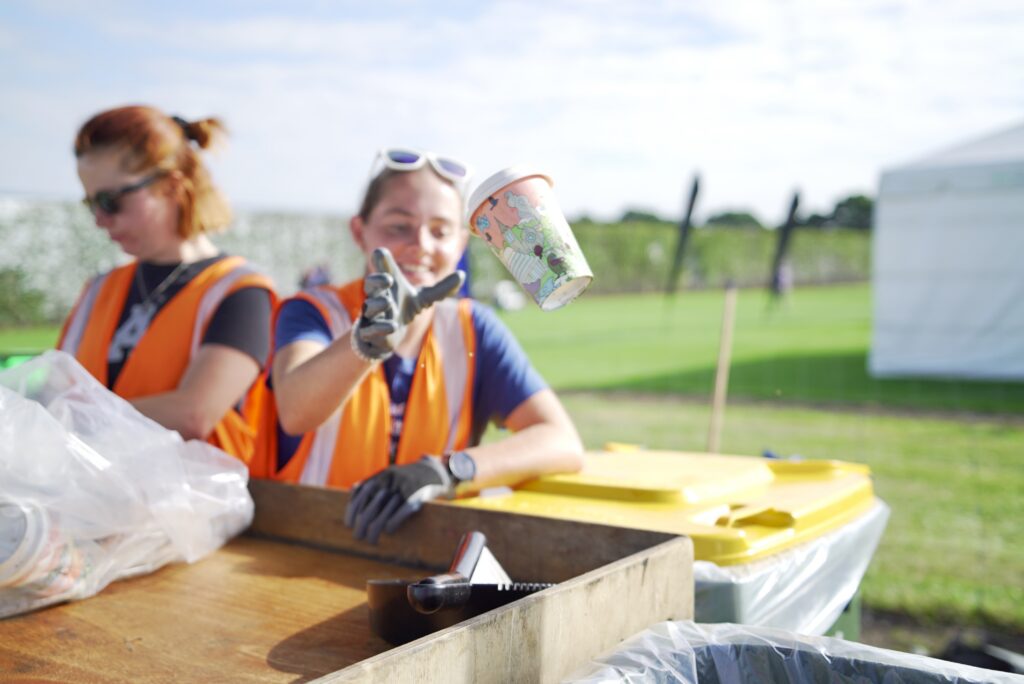
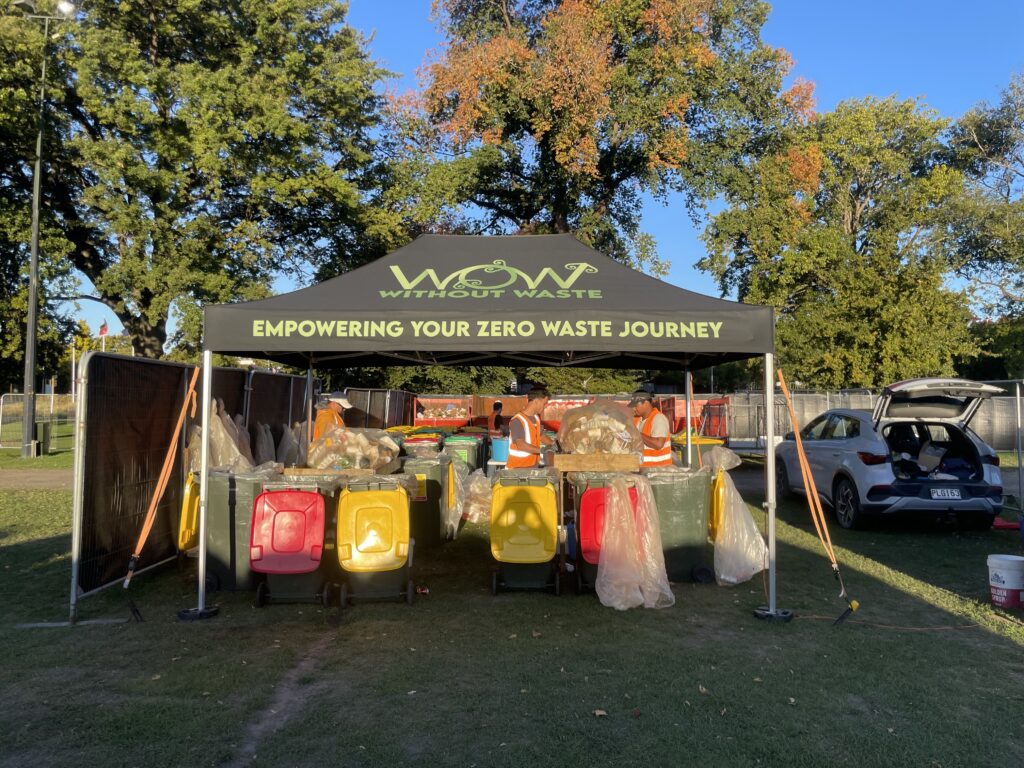
For Kate, a full-service event may include ordering bins and skips, placing and emptying bins, cleaning the site, managing back-of-house sorting, and producing detailed post-event reporting.
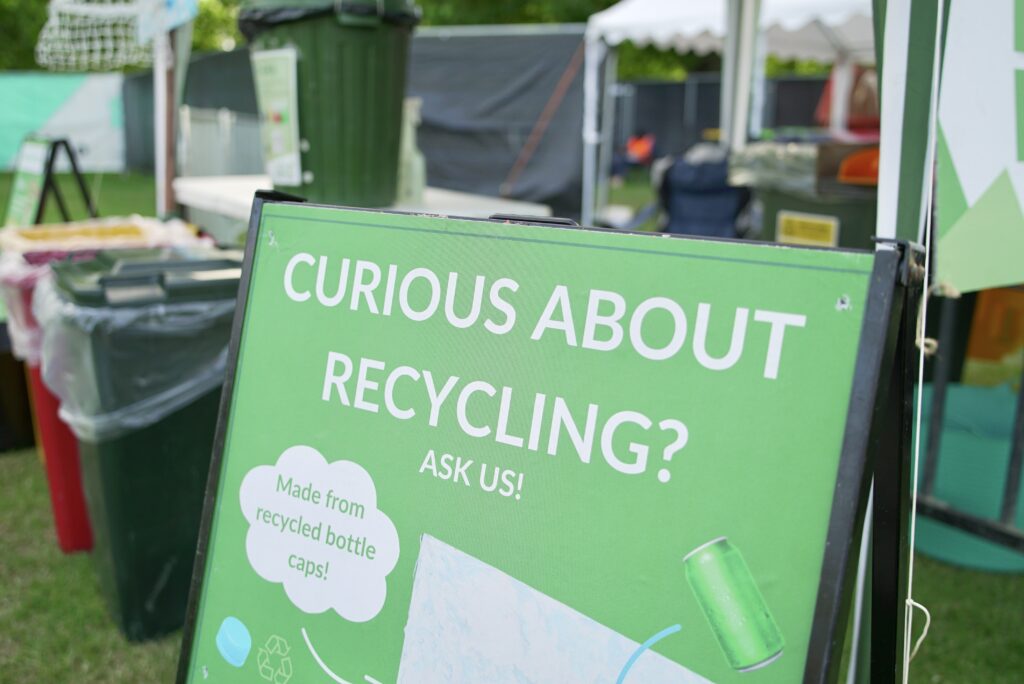
During the event, the team tracks front-of-house and back-of-house observations, photographs problem items, notes contamination points, and records opportunities for avoidance, reuse, recycling or composting, “The report becomes the catalyst for next year’s work. It’s about identifying the items taking up a large part of the waste stream, or causing contamination, and asking why they are there in the first place.”
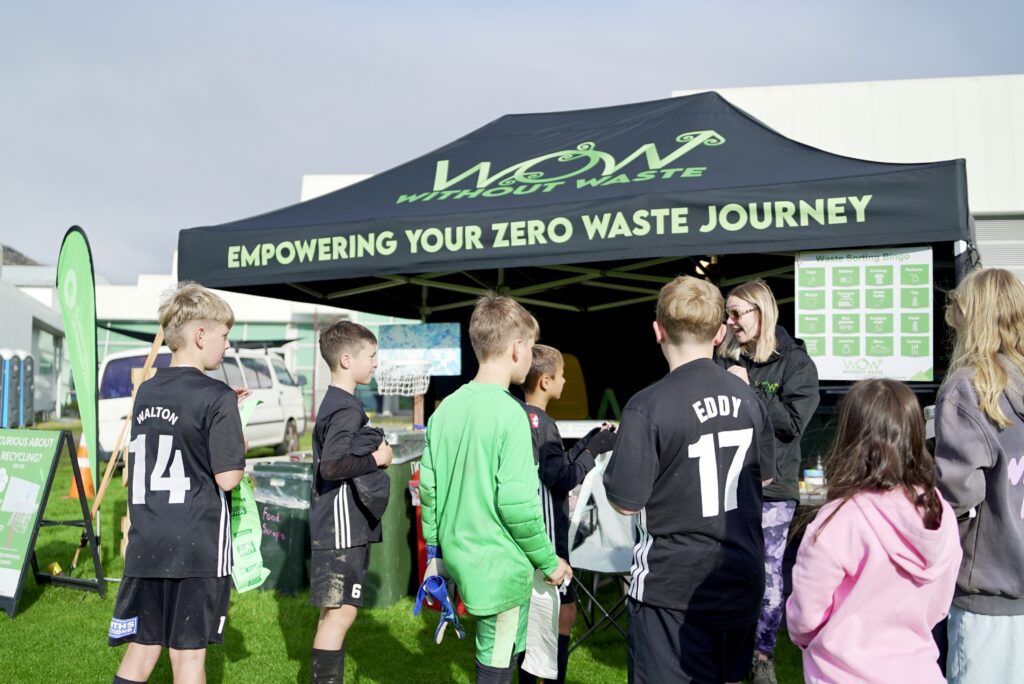
Snow Machine, Queenstown’s winter festival shows the value of a multi-year relationship. The first year was for analysis. Since then, the event team has been working through active projects: reuse opportunities for decorations, vendor and take-back agreements, and reusable cups with local washing solutions, “What gets an event to zero waste is buy-in from the event management team. It’s working together on local solutions that are effective, long lasting, and don’t feel like they will take up everyone’s time and money.”
The Summer Numbers
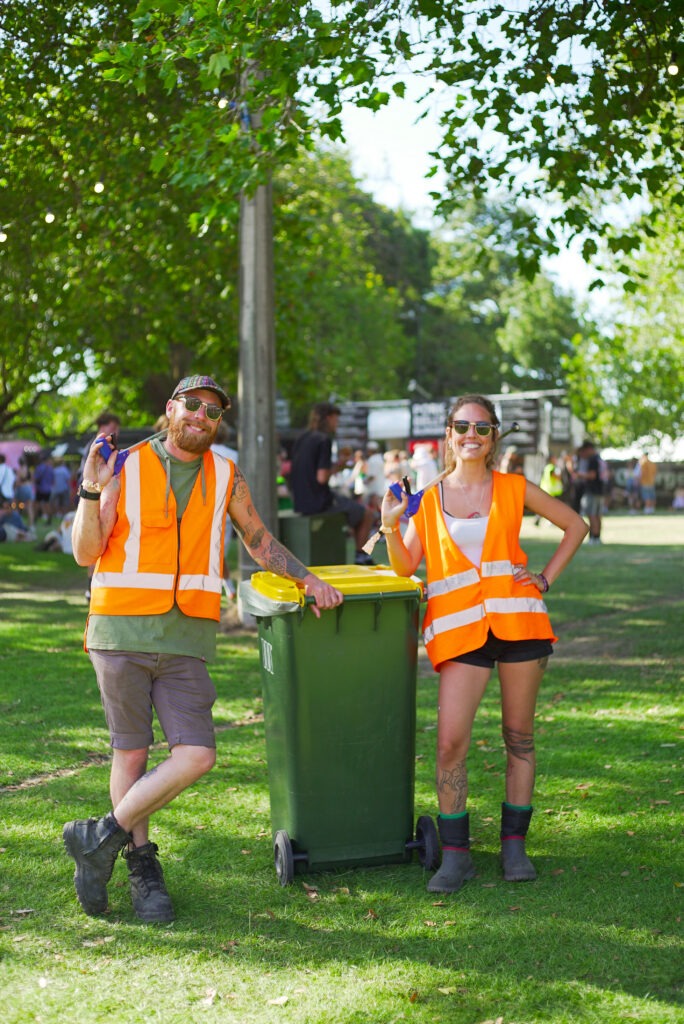
The most recent summer season suggests the model is gaining traction. Across Canterbury and Otago, the team worked with 26 events and achieved an average landfill diversion rate of 80.9%, diverting 10,242kg of material through composting, recycling, or avoidance. The Valley Food, Wine and Music Festival in Gibbston, Queenstown reached 92% diversion and Woolston Gala reached 90% in their first year. Other events including the Global Games – New Zealand Junior Rugby Festival (NZJRF) and Selwyn Culture Fest hit the 90% mark in their third year, demonstrating what Kate sees as the real kaupapa of the work, “Zero waste is a journey, it’s about improvement. It is fantastic to see this recognised with The Valley and NZJRF both named as finalists for this year’s NZEA Sustainability Award.”
Reading the Rubbish
For production and event teams and venues, Kate’s most immediate advice is also the simplest: look in your bins. Rubbish tells a story. After years of sorting, weighing, and auditing, Kate can lift a bin lid and quickly identify where money is being lost: over-ordering infrastructure, accepting questionable skip weights, paying to dispose of material that could have been diverted.” If you open any of the red land-fill bins and they’re clearly full of plastic cups or food packaging, you start to broadly identify where your opportunities lie. Most companies that don’t know what’s in their bins are ordering the biggest skips just to make sure they’re covered. If you separate it properly and understand what’s really there, you can save money straight away.”
Without Waste’s services extend beyond events to businesses with site walkthrough audits, bin digs, workshops, project planning, and diversion opportunity analysis. Kate sees a simple site visit as the easiest entry point, “People get apprehensive and say, ‘Waste minimisation is great, but you have to have an upfront cost.’
And I’m like, yes, but you’ll most likely get immediate savings.” One early business client saved thousands after Without Waste reviewed its waste infrastructure, “That was me barely doing anything. It was just looking at what they actually had, what was being collected, and whether it matched what they needed.”
Growth, Carefully
The next stage for Without Waste includes adding carbon reporting through a partnership with the Rubbish Portal. For Kate, the value is in connecting the detailed waste data the company already gathers with the transport and landfill emissions associated with where materials actually go.
Growth is also on the horizon, but strategically. Without Waste now has three branches, in Christchurch, Auckland, and Queenstown, while still operating with a small permanent core team and a larger pool of casual event and audit staff. Kate is cautious about expanding faster than the company’s culture can handle, “I’m never going to a random temp agency to get staff. Getting people to sort waste efficiently, effectively and with care is not easy. Our team are good at what they do because they actually care.”
North Island growth is beginning through audits rather than full event operations. Offshore ambitions are also on the horizon, but again, only when the model and people are ready, “My goal is growing sustainably and delivering 100% value in anything we do.”
In the quieter Winter season, Without Waste is continuing its education work, including a workshop series for event organisers. The next session in Auckland is scheduled for 18 November 2026 and will focus on organics, compostables, contamination, food waste, and food rescue at events. Further sessions are planned around the quieter edges of the summer season.
For Kate, it all comes back to that same practical, slightly stubborn belief: waste changes when people stop treating it as invisible. Whether it is a skip weight, a food vendor agreement, a compostable cup, a site plan, or a handful of zip ties on the ground after pack-out, the question remains the same: who is picking it up?
And, perhaps more importantly, why was it there in the first place?
Subscribe
Published monthly since 1991, our famous AV industry magazine is free for download or pay for print. Subscribers also receive CX News, our free weekly email with the latest industry news and jobs.
Recent posts