THE GAFFA TAPES
23 Mar 2026
When Opportunity Knocks

Subscribe to CX E-News
SNIPPETS FROM THE ARCHIVES OF A BYGONE ERA
When I left school on my final day, there was no departing ceremony and no well wishes or handshakes from the teachers. The school hadn’t bothered organising a school formal, nor did they keep student records or organise reunions. When the final bell rang, I just walked out and never returned. Without a serious career in mind, I joined the NSW Government Railways as a junior clerk, and after those mind-numbing 18 months, I wandered through a succession of meaningless jobs for the next 10 years, waiting for opportunity to knock.
Passing the Intermediate Certificate in 1964 allowed me to leave the drudgery of school life at age 15. It was the era of Professor Harry Messel, who was the visionary architect of the famous blue science book introduced in the same year. The ‘Messel Blue Book’ contained 879 pages of integrated physics, chemistry, biology, and geology, and it included a graphic image of a dissected rat, for which it is notoriously remembered. However, it was Chapter 14, Magnetism and Electricity, that piqued my interest, and despite my dogged resistance to most things academic, this intrigue would eventually lure me into a lifelong career in audio, broadcast, and music technology.

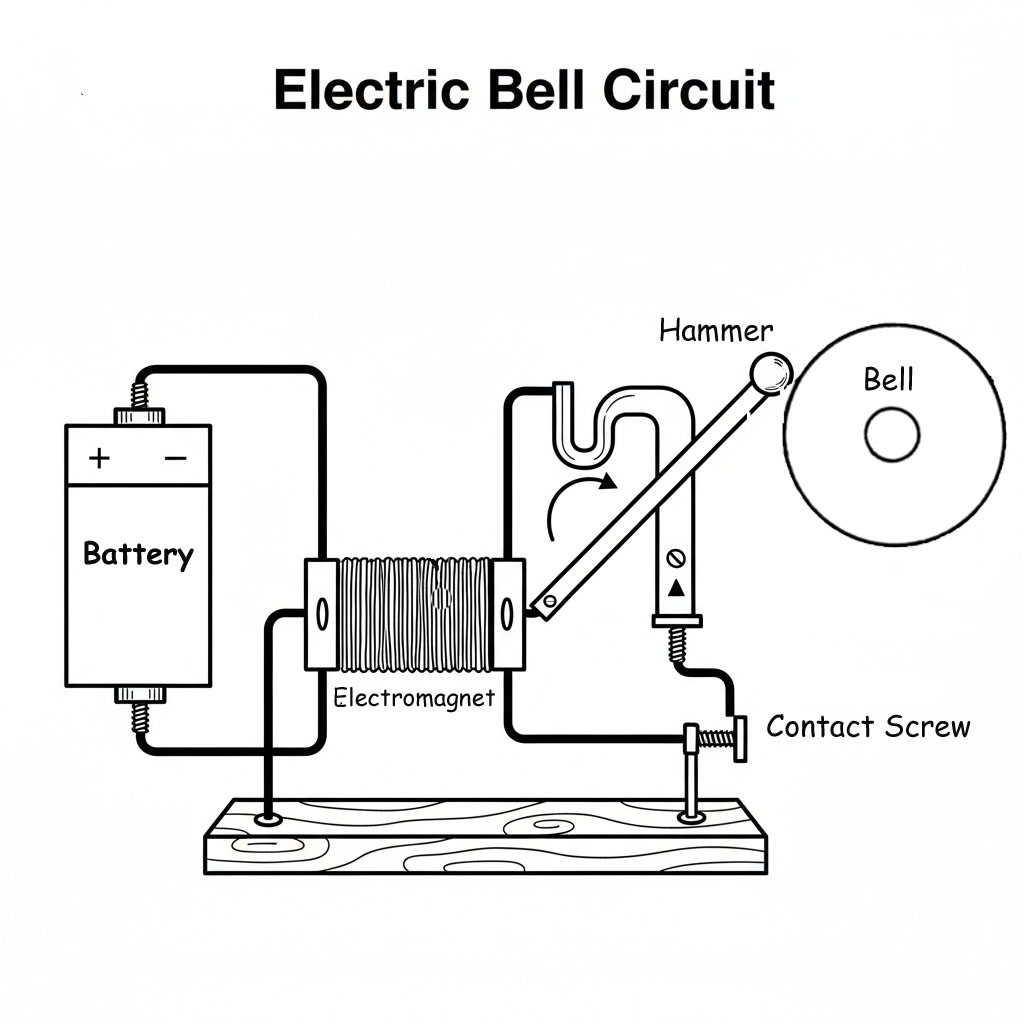
I remember our science teacher being as nonplussed about the contents of the Blue Book as the students were. He would tentatively turn the pages as if dreading what intricacies he would unfold next, taking us into the worlds of carbon chemistry, plant biology, and other complexities. It would be mid-year before he got to the chapter on magnetism and electricity, where a diagram of an electric bell circuit was displayed. This was a project that I was obsessed with, and I could hardly wait for the teacher to assign the task of building it to the class. However, when he finally got to that magical page, he just flicked over it and said something like, “Well, we won’t be bothering with any of that.” I was devastated! At the time, I didn’t realise that the electrical signal that activated the bell operated on the same principle as the analogue audio that would eventually define my career.
I’d left my last band, a pub rock band, in 1981, and I was amassing PA equipment to start a hire business. In the years since, it seems that every member of that band has formed a different view as to why I quit, and I’m also a bit mystified. Two of the band members were licensed electricians; they even named the band Main Earth. I always thought that my role as the lead singer was more of an act than a musical expression, and I felt that the well was running dry. I’d also become interested in the technical side of sound reinforcement, but alas, that job was firmly in the hands of my two electrician band mates. There were never any disputes about this, but I was becoming obsessive about putting together my own PA system, and to deviate from the lowly paid gigs that resulted from seven years of playing in bands, this was going to be my venture into a full-time profession, and I made a vow never to stray too far from the industry.
Over the next 10 years, the PA hire venture shape-shifted from sound engineering into sound and lighting installation, entertainment and venue management, band management, one-man-band performances, karaoke hire and hosting, and eventually the graveyard of a large contingent of music industry personnel, sales. I won’t dwell on my lifelong disdain for the mundane life of a sales representative; perhaps watch Seize the Day starring Robin Williams, or Arthur Miller’s Death of a Salesman.
Looking back, whether these ventures were planned or opportunistic depends on how one answers the proverbial knock at the door when opportunity knocks. I never had the slightest inkling to play guitar; it came about as an essential need after my songwriting partner departed interstate for an employment opportunity. This created the need for me to learn guitar, which eventually led me into music performance and then the PA hire business, where I eventually ended up doing sound for the Chet Reynolds Band. Chet had been a regular performer on The Mike Walsh Show, The Midday Show with Ray Martin, and The Don Lane Show. After Chet became ill and the group disbanded, I decided to investigate employment opportunities in the fledgling rock ‘n’ roll business in the Philippines.
One morning, while nursing a hangover and sipping coffee in a Manila bar, I was invited by the owner to sit in at a card game. One of the players was planning to feature rock ‘n’ roll bands in a new nightclub venture, and he happened to ask me what I did for a living. When I told him I was in sound and lighting, his face lit up. It seemed that opportunity had finally knocked at my door, and I spent the next four years in the Philippines in sound and lighting and entertainment management.
Back in Australia in the late 1980s, it was desperation that led me into sales. During my second sales position interview, the CEO of Audio Telex handed me their catalogue, which was bristling with Symetrix audio processors. Audio Telex had just acquired the Symetrix distributorship, and I was asked if I had any grasp of their audio processing equipment, which consisted of high-performance outboard equipment, including voice processors with quality preamps and EQ, compressor limiters, and SPL computers. I arrogantly blurted out that I not only understood the equipment but that I could set it up and operate it.
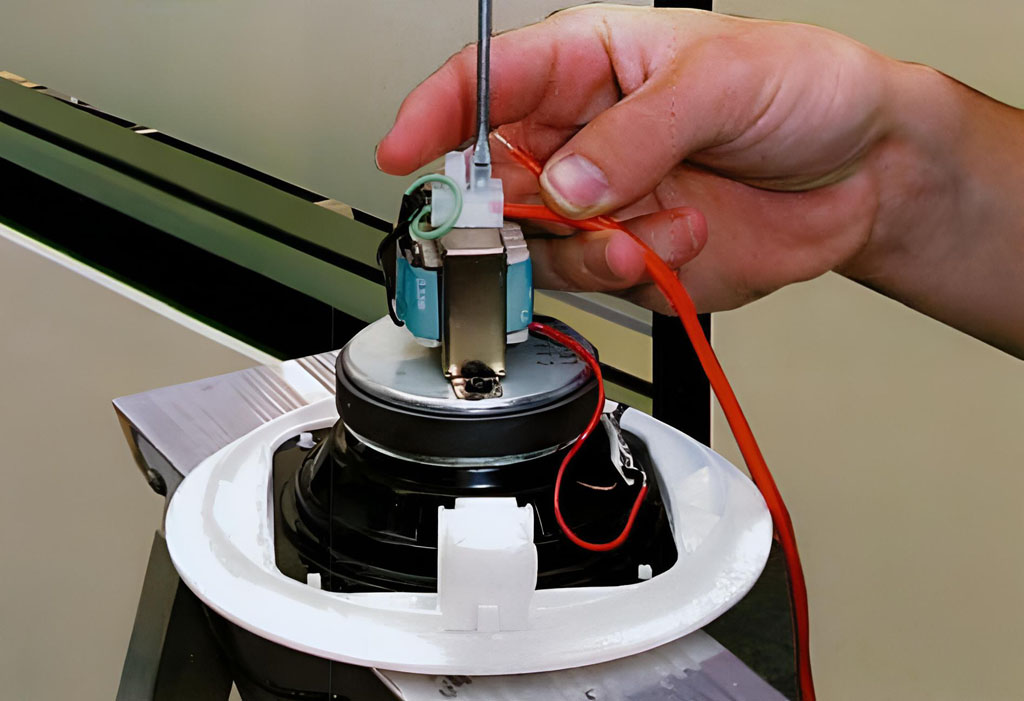
Audio Telex was primarily the distributor of 100V line systems, often referred to as high impedance, and they were now additionally entering the world of low impedance systems as used in the music industry. Scanning the catalogue, I noticed images of transformers attached to several of the speakers, and having zero knowledge of 100V line systems, I was very close to asking why transformers were attached to the speakers.
Fortunately, a little voice in my head said, “Shut up, you’ve got the job; don’t put your big foot in your mouth.”
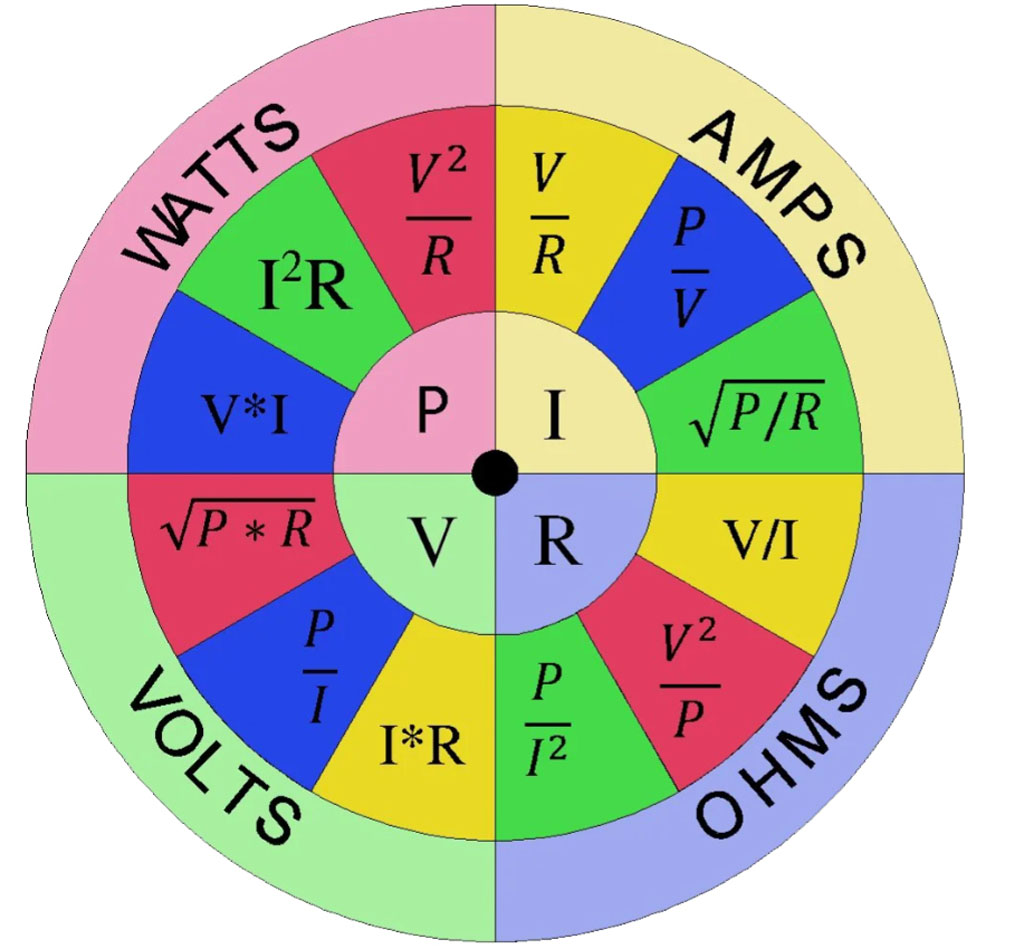
Since I was now the pseudo low-impedance techno-head of the sales staff, I thought I’d better figure out how the 100V line high-impedance world worked; however, the technology sounded a lot like Ohm’s Law, which I had a basic knowledge of. The problem was that Ohm’s Law basically dealt with voltage (V), current (I), and resistance (R). I couldn’t find anything under power (P), which was the output wattage of the amplifier. I did learn that if you exceeded the wattage of the power amplifier by incorrectly tapping the speaker’s transformers, you could blow up the whole shooting match, which was often the case with inexperienced installers that I had to deal with.
Thankfully, a Manchester brewer, James Joule, had discovered in 1840 that the heat produced by an electric current was proportional to the square of the current multiplied by the resistance.
Not bad for a beer brewer. But the complexity of that jargon, which kept most of the sales staff away from the technical aspects, gave me the opportunity to explore and understand the simplicity of Ohm’s Law and retain my position as a pseudo techno-head for over five years.
I often wondered how three guys, who worked in different areas of physics and who never worked together, became factored into Ohm’s Law. James Watt worked on steam engines and horsepower, Georg Ohm worked on voltage, current, and resistance, and James Joule worked on the relationship between heat, electricity, and mechanical work. However, it was Joule’s Law that consummated the ménage à trois, which is now represented on the Ohm’s Law pie chart.
The traditional ‘over the hill’ age in Australia used to be 40 years of age, and getting a ‘boob cake’ presented to me at my 40th birthday party signified a kind of last hurrah for my chances to again find romance. This milestone also rendered me virtually unemployable and stuck in sales, where I persevered, as my prime motivation was that I was saving and planning to build my dream house in Port Stephens, NSW. Fortunately, the digital age of computers, audiovisual, and video conferencing was evolving at an exponential speed, and no opportunity had ever knocked louder at my door. So, I was able to transition into audiovisual and audiovisual management, where I spent the next six years.
When the house in Port Stephens was built to ‘lock-up’ stage in 2002, it provided an almost perfect sea change. But while Newcastle was the nearest metropolitan hub, its urban core was navigating a post-industrial lull at the time. With the CBD essentially dormant, my prospects of landing a corporate audiovisual role were about as likely as a slow sheep in a shearing shed escaping the clippers.
I’ve made many jokes in the past as to how in 2003 I became the editor of Broadcast Engineering News, including that I was looking under the Js for janitor, and a journalist position caught my eye. The truth is that it was a tongue-in-cheek application, where I subsequently had to bluff my way through the first two interviews before I was finally asked to submit evidence of my writing ability. I submitted a comedy screenplay, and the newly appointed publisher, who didn’t have a broadcast background, liked it, and he hired me. Opportunity sometimes knocks in strange ways.
I often reflect on the flak I took from all quarters for not having a regular job in those interim years. I was even admonished by a mate’s father who’d spent his entire life as a postal worker sorting mail.
My first fiancée once referred to my obsession with learning guitar and wanting to join a band as ‘childish’. “My brother wanted to be a train driver,” she once scoffed. And she would often remind me that opportunity would never knock at my door. My retort, which virtually ended the relationship, was, “Did you know that my electric guitar cost more than your engagement ring?” Try that one, guys, and see how well it goes down.
Subscribe
Published monthly since 1991, our famous AV industry magazine is free for download or pay for print. Subscribers also receive CX News, our free weekly email with the latest industry news and jobs.
Recent posts


Latest jobs