BACKSTAGE
15 Dec 2025
ADDING VALUE TO PRODUCTION

Subscribe to CX E-News
Plucky, lucky or shortsighted?
In Australia we are very good at primary production. Grow it, mine it, flog it off. Where we seem to fall over is adding value to that raw product. This is far from a new phenomenon. Donald Horne’s assertation that we are “a lucky country run by second rate people who share its luck” has never held so much weight as currently.
A recent Australian government round table was framed as a forum focussing on enhancing productivity. Gains made here might look good on the national bottom line, but they ignore the broader reality that we can augment in so many areas and so much more intelligently than we do now.
So where do we add value here in the wide brown land? First, we could look at examples of local businesses that have made the commitment to develop and/or manufacture their products on shore. This approach may carry an intrinsic cost in higher rents and wages but that is offset by having immediate physical oversight of every step of the production process. Doing so results in a superior output and allows upgrades to be implemented effectively.
In the events and AV world, Rode, LSC, and ENTTEC are all good examples of local companies backing an idea and committing to not only bring it to market but consolidate it there. They all have excellent international presence and continue to produce quality products by investing in future development.
But they are the outliers. In the Temu-ification of the global product cycle, offshoring to China is an easy way to quick profit with low overheads. Apart from generating waste by its disposable nature, it ties you into managing a business relationship that has consequences.
This model makes QC much harder to manage, adds a massive transport impact, and leaves your enterprise ultimately captive to the economic engine room that is the People’s Republic.
Our other great arena of success is tertiary production, specifically services. Sport, education, tourism, hospitality and entertainment are fields where we are world class. As a nation, we have invested considerable resource into these sectors, although it’s arguable that those five are listed in descending order of government support.
Where we fall over is the middle part of the equation: secondary production. Adding value to raw materials by refining them is not a strong suit for antipodeans. We are OK at turning these refined materials into products but rarely do. Last century, while locked behind a tariff wall, the country built a reasonably strong and diverse manufacturing base. Much of its output was locally focussed but a few looked further afield. Unfortunately, even more were offshoots of internationally based firms. Jobs were made here but profits went offshore. The colonial legacy continued.
Cars are the most obvious example. The demise of the locally produced automotive industry has affected the whole country far greater than losing a FoMoCo vs GM brand loyalty culture. The greatest loss was in all of the ancillary local businesses that supported these large multinational manufacturers.
Some of them pivoted to new industries, some went under. But the biggest loss was the manufacturing skillset. We saw a similar draining of the events talent pool during pandemic shutdowns. As have long term show crew redeployed themselves somewhere more stable, so too have the highly skilled toolmakers, pattern makers, engineers, et al who made up the bulk of the manufacturing personnel. It takes decades to (re)build this talent base.
That this business handout was all underwritten by government support is overlooked by free market culture warriors. Ford, GM, Chrysler and Toyota all greatly benefitted from corporate socialism. When this financial support was yoinked, the car mobs left in a hurry. Their model here was not viable without being propped up with our taxes.
Probably our major disadvantage to manufacturing and development is the lack of easy access to capital. Plenty of ideas but no quick or simple way to market. We don’t have large VC pools on tap to fund startups like more adventurous countries do. Further, as a nation, we lack the ability to fail. We’d rather gamble on a horse race and laugh off our losses than back our inventors. Then we flog off our ideas to overseas interests for cents on the dollar. Again…sigh.
Yes, economies of scale are against us. But they are not insurmountable. Careful planning in product and production development has paid off for those companies I listed above.
They have consolidated on well received products and kept developing the next generation. That also supports the next generation of manufacturing knowledge and workers.
The other significant impediment to our manufacturing success is the length of time required to research and develop a new product from scratch. This requires forward planning over multiple business cycles and financial backing that allows investment past the immediacy of the next AGM. While IPOs and public listings might generate a large sum of cash, they expect immediate returns, so you’d need a very solid commercial profile before going down this route. Further, strategic control of your business is ceded or, at the very least, watered down to produce dividends, rather than build the business. As ever, deep pockets help.
What are the answers here? After selling our children’s future for a quick buck via the property hoarding encouraged by distorted tax benefits, we now leave them with little else in support. While deciding that supporting the investor class is more important than actually housing people, we have done also little to invest in the economic base that could sustain our world to come.
How about offloading that second (third, fourth or more) property and investing in the future resilience of our country? Why not support a local manufacturer? Lend some money to struggling new companies. Be a mentor or business angel to a new entrepreneur. Keep our best talent from fleeing overseas.
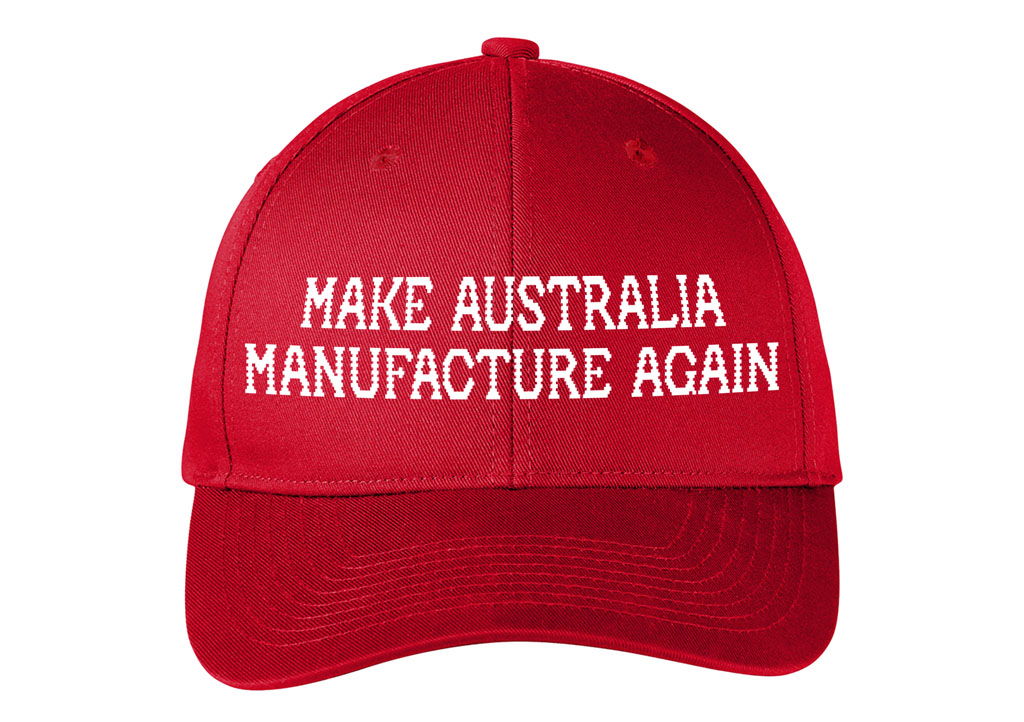
Make Australia Manufacture Again – wouldn’t that look great on a hat? Welcome to the MAMA era.
Subscribe
Published monthly since 1991, our famous AV industry magazine is free for download or pay for print. Subscribers also receive CX News, our free weekly email with the latest industry news and jobs.



Latest jobs