LISTEN HERE
12 May 2026
HAIL TO THE THIEF (and his grifter mates)
Subscribe to CX E-News
Can the recording industry possibly sustain another decade dominated by corporate streaming services if the price per stream remains smaller than a Higgs boson particle? Can it even last another year?
The world is a crazy place at the moment, there’s no denying it.
Even if you somehow manage to block out the endless stories of the world’s most heinous amoral grifter – who harvests billions from the world and kills thousands to distract from his own appalling behaviour – there’s still the breathtakingly self-absorbed conduct of elites in our own music industry to contend with.
By my reckoning, the entertainment industry is almost as amoral and twisted these days as the wider world around it, tolerating some of the most outrageous inequality on the planet; it’s key protagonists every bit as hypocritical and unscrupulous as world leaders.
It’s as if everyone in the upper echelons of the music industry has become a ravenous grifter; its main players shamelessly taking as much for themselves as possible, in some cases with almost no effort (let alone scruple), leaving very little to be shared amongst the vast majority of the industry.
But who confronts this behaviour? Anyone?
By my reckoning it’s no one. On the contrary, everyone seem more concerned about boarding this tawdry grift-train than calling it out.
I can hardly look.
Take the cynical ‘headline performance’ recently by Justin Bieber at Coachella as an example of this shameless grift. The ‘B-Brain’ himself went on stage at Coachella with his laptop and proceeded to do a bit of YouTubing (of himself), and for that he was paid 10 million dollars!
Seriously, where are we in the music industry today, when ‘artists’ like this are getting paid more than you or I are likely to earn in several lifetimes for doing sweet f**k-all – in Justin B-Brain’s case, for poncing around on stage for an hour or two in his gumboots, singing along to his own songs on YouTube! I mean, really… what the actual f**k?
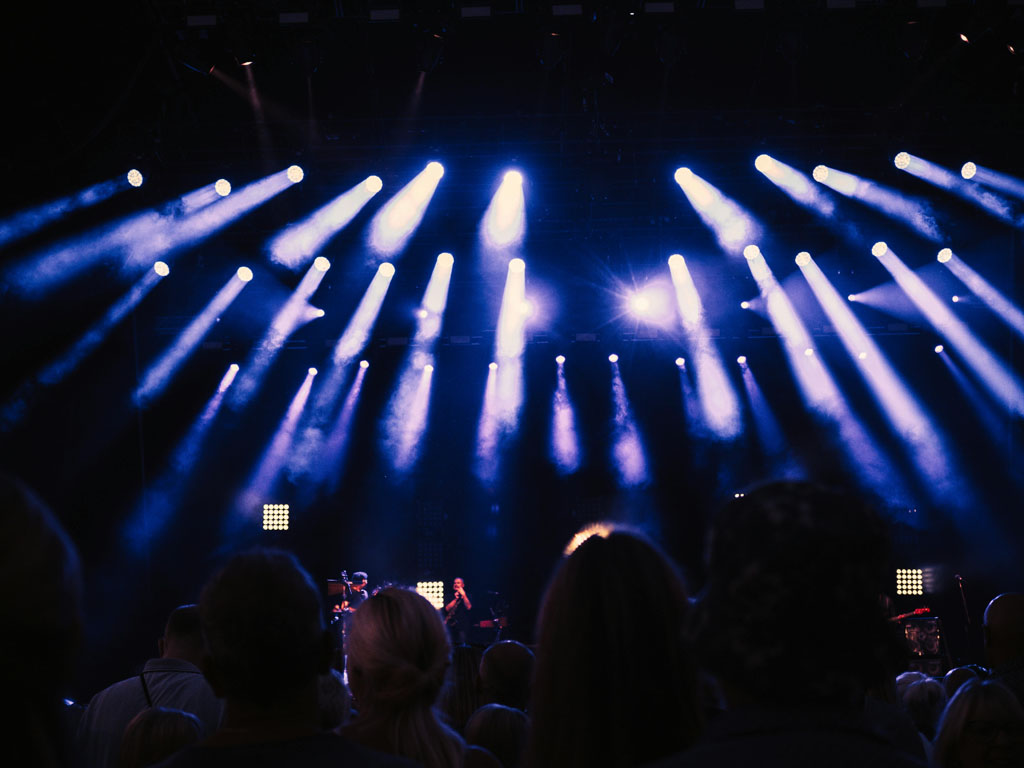
This is a particularly pointed example of where things are at in our industry in 2026, and yet perplexingly, nowadays, crowds tolerate moments like this in what feels like a breathtaking expression of collective irony – the so-called ‘cultural moment’ of these ‘shared experiences’ apparently outweighing any strict expectations of what constitutes a ‘live’ performance. It’s ironic mainly because, while these days – arguably more so than ever before – going to a concert is about being able to say you ‘witnessed it’, in reality almost no one actually did! They all watched it on their six-inch iPhone screens.
It’s somehow fitting perhaps that no one in the audience was ‘present’ enough at the Bieber-Grade Coachella event to actually witness it directly – and by ‘directly’ I mean, with their eyes receiving light that had bounced directly off their beloved pop star. While the B-Brain was looking at his screen, audience members were all on their screens, experiencing the show collectively – and yet privately – via their tiny smartphones.
Like flesh and blood avatars, thousands upon thousands of punters filmed the Coachella event to share the experience ‘collectively’ on social media later. At the gig itself, no one was actually looking directly at anyone, which begs the philosophical question: if Justin Bieber falls down at Coachella and there’s no one there to film it, did it really happen?
What’s worse is the utter mediocrity of it all. And to top it all off – and presumably remind audience members that they were indeed at this ‘happening’ – they collectively bought over five million dollars of Bieber-merch on the first weekend alone.
Adding value, or undermining it?
The thing I find most diabolical about all this is the stark contrast between the public’s desire to pay to see a live show and/or buy copious amounts of merchandise, versus their disinclination to pay anything at all for the music their favourite artists produce.
Fans eagerly spend hundreds – sometimes thousands – of dollars to see their favourite artist perform live, while paying little or nothing for the recorded music that made them a fan in the first place. At first glance, this seems completely arse-backwards and inconceivable. Why on earth would someone place no value on music they can listen to repeatedly, while placing an unprecedentedly high value on the same music played as a one-off?
The answer is simple: because companies like Apple, and more recently Spotify et al, have made music essentially valueless. As a result, music is no longer a commodity that artists can easily sell, and you could argue that this fundamental change is tantamount to a form of corporate theft.
When companies made listening to music all about access rather than ownership – with a diabolical lie embedded: that they were going to ‘put a record store into every household’ – they essentially killed off huge sections of the music industry, with the vast majority of the gross earnings going everywhere but to the musicians themselves. Corporations conveniently neglected to mention that in doing so, artists would get far less for their music than ever before. These days, musicians are lucky to earn one dollar from 25,000-odd Spotify streams – it doesn’t take a maths genius to realise how utterly unsustainable the whole streaming model has become.
How recorded music lost its value — and why it matters
The transformation of music into an abundant, near-free commodity has fundamentally altered the perceived value of music. It’s no longer something you ‘own’; it’s something you access. A song has becomes less like a product and more like running water: always there, always available, and rarely something anyone thinks about paying for – certainly not one drop at a time.
But of course, this shift fundamentally denies the vast majority of recording artists the ability to earn anything resembling a livelihood from their work, particularly if they can’t simultaneously play live to large audiences, like the ones Tay Tay or Ed enjoy. This is where the money is now spent.
It’s no surprise then, that as revenue from recorded music has declined due to streaming, artists and their teams have shifted their focus toward live performance as a primary income source. This has led to significant investment in production value, marketing, and overall concert experience. In other words, concerts have become more expensive because they have become more elaborate – and because they need to be. Fans, in turn, have come to expect a certain level of spectacle, and they are willing to pay for it. The higher ticket prices are not just tolerated; they are often justified by the scale and quality of the experience being delivered.
At the top end of town, concerts have evolved into something far more than a musical performance. They are spectacles – multimedia experiences combining sound, lighting, staging, choreography, and narrative into a single, cohesive event. In many cases, the live show is now the ‘premium product,’ while the recorded music functions almost as an entry point or promotional tool – more of a ‘musical ad’ than ‘art’.
But not everyone in the industry has a ‘team’ or the wherewithal to improve their production values, and indeed most grass-roots venues can’t accommodate these anyway. So, while the concerts at the top-end grow more and more outlandish, independent smaller shows are simultaneously becoming less well attended, essentially making poor musicians poorer.
Meanwhile the wealthy ones – who can afford the more extravagant productions – get richer.
There’s also a powerful psychological component at play here. Attending a concert is not just about hearing songs; it’s about feeling something in real time, surrounded by thousands of others who feel the same way. That sense of collective emotion – of singing along with a crowd, of witnessing an artist you admire in the flesh – cannot be replicated through headphones.
But this has always been the case, hasn’t it? If so, what’s changed?
The all-pervasive role of social media.
In a modern age utterly dominated by social media, experiences have become a form of social currency. Being able to say “I was there” matters more now than ever, it seems (and everyone has to prove the fact by filming it). Concerts provide highly shareable moments – photos, videos, and stories – and this adds another layer of value that goes beyond the music. Spending money on a concert isn’t just about consumption; it’s about participation and visibility.
Another key factor is the changing relationship between fans and artists. In the past, the primary connection between an artist and their audience was mediated through recorded music. Today, that relationship is more direct and multifaceted. Social media allows artists to communicate with fans on a daily basis, creating a sense of familiarity and intimacy. When fans attend a concert, they are not just supporting a body of work; they are supporting a person they feel connected to.
The live show becomes a moment of proximity – a chance to bridge the gap between digital interaction and physical presence. That perceived closeness can justify a much higher price point than a piece of recorded media ever could.
Meanwhile, paying for music is a concept that has been utterly eroded. Younger listeners in particular have grown up in a world where paying for individual pieces of music is a rare event indeed. While they are more likely to buy an album on vinyl than any form of digital recording, this too remains a statistical rarity. Meanwhile, their willingness to spend on live experiences is often higher than previous generations, particularly when those experiences align with their identity and values. For them, buying a concert ticket is not an alternative to buying music; it’s a completely different category of spending.
Finally, there’s the simple matter of perceived uniqueness. A recorded track is fixed and repeatable. You can listen to it as many times as you like, in exactly the same form. A live performance, on the other hand, is ephemeral.
Even if the setlist is similar night to night, each show has its own nuances – moments that happen once and never again. That uniqueness carries intrinsic value that people are willing to pay a premium for.
In the end, the disparity between spending on concerts and spending on music is a reflection of how value has shifted. Music, as a recorded medium, has become ubiquitous and accessible to the point of near invisibility in economic terms. Live performance, by contrast, has – at the top-end of town at least – become concentrated, elevated, and emotionally charged. Fans are not devaluing music; they are reallocating their spending toward the aspects of music culture that feel most meaningful, memorable, and irreplaceable.
What might seem like a paradox is, in reality, a logical response to a new landscape – one in which access is cheap, but experiences are not.
But this ignores one fundamental question: if the recording industry collapses because there’s no money to pay artists for their work, what then becomes of the music industry in general? Fans can’t go to big stadium concerts to see their favourite artist if that person doesn’t exist.
Andy Stewart owns and operates The Mill in Victoria, a world-class production, mixing and mastering facility. He’s happy to respond to any pleas for pro audio help… contact him at: andy@themill.net.au
Subscribe
Published monthly since 1991, our famous AV industry magazine is free for download or pay for print. Subscribers also receive CX News, our free weekly email with the latest industry news and jobs.
Recent posts


Latest jobs