LISTEN HERE
3 Aug 2026
Live & Let Live
Subscribe to CX E-News
Has the relationship between recorded music and live performance become fundamentally different in the age of AI? Perhaps recorded music and live performance are becoming two very different art forms.
It’s funny to observe that whenever I sit down to write about the music industry these days, one of the first things that springs to mind is the inevitable topic of AI. Speculation is clearly rife around this issue: will it destroy our industry entirely, upend how we record music permanently, or will it simply settle in to become a powerful tool of trade?
Everyone has a strong opinion.
But when I mix live, all that speculation evaporates.
Live music, it seems, has become the firewall that AI cannot penetrate, at least for now.
While this remains the case, it’s perhaps worth reflecting on what makes live music so resilient, and what pushback, if any, this firewall might generate against a recording world that seems to have accepted AI as an inevitability.
Live… Because We Are
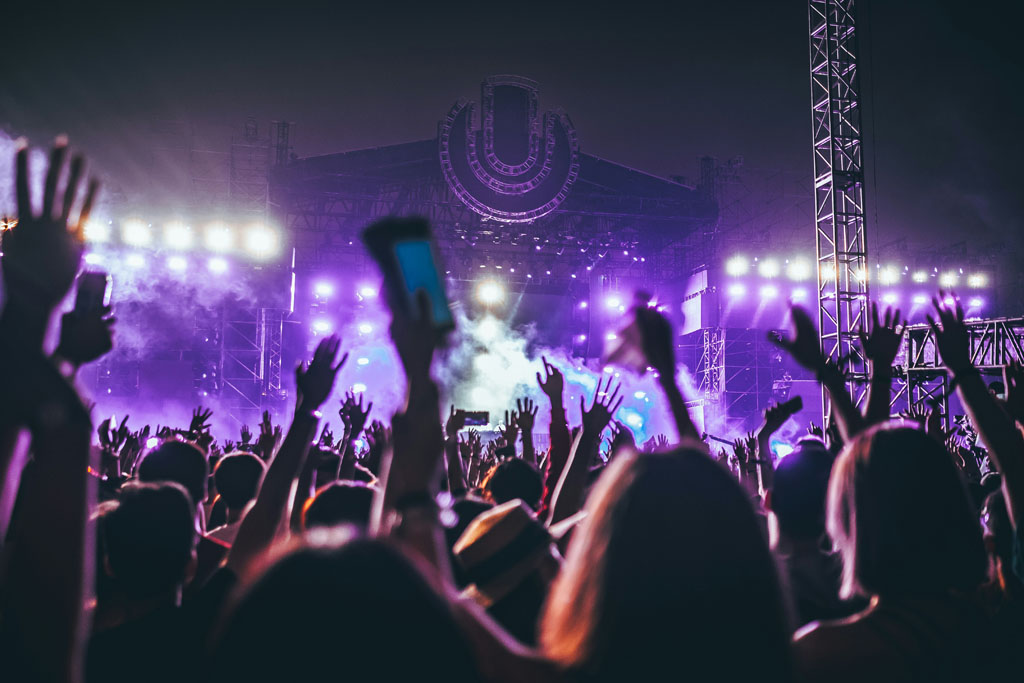
When a musician hits the stage with an instrument slung over their shoulder, things seem to temporarily revert to the way they once were. One human attempts to connect directly with a large group of audience members. It always feels risky, and there are no barriers between the artist and audience, save for a couple of wedges and a mic stand.
But it’s not really like that in the studio anymore.
For the last couple of decades, we’ve grown so accustomed to computers playing an ever-increasingly pivotal role in our music productions that the majority of our productions, regardless of whether we’re recording funk, folk or phonk, have become more akin to a manufacturing process than a ‘recording’. And with so much post-performance control and manipulation at our fingertips, even the concept of red-light fever seems to have been alleviated.
If our DAWs of choice existed in physical form like car assembly lines, our so-called ‘recording studios’ would look like this: rows and rows of robots constructing and performing all the music, with the odd human wandering through the plant giving the hard-working androids the thumbs-up for all their creative work. If this human happens to be the lead singer in this enterprise, they might add a vocal to the process while they’re on the factory floor, leaving the robots to synthesise some additional harmonies, before tuning, mixing, mastering and then finally distributing the master audio file.
Cynical, Or True?
Songs have become files, and streaming services the library catalogues where tens of millions of tracks can be searched, analysed and categorised. AI has arrived at the perfect time, it seems; music has already become synthesised, quantised and abstracted into data, allowing AI to have an immediate and expanding influence over the way music is now made. It has advanced swiftly, analysing music every which way, tirelessly, relentlessly, and quickly.
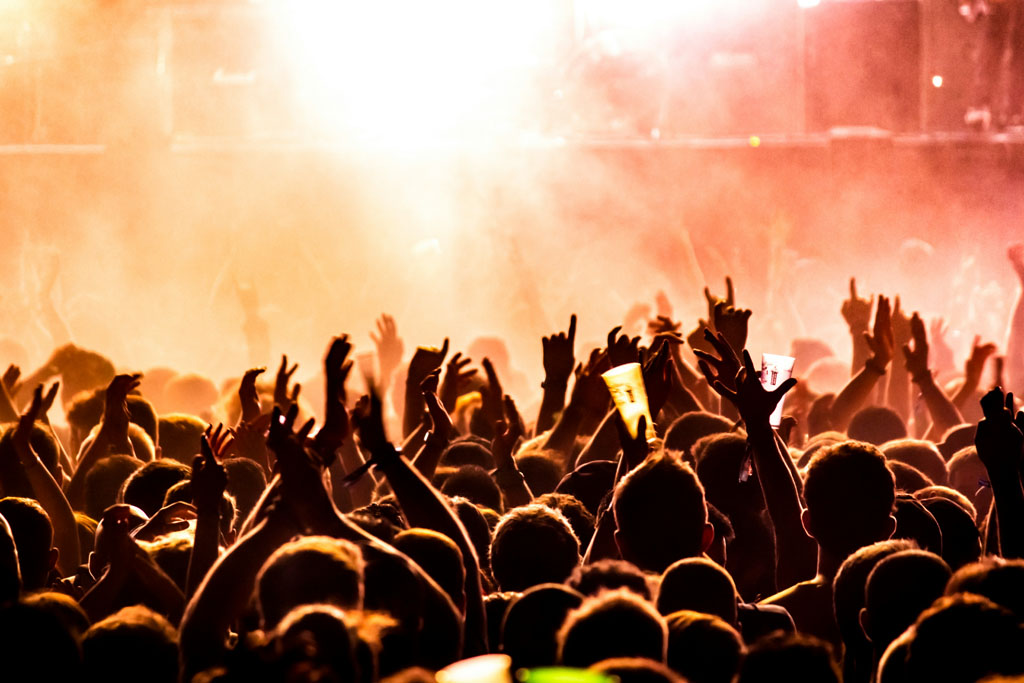
But standing behind a mixing console at a live show is the antithesis of this. It’s a reminder that music is neither information nor a manufacturing process. It’s an event.
Even if a song was recorded decades ago and the musicians have played it hundreds of times before, the version unfolding right in front of me on any particular night has never existed before, nor will it ever exist again.
Everything about live performance is unique in that respect, by definition.
The audience, the room, the mood of the band, the confidence of the singer, the abilities of the front-of-house engineer, the energy in the first few rows, the weather outside – all of it is unique to that moment.
None of those things exist inside a recording. And none of them can be replicated by AI.
Artificial intelligence is extraordinarily good at analysing the past. Everything it produces is built on what has already happened. It recognises patterns, predicts probabilities and generates new material from existing knowledge.
Live performance functions differently in almost every respect.
Even though songs might be familiar, and the artists themselves well known, each live performance creates something new. Every show begins with uncertainty. Not because the musicians aren’t prepared, but because live performance is built upon unpredictability. The possibility that something unexpected might happen isn’t a flaw in the experience. It IS the experience!
And while, as an engineer at a live show, I’m always working to eliminate uncertainty wherever possible, building redundancy into systems, carrying spare microphones, spare cables and, in some cases, even spare consoles, no amount of preparation removes the human element… thankfully!
Because that’s the very thing audiences have come to see. Nobody buys a ticket hoping to hear a flawless reproduction of an album. If they did, a recording would suffice. Instead, they buy tickets because they’re curious about the artist, and in some cases simply happy to occupy the same breathable air as their idols.
A concert is one of the few cultural experiences where thousands of people willingly gather to witness something that hasn’t happened yet.
The outcome isn’t entirely known, and there’s an unspoken contract between artist and audience: the audience agrees to be present in the moment, and the artist agrees to create something in that moment.
Neither side knows exactly where it will lead, and that’s a live performance’s compelling beauty and fascination. It’s alive, literally!
Watch an experienced band and you’ll immediately notice how its members are constantly reacting to one another in a million subtle ways. A drummer pushes the groove slightly. The bassist follows. The guitarist senses the shift and leans into it. The vocalist hears the audience singing louder than expected and holds the microphone out for another chorus. The audience, in turn, responds to every one of those decisions.
It’s a feedback loop in the truest sense of the phrase. Not acoustic feedback, mind you. No, no, no…
It’s human feedback.
Everyone in the room is subtly influencing everyone else. Even the front-of-house engineer becomes part of that conversation.
A slight lift in the vocal changes how confidently the singer performs. Extending the reverb through an emotional passage can encourage a musician to linger a little longer.
Bringing key musical elements forward during intimate moments leaves the audience breathless, never quite knowing why.
Who (Or What) Is The Artist?
But as much as I’d like to think a live show is all about me at front-of-house, my success up the back of the room is not why audiences remember concerts.
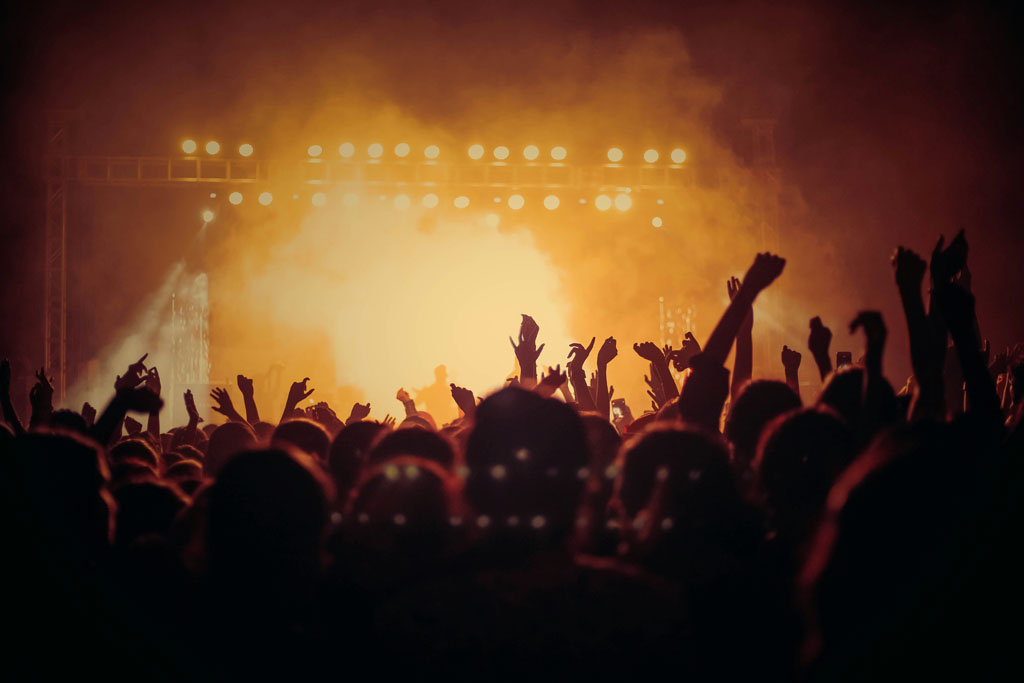
They remember the goosebumps. They remember laughing. They remember unexpectedly becoming emotional during a song they’ve heard a hundred times before. They remember looking around and realising several thousand strangers were singing exactly the same lyric.
Those are social experiences as much as musical ones.
Perhaps that’s what AI can’t replicate: being present.
Bearing witness to a remarkable gig matters. Sharing time with other people matters. That’s becoming increasingly obvious as more of our lives migrate into digital spaces.
We’re now able to work remotely, shop remotely, learn remotely and increasingly create remotely. Many of those developments are genuinely positive. But they also make genuinely shared physical experiences increasingly valuable.
Live music sits at the centre of that.
It’s one of the few remaining activities that asks people to leave their homes, put their phones away, at least occasionally, and commit to being in one place at one time with other people.
Nothing about that can be downloaded. You either experience it or you don’t.
Perhaps that’s why the live sector has remained so resilient. Recorded music has changed beyond recognition over the past 20 years. Distribution, discovery, revenue models and production techniques have all been transformed. Yet people continue to crave concerts. If anything, they seem to value them more now.
Maybe that’s because concerts provide something increasingly scarce: reality! We’re entering an era where almost every digital artefact can be questioned. Images can be generated. Voices cloned. Videos fabricated. Entire performances synthesised. The more convincing these become, the more valuable genuine experiences become. Not because they’re technically superior, but because they’re verifiably real.
Standing in front of a stage requires no authentication. You know the singer is singing because the sound reaches your ears directly. You know the drummer missed that fill because everyone heard it! You know the crowd erupted because you felt it happen around you.
Ironically, AI may end up strengthening live performance rather than diminishing it. As synthetic media becomes commonplace, authenticity becomes increasingly precious, and imperfection becomes evidence.
A cracked vocal isn’t a failure. It’s proof! Proof that someone stood in front of an audience and attempted something difficult. That’s always been what musicians do, and perhaps that’s what audiences have always admired. They’re not looking for perfection (although arguably they’re not looking for it on a recording either). That vulnerability is impossible to fake. It’s the thread that connects every memorable performance, whether it’s in a packed arena or a tiny pub with 50 people. The audience isn’t applauding because every note was correct. They’re applauding because someone took a risk, expressed themselves in an authentic way and perhaps displayed a talent that audience members themselves can’t imagine possessing.
The Space Time Continuum
When I set myself for a show at front-of-house, standing behind the console as the house lights dim (thanks Carl), the band walks on stage, the crowd leans forward, someone counts to four, and for the next couple of hours, music returns to its oldest form: a shared human experience unfolding in real time. It’s true for me, it’s true for the band, and it’s true for the audience.
Perhaps AI will eventually learn to imitate this musical format too, someday, but I doubt it.
I suspect we are relatively safe in the live domain, for the foreseeable future at least, simply because the very concept of imitation misses one fundamental point. Music has never simply been about the notes. It’s about gathering around those notes, and the people (not robots) who perform them.
That’s something humanity has been doing for thousands of years, long before microphones, recording studios, streaming platforms or machine learning. Around campfires, in churches, in village halls, on festival stages and in concert arenas, we’ve used music as a way of synchronising emotion between complete strangers.
Standing at front-of-house, watching that happen night after night, it’s difficult to believe this process could ever be fully virtualised, not because AI lacks intelligence but because intelligence isn’t the magic ingredient.
Presence is.
That’s the one thing no machine can generate. It has to be lived.
—
Andy Stewart owns and operates The Mill in Victoria, a world-class production, mixing and mastering facility. He’s happy to respond to any pleas for pro audio help… contact him at: andy@themill.net.au
Subscribe
Published monthly since 1991, our famous AV industry magazine is free for download or pay for print. Subscribers also receive CX News, our free weekly email with the latest industry news and jobs.
Recent posts