News
12 Mar 2026
Sixty Days On: BNZ Theatre Finds Its Feet
Subscribe to CX E-News
Hamilton’s new $80 million venue opens
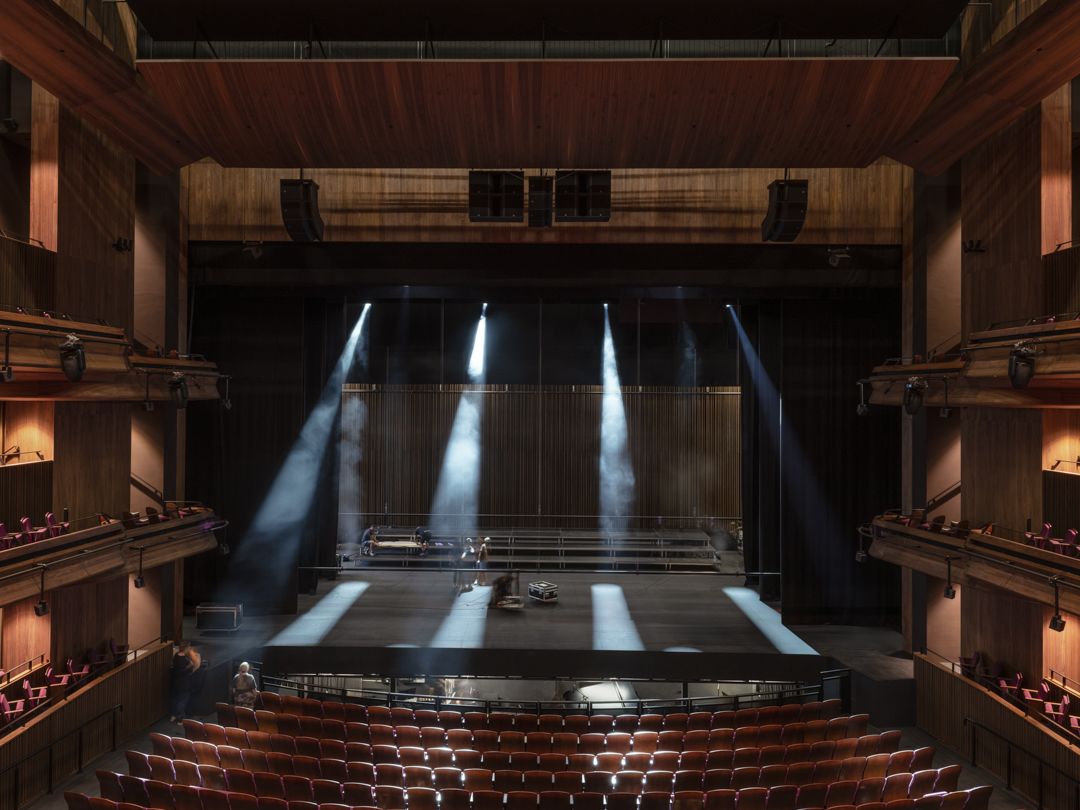
There is a particular tension that hangs over any new theatre in its opening weeks. Months of acoustic modelling, system commissioning and workflow planning suddenly give way to real audiences, real artists and real-world variables. Sixty days after opening, Hamilton’s Waikato Regional Theatre, branded the BNZ Theatre in the week prior to launch, has successfully transitioned from construction completion to an active, varied performance schedule. We spoke to Ash Jugum, Technical & Operations Manager, to get his take on the last two months.
Community First
In mid-January, Hamilton’s long-awaited Waikato Regional Theatre stepped decisively from construction site to community asset. Days after BNZ was confirmed as naming-rights partner, the building was formally blessed, acknowledging its place within Kirikiriroa and the wider Waikato region. Within the same week, the doors opened not to a touring headline act, but to three nights of To The Stars / Ki Ngā Whetū, a locally driven production that filled the new 1,300-seat auditorium with regional voices before the national spotlight arrived.
Operationally, it marked the venue’s first full-capacity live delivery. For Ash the biggest unknown was how the room would behave once it was full, “During commissioning you’re working in an empty building, and that’s never quite the same as having a full audience in the space. We also had a tight handover period from construction into operations, so we were moving quickly from installation to live performance. Fortunately, we were able to bring L-Acoustics in during that window to review the installation and help tune the system before opening, which gave us a lot of confidence heading into that first show.”
And the result? “The room performed incredibly well. The theatre itself has exceptional acoustics. People have commented that they are genuinely some of the best in a venue of this type. That provides a fantastic foundation for the sound system. Once the audience was in the space there were the usual small changes in absorption, particularly in the high frequencies, but overall, the translation was excellent.”
Opening Concert: An Acoustic Test
Teeks followed a few days later, headlining the official opening concert. Teeks has built a national following for his soulful, gospel-inflected songwriting and distinctive falsetto, with live shows that place his voice front and centre, a bold choice in acoustic terms. Ash and his team had several days of rehearsals which gave them the opportunity to do some fine tuning, “Nothing major structurally, but those early shows are always valuable for refining things. It was more about subtle adjustments and confirming coverage and balance rather than making any significant changes.”
Again, audience feedback centred on clarity and warmth. A Muzic.nz reviewer noted that Teeks’ “raw, beautiful vocals filled the space from the very first note”, with the auditorium feeling “cosy and close, like you were part of the performance.”
Expanding the Production Profile
Two nights later, Dave Dobbyn brought a very different production profile to the stage. A full band mix and higher SPL expectations presented a broader systems test, “Shows like Dave Dobbyn are a great benchmark because they bring a full live band dynamic into the room. That really lets you experience the system across the full range, from quieter moments through to much higher energy sections.”
“Commissioning is very controlled when you’re testing systems in isolation and under ideal conditions. Once touring productions arrive, the system becomes part of a much bigger ecosystem with visiting engineers, different mixes, and different expectations. The transition was actually very smooth for us, largely because the system had already been well tuned and the room acoustics are so strong.”
Flexible February: International Pop and Pacifika Poetry
Within ten days of opening, the theatre had successfully hosted community theatre, an intimate concert format and heritage rock, three distinct production profiles in rapid succession. Then came Sophie Ellis-Bextor and Upu, a Tagata Moana production celebrating Pasifika poetry, spoken work incorporating lighting design, projection and a layered soundscape.
Ash reflects, “Flexibility was a big part of the design intent for the venue. The space can move between concert and theatre modes relatively efficiently depending on the production requirements. Sophie Ellis-Baxter was a good example of the venue operating in concert mode. There were some adjustments to staging and seating to suit the production, but it was well within what the venue was designed to accommodate. It really demonstrated how easily touring shows can adapt the room to their needs.”
Coming up are Bic Runga and the Soweto Gospel Choir, and Ash is especially looking forward to the Hamilton Operatic bring their season show of Matilda, “One of the exciting things about opening a new venue is seeing the variety of productions that come through early on. Each show brings different technical and production demands, and that really helps us continue to learn more about how the room performs across different styles of performance.”
The First Sixty Days
For Ash it has been a busy but smooth process, “Acoustics-wise there have only been minor refinements. The initial tuning work with L-Acoustics set a solid baseline, and since opening we’ve just continued to make small adjustments based on what we’re hearing across different types of performances and feedback from visiting engineers.”
The biggest learning curve? “Probably the pace of moving from construction straight into a busy event schedule. When you open a venue, you’re learning the building while also establishing operational rhythms with staff, touring crews, and promoters at the same time. Those first couple of months are about bedding everything in. Sell-out shows are always a great test for a new venue. They really highlight how people, equipment and information move through the building. Those early shows helped us refine some of our workflows, particularly around loading dock operations and stage changeovers.”
“The response from the local crews has also been great. There’s been a lot of excitement about working in the building and with the technology that’s been installed.”
The Next Six Months
“The focus will be on continuing to refine operations and making sure the systems perform consistently across a wide range of shows. As more touring productions come through, their engineers bring different perspectives and feedback, which is incredibly valuable in helping us keep fine-tuning the venue.”
The true measure of success will come over time, but if the first sixty days are any indication, the BNZ Theatre is already proving itself a technically capable and highly adaptable venue, one set to reshape the live performance landscape for Hamilton and the wider Waikato.
Subscribe
Published monthly since 1991, our famous AV industry magazine is free for download or pay for print. Subscribers also receive CX News, our free weekly email with the latest industry news and jobs.
Recent posts



Latest jobs