LISTEN HERE
16 Mar 2026
The Productivity Paradox
Subscribe to CX E-News
The struggle with productivity is not a personal failing but a reflection of the complex environment in which modern audio professionals operate. In a world where our tools of trade try to convince us that music-making is an assembly line, it’s high time we cut ourselves some slack and reconnected with why we make music in the first place. We make music, not toasters.
From outside, music production has never looked easier. A laptop, a modest interface, a handful of plug-ins and some decent headphones can now (apparently) replicate most of the capabilities of studios that once required entire buildings and vast budgets to operate. In theory, this should mean we’re currently residing in a golden age of productivity. Our tools are powerful, cheaper than ever, and endlessly flexible, and entire records can now be made without ever setting foot in a traditional recording space…
And yet, many creative professionals feel less productive than ever. Projects stall. Mixes remain unfinished. Hard drives fill with half-completed ideas and umpteen reiterations of a song structure. Despite an abundance of technology designed to streamline the production process, a persistent sense of creative gridlock has become common amongst professionals and enthusiasts alike. This contradiction isn’t caused by laziness or lack of ability… it’s more complicated than that. More often, it arises from a combination of psychological pressure, technological overload, economic reality, and the deeply personal nature of making music.
The Paralysis Of Possibility
One of the most significant challenges facing modern audio professionals today is the sheer number of options available. Earlier generations worked within firm constraints: limited tracks, finite studio time, expensive tape, and commonly no recall. Decisions were often made quickly and committed to permanently. Mistakes became part of the record. Limitations shaped creativity and encouraged forward motion.
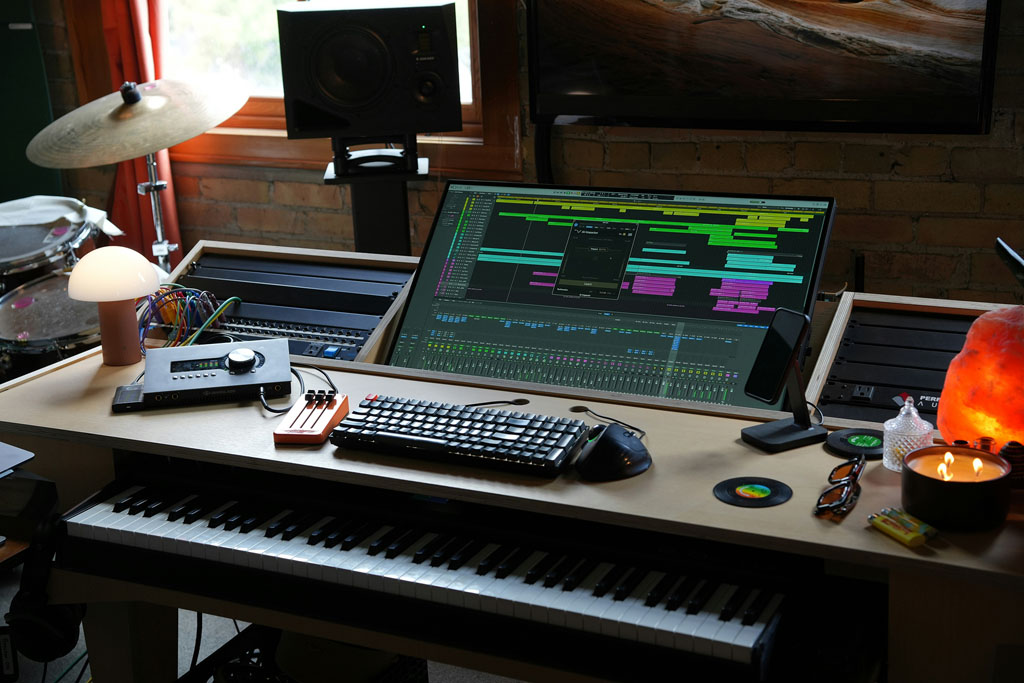
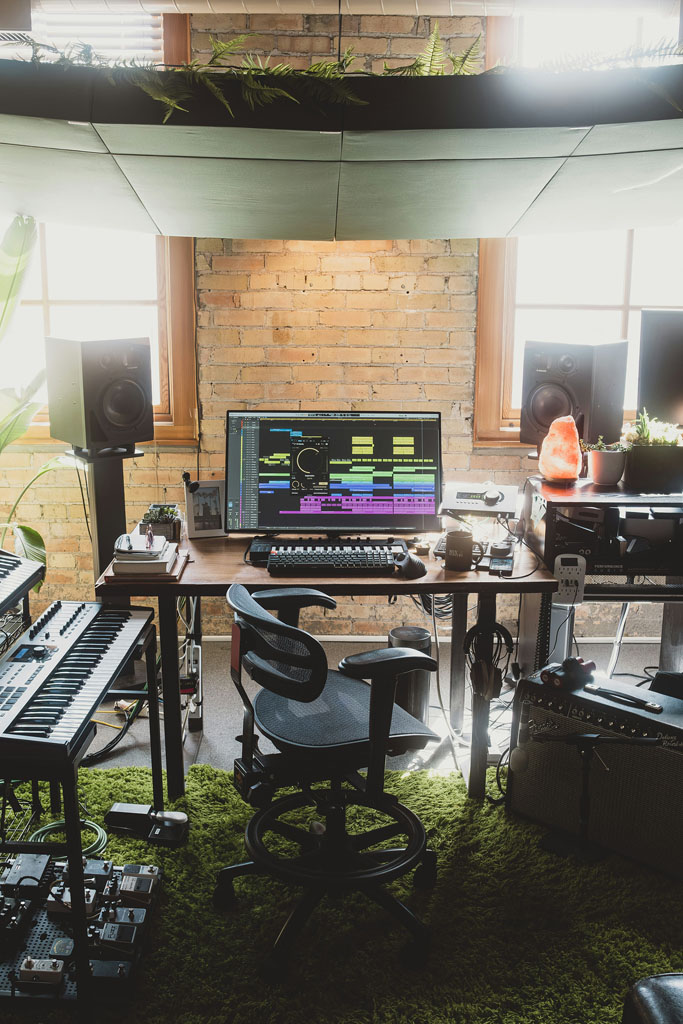
Today, those boundaries have largely disappeared. Digital recording environments allow for unlimited tracks, infinite undos, and constant revision. Every sound can be replaced, every performance corrected, every mix endlessly refined. While this flexibility is technically liberating, it can also be psychologically paralysing. When there’s always another option, it becomes difficult to decide when something is finished. Songs linger in a state of perpetual revision, caught between what they are and what they might still become. But when no external forces exist to push songs over the line into the limelight, a song can curdle like a carton of milk.
Cognitive Overload
Audio production is a discipline built on thousands of small decisions. Engineers and producers constantly evaluate tone, timing, dynamics, balance, arrangement, and emotional impact. Each choice may seem minor in isolation, but collectively they demand significant mental energy.
Over long sessions, this continuous decision-making leads to cognitive fatigue. As mental resources deplete, confidence in those decisions also declines. What once felt obvious begins to feel uncertain. A vocal that sounded perfect an hour ago now feels questionable. A mix that seemed balanced suddenly appears flawed. The result is often a loop of second-guessing and revision that slows productivity and erodes satisfaction.
Unlike many technical fields, there are rarely definitive answers in music production. Most decisions are subjective and context-dependent. This ambiguity amplifies fatigue, as creators cannot rely on clear right-or-wrong outcomes. Instead, they must trust their judgement repeatedly, even as their mental clarity diminishes.
Modern musicians, producers and engineers also swim in a constant stream of information. Tutorials, plug-in reviews, production breakdowns, and social media content are available at all times in most modern studios, and while these resources can be educational and inspiring at times, they also fragment attention and create subtle pressure to keep learning rather than doing something with your precious time!
And as we all know, it’s easy to spend hours watching demonstrations of new techniques or trawling the internet for free plugins that promise to solve our production problems, rather than closing up the shutters and getting something done. These activities feel productive because they’re ‘related’ to music-making, yet they often replace the more difficult task of actually finishing projects!
Perfection Or Procrastination?
Another byproduct of our current approach to creativity, which stifles productivity as often as it supports it, is perfectionism; a pursuit that’s deeply embedded in our audio culture. Engineers are trained to listen critically and correct flaws. Producers are expected to deliver professional, competitive results. Musicians often feel that each release represents their identity and reputation.
While high standards can drive excellence, perfectionism frequently becomes a barrier to completion. When the internal benchmark for quality becomes unrealistically high, no work ever feels ready. Every mix reveals new imperfections; every performance could be improved. The pursuit of flawlessness delays our upcoming releases and transforms our creative process into an endless refinement exercise. And yet ironically, most listeners outside our audio community wouldn’t be able to discern one mix from another. So the question then becomes: who are these mixes really trying to impress? Not the wider public, clearly… they couldn’t care less.
Economic Pressures and Fragmented Time
For many audio professionals, productivity is also closely tied to financial survival. Freelance engineers, session musicians, and independent producers often juggle multiple roles: recording, mixing, teaching, performing, maintaining equipment, managing clients, and handling administrative tasks. This fragmentation of time makes sustained creative focus difficult.
Creative work thrives on immersion and continuity, and constantly switching between tasks disrupts that flow. An engineer may spend the morning responding to emails, the afternoon troubleshooting technical issues, and the evening attempting to mix. By the time a window of uninterrupted creative space opens up, the mental energy is already depleted.
Financial pressure can also discourage experimentation, and in some cases stop the creative process dead in its tracks. When income depends on client satisfaction, risk-taking may feel unsafe. If you’re producing your own work at home, popping out to the studio for the day might seem like an indulgence – particularly to your immediate family – if you’re also struggling to pay the power bill. Nothing kills the creative process faster than a sense that what you’re trying to achieve is a waste of precious time, or a distraction from your ability to earn a wage elsewhere.
Hopefully your music is not seen as a ‘waste of time’ by those around you. If it is, that is an exceedingly difficult pill to swallow – strychnine for your motivation, basically. If you’re in that situation, reassessing how your creative workflow functions alongside your day-to-day commitments is something you need to address separately first.
The Isolation Booth
Advances in technology this century have made it possible to produce entire records alone that are indistinguishable from others costing more than the average house. While this independence is empowering, it can also be isolating. Without collaborators, deadlines, or external feedback, momentum can fade. There is no session start time, no studio clock, no collective energy pushing the work forward.
Isolation removes the gentle pressure that often drives completion. In collaborative environments, decisions must be made to keep the session moving. Alone, it is easy to postpone those decisions indefinitely. Collaboration also provides perspective. Another set of ears can resolve uncertainty quickly. Without that feedback loop, creators may spend hours debating choices that could be settled in minutes through conversation.
Many audio professionals also operate in a state of chronic overwork. Long hours, irregular schedules, and the pressure to remain constantly available can lead to burnout. Unlike physical fatigue, creative burnout often manifests as apathy, procrastination, or loss of enthusiasm.
When passion becomes obligation, productivity declines. Tasks that once felt exciting begin to feel burdensome, at which point the studio becomes associated with stress rather than exploration. In this state, working harder rarely helps. What is needed instead is rest, renewal, and reconnection with the original joy of making music.
A fundamental challenge in creative professions is that productivity does not follow a predictable pattern. Some days yield remarkable progress with little effort. Others produce nothing despite intense focus. This variability can be frustrating in a culture that values consistent output and measurable results. Recognising this inconsistency not as failure, but rather an inevitable part of the creative process to be embraced, not shunned, is crucial to sustaining a career in the arts, whether it be in music or some other form of expression.
Finding The Motivation
Motivation is the quiet engine behind every meaningful piece of music ever made. Long before the first microphone is placed, the first lyric written, or the first track recorded, there exists a simple but powerful question: why am I doing this? For musicians, producers, and audio engineers, returning to that question can be confronting. If it’s a difficult question to answer, it may be that you’ve lost contact with the reasons that got you hooked on this caper in the first place.
When productivity declines, the instinct is often to search for better tools, better systems, or stricter discipline. Yet many creative blocks are not technical problems but motivational ones. Reconnecting with the original reasons for making music can restore a sense of direction and energy.
Revisiting your internal compass can be clarifying. If, for example, your core motivation was once pure expression, then reminding yourself that not every project needs to be perfect is a good start. If it was collaboration, then perhaps it’s time to acknowledge that isolation is now your main obstacle. If it was curiosity, then routines may be stifling your ability to experiment.
Redefining Productivity
Perhaps the most useful step forward for modern audio creatives is to reconsider what productivity actually means. In creative work, productivity is not measured solely by quantity. It is measured by completion, growth, sustainability, and ultimately, happiness.
Productivity may look like everything from finishing a song ‘imperfectly’ to setting boundaries around endless revisions. It may involve taking breaks without guilt or allowing time for experimentation without immediate results. It may mean collaborating more, sharing unfinished ideas, or accepting that some projects will remain experiments rather than releases.
In a culture obsessed with optimisation and output, these approaches can feel counterintuitive. Yet they align more closely with the realities of creative practice. Music-making is not an assembly line. It is a process shaped by emotion, curiosity, and human connection.
When musicians, producers, and engineers allow themselves to work in ways that honour those realities, productivity becomes less about relentless output and more about meaningful completion. The pressure to constantly produce gives way to a steadier, more sustainable rhythm.
And from that place, the path forward often becomes clearer – not through forcing more output, but through reconnecting with the simple, enduring reason of why we began making music at all.
—
Andy Stewart owns and operates The Mill in Victoria, a world-class production, mixing and mastering facility. He’s happy to respond to any pleas for pro audio help…
contact him at: andy@themill.net.au
Subscribe
Published monthly since 1991, our famous AV industry magazine is free for download or pay for print. Subscribers also receive CX News, our free weekly email with the latest industry news and jobs.
Recent posts