HISTORY
26 Mar 2026
The Venue That Changed Sydney
Subscribe to CX E-News
In 1969, Sydney’s rock-and-roll scene was loud, lawless and running seven nights a week. Clubs like Chequers, the Chevron Hotel and Whisky Au Go Go were packed with American GIs on short ‘Rest and Recreation’ (R&R) breaks from Vietnam, men spending hard and fast, flipping the coin on a possibly short future life. They poured their pay into booze, birds, and drugs before being shipped back to the war.
The club scene was blokes in tight trousers, Cuban heels and paisley shirts, and girls in minis, eyeliner thick enough to be armour. Go-go dancers did their thing in cages. US Military Police patrolled the streets outside, collecting any colleague unlucky enough to be “bounced”, which quite literally involved huge thug-like bouncers cannoning the perp into the gutter, where two MPs would bodily lift him and throw him into a US divvy van.
Television told a different story. Shows like Bandstand portrayed a controlled, respectable industry: male performers with short hair, clean-shaven, in suits or neat jackets; women with bouffant or beehive hair, coordinated dresses and immaculate makeup. Everything looked smiling, polite and non-threatening, with no visible rebellion. Songs were tightly arranged, usually under three minutes, with no extended solos and no grit. It was essentially 1950s television values stretched into the late ’60s.
What makes this especially interesting in 1969 is the disconnect. The same musicians who smiled for daytime TV were tearing clubs apart at night with loud blues-rock and proto-hard rock. Billy Thorpe is the classic example: he went from straight pop to raging guitar hero. But for that shift to happen, the scene itself had to change.
Enter Geoff Cantor, today an international film, video and event producer based in Queensland. In 1959 he left the rarefied air of Wesley College in Melbourne, went skiing with Olympic aspirations, then lived in Scandinavia for four years and the USA for two. In California he became involved with the San Francisco music scene, working as a roadie at the Avalon Ballroom, hauling guitar amps and PA speakers onto the stage. There he learned stage production, psychedelic lighting, sound setup and event management. He returned to Australia in 1968.
Geoff produced several shows in Sydney at Paddington Town Hall but ran into a basic problem: janitors wanted bands out by 11.30pm. Bands hated playing covers, and halls were suffocatingly rule-bound. Typical of the era, many hall attendants were war retirees and often former officers. They loathed these young bands. The mood was right for something new.
Borrowing five grand from his surgeon father, Geoff opened The Arts Factory at 158 Goulburn Street. It was an empty factory with a dividing wall down the middle. The Federal Police were just around the corner.
Michael Batchelor helped hose the place out, clean it up and set it running, stage with a 360-degree screen on one side, flea market on the other. A young Peter Noble (later of Bluesfest) had a stall selling juice, alongside candles and other hippie paraphernalia. Parachutes hung from the ceiling, with old rugs and cushions scattered across the floor.
Police interest was constant. Large crowds of long-hairs always attracted attention, but everyone knew who the interlopers were. “They had shiny shoes under their flares,” Geoff chortled.
The programming was eclectic: poetry on Tuesdays, auditions on Wednesdays, shows Thursday through Sunday. Rising bands made their name there; Tully, Nutwood Rug, the La De Da’s from New Zealand, Chain, Taman Shud. Doug Parkinson converted his career from pop to rock. A 15-year-old girl from Dover Heights was invited onstage to sing for the first time with a jazz-fusion band called Sun. Her name was Renée Geyer. Barry Leef and Bakery ripped the roof off on their first foray from Perth; Leef later joined Frank Zappa’s band.
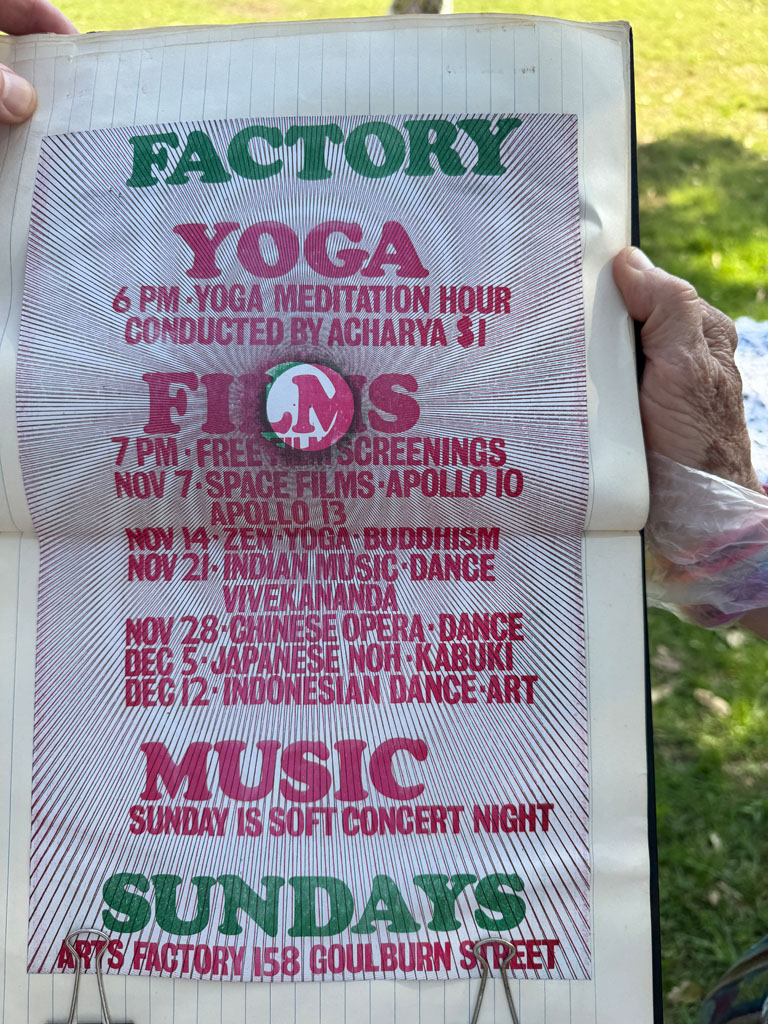
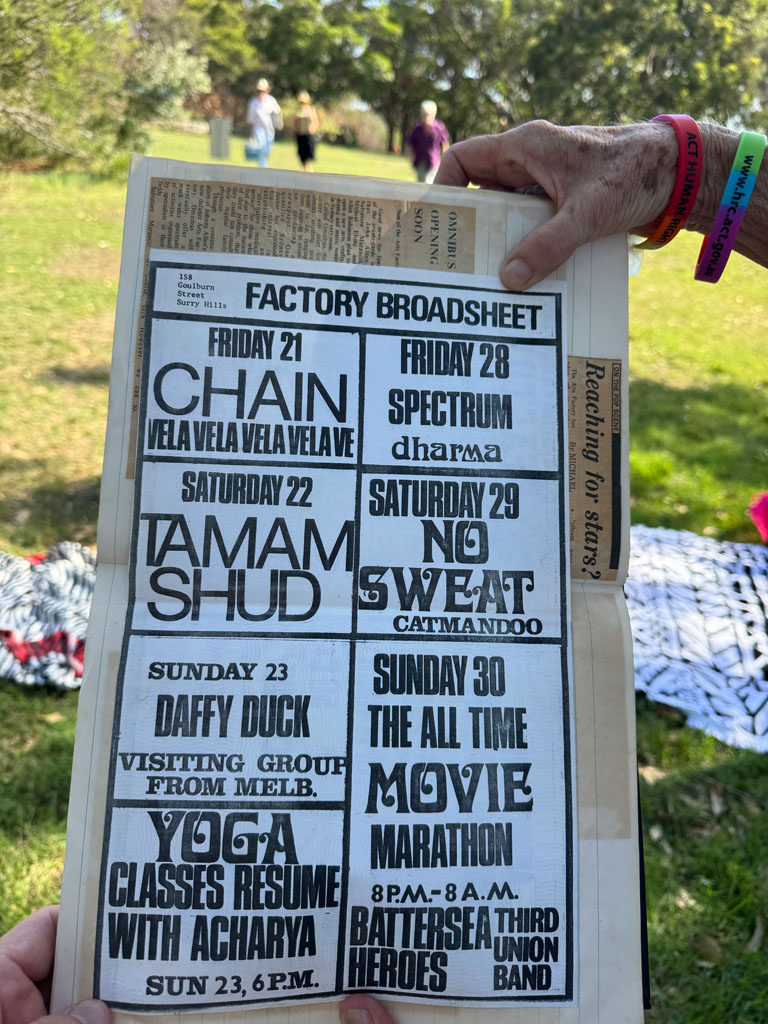
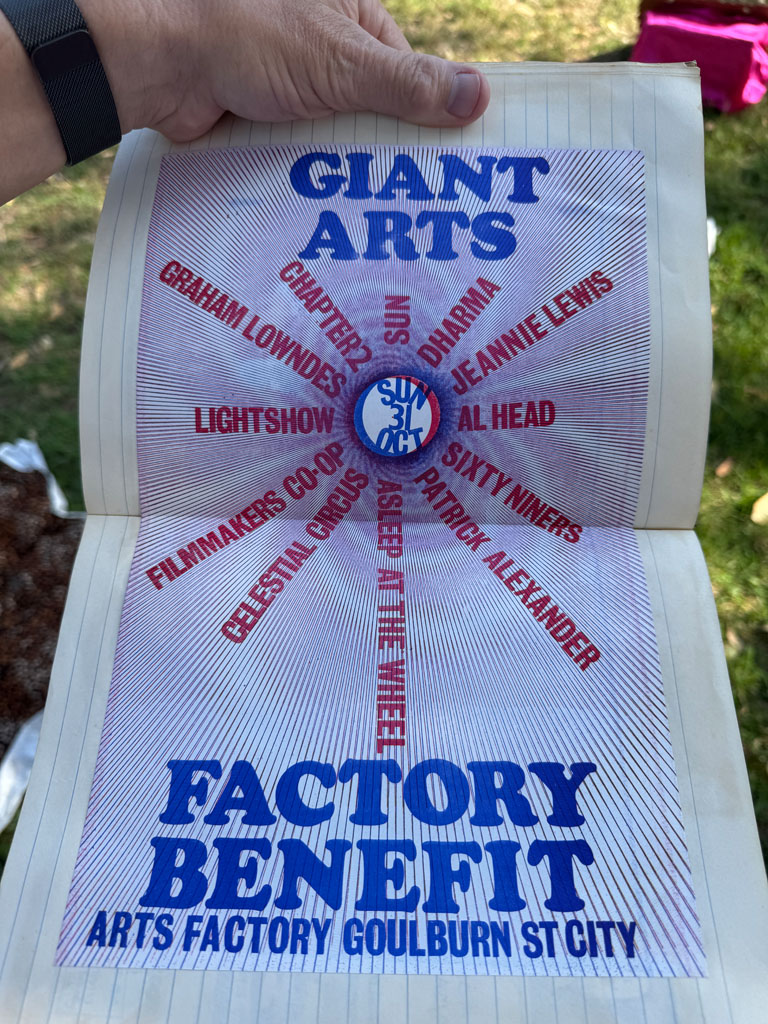
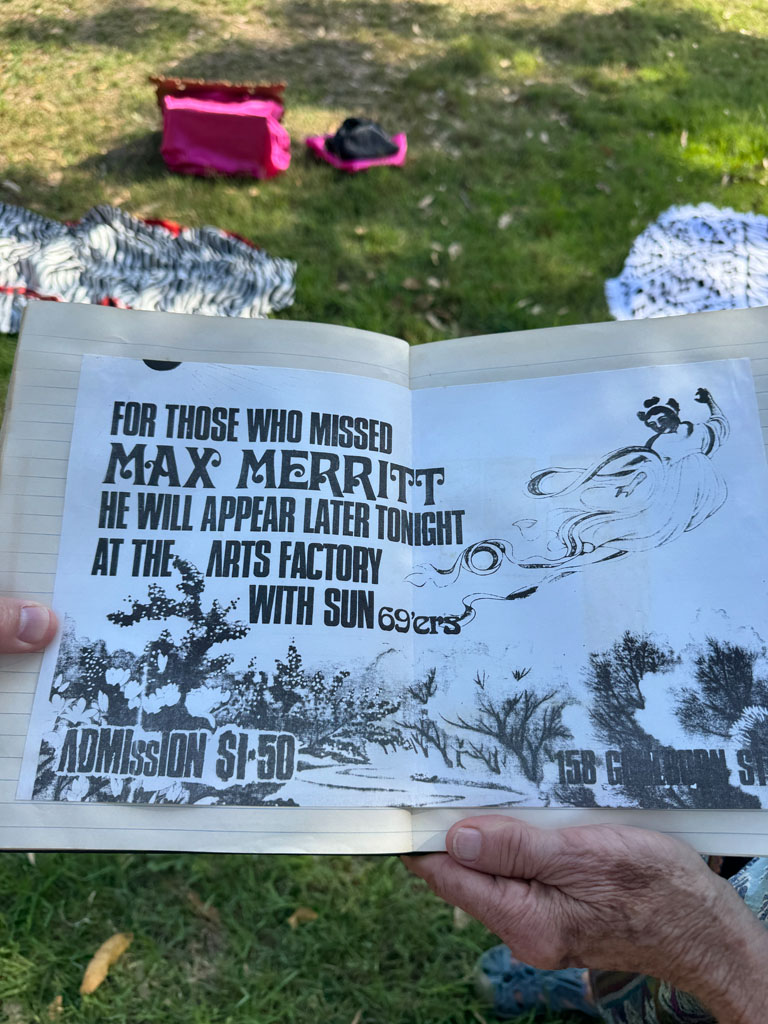
It was a time of cultural upheaval. Australia dragged behind the free-love, hippie revolution that began in San Francisco and climaxed with Woodstock in upstate New York. Indian swami influences rose, the Hare Krishna movement blossomed, orange robes and drums on the street everywhere, and The Pill transformed society. Meanwhile, 19-year-olds were balloted into conscription; two numbers were drawn each month, and if your birthday came up, off you went to Puckapunyal or Kapooka for army training. Then into the jungles of Vietnam on a Qantas 707. They WERE only 19.
A mass protest movement against conscription emerged, known as the Moratorium, running parallel to venues like the Arts Factory. It drew on the same energy; distrust of authority and a rejection of inherited values. Musicians, artists and audiences moved fluidly between clubs, communes and protest marches.
Conscientious objection to conscription frequently led to imprisonment in Australia, and hippies were at the forefront of both protest and broader anti-establishment resistance. Society was changing under black-and-white television and heavy censorship, in a culture still uneasy with dissent and quick to punish those who stepped outside the line.
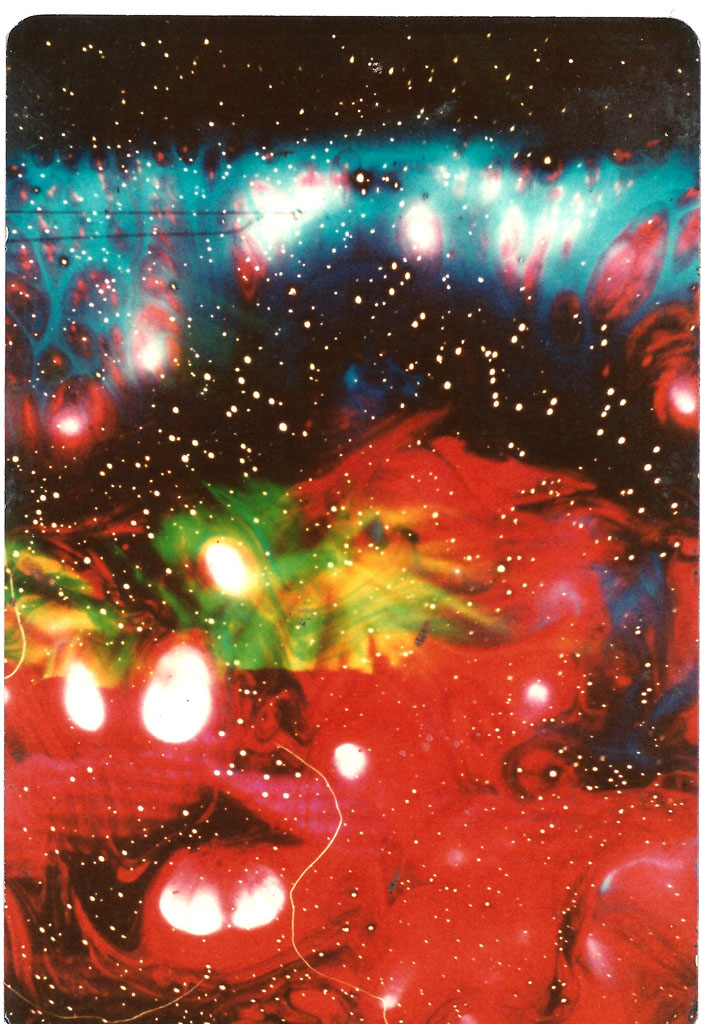
At The Arts Factory, a psychedelic ‘liquid’ light show was pioneered by Michael Batchelor.
On a scaffold platform, Batchelor and several hippies, usually in a chemically altered state, operated overhead projectors using paired Pyrex dishes filled with water- and oil-based dyes. Moving the dishes produced swirling colour patterns, ideally in time with the music.
Each operator controlled a section of screen, some overlapping. Over the top of this, mad genius Eddie Van Der Madden projected “de machines”: a slide projector with its heat filter removed to melt slides; polarising plastic sheets rotating against static images; old turntables spinning prisms to throw fractured beams through spotlights.
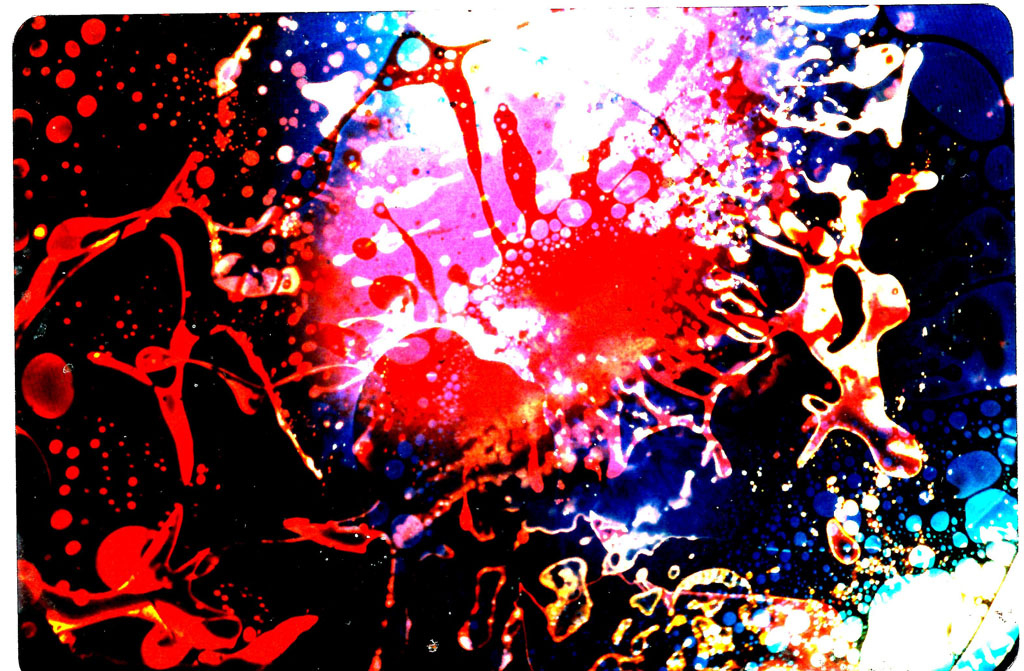
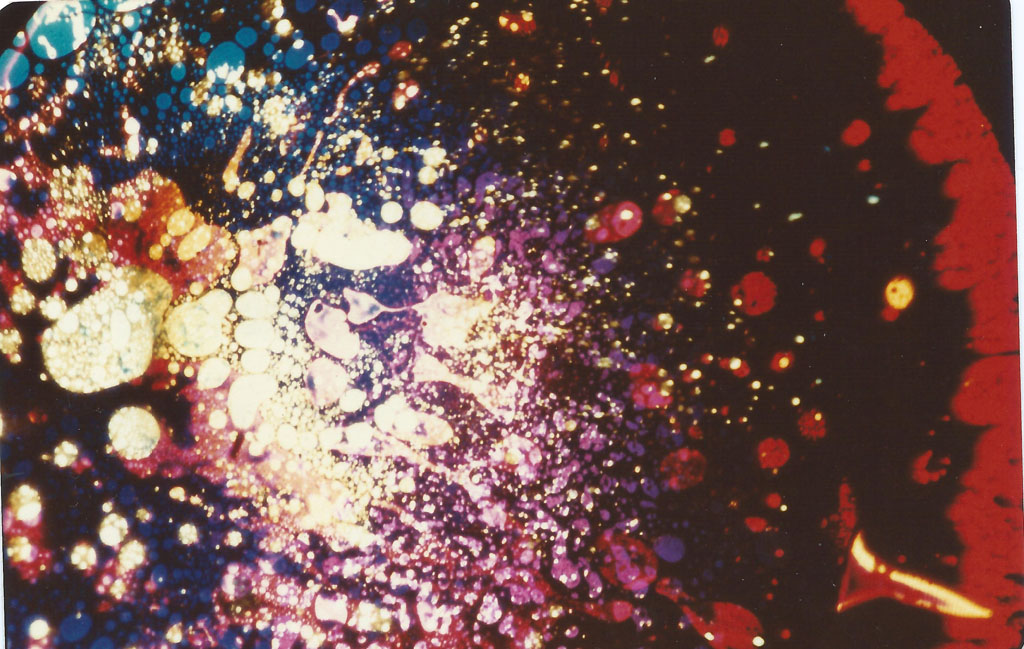
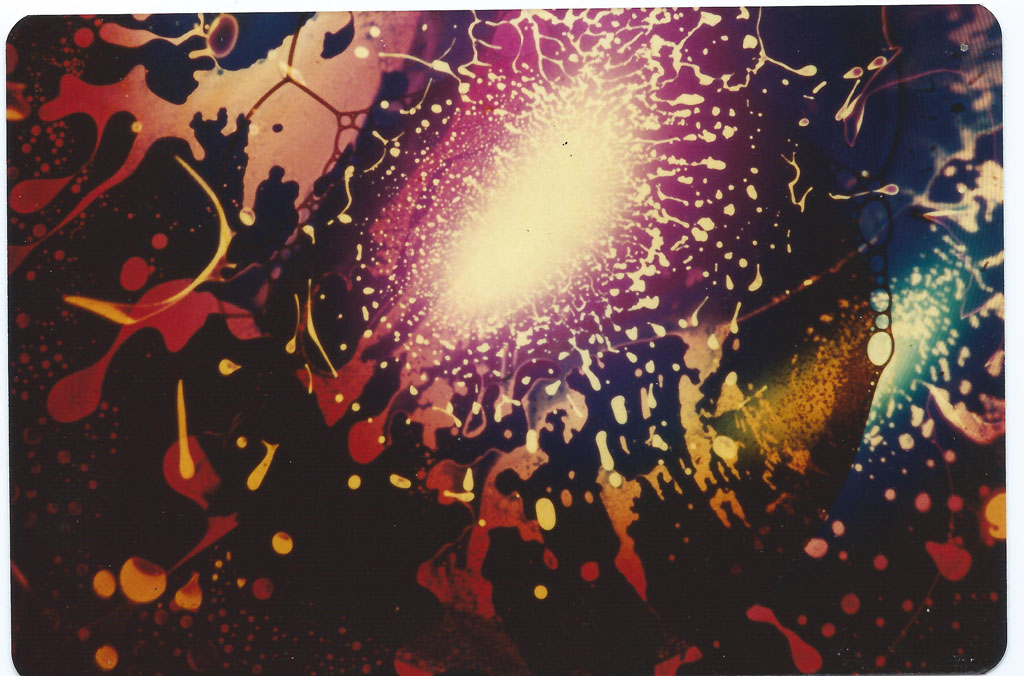
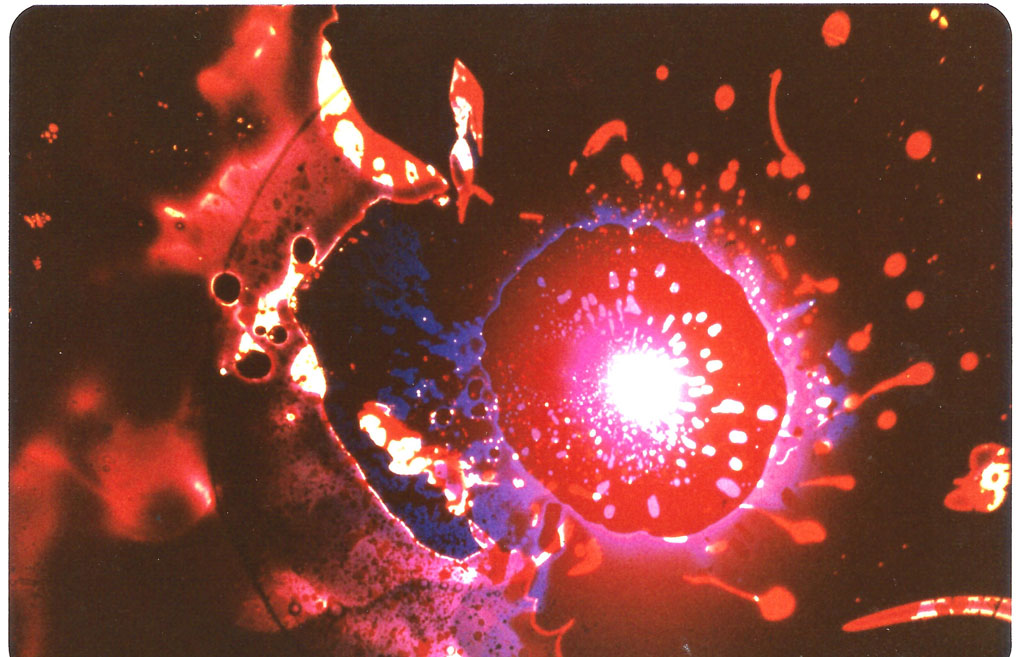
All this visual chaos happened around the room while the band played under a single static spotlight. Lighting bands wasn’t yet a thing. A few years later Sherbet, Skyhooks and Hush would pioneer touring lighting rigs.
There was no house PA. Bands arrived in Kombis, Transits or Commers with their backline and a column PA; four 12-inch speakers, a single four- or six-channel head, rudimentary rotary controls and a built-in 150-watt valve or transistor amp. The La De Da’s arrived one night straight from a double; sweaty roadie Michael Chugg lugged their gear inside. Company Caine had radio hits; their roadie was better dressed than anyone else. Roger Davies, who would go on to manage Joe Cocker, Sade, Cher, Tina Turner and Pink, was already around.
Towards the end of The Factory’s life, modern Jands PA systems occasionally appeared, horn-loaded speakers, separate mixers and amplifiers, a glimpse of what was coming.
Geoff was exhausted by November 1971 and departed overseas for a short break, as he put it, after six years of sex, drugs and rock and roll. By then the scene had changed: bikers were turning up, sharpies and skinheads were around, violence was escalating. Someone took a gunshot at the front of the building. Johnny Allen stepped in to run the venue for a few months, a bouncer was skimming money, the energy ebbed away, and The Factory shut its doors.
“The dream is that every man is your brother, that the forces underlying the universe are basically good. Whether the dream is reality, or reality is a dream, is for us to live out,” Johnny wrote in his farewell note.
Johnny went on to create the Aquarius Festival at Nimbin, and the counterculture that had burned hot and fast in the city dissolved into something looser and harder to hold. The Factory was gone, but the idea behind it, that music, freedom and community might briefly align, didn’t disappear. For some it became memory, for others myth. Either way, the dream had run its course, leaving behind stories, scars, and the sense that, for a moment, however chaotic, something real had happened.
Subscribe
Published monthly since 1991, our famous AV industry magazine is free for download or pay for print. Subscribers also receive CX News, our free weekly email with the latest industry news and jobs.



Latest jobs