THE GAFFA TAPES
15 Apr 2026
Some Cold Facts About Audio Warmth
Subscribe to CX E-News
Snippets From the Archives of a Bygone Era
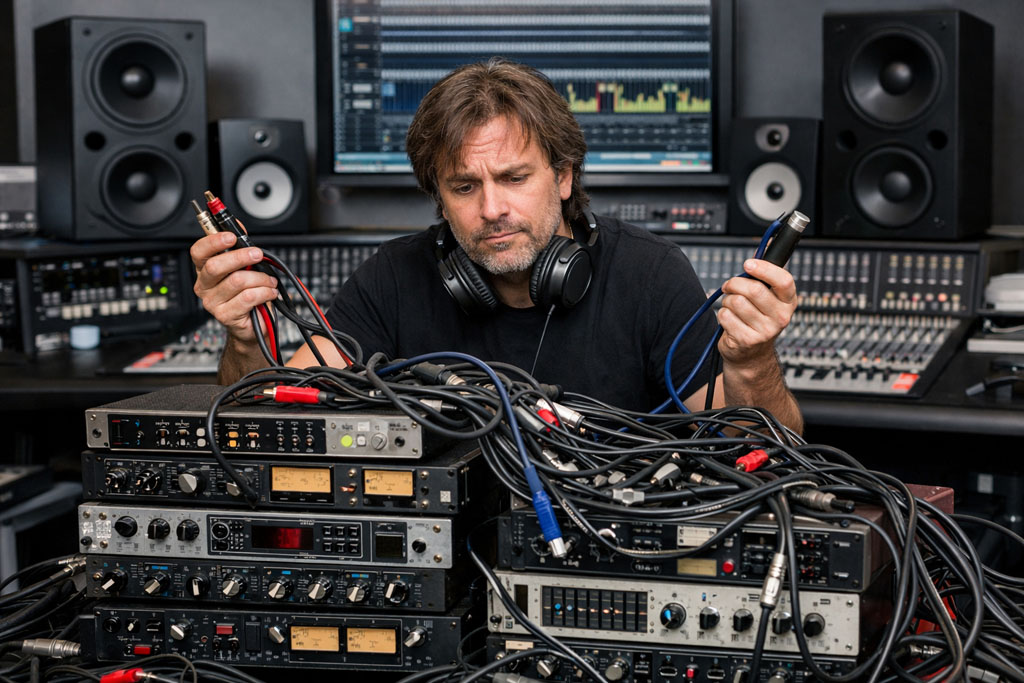
The internet has become a minefield of tutorials featuring virtual time‑travelling crusaders promoting various outboard audio devices in an effort to drag their surmised versions of warm analogue audio back to the future. But there’s a simple method that fledgling audio producers can employ to get great analogue vocals and other sounds today without embarking on a labyrinthine and unnecessarily expensive journey. Just plug a good microphone into a mixer that has good microphone preamps.
Derived from the word ‘analogous’, meaning ‘the same’, an analogue signal is an electrical copy of a sound wave that remains virtually identical in shape from the moment it is captured to the moment it is converted back to a sound wave by a speaker. Analogue audio doesn’t have to synthesise subtle distortion to create the warmth that is often touted by reviewers to be the consummate analogue signal, and there are many audio and recording engineers who meticulously try to avoid the noise and distortion associated with some early analogue equipment.
One such recording engineer is George Massenburg, the inventor of the parametric equaliser, who is noted for his meticulous approach to transparent audio. Unlike those who chase the coloured or warm sound of vintage tubes, Massenburg aims for chemically sharpened accuracy; his goal is to capture a performance without adding artificial harmonic distortion. He has engineered award‑winning albums including, Linda Ronstadt’s ‘Cry Like a Rainstorm, Howl Like the Wind’, James Taylor’s 1997 ‘Hourglass’, Billy Joel’s ‘The Bridge’, and Alicia Keys ‘Alicia’ album.
Massenburg has consistently stated that a microphone preamplifier should be used primarily to add the necessary gain needed to boost a microphone to line level; this is a term used in the industry called ‘wire with gain’. He argues that if you want to colour or warm the sound, you should do that later in the mix, where you have more control. He has stated that even musical harmonic distortion is essentially loss of information, and while you can often ‘fix it in post’ if there’s a problem, you can never truly reconstruct the exact, untouched waveform once it has been processed at the input stage.
Those of us who mixed live sound in the 70s and 80s often wrestled with mixing consoles that had inferior microphone preamps. While there were concerns about the purity of microphone preamps, most conversations revolved around ‘headroom’. The gain structure knob at the very top of a mixing console, which is often misunderstood, regulates how much the preamp multiplies the tiny voltage coming from the microphone. If it’s too low, you drag up noise in the preamp boost; if it’s too high, you introduce clipping. On the old analogue mixers you’d sound‑check different microphones, even shouting into them with the fader down until they peaked, and then you’d back off the gain until you got into what was called the ‘Goldilocks Zone’, where you had enough headroom without clipping during the show. The gain structure knob was logarithmic, and all the steps weren’t exactly the same in terms of dB, and there were variances in dB steps between different mixer brands. On a digital mixer you would have to back off the gain about three to four segments to get to the sweet spot, which is ‑18dBFS (decibels relative to ‘full scale’ in digital systems).
Early console pre‑amplifiers often suffered from an inadequate gain range; even with the gain pot at its minimum setting, high‑transient sources like kick drums or powerful vocals would exceed the input headroom, triggering the peak LEDs and causing clipping. That clipping didn’t produce a warm harmonic distortion for vocals. In fact, clipping a vocal on a 1980s‑era console with ICs (integrated circuit) preamps wasn’t musical; it caused a harsh, aggressive shift in the frequency response largely and painfully heard in the high mids.
The clipping in those early mixers was a result of mixing consoles moving away from big, expensive transformers to ICs and op‑amps. Sound engineers doing the Aussie pub‑rock circuits in the 70s and 80s couldn’t afford upwards of $75,000 for a Midas Pro40 with quality transformer preamps on every input or $40,000 for a Yamaha PM2000 with quality Tamura input transformers. It was rarely an argument for or against a true analogue sound; more so, it was about quality preamplifiers with lots of headroom that didn’t sound thin and harsh.
To accommodate the pub‑rock market of the 70s and 80s, Jands released the JM5, which had ICs and was more of a bulletproof workhorse than a mixer with expensive transformer preamps, but it lacked adequate headroom. The flagship of Jands’ final mixing console for touring was the JM8 (8-bus console), which featured discrete transistor front‑end preamplifiers that could compete with high‑end British consoles, including Soundcraft. Ultimately, in 1987 Jands became the distributor of Soundcraft when Australian tariffs were significantly lowered.
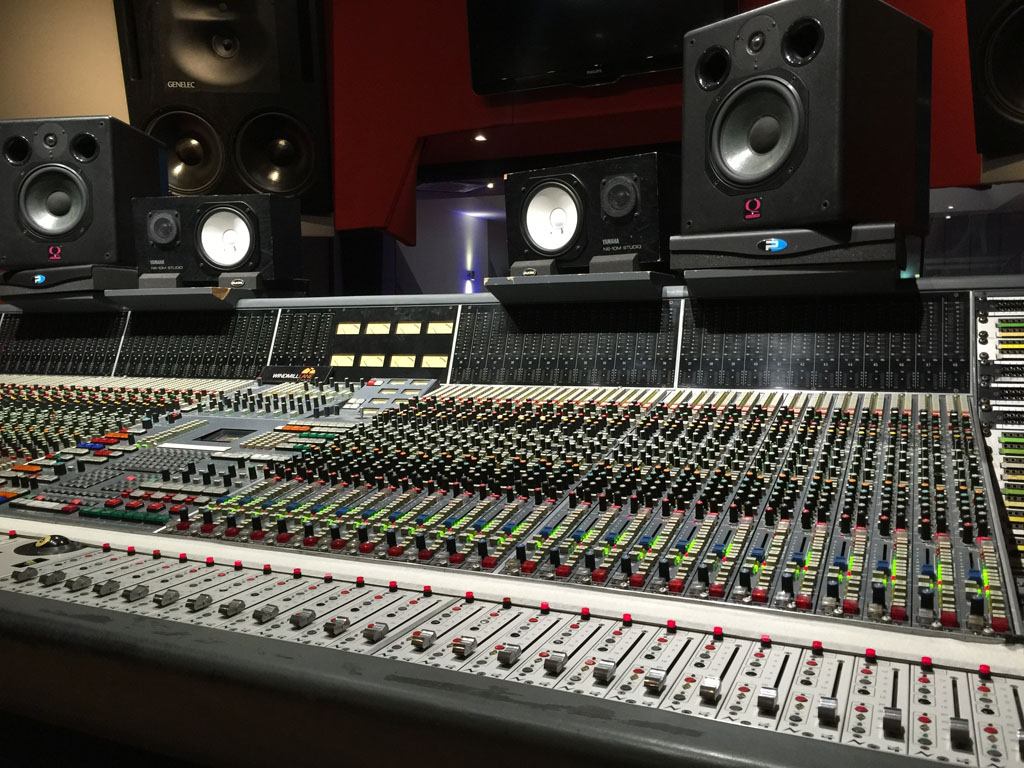
Way back in 1970, when Rupert Neve released the Neve 1073 Channel Amplifier, it was marketed as the ‘modern, high‑tech’ replacement for vacuum tubes. He wasn’t trying to distort the sound; instead, he was trying to create massive headroom. The low‑end power and mid‑range thickness were actually by‑products of Neve’s quest for a signal that wouldn’t sound thin under pressure. By the time Neve founded Focusrite in 1985, his philosophy had evolved, and he began to move away from the heavy saturation of the 1073 era towards ultra‑wide bandwidth and transparency. The Focusrite sound has been described as ‘silky’ and ‘artistic’, rather than the previous thick‑body sound of the 1073. Neve didn’t use words like ‘analogue’ or ‘warmth’ to describe his devices; he was always looking for purity, musicality, and human perception. He actually used the word ‘glow’, describing ‘2nd‑order harmonics’ that didn’t sound distorted.
Behringer’s 1273, which they say ‘pays homage’ to Neve’s 1073, uses Midas‑designed custom transformers built for mass production to mimic the Neve curve, but they generally offer a cleaner, less harmonically dense saturation. It’s Behringer’s ‘tone’ button on the 1273, which some aficionados claim captures a warm analogue sound, but the tone button simply switches the input transformer from the normal setting of 1200 ohms to 300 ohms, which loads the microphone’s output stage more heavily, typically resulting in a 6dB gain and a subtle shift in the high‑frequency resonance.
Microphone preamplifiers have improved significantly since their early days of ‘hot and heavy’ at the top end and cheap electronics at the lower end. Some of today’s microphone preamplifiers have lower noise and distortion than those featured in the $5000 consoles of the 1970s. In the early 90s, Mackie revolutionised the industry with their VLZ architecture as featured in the CR‑1604 console. By the early 2000s, they again excelled with their Onyx pre‑amplifiers that offered quality headroom and a low noise floor at a price that rivalled some of the giants in the industry. I’ve still got my Mackie 402‑VLZ3, which I bought for my home studio in 2008, although it’s now mothballed.
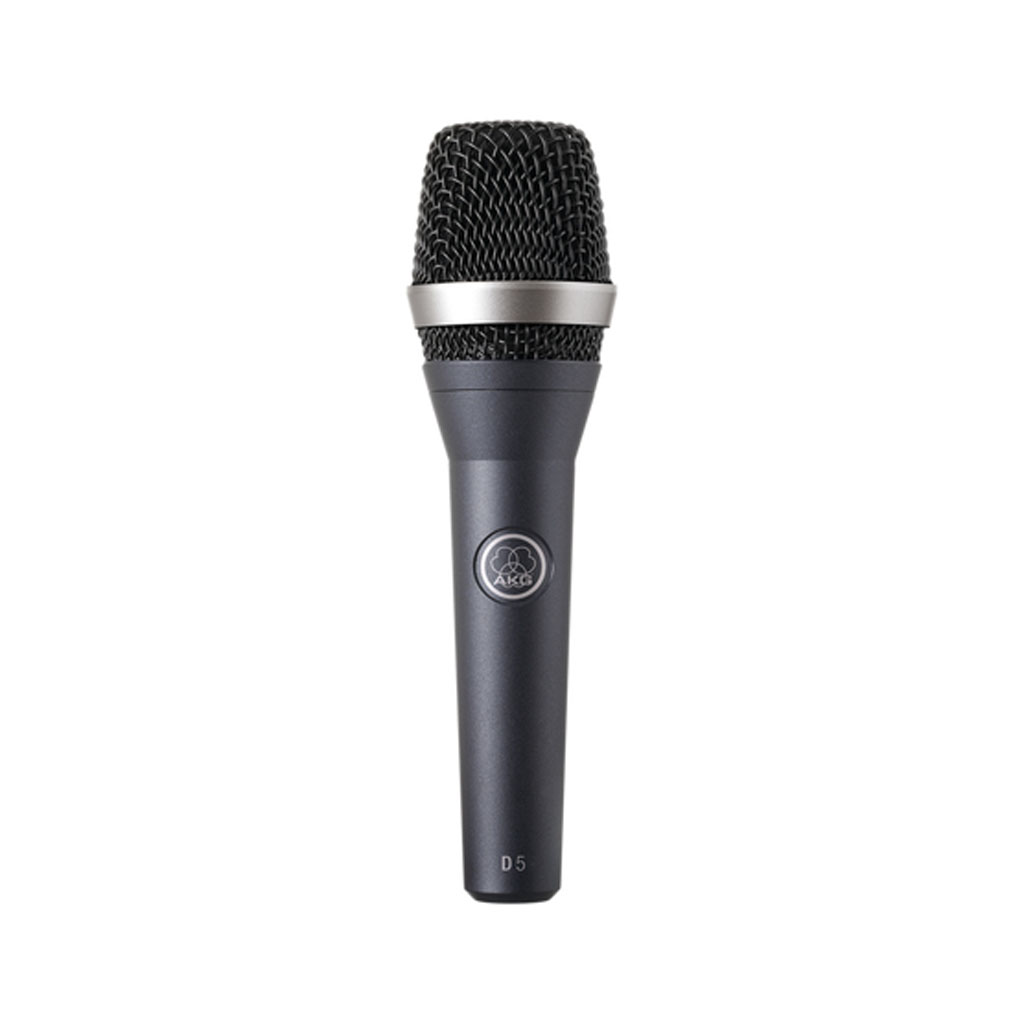
In the mid‑90s, I purchased a Rode NT2, which, after testing, I thought was adding a nice harmonic distortion to colour my voice. However, I later discovered that Peter Freedman focused more on frequency voicing and capsule design to emulate legendary microphones such as the Neumann U87, rather than intentionally introducing harmonic distortion. While many 60s microphones used transformers, which contribute to harmonic distortion, the NT2 utilised a transformerless FET circuit, and Freedman and his engineers used special tuning of the backplate and tensioning of the diaphragm to achieve the NT2’s vintage sound.
When my Rode NT2 met with a non‑repairable fate some 25 years later, I dug out my old dynamic AKG D330 BT microphone, which AKG has long discontinued. Some would argue that going from a condenser to a dynamic microphone for recording was a significant step down, but even Rode has aggressively expanded into dynamic microphones, establishing a dominant foothold in the home studio, podcasting, and broadcast sectors. When my son was setting up his home studio, we settled on the AKG D5. I had a couple of old SM58s that we sound‑checked against the D5, and we were both blown away by the AKG D5’s performance. Admittedly, the SM58s were over 30 years old, and to be fair, they were designed for live sound reinforcement use.
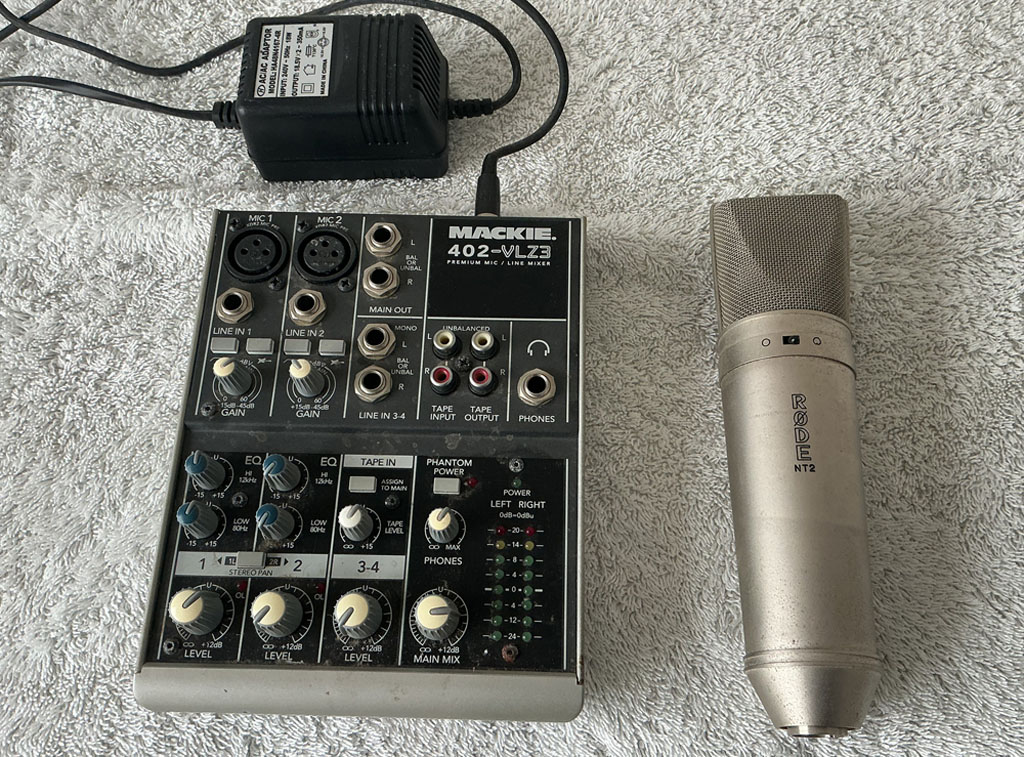
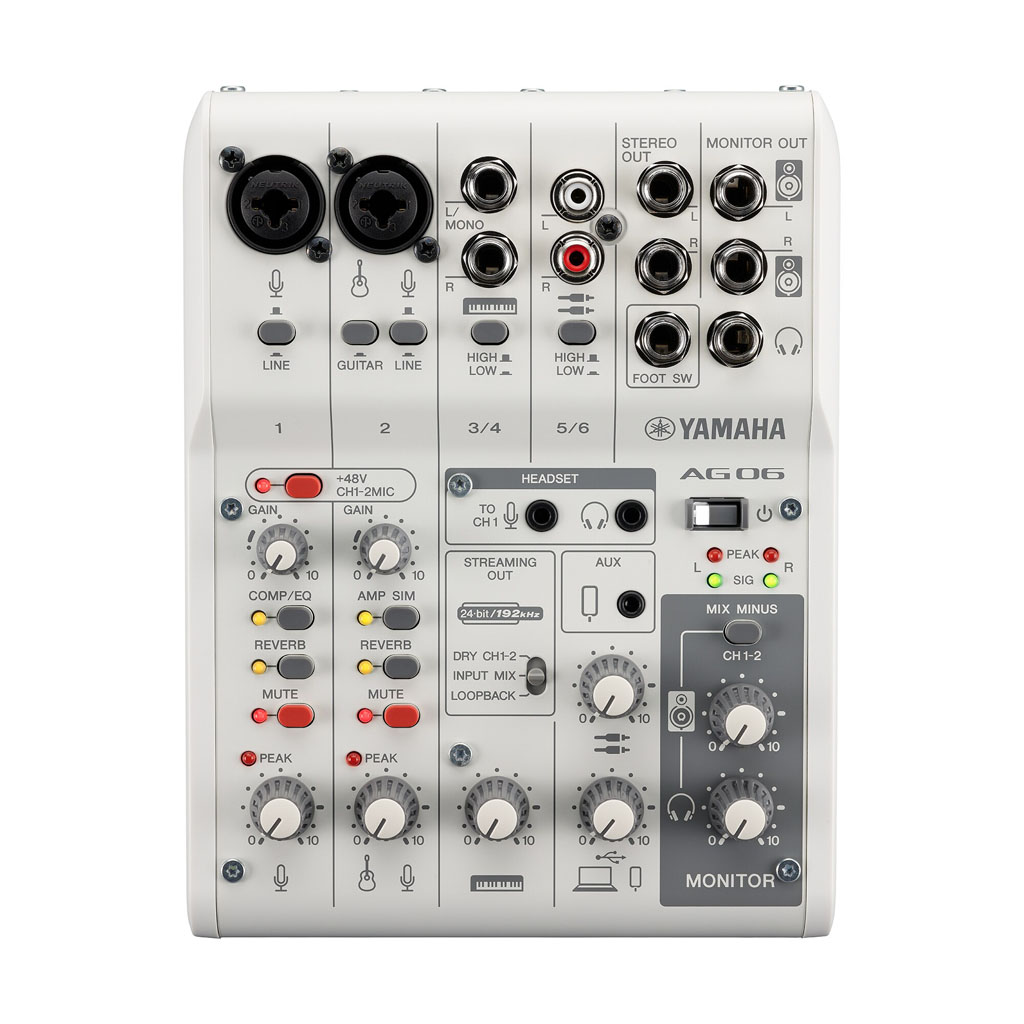
My Mackie 402‑VLZ3 was a great workhorse, but it had analogue outputs, and I needed a little mixer with a digital output. I decided on the Yamaha AG06, which has a USB output. This little gem is often overlooked because it doesn’t feature EQ knobs; however, you’re not mixing a live gig, so you can do your EQ later in your DAW. The AG06 has the high‑quality D‑PRE preamps that are found in Yamaha’s high‑end consoles. I’ve just purchased the newer AGO6 MK2 for my son, and I’m insanely jealous because the new version has channel mute buttons, and they’ve redesigned the preamps to even accommodate the popular SM7B podcasting microphone because of its low signal level.
Most aficionados on the internet use ‘sample packs’ in demonstrating audio equipment they claim adds analogue warmth, and a lot of those samples just feature instruments. The bottom line is, if you aren’t actually recording the audio, especially vocals, you are likely just utilising an expensive device to add an unnecessary layer of noise to a sampled sound. There is a current elite class of engineers who have divorced themselves from the outboard obsession, arguing that if you capture a sound correctly at the source using a great microphone and a high‑headroom console preamp, the warmth is already there, and further analogue processing is just adding clutter. These engineers include Serban Ghenea (Taylor Swift, The Weeknd, and Bruno Mars); Andrew Scheps (Adele and Red Hot Chili Peppers); and Billy Decker, whose work is associated with over 50 million albums and who has mixed 16 Billboard #1 singles.
Subscribe
Published monthly since 1991, our famous AV industry magazine is free for download or pay for print. Subscribers also receive CX News, our free weekly email with the latest industry news and jobs.
Recent posts